Artwork
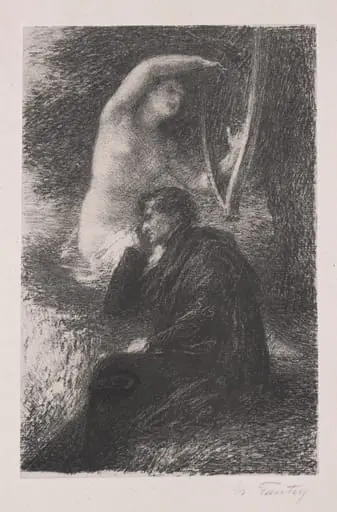
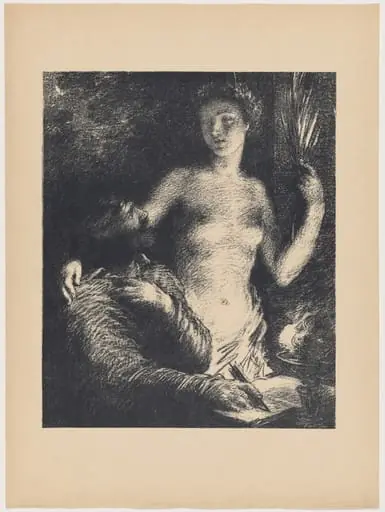
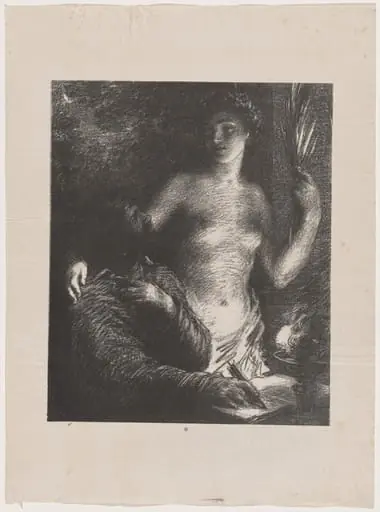
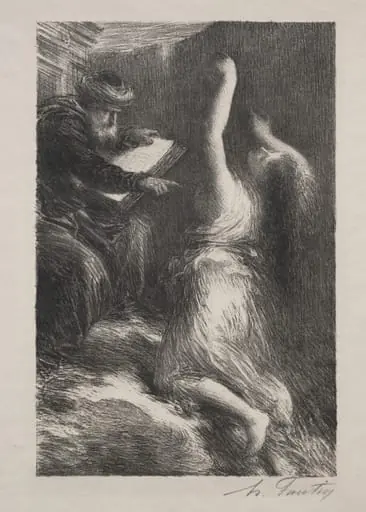
The Muse
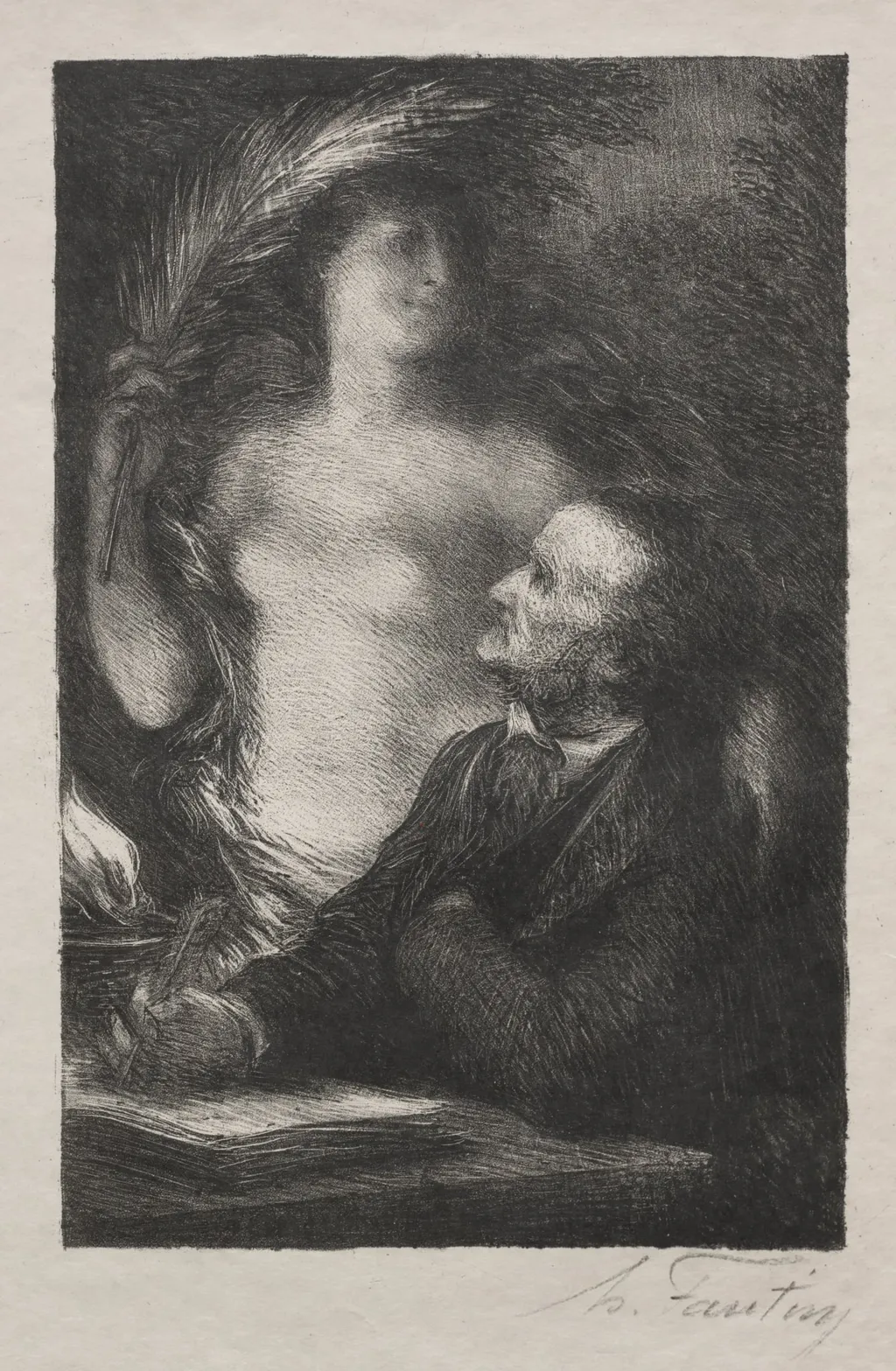
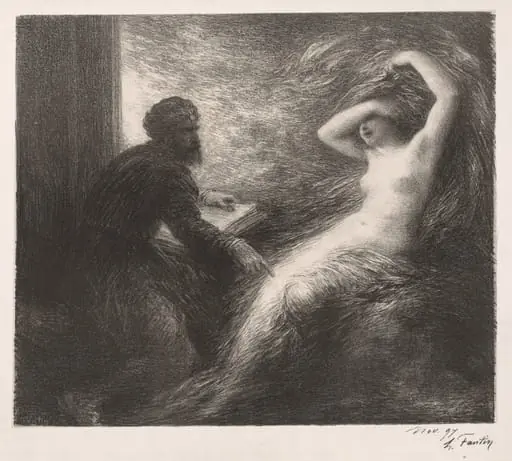
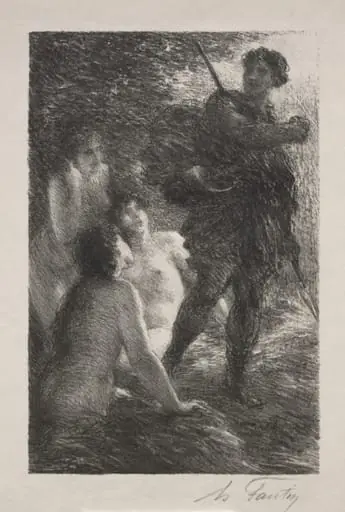
The Muse is a print by the Impressionist artist Henri Fantin-Latour. It dates from 1887 and is held in the collection of the Cleveland Museum of Art.
- Accession no.
- 1921.59
- Credit line
- Gift of Ralph King
About this work
Overview
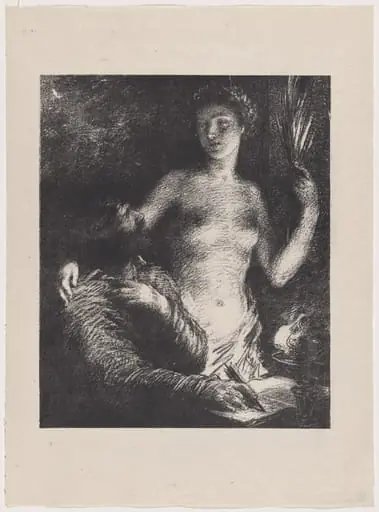
Henri Fantin‑Latour’s work titled The Muse (1887) presents a solitary figure in a dim interior, where a man at a desk gazes toward a barely visible, shadowy presence that suggests an inspirational muse. The composition is dominated by a stark contrast between the illuminated figure and the surrounding darkness, creating a mood of quiet contemplation.
Subject & Meaning
The central scene shows a seated man, absorbed in thought, his posture indicating concentration and creative focus. Opposite him, a faint, shrouded outline hints at a muse, embodying the intangible source of artistic inspiration. The interplay of light and shadow underscores the tension between tangible effort and the elusive nature of creative impulse.
Technique & Style
Fantin‑Latour employs a restrained palette and careful chiaroscuro to model the figures, allowing the illuminated man to emerge sharply from the gloom while the muse remains indistinct. The handling of light emphasizes form and volume, a hallmark of his later allegorical works, and diverges from his more detailed floral still‑lifes and group portraits.
History & Provenance
Created in 1887, The Muse is part of the collection of the Cleveland Museum of Art. Though Fantin‑Latour is best known for his flower studies and portraits of Parisian cultural figures, this piece reflects his occasional forays into allegorical subject matter during the late 1880s.
Own this work as a print
Artist & collection
Artist
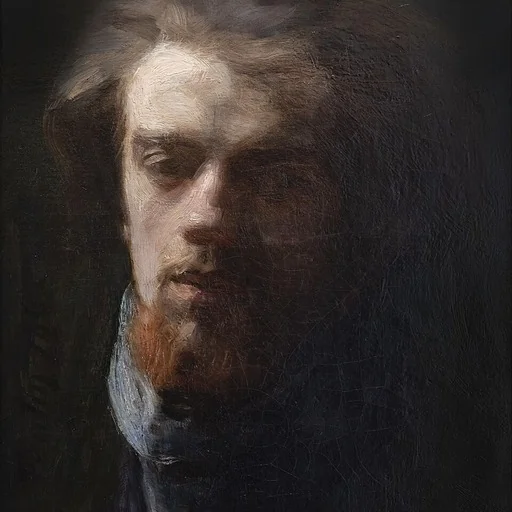
Ignace Henri Jean Theodore Fantin-Latour (French pronunciation:; 14 January 1836 – 25 August 1904) was a French painter and lithographer best known for his flower paintings and group portraits of Parisian artists and writers.