Artwork
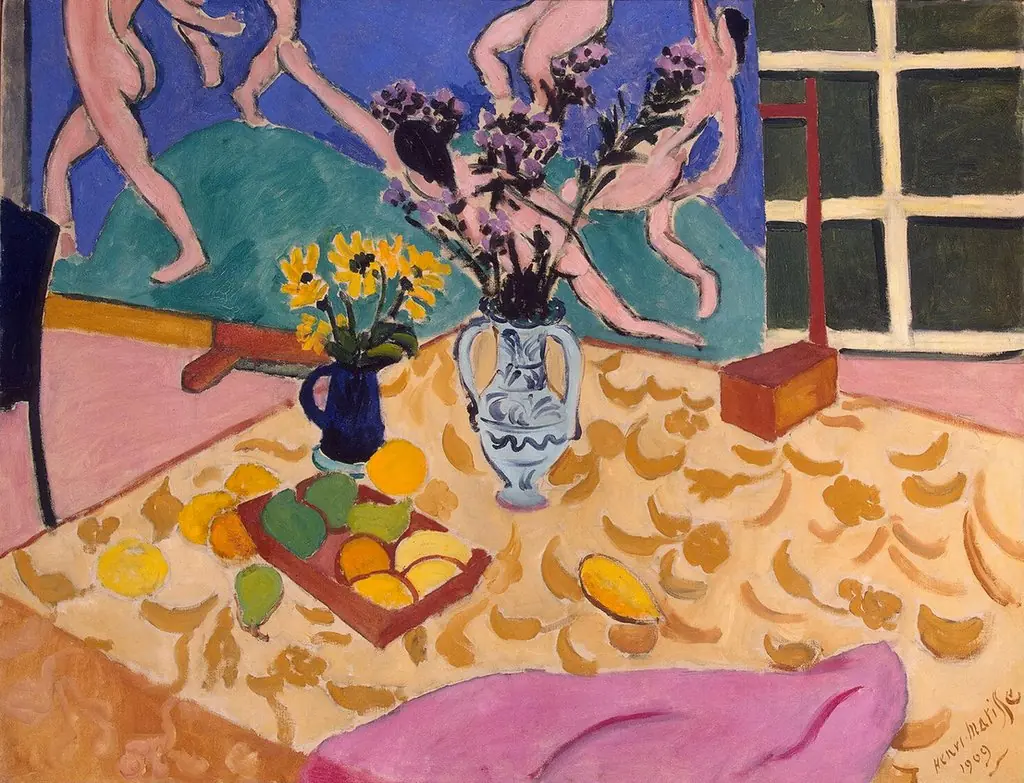
Nasturtiums with the Painting "Dance" I
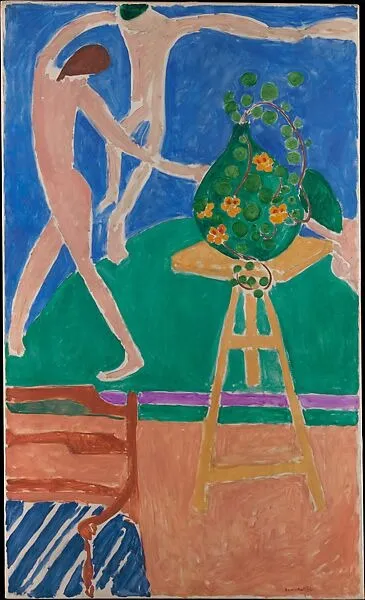
Nasturtiums with the Painting "Dance" I is an oil painting by the Fauvist artist Henri Matisse. It dates from 1912 and is held in the collection of the Metropolitan Museum of Art.
About this work
A tall, slim vase of bright orange and yellow nasturtiums stands on a small table. Behind it, a long-armed figure seems caught mid-dance, set against green, blue, and a striped floor. Henri Matisse painted it in 1912 in bold, flat color with no shadows.
Subject & Meaning
The work depicts a chair, dance, a flower, and a human figure, reflecting this layered subject matter.
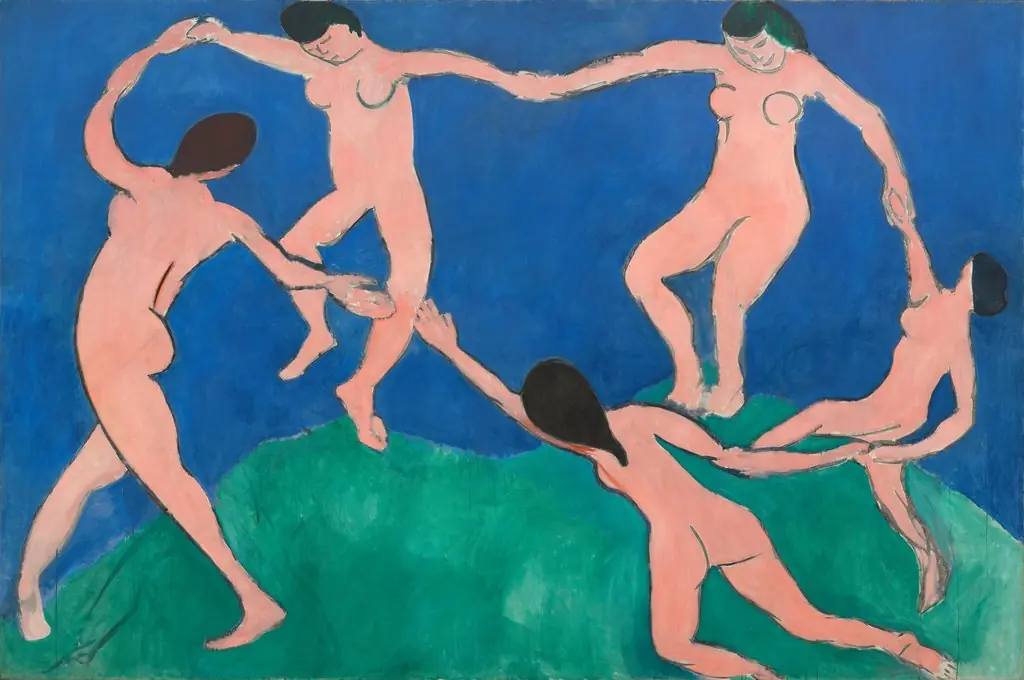
The painting depicts the interior of Henri Matisse's studio at Issy-les-Moulineaux, where a vase of nasturtiums is placed in front of the left half of his earlier composition La Danse I (1909). The arrangement juxtaposes a still-life subject, flowers in a vase, with a fragment of one of Matisse's most ambitious figurative works, allowing the bright blooms to overlap and partially obscure the dancing figures behind them. The work depicts a chair, dance, a flower, and a human figure, reflecting this layered subject matter.
The inclusion of La Danse I within the composition serves as a self-referential gesture, embedding a reference to his own earlier exploration of rhythmic human movement within a domestic interior. Painted in 1912, the work was subsequently shown at the 1913 Armory Show, situating the still life within the broader context of early modernist experimentation with form and color.
Technique & Style
Executed in oil on canvas in 1912, the work employs a fluid handling of paint to articulate an interior scene where a still-life of nasturtiums in a vase is set before Matisse's own large canvas The Dance I. The composition juxtaposes organic forms with the schematic figures of the earlier Dance, using broad, unmodulated color planes and decisive outlines to flatten pictorial space. The handling balances crisp contours with softly blended passages, particularly in the petals and stems. The stylistic synthesis reflects the artist's Fauvist color intensity combined with an abstracted studio mise-en-abyme.
History & Provenance
Henri Matisse executed this oil on canvas in 1912 within his studio at Issy-les-Moulineaux. The composition depicts a vase of nasturtiums positioned before the left portion of his earlier 1909 work, Dance I. The painting entered the collection of the poet Scofield Thayer, who subsequently bequeathed it to the Metropolitan Museum of Art in 1982. Prior to this acquisition, the work was exhibited in the United States during the historic 1913 Armory Show. It remains housed in the Metropolitan Museum of Art's collection.
Nasturtiums with the Painting "Dance" I is held in the collection of the Metropolitan Museum of Art in New York. The painting entered the museum through the bequest of the poet Scofield Thayer, whose gift was received by the institution in 1982. Its documented exhibition history is limited to a single major showing: it was displayed in the United States in 1913 at the Armory Show, the landmark international exhibition of modern art held in New York. No further exhibition venues or dates are recorded in the available documentation.
Context
Created in 1912, Nasturtiums with the Painting "Dance" I occupies a strategic position in Henri Matisse's exploration of the studio as a subject, directly referencing his earlier 1909 masterpiece, "Dance I." By depicting a vase of nasturtiums positioned before the canvas, the work functions as a meta-commentary on the act of painting itself. Its historical significance is underscored by its inclusion in the landmark 1913 Armory Show in the United States, which introduced radical modernist concepts to a broad American audience. The painting's provenance further links it to the literary and artistic circles of the era through its former ownership by the poet Scofield Thayer.
Currently held by the Metropolitan Museum of Art following Thayer's 1982 bequest, the piece remains a key document of Matisse's early twentieth-century practice and the dissemination of modernist ideas across the Atlantic.
Overview
Nasturtiums with the Painting "Dance" I, created by Henri Matisse in 1912, is an oil painting that exemplifies his innovative approach to color and composition. This work presents a complex arrangement, featuring a still life of flowers and a chair in the foreground, set against the backdrop of one of his earlier, monumental canvases, Dance. It showcases Matisse's ongoing exploration of spatial relationships and vibrant hues within a domestic interior.
Artist & collection
Artist
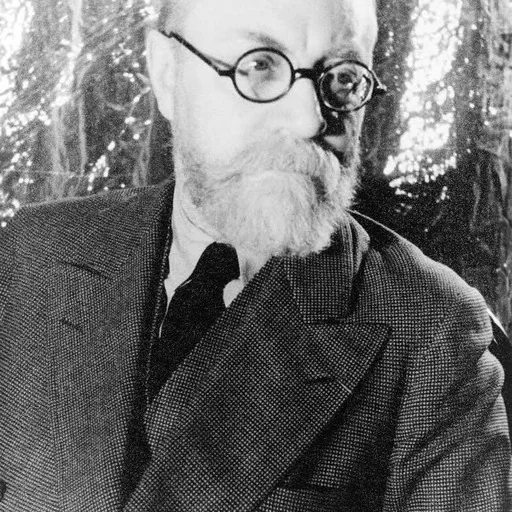
Henri Émile Benoît Matisse (French:; 31 December 1869 – 3 November 1954) was a French visual artist, known for both his use of colour and his fluid and original draughtsmanship.