Artwork
Olive Trees at Collioure
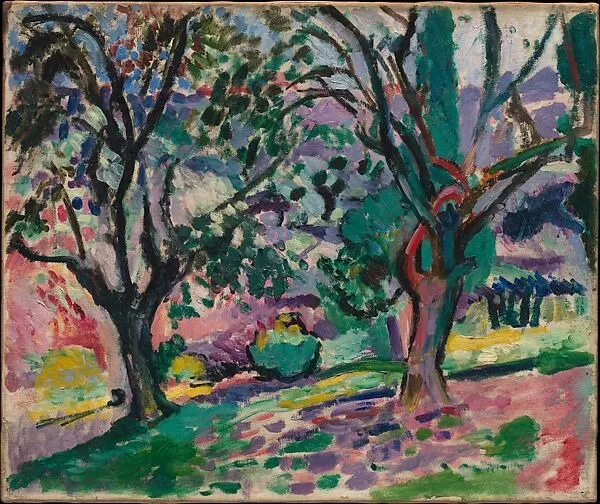
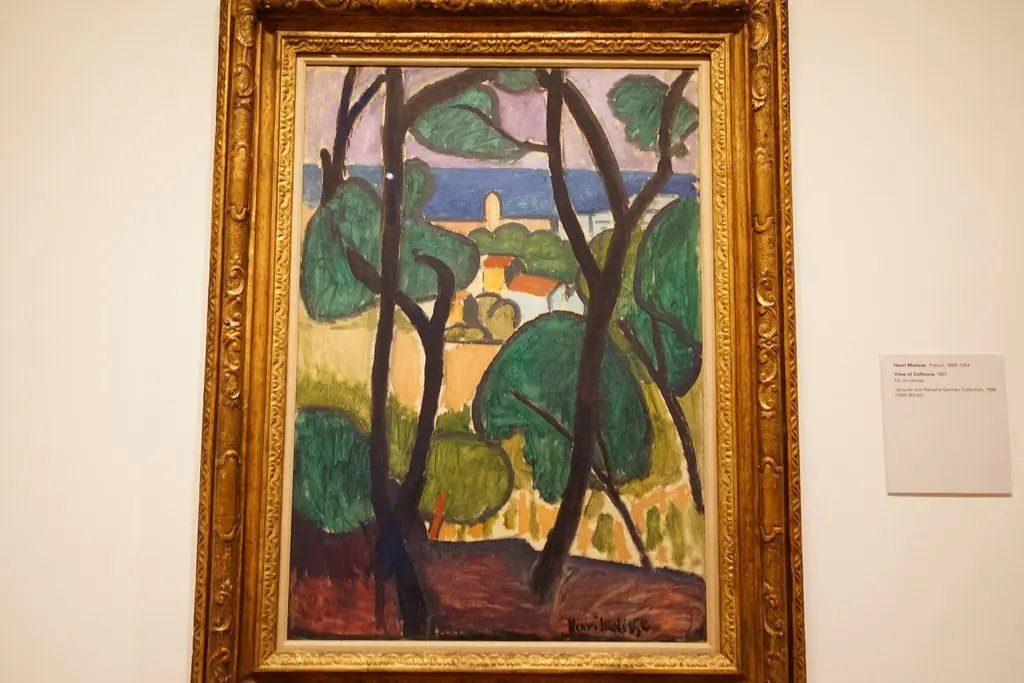
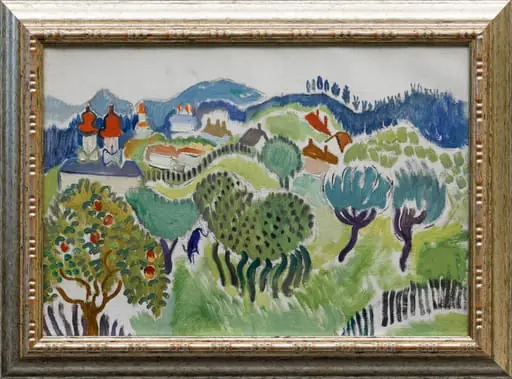
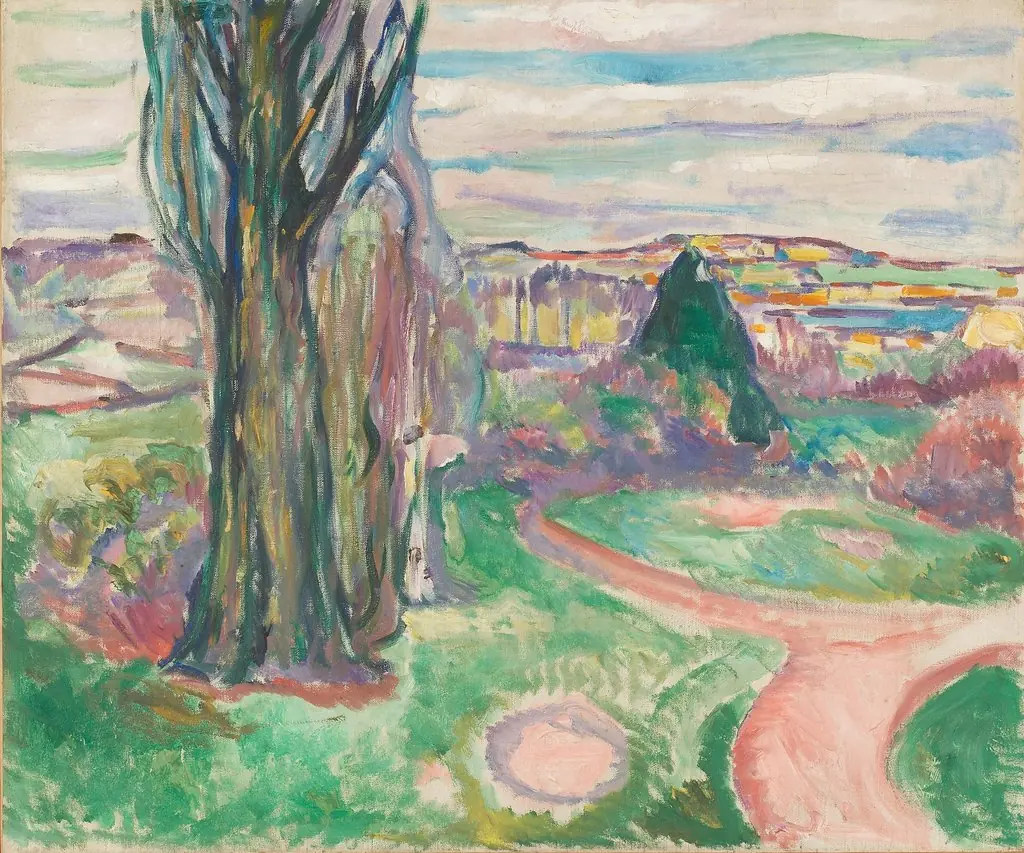
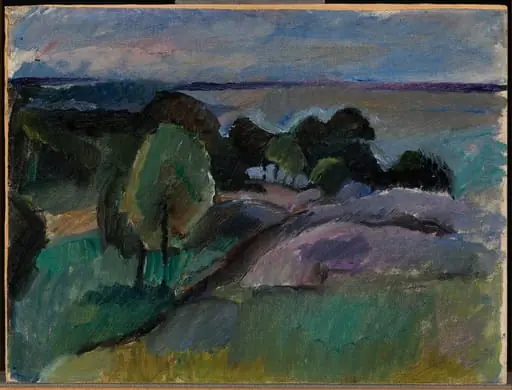
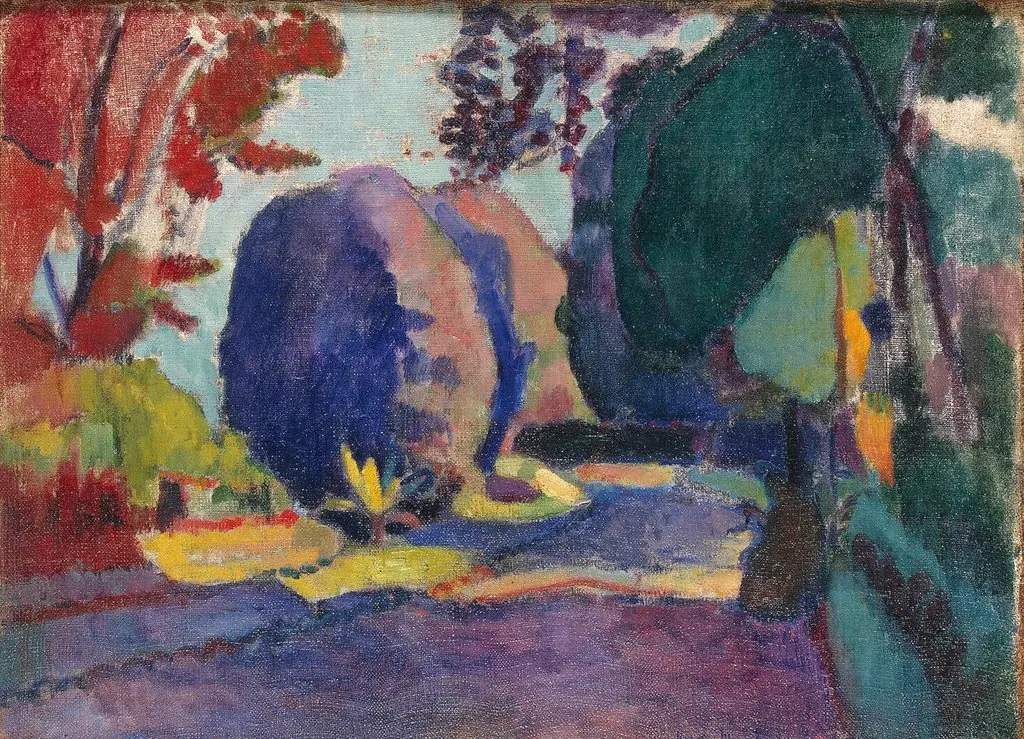
Olive Trees at Collioure is an oil painting by the Fauvist artist Henri Matisse. It dates from 1906 and is held in the collection of the Metropolitan Museum of Art.
About this work
Subject & Meaning
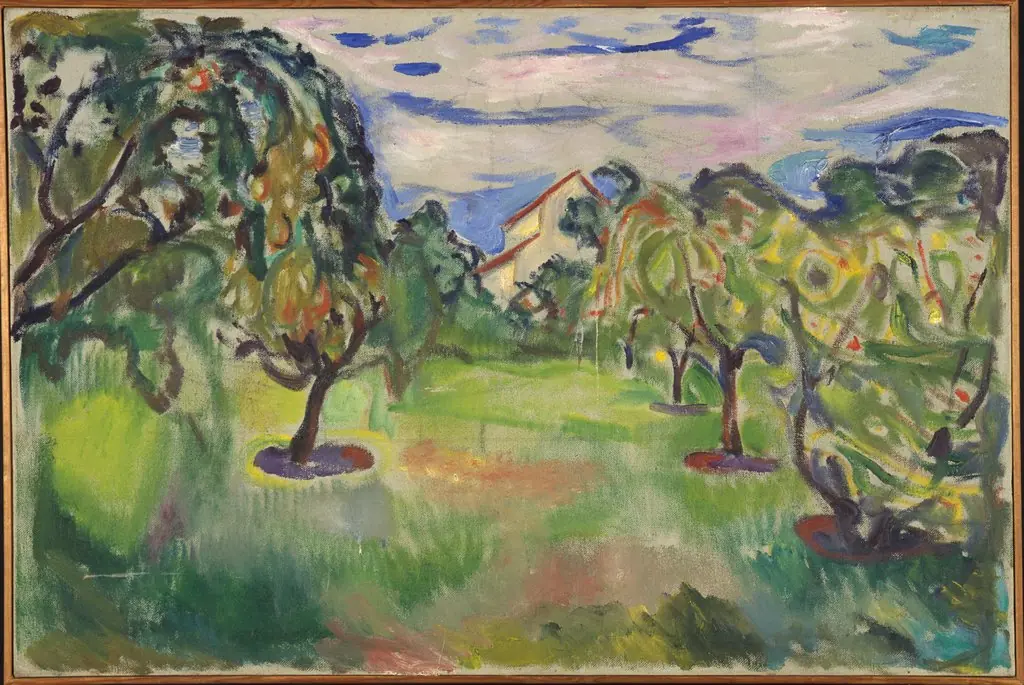
Executed in 1906, this oil painting depicts a landscape featuring olive trees situated in Collioure within the Pyrénées-Orientales region.
Executed in 1906, this oil painting depicts a landscape featuring olive trees situated in Collioure within the Pyrénées-Orientales region. As a quintessential work of Fauvism, the piece focuses on the natural subject matter of the olive grove rather than complex allegorical iconography or symbolic narrative. The representation centres on direct observation of the local environment, capturing the specific vegetation of the southern French coast during the summer season.
While the work signifies Matisse's engagement with the intense light and colour of the Mediterranean, available records describe it primarily as a straightforward landscape study devoid of explicit metaphorical meaning beyond its depiction of the natural world.
Technique & Style
Executed in oil on canvas in the summer of 1906, the work belongs to Matisse's early Fauve phase, characterised by bold, unmodulated colour and simplified forms. The paint is applied in broad, flat planes with minimal blending, heightening the decorative effect of the olive-green foliage and cobalt-blue sky. Compositionally, the two central olive trees are rendered as simplified, almost abstract shapes anchoring the horizontal expanse of the landscape. The canvas measures 46 × 55 cm and is housed at the Metropolitan Museum of Art.
History & Provenance
Painted in summer 1906 at Collioure, this Fauve landscape by Henri Matisse was acquired by the American collectors Gertrude and Leo Stein shortly after its execution. It entered the Metropolitan Museum of Art, New York (accession number 1975.1.20), in 1975 through the Robert Lehman Collection bequest. No exhibition history beyond its permanent display at the Metropolitan Museum is documented in the cited sources.
Context
Created in 1906, Olive Trees at Collioure stands as a definitive example of the Fauvist movement, characterised by vibrant, non-naturalistic depiction of the landscape of the Pyrénées-Orientales. The work's early acquisition by the prominent collectors Gertrude and Leo Stein highlights its immediate recognition within avant-garde circles. Since 1975, the canvas has been held in the collection of the Metropolitan Museum of Art in New York, where it remains a key object for understanding Matisse's exploration of colour and form during this pivotal summer.
The painting's enduring presence in major institutional collections reflects its established role in the canon of early twentieth-century modernism.
Overview
Henri Matisse's Olive Trees at Collioure, painted in oil in 1906, captures a vibrant landscape. This work exemplifies the artist's engagement with Fauvism, an influential art movement of the early 20th century. The painting depicts a scene of olive trees, rendered with a distinctive approach to color and form that characterizes Matisse's innovative contributions to modern art. It is presently housed in the collection of The Metropolitan Museum of Art.
Artist & collection

Artist
Henri Émile Benoît Matisse (French:; 31 December 1869 – 3 November 1954) was a French visual artist, known for both his use of colour and his fluid and original draughtsmanship.