Artwork
Ophelia
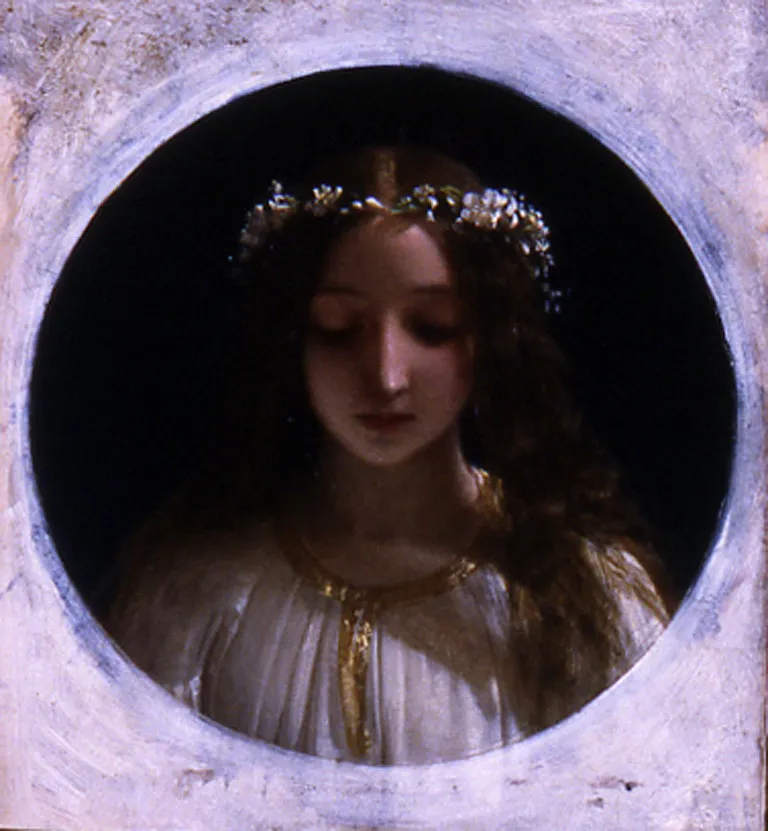
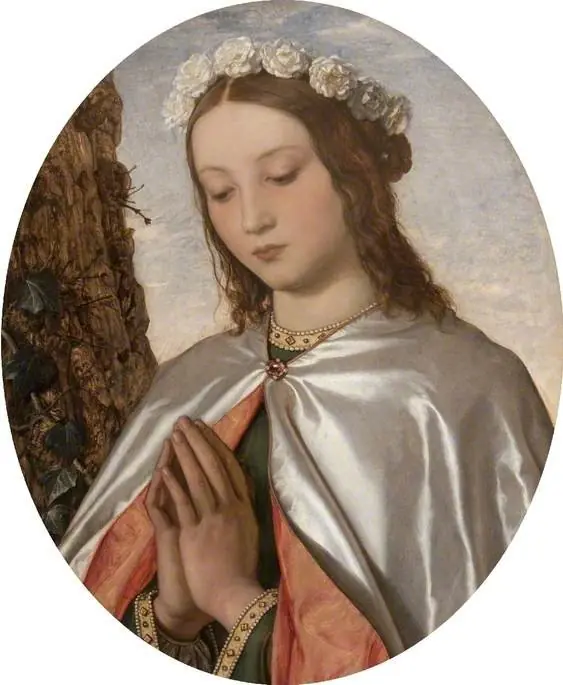
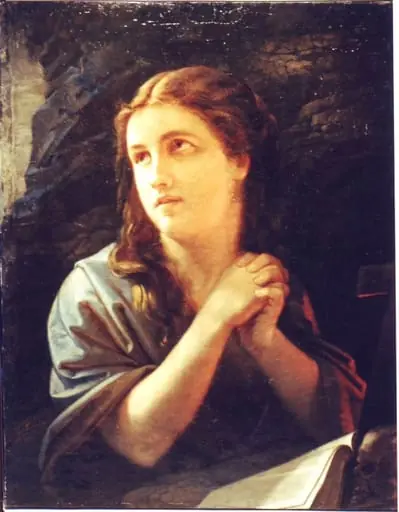
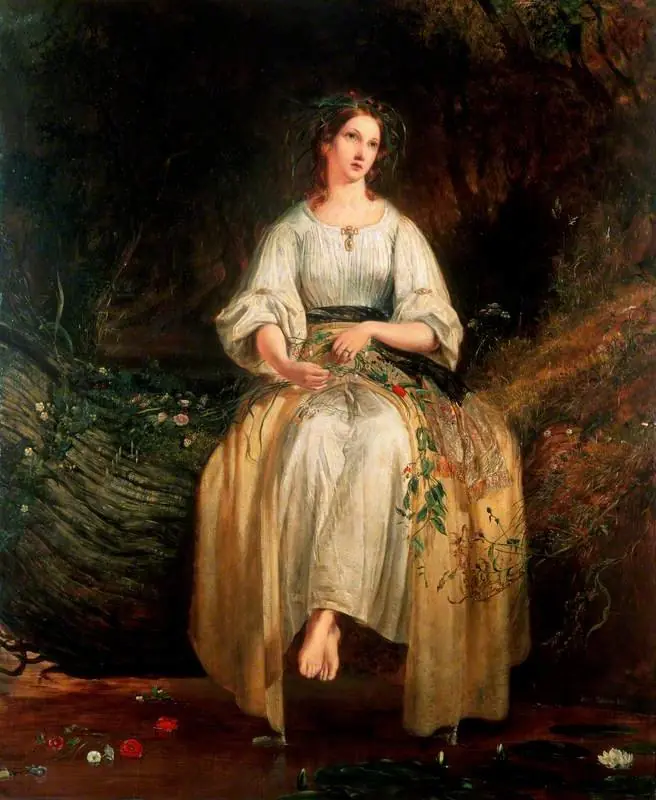
Ophelia is an oil painting by the Pre-Raphaelite artist Henry Lejeune. It dates from 1857 and is held in the collection of the Walters Art Museum.
About this work
Subject & Meaning
The wreath evokes the floral garlands associated with Ophelia's descent into madness and her eventual drowning, when she distributed symbolic herbs and flowers.
The painting portrays Ophelia, the tragic heroine from Shakespeare's Hamlet, rendered as a young woman with brown, waist-length hair. She wears a wreath upon her head, a detail drawn from traditional iconography of the character, and is shown in a half-length portrait format. The wreath evokes the floral garlands associated with Ophelia's descent into madness and her eventual drowning, when she distributed symbolic herbs and flowers.
By isolating her bust against a plain ground, the composition emphasizes her contemplative melancholy rather than the narrative moment of her death, presenting her as an emblem of doomed love and fragile innocence rather than illustrating a specific scene from the play.
The work thus operates both as a character study and as a meditation on the romantic idealization of Shakespeare's Ophelia, a subject that preoccupied Victorian artists.
Technique & Style
Henry Lejeune's 1857 portrait of Ophelia is executed in oil paint on a wood support. The work measures 19.6 cm in height and 17.8 cm in width. Stylistically, the painting presents a waist-length depiction of the female subject, characterized by brown hair adorned with a wreath.
The composition focuses on specific facial features, including the eyebrows, within the constraints of the small-scale panel format.
History & Provenance
Henry Lejeune's portrait of Ophelia was created in 1857, executed in oil paint on a wood panel measuring 19.6 by 17.8 centimeters. The work is held in the collection of the Walters Art Museum, where it is located. No further details regarding commission, intermediate ownership, or acquisition history are documented in the available sources.
The Ophelia painting by Henry Lejeune is housed in the Walters Art Museum. Its inventory number is not explicitly stated in the sources. The work has been exhibited at the museum as part of its permanent collection displays.
Exhibition records indicate its inclusion in Walters Art Museum presentations, though specific exhibition titles and dates are not detailed in the provided documentation.
Context
The 1857 portrait by Henry Lejeune depicts Ophelia in a moment of quiet contemplation, her figure framed by a wreath of flowers and a subtle expression that captures both vulnerability and resolve. Scholars have long examined the work as a visual meditation on Shakespearean tragedy, noting its restrained palette and delicate brushwork as hallmarks of mid-nineteenth-century British portraiture. The painting's placement within the artist's oeuvre reflects a broader shift toward narrative realism in Victorian art, where literary subjects were rendered with psychological depth rather than idealized splendor.
Contemporary critics praised the composition for its technical precision and emotional nuance, while modern scholarship situates it alongside other literary-inspired works that explore the intersection of gender, identity, and artistic representation.
Overview
Created in 1857, Henry Le Jeune’s Ophelia is a wooden relief that interprets the tragic Shakespearean figure. Executed within the Pre‑Raphaelite aesthetic, the work is part of the collection of the Walters Art Museum and presents a solemn, frontal portrait of the heroine.
Artist & collection
Artist
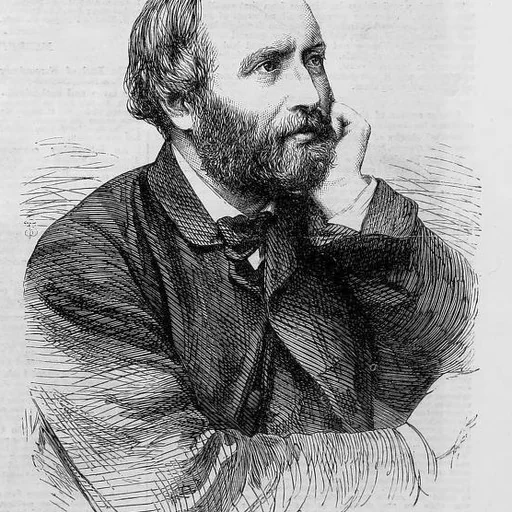
Henry Le Jeune (12 December 1819 – 5 October 1904) was an English painter of landscapes, genre, literary and biblical scenes. He became well known for his genre paintings of children.