Artwork
Rocky Landscape
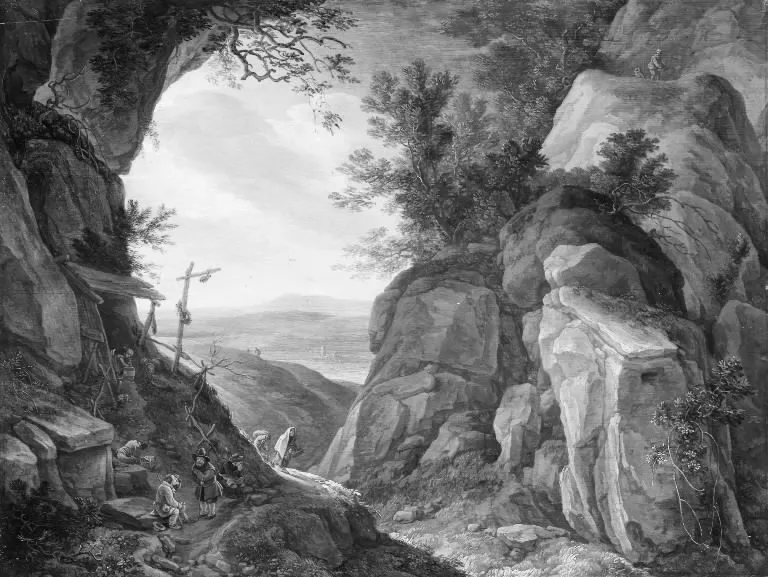
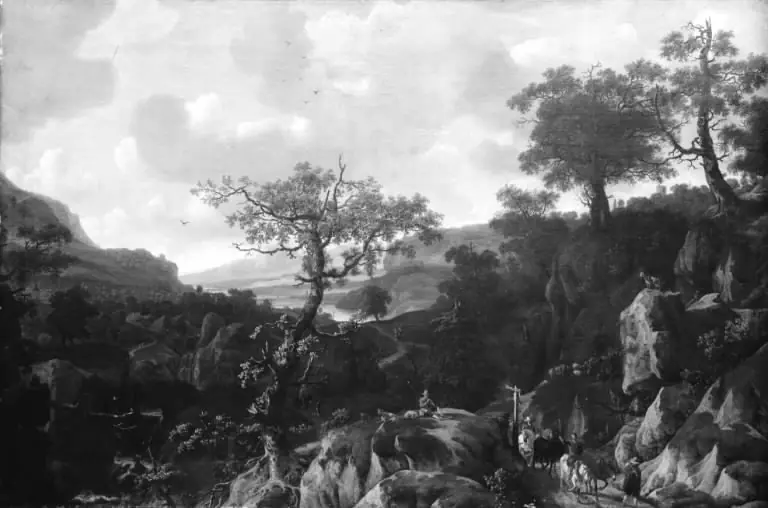
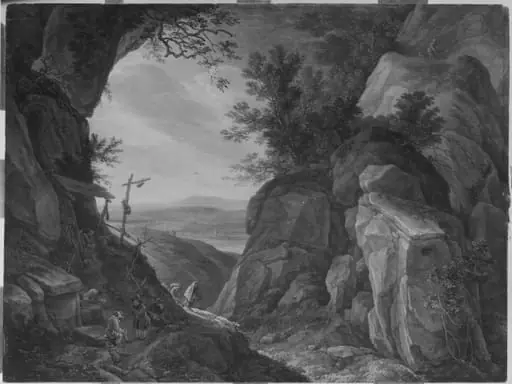
Rocky Landscape is an unspecified painting by the Dutch Golden Age artist Herman Saftleven. It dates from 1661 and is held in the collection of the Statens Museum for Kunst.
About this work
Overview
Executed in oil, the work measures 450 by 590 millimeters and is held in the collection of the Statens Museum for Kunst in Copenhagen.
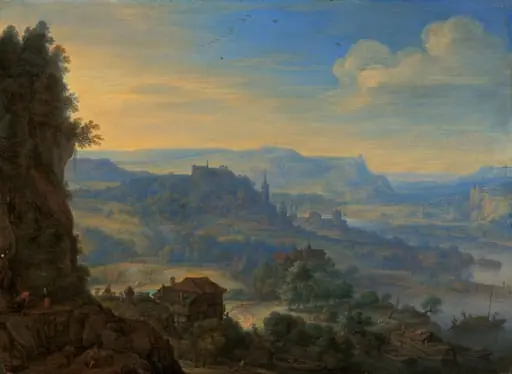
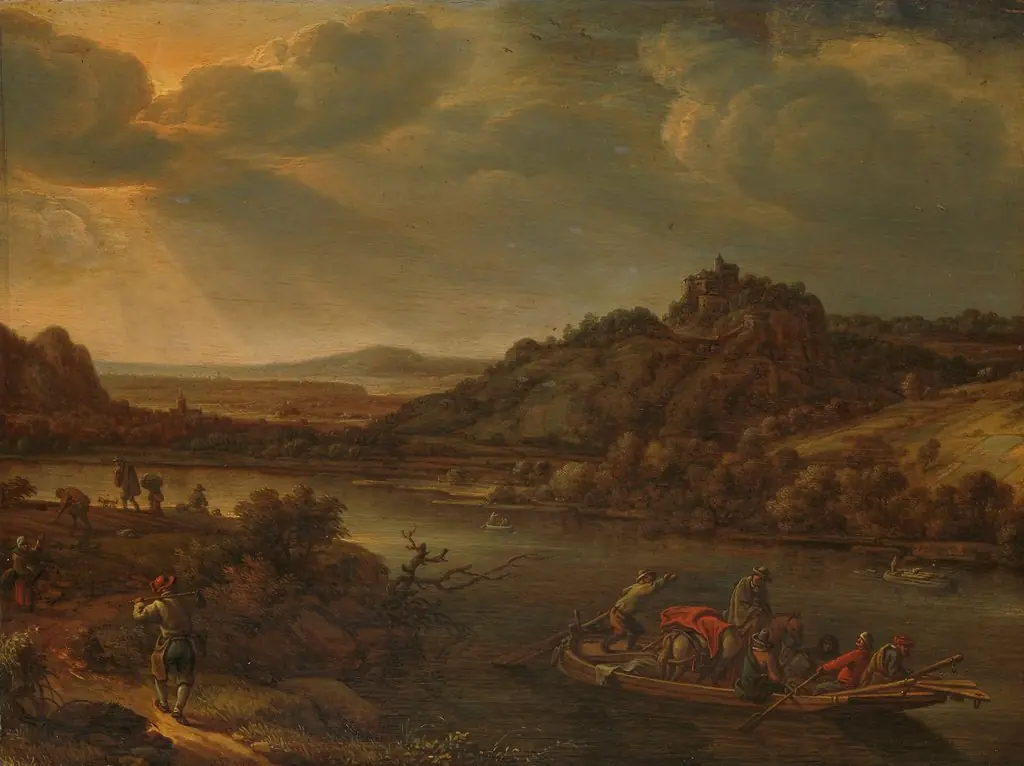
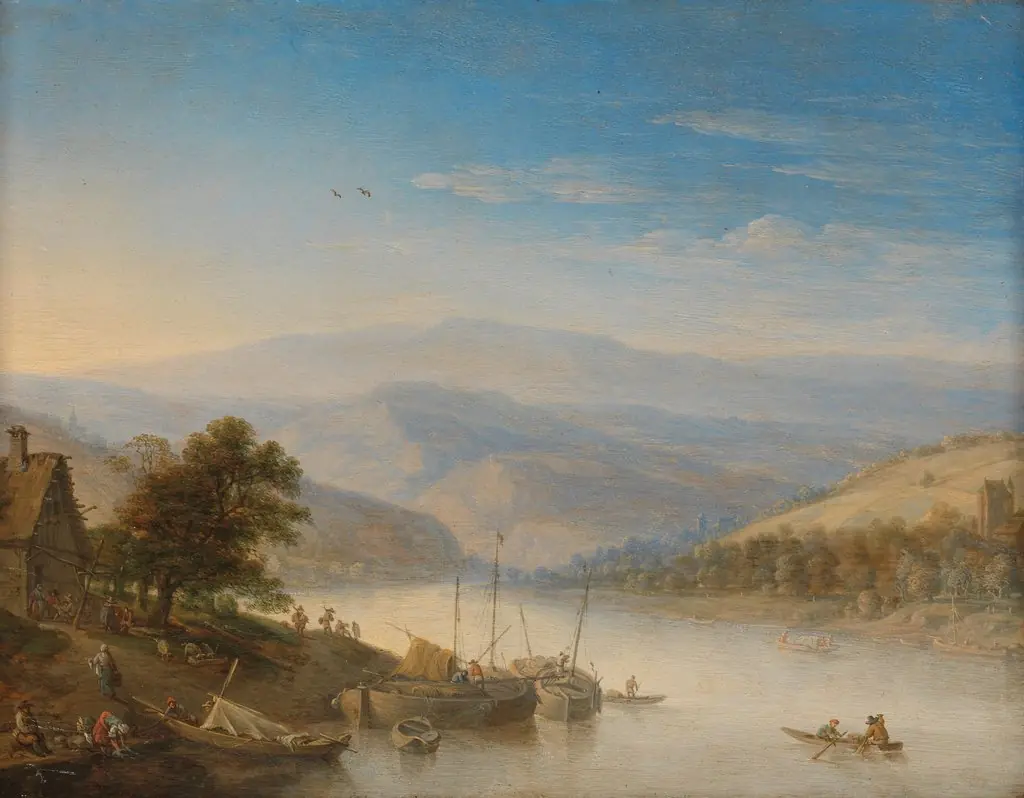
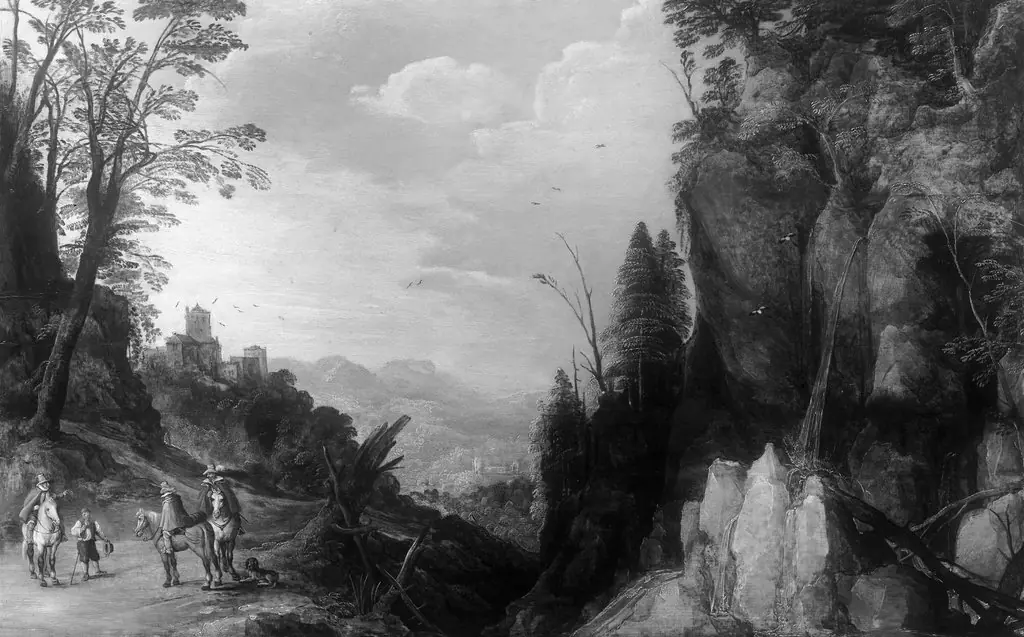
Rocky Landscape is a 1661 landscape painting by the Dutch Golden Age artist Herman Saftleven the Younger. Executed in oil, the work measures 450 by 590 millimeters and is held in the collection of the Statens Museum for Kunst in Copenhagen. The painting belongs to Saftleven's mature period, when he had shifted away from Italianate subjects to concentrate on imaginary yet topographically precise Rhineland views. As a rocky landscape populated with small figures and rendered in a restrained monochrome palette, the work exemplifies the artist's distinctive approach to northern European terrain during the 1650s and 1660s.
Subject & Meaning
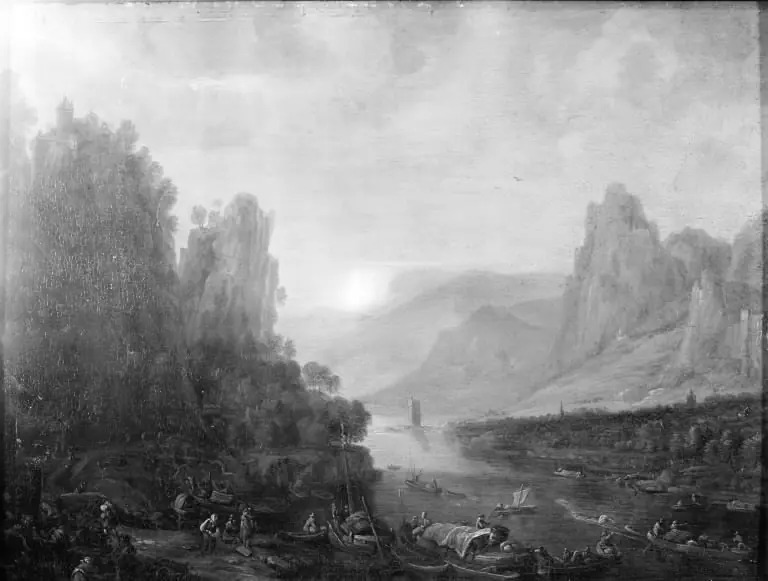
The painting presents a rocky gorge that opens onto a distant valley vista. On the left, a rough wooden shelter clings to the cliff face near a crucifix with a hanging figure, while below, several small figures gather: one sits, another stands nearby, and two more ascend a path. To the right, massive boulders rise steeply, crowned with trees and a diminutive figure. The composition channels the viewer's gaze through the arching rock formation toward a hazy horizon, creating a sense of depth and pilgrimage. The inclusion of the crucifix and the travelers suggests a possible religious or allegorical reading, common in Dutch landscape painting of the period, where human figures serve to emphasize the scale and grandeur of nature while also alluding to spiritual journeys through earthly terrain.
Technique & Style
Saftleven executed the work in oil with a monochrome palette dominated by grays. Light enters from the left, illuminating the central vista and highlighting rock faces while deep shadows pool in crevices. The brushwork demonstrates considerable variation, from smooth gradations in the sky to textured, detailed handling of stone surfaces. Sparse vegetation dots the cliffs, contributing to the naturalistic effect. This technical approach reflects the influence of Roelandt Savery, who spent the final part of his career in Utrecht where Saftleven was based. The painting's handling of rocky terrain and its dramatic chiaroscuro also connect to Saftleven's broader development in the 1650s, when his work became more diverse in its interpretation of nature, combining topographical accuracy with imaginative composition.
History & Provenance
The painting is dated to 1661, placing it firmly in Saftleven's mature period. It is currently located at the Statens Museum for Kunst, though the specific circumstances of its acquisition by the Danish national gallery are not documented in the available sources. The work has not been traced through earlier private collections or auction records in the provided material. No exhibition history is recorded in the sources.
Context
Herman Saftleven the Younger was born in Rotterdam in 1609 and lived most of his life in Utrecht from 1632 until his death in 1685. He probably first studied with his older brother Cornelis, a highly accomplished painter of genre scenes. After moving to Utrecht, Saftleven married the daughter of the architectural painter Hendrick van Vliet and became deeply embedded in the city's artistic community, serving as overman of the painters' guild in 1655, 1656, and 1665, and as Dean in 1657, 1658, 1666, and 1667. His early landscapes related to the works of Jan van Goyen, Abraham Bloemaert, and Pieter Molijn, but by the 1650s he had developed a more personal manner. The 1644 visit to Gelderland marked a decisive turning point, after which he abandoned Italianate subjects in favor of native Dutch and imaginary Rhineland landscapes. Rocky Landscape belongs to this later phase, when Saftleven concentrated on hilly and rocky panoramas populated with tiny figures, a specialty that would influence Jan Vollerdt, Christian Georg Schutz, and Jan Griffier.
Legacy
Saftleven's rocky and hilly landscapes, including this 1661 work, exercised significant influence on subsequent generations of northern European landscape painters. Jan Vollerdt, Christian Georg Schutz, and Jan Griffier were directly affected by his approach, with Griffier even copying some of his compositions. The artist's ability to combine topographical accuracy with imaginative construction of Rhineland terrain helped establish a model for imaginary landscape that persisted in Dutch and German painting. His drawings of Utrecht churches, made before their destruction in the 1674 derecho and subsequently sold to the city, also secured his reputation as a documenter of Dutch architectural heritage. The Statens Museum for Kunst's holding of Rocky Landscape ensures continued scholarly and public attention to this aspect of his achievement.
Artist & collection

Artist
Dutch painter Herman Saftleven specialized in river and landscape scenes during the 1600s.