Artwork
South Downs
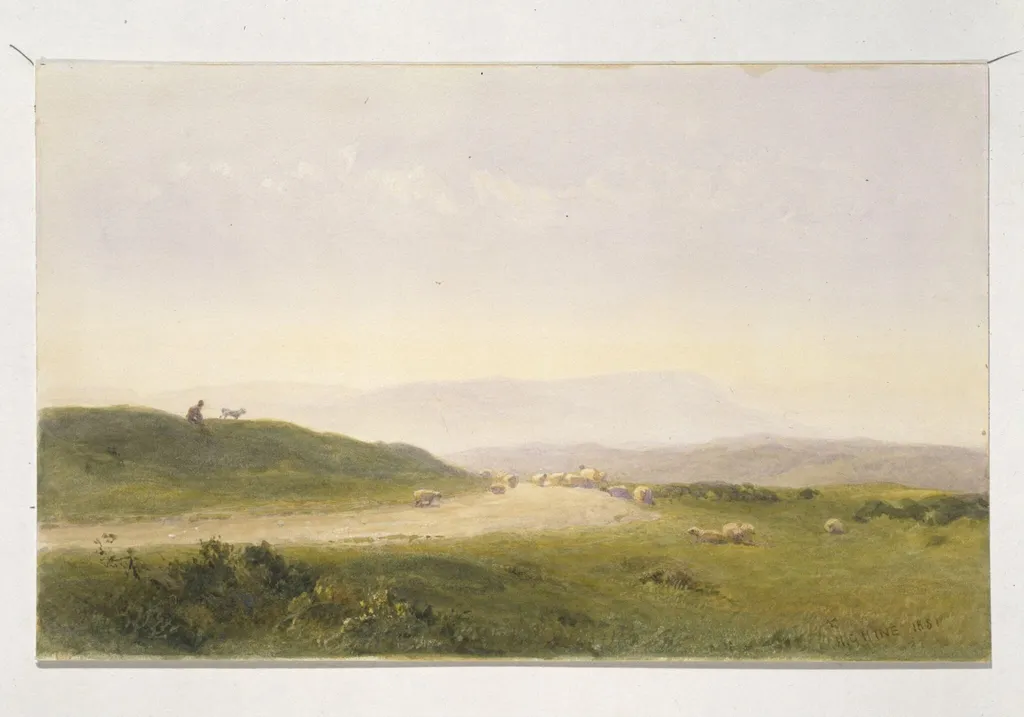
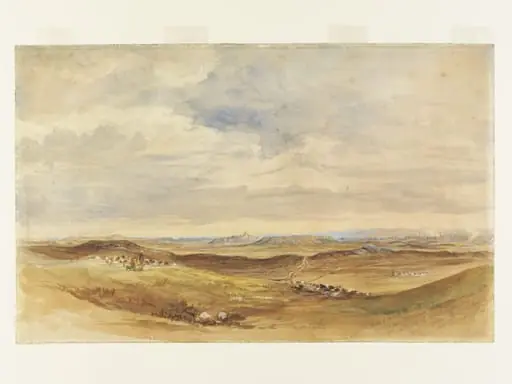
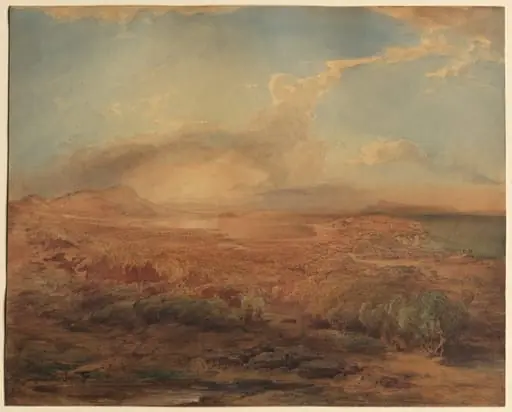
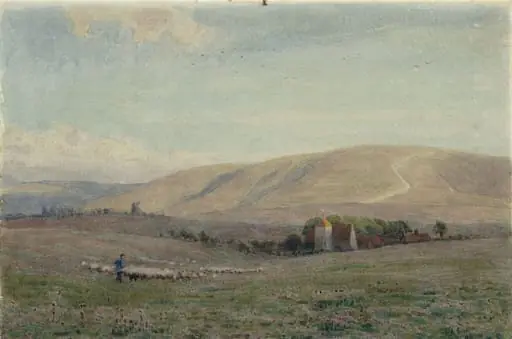
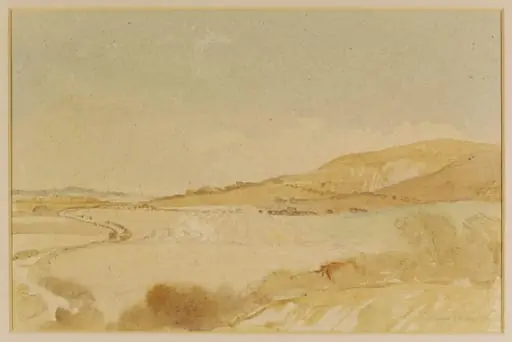
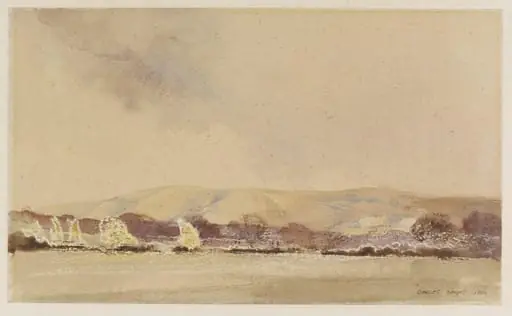
South Downs is a watercolor work on paper by the Romanticist artist Henry George VPRI Hine. It dates from 1830 and is held in the collection of the Victoria and Albert Museum.
About this work
Overview
South Downs is a watercolour painting created in 1830 by Henry George VPRI Hine, now part of the Victoria and Albert Museum's collection.
Subject & Meaning
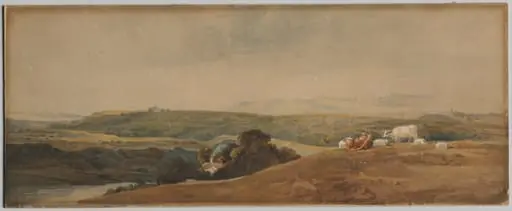
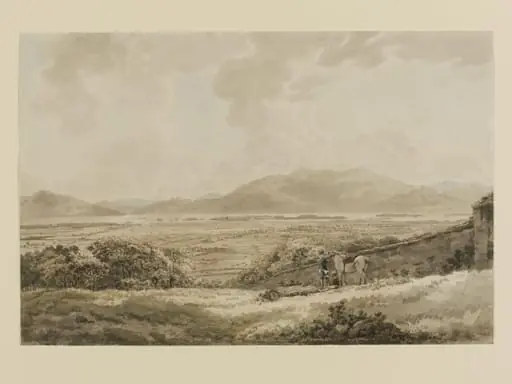
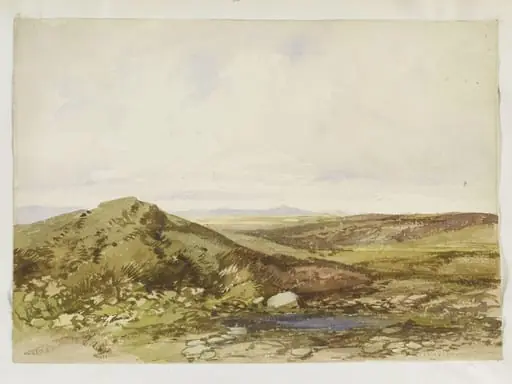
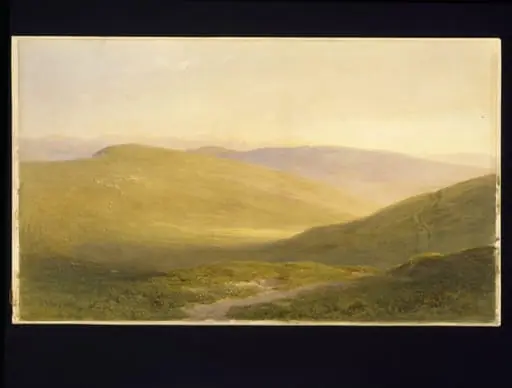
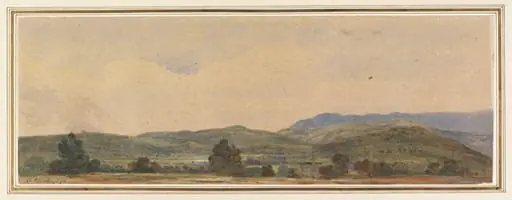
The painting depicts a serene rural landscape with a solitary figure and dog on a hilltop, overlooking grazing sheep, evoking a sense of peaceful contemplation.
Technique & Style
Hine employed light, soft washes of colour to achieve a dreamy, distant quality, characteristic of the Romantic movement's emphasis on nature's beauty.
History & Provenance
Created in 1830, the work is currently held in the Victoria and Albert Museum's collection.
Context
The painting aligns with the early 19th-century Romanticism art movement, which often idealized natural landscapes as settings for emotional reflection.
Legacy
As part of the Victoria and Albert Museum's holdings, South Downs remains accessible for study and appreciation of early 19th-century Romantic watercolour techniques.
Own this work as a print
Artist & collection
Artist
This British artist painted quiet landscapes in watercolour, mostly views of southern England.