Artwork
Hans Brosamer
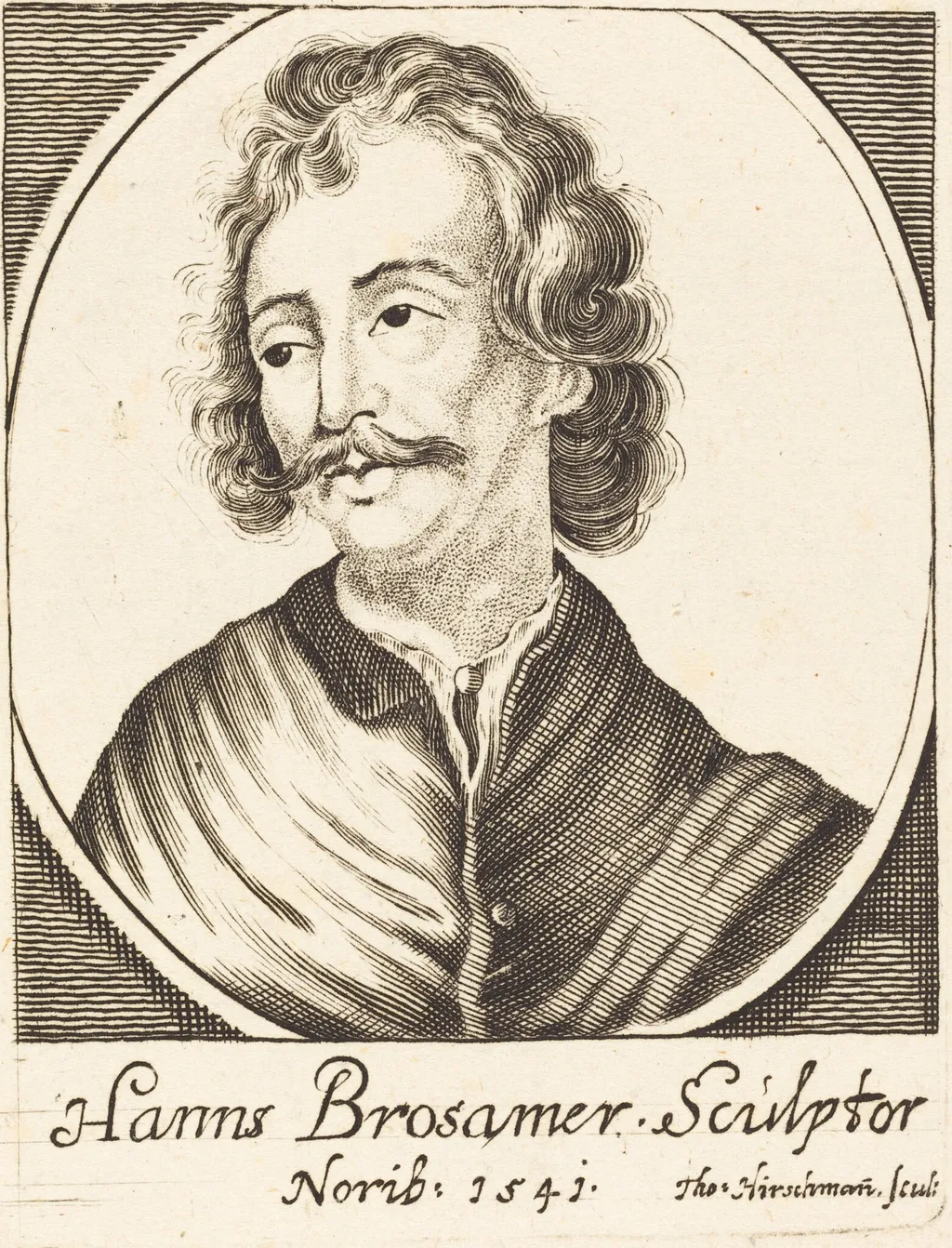
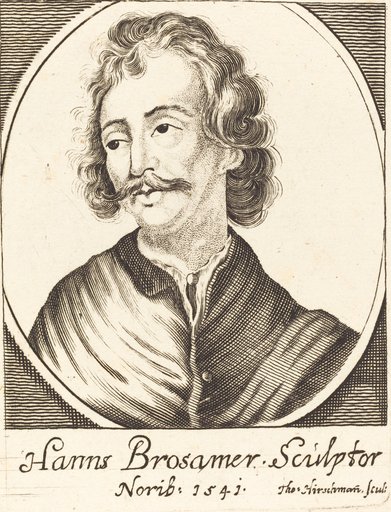
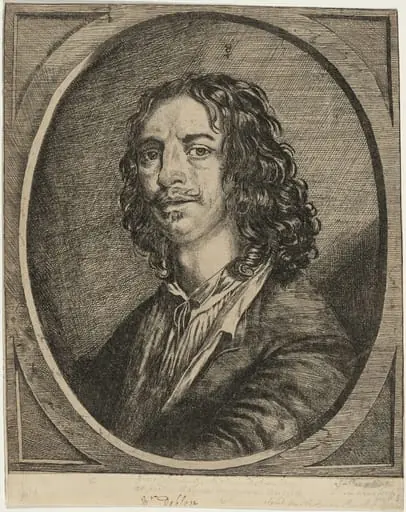
Hans Brosamer is an ink print by the Baroque artist Thomas Hirschmann. It dates from 1670 and is held in the collection of the National Gallery of Art.
About this work
Overview
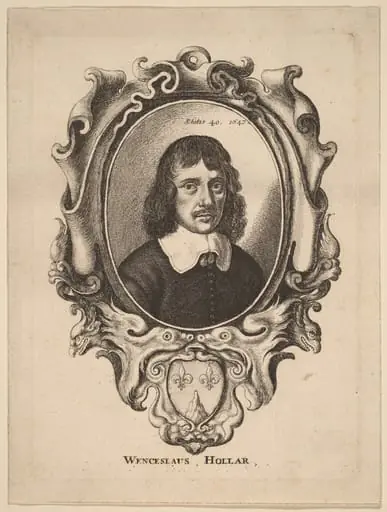
The composition centers on Brosamer’s face and upper torso, framed by a dark border that draws focus to his features.
This engraving, produced in 1670 by Thomas Hirschmann, portrays the German printmaker Hans Brosamer. Executed in the intaglio technique, the image relies on fine lines and cross-hatching to model form and texture. The composition centers on Brosamer’s face and upper torso, framed by a dark border that draws focus to his features. The work reflects the precision and tonal control typical of 17th-century German engraving traditions.
Subject & Meaning
Hans Brosamer was a noted engraver and publisher active in the early 16th century, known for religious and allegorical prints. This posthumous portrait, made nearly a century after his death, serves as a tribute to his legacy within the printmaking community. The dignified pose and detailed rendering suggest respect for his professional standing, positioning him as a figure of intellectual and artistic authority rather than merely a subject.
Technique & Style
The portrait employs fine-line engraving to achieve subtle gradations of light and shadow. Cross-hatching defines the texture of fabric, the curl of hair, and the contours of the face. The light background contrasts with the dark border and clothing, enhancing the three-dimensionality of the figure.
The style aligns with Northern European printmaking conventions of the late Baroque period, emphasizing clarity and controlled detail over theatricality.
History & Provenance
Created in 1670 by Thomas Hirschmann, the engraving likely originated as part of a series documenting notable German artists. Hirschmann, active in Nuremberg, specialized in reproductive prints of historical figures. The work’s survival suggests it was circulated among collectors or academies interested in the lineage of printmakers.
No earlier versions of this portrait are known, indicating Hirschmann’s image may be the primary visual record of Brosamer.
Context
In the late 17th century, German printmakers frequently commemorated earlier masters through engraved portraits, reinforcing a sense of professional continuity. Brosamer, though deceased for over a hundred years, remained a reference point in printmaking circles. Hirschmann’s portrait reflects this tradition, situating Brosamer within a lineage of skilled artisans whose work shaped the medium’s development in Central Europe.
Legacy
This engraving preserves the only known visual representation of Hans Brosamer, making it a key reference for art historians studying early German print culture. While not widely exhibited today, it remains a documented example of how later generations honored their predecessors through reproductive art. Its technical discipline and historical intent continue to inform studies of printmaking’s institutional memory.
Own this work as a print
Artist & collection