Artwork
Plate 25: Mediterranean Rainbow Wrasse, Other Wrasse, a Swallowtail Sea Perch(?), Several "Anthiae," and Other Fish
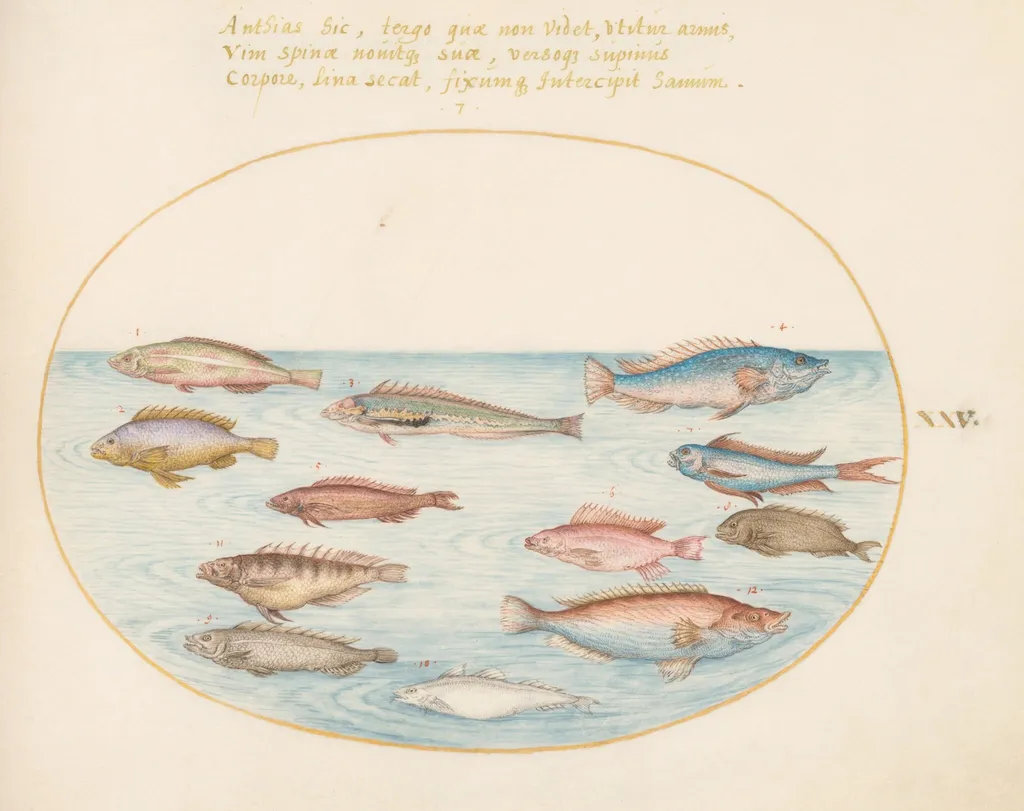
Plate 25: Mediterranean Rainbow Wrasse, Other Wrasse, a Swallowtail Sea Perch(?), Several "Anthiae," and Other Fish is a gouache drawing by the Renaissance artist Joris Hoefnagel. It dates from 1594 and is held in the collection of the National Gallery of Art.
- Inscription
- Inscribed:upper center in (gold?): Anthias hic, tergo quae non videt, utitur armis, / Vim spinae novitq[ue] suae, versoq[ue] supinus / corpore, lina secat, fixumq[ue] intercipit hamum.; fish in image numbered .1., .2., .3., .4., .5., .6., .7., .8., .9., .10., .11., and .12. in red ink; center right in (gold?): XXV. Facing page: upper center in blue ink: Casus ubique valet, semper tibi pendeat hamus: / Quo minime credis gurgite, piscis erit.; lower center in red/violet ink: Tua pater providentia ab initio cuncta gubernat / quonia[m] dedisti et in MARI viam et inter fluctus semitam firmissimam. sap.14.
About this work
Overview
Created around 1594 by Joris Hoefnagel, a Flemish artist renowned for natural history illustrations and manuscript illuminations, Plate 25 is a watercolor and gold paint drawing on parchment featuring a diverse assembly of marine species.
Subject & Meaning
The piece depicts twelve distinct fish species, including Mediterranean Rainbow Wrasse and 'Anthiae', arranged within a circular blue field. The meticulous, labeled illustrations reflect the Renaissance convergence of artistic expression and scientific documentation.
Technique & Style
Hoefnagel employed watercolors and gold paint on parchment, achieving a soft glow through layered glazing techniques. A thin gold border frames the scene, enhancing the vibrant, evenly distributed fish in shades of pink, green, and brown against a suggested aquatic background.
History & Provenance
While specific provenance details for Plate 25 are not provided, its creation circa 1594 situates it within Hoefnagel's contributions to late 16th-century northern European art, notably in natural history drawing and the nascent floral still-life genre.
Context
This work embodies the Renaissance's blending of art and science. Hoefnagel's precision in natural history illustration influenced the development of topographical drawing and the independent floral still-life painting genre in northern Europe.
Legacy
Plate 25 exemplifies Hoefnagel's impact on the intersection of artistic and scientific practices in the Renaissance, leaving a legacy in the evolution of natural history and botanical art in Europe.
Own this work as a print
Artist & collection

Artist
Joris Hoefnagel or Georg Hoefnagel (1542 – 24 July 1601) was a Flemish painter, printmaker, miniaturist, draftsman and merchant.

 Forum Vulcani: The Hot Springs at Pozzuoli
 Plate 76: Insects with a Pink and Cream Columbine
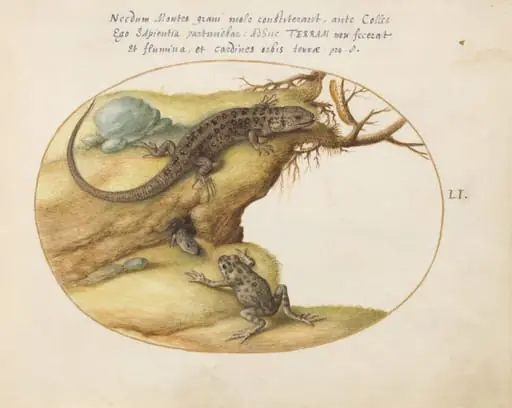 Plate 51: Two Sand Lizards, a Common Parsley Frog(?), and a Caterpillar
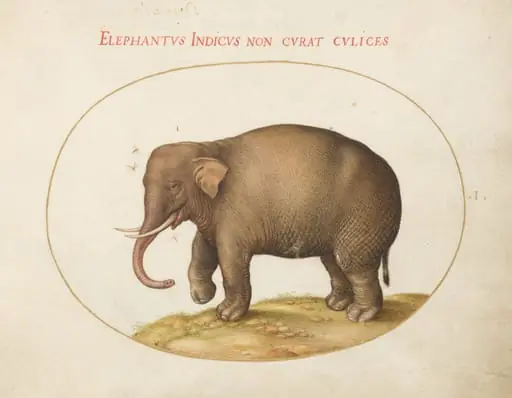 Plate 1: Elephant with Insects
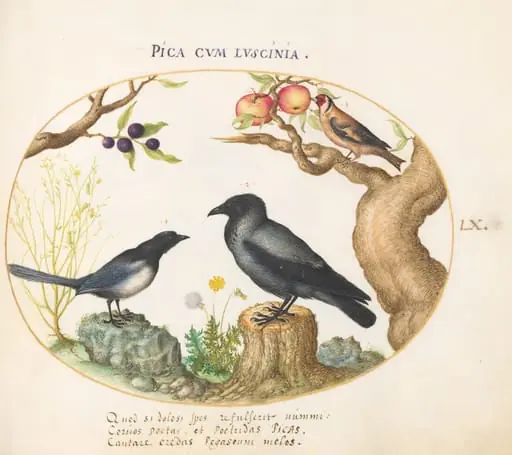 Plate 60: Magpie, Crow, and Goldfinch
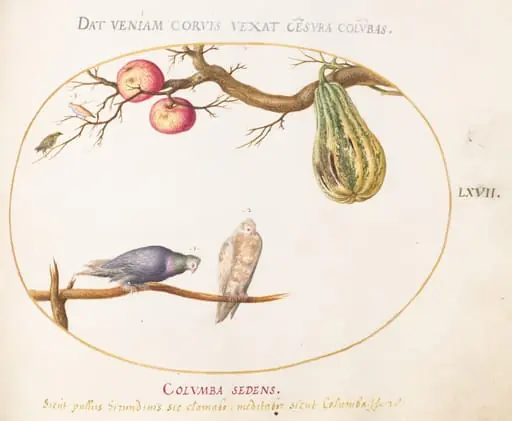 Plate 67: Two Doves beneath a Gourd and Apples
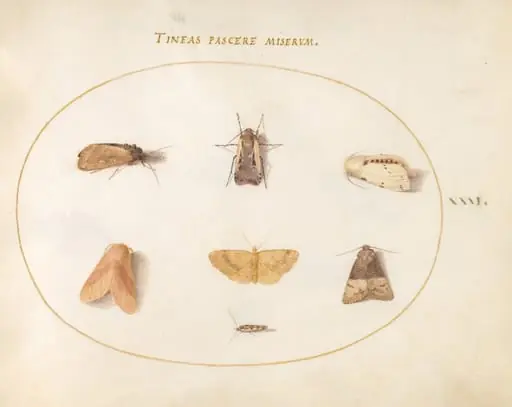 Plate 31: Seven Moths
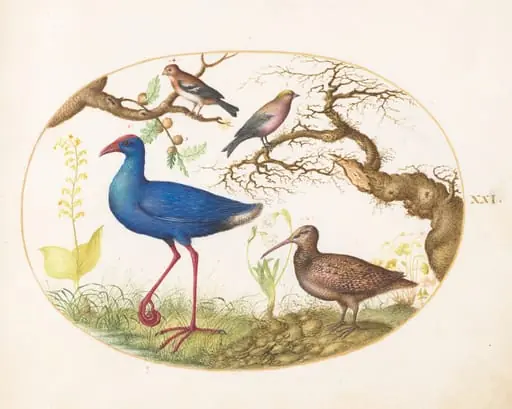 Plate 21: Swamp Hen and Woodcock with a Streaked Rosefinch, a Finch, and Oak Galls
- Plate 20: Sea Bream, Dentex, Sargo, and Other Fish
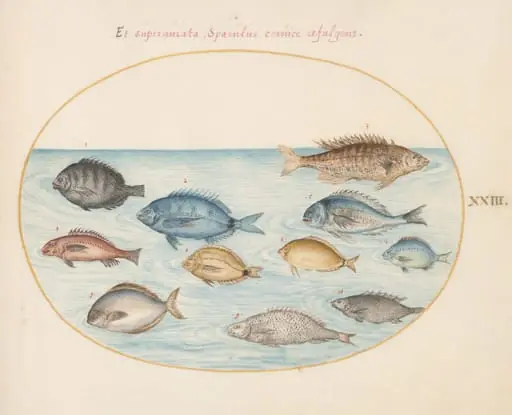 Plate 23: Bream(?) and Other Fish
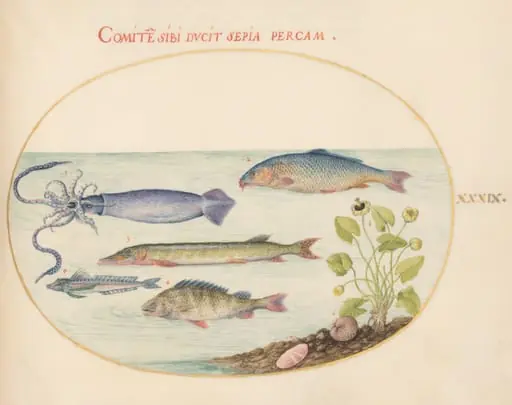 Plate 39: Squid, Gurnard, Pike, and Other Fish
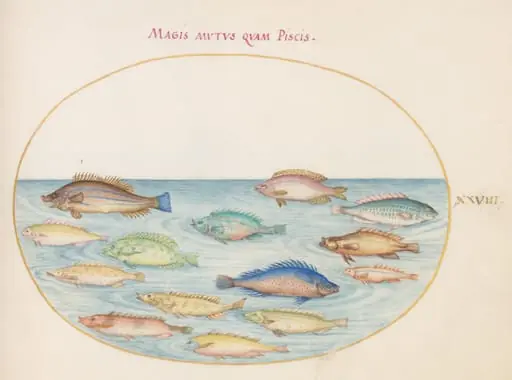 Plate 28: Sea Bream(?) and Other Fish
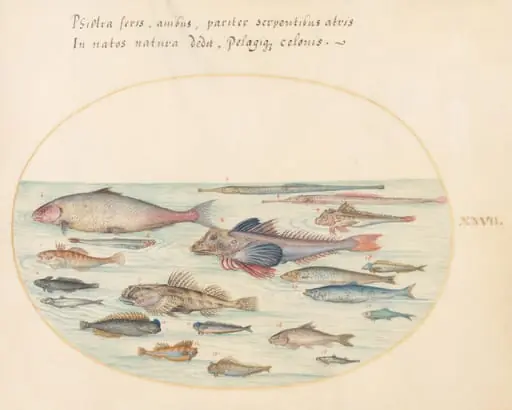 Plate 27: Blennies, Scorpion Fish, and Other Fish
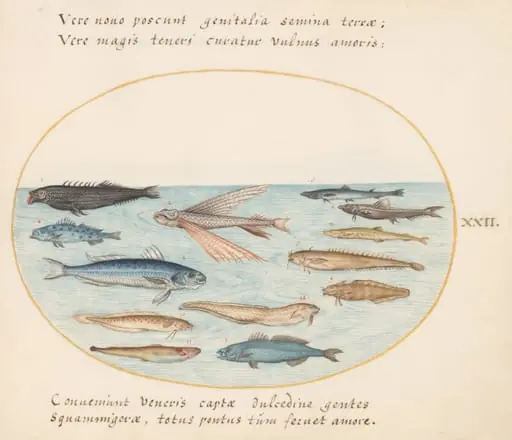 Plate 22: Mullet, Flying Fish, Eels, and Other Fish
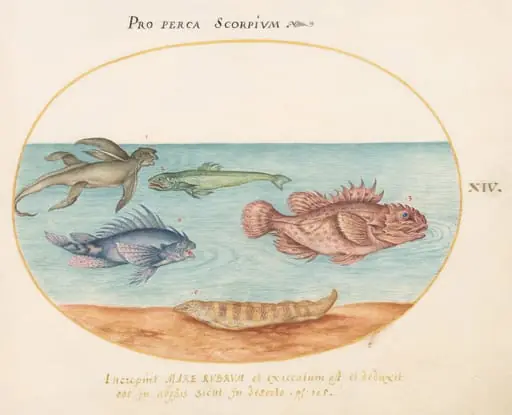 Plate 14: A "Sea Ape," Two Scorpion Fish, and Two Other Fish
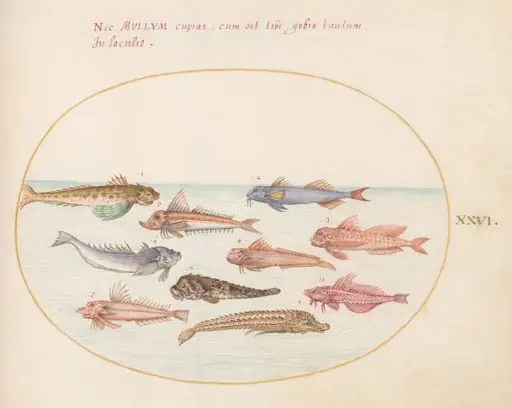 Plate 26: Gurnards, Dragonets, and Other Fish
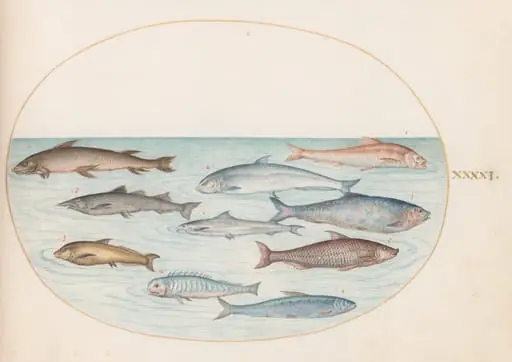 Plate 41: Whitefish(?) and Other Fish
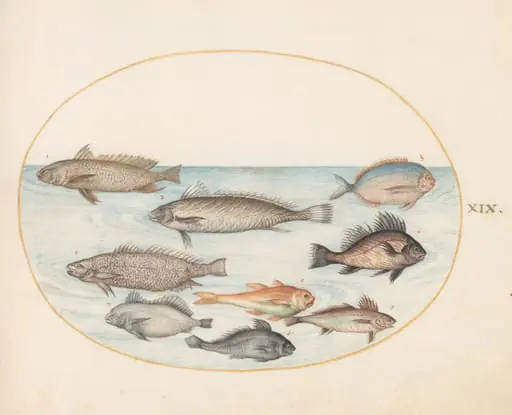 Plate 19: A Damselfish and Other Fish, Including Two "Coracinis"
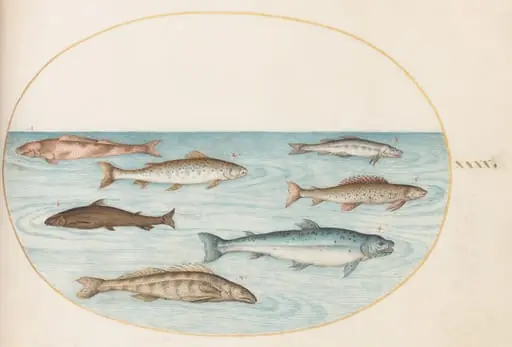 Plate 40: Salmon, Trout, and Freshwater(?) Fish
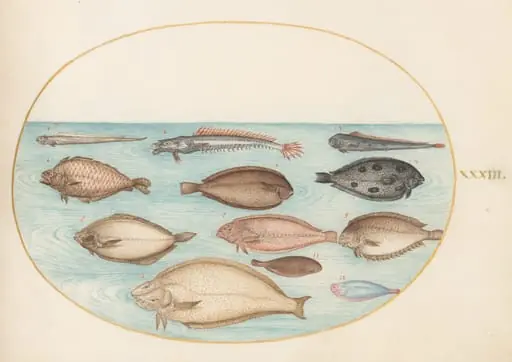 Plate 33: Sole and Other Flatfish with Bandfish(?)