Artwork
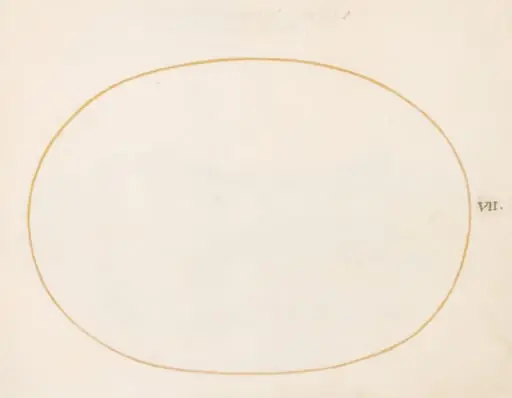
Plate 3: Empty Oval
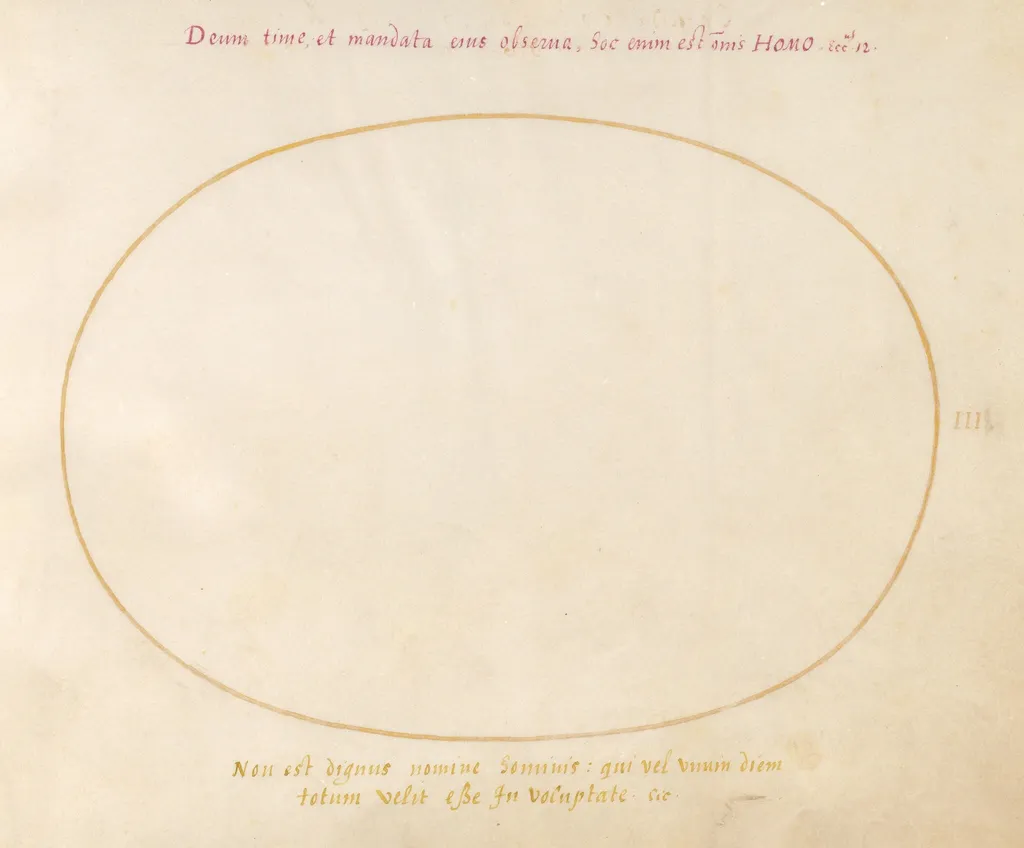
Plate 3: Empty Oval is a watercolor drawing by the Renaissance artist Joris Hoefnagel. It dates from 1594 and is held in the collection of the National Gallery of Art.
- Inscription
- Inscribed:Upper center in red ink: Deum time, et mandata eius observa, hoc enim est o[m]nis HOMO. Ecc[us] 12. (“Fear God, and keep his commandments: for this is all man.” Ecclesiastes 12:13) (Latin Vulgate Bible); center right in gold ink: III.; lower center in gold: Non est dignis nomine hominis: qui vel unum diem / totum velit esse in voluptate. Cic Facing page: Upper center in red ink: Conscidit me vulnere super vulnus: Irruit in me / quasi GIGAS.Job 16. (“He breaks me with wound upon wound, he runs upon me like a giant.” Job 16:15) (Latin Vulgate Bible); lower center in black ink: Ad subitas tracum volucres, nubemq[ue] sonoram, / PYGMEVS parnis currit bellator in armis: / Mox impar hosti, raptusq[ue] per Aera curius / unguibus, a saena fertur grue.
About this work
Overview
Created circa 1594, Plate 3: Empty Oval is a work by Joris Hoefnagel, a Flemish artist recognized for his contributions to natural history illustration and topographical representation. Executed in watercolor and gold paint on parchment, the piece exemplifies the transition from manuscript illumination to independent still-life compositions in Northern European art of the late Renaissance.
Subject & Meaning
The composition centers on an unadorned oval frame, a recurring motif in Hoefnagel’s ornamental designs. Rather than depicting a specific subject, the empty form invites interpretation as a meditation on absence, structure, or the potential for embellishment. Such minimalism contrasts with the artist’s typically detailed naturalistic studies, suggesting a deliberate exploration of negative space.
Technique & Style
Hoefnagel employed watercolor and gold pigment on parchment, materials associated with both manuscript illumination and early still-life traditions. The translucency of watercolor allowed for delicate layering, while gold paint introduced luminosity, a hallmark of Renaissance decorative arts. The restrained execution aligns with the period’s interest in precision and symbolic clarity.
History & Provenance
Dated to the mid-1590s, Plate 3: Empty Oval reflects Hoefnagel’s engagement with both scientific illustration and courtly patronage. As one of the last practitioners of manuscript illumination, his work bridges medieval traditions and emerging genres. The piece’s early ownership remains undocumented, though it likely circulated within collections valuing botanical and ornamental studies.
Context
During the late 16th century, Northern European artists increasingly turned to independent still-life subjects, departing from religious and allegorical themes.
During the late 16th century, Northern European artists increasingly turned to independent still-life subjects, departing from religious and allegorical themes. Hoefnagel’s work embodies this shift, merging empirical observation with decorative elegance. His designs also catered to the era’s fascination with cabinets of curiosities, where natural specimens and artistic renderings coexisted as objects of inquiry.
Legacy
Hoefnagel’s Empty Oval occupies a niche between manuscript illumination and the nascent still-life genre. Its technical refinement and conceptual simplicity influenced later artists exploring compositional boundaries. While not widely replicated, the work underscores the period’s experimentation with form, material, and the interplay between representation and abstraction.
Own this work as a print
Artist & collection

Artist
Joris Hoefnagel or Georg Hoefnagel (1542 – 24 July 1601) was a Flemish painter, printmaker, miniaturist, draftsman and merchant.

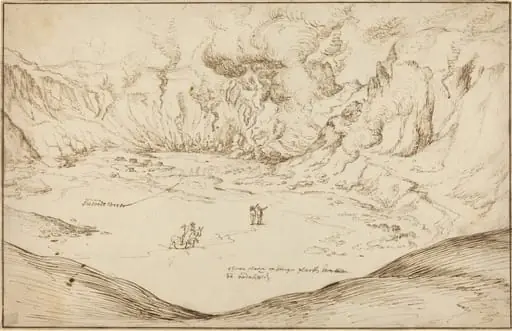 Forum Vulcani: The Hot Springs at Pozzuoli
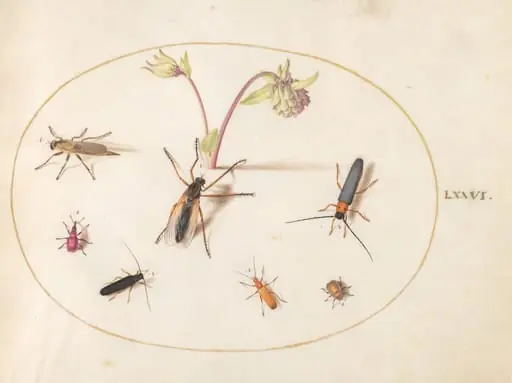 Plate 76: Insects with a Pink and Cream Columbine
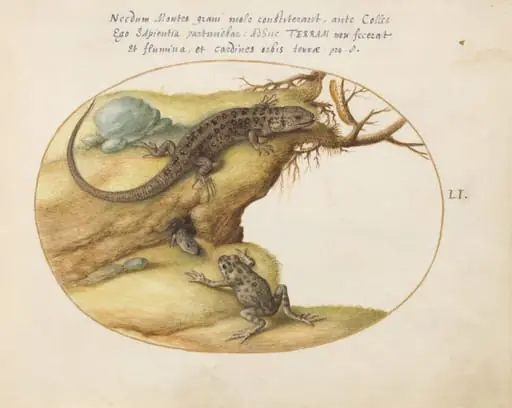 Plate 51: Two Sand Lizards, a Common Parsley Frog(?), and a Caterpillar
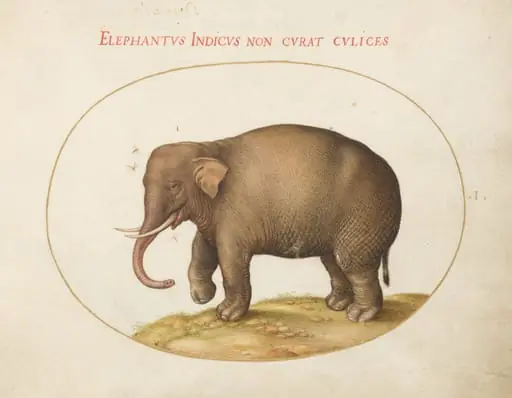 Plate 1: Elephant with Insects
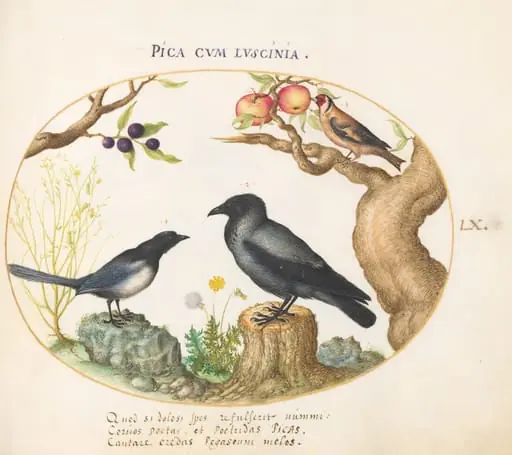 Plate 60: Magpie, Crow, and Goldfinch
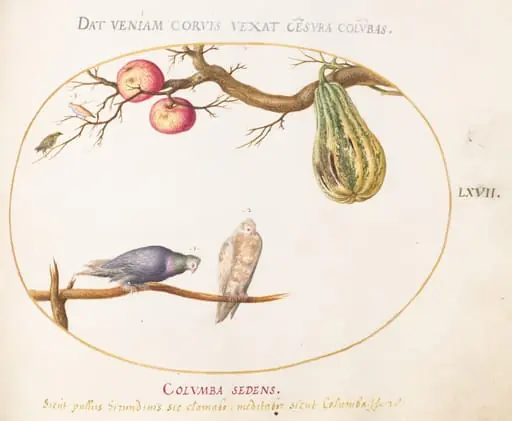 Plate 67: Two Doves beneath a Gourd and Apples
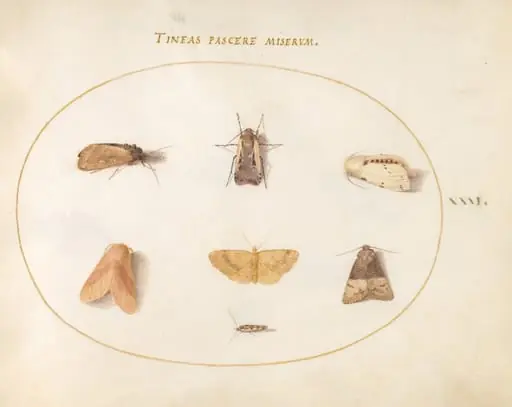 Plate 31: Seven Moths
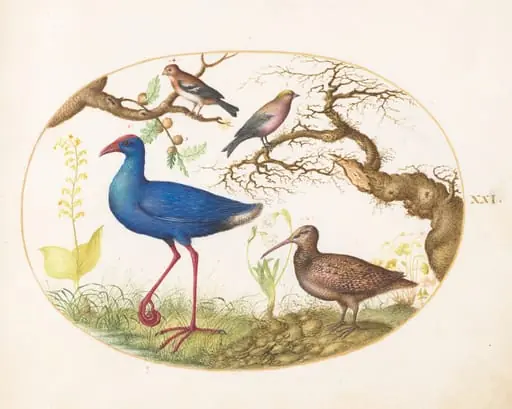 Plate 21: Swamp Hen and Woodcock with a Streaked Rosefinch, a Finch, and Oak Galls