Artwork
Plate 56: A Rosebud and a Disintegrating Pink Rose
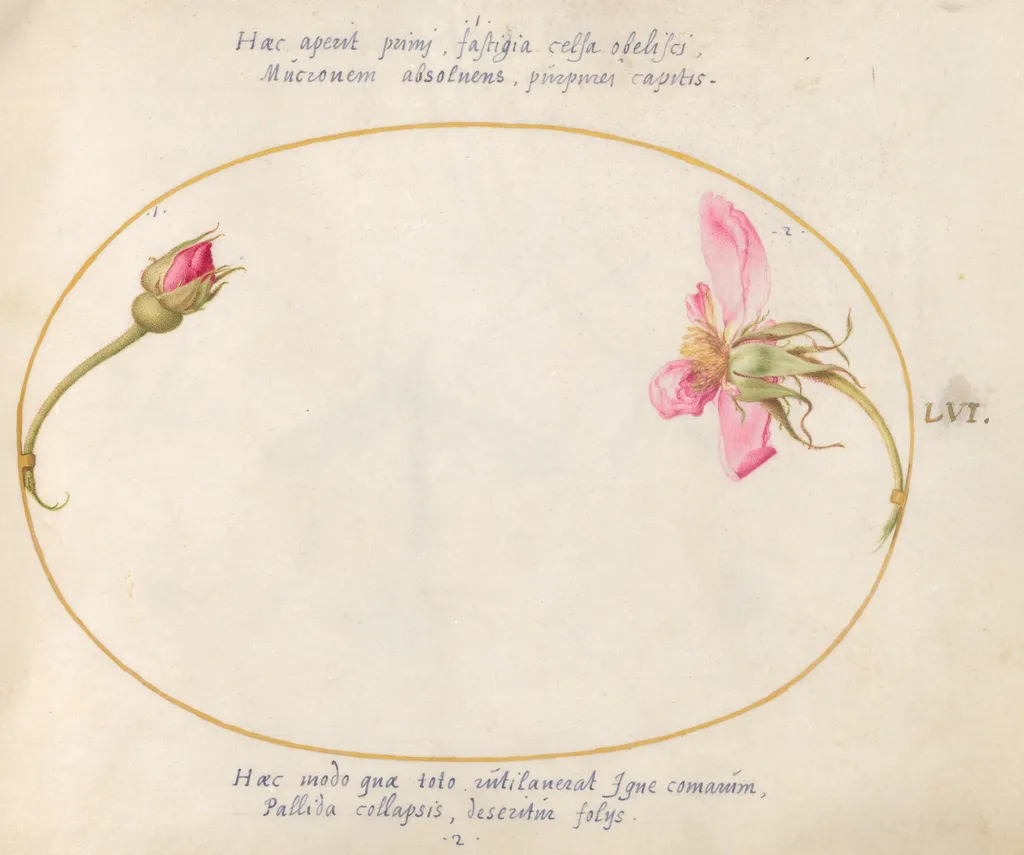
Plate 56: A Rosebud and a Disintegrating Pink Rose is a gouache drawing by the Renaissance artist Joris Hoefnagel. It dates from 1594 and is held in the collection of the National Gallery of Art. Created circa 1594, this small watercolor on parchment depicts two roses within a circular gold‑lined frame.
- Inscription
- Inscribed:Upper center in blue/black ink: .1. / Haec aperit primi, fastigia celsa obelisci, / Mucronem absolvens, purpurei capitis.; flowers in image numbered .1. and .2., in blue ink; center right in (gold?): LVI.; lower center in blue ink: Haec modo quae toto rutilanerat Igne comarum, / Pallida collapsis, deseritur folys. / .2. Facing page: Upper center in red/violet ink: Victrices lauros vel dat bellona catenas; / ut Rosa, sed tandem cervite cuncta cadunt.; lower center in brown ink: Praeterit illa dies, nescitur origo secundi, / An labor, an requies: sic transit gloria mundi.
About this work
Overview
Created circa 1594, this small watercolor on parchment depicts two roses within a circular gold‑lined frame. The left side shows a tight, unopened bud, while the right side presents a pink rose in decline, its petals drooping and some detached. The composition is accompanied by faint Latin verses at the top and bottom, rendered in a delicate hand.
Subject & Meaning
The work contrasts the stages of a rose’s life, juxtaposing nascent potential with inevitable decay. By pairing a bud with a wilting flower, the image invites contemplation of growth, fragility, and the passage of time, themes common in late‑Renaissance botanical studies.
Technique & Style
Executed in watercolor with subtle glazing, the artist builds colour through successive translucent layers, achieving soft tonal transitions. Gold paint outlines the circular border, lending a luminous quality that frames the botanical detail. Fine green and brown strokes render stems and leaves with a precise, almost scientific accuracy.
History & Provenance
The drawing is attributed to Joris Hoefnagel, a Flemish painter and miniaturist noted for natural‑history illustrations. As one of the later manuscript illuminators, Hoefnagel’s work marks a shift toward standalone floral still‑life paintings in northern Europe during the late sixteenth century.
Context
Hoefnagel’s interest in meticulous botanical representation aligns with contemporary scientific curiosity and the growing popularity of herbals. The inclusion of Latin poetry reflects the era’s practice of merging artistic beauty with scholarly commentary.
Own this work as a print
Artist & collection

Artist
Joris Hoefnagel or Georg Hoefnagel (1542 – 24 July 1601) was a Flemish painter, printmaker, miniaturist, draftsman and merchant.

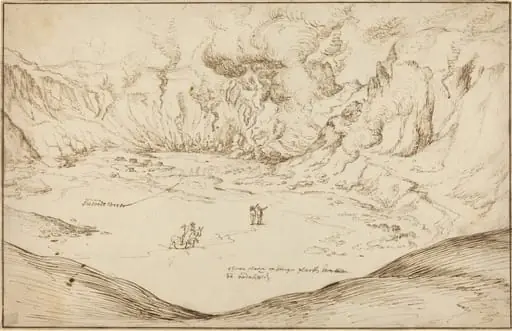 Forum Vulcani: The Hot Springs at Pozzuoli
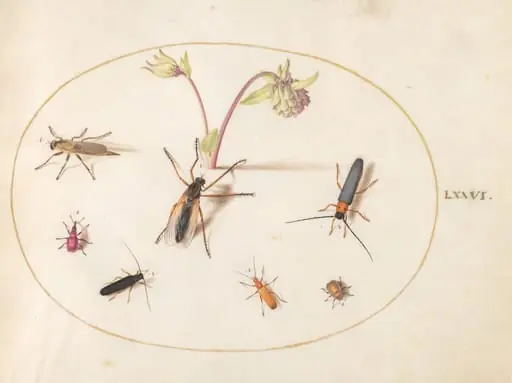 Plate 76: Insects with a Pink and Cream Columbine
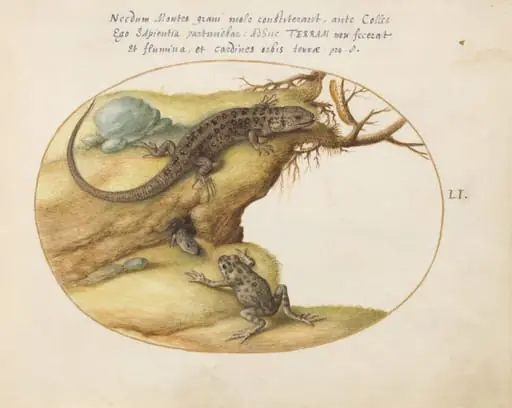 Plate 51: Two Sand Lizards, a Common Parsley Frog(?), and a Caterpillar
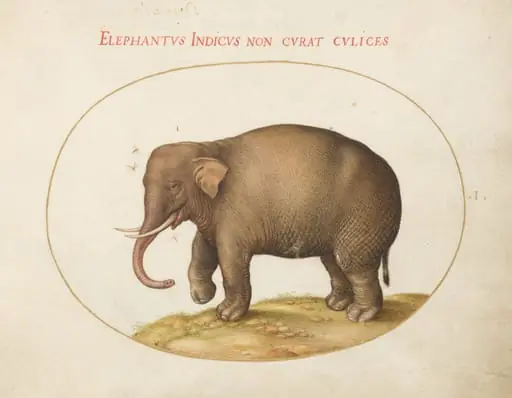 Plate 1: Elephant with Insects
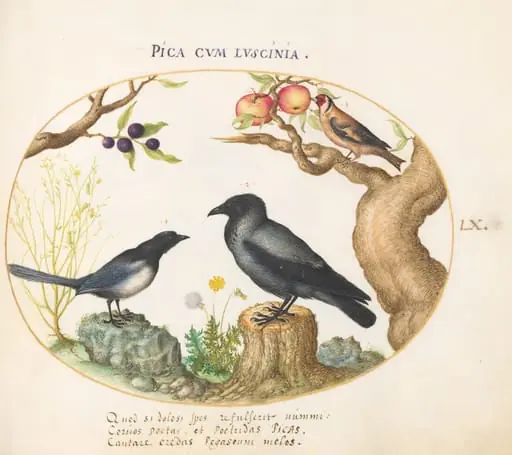 Plate 60: Magpie, Crow, and Goldfinch
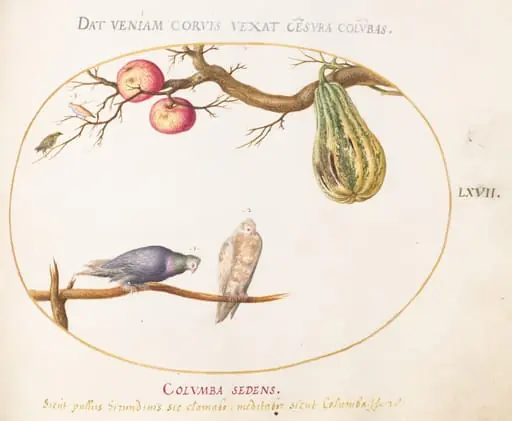 Plate 67: Two Doves beneath a Gourd and Apples
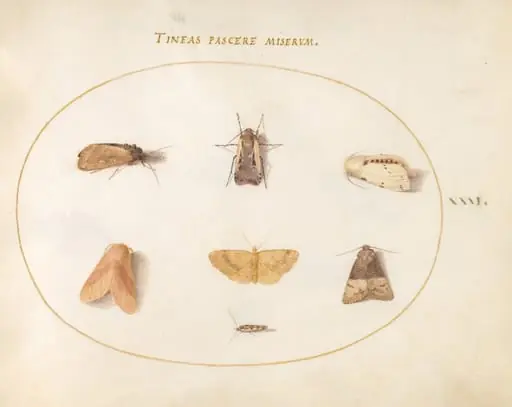 Plate 31: Seven Moths
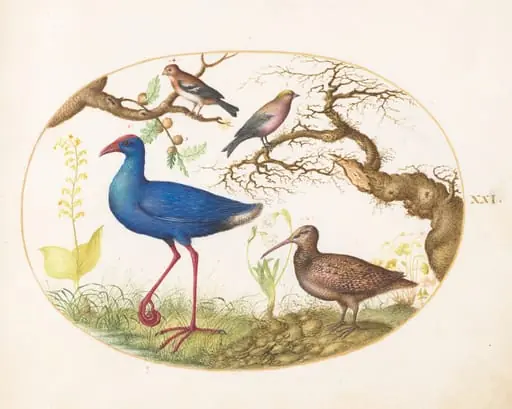 Plate 21: Swamp Hen and Woodcock with a Streaked Rosefinch, a Finch, and Oak Galls
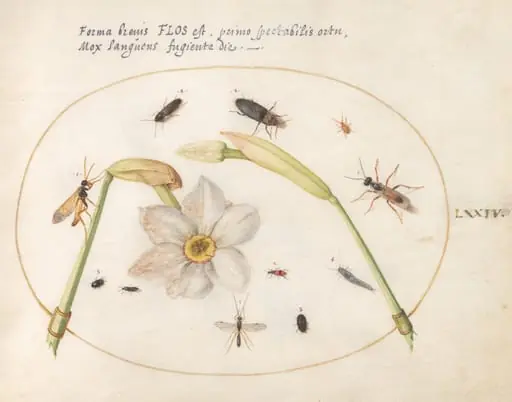 Plate 74: Insects with White Daffodils
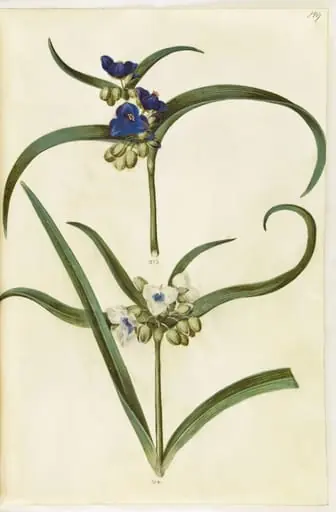 Tradescantia virginiana eller Tradescantia ohiensis (?) (blomsterjøde)
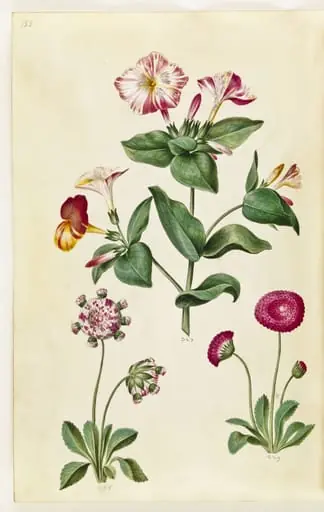 Mirabilis jalapa (vidunderblomst); Bellis perennis (almindelig tusindfryd)
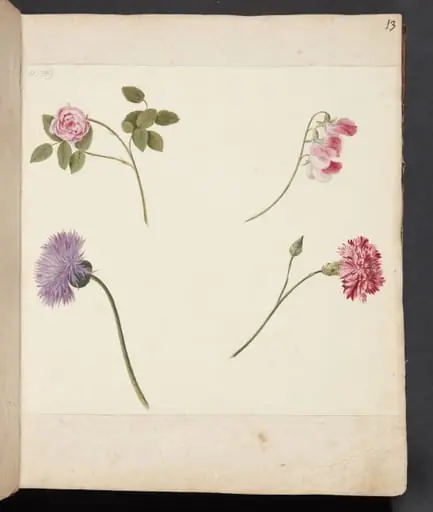 Studie af blomster
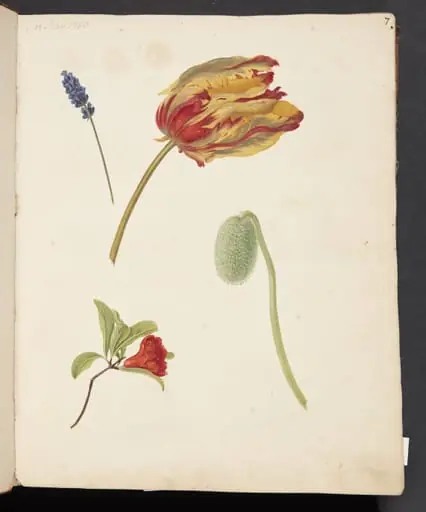 Studie af tulipan og andre blomster
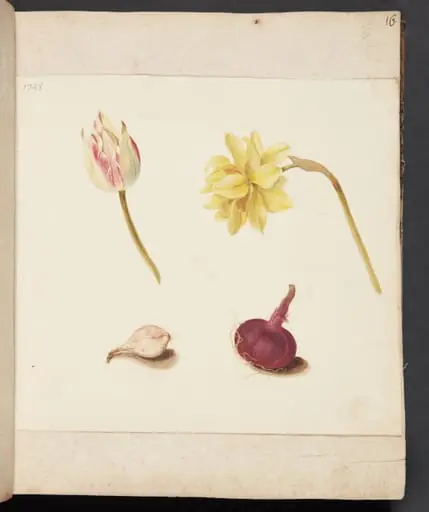 Studie af blomster og løg
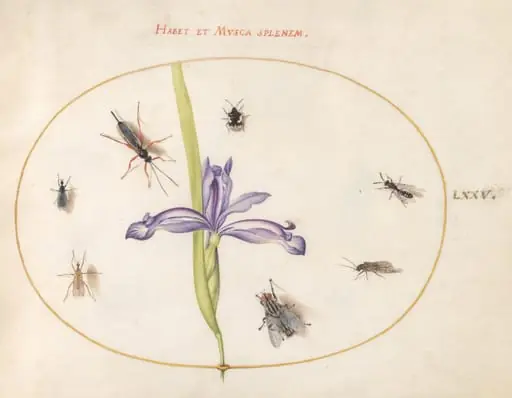 Plate 75: A Fly and Other Insects with an Iris
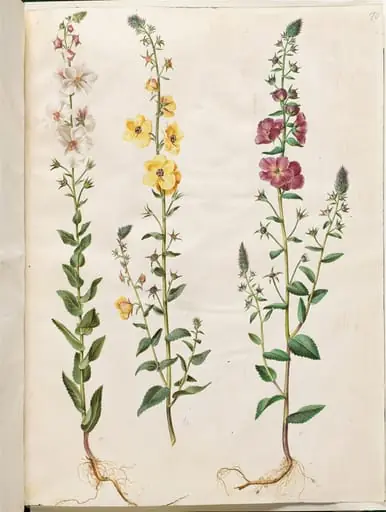 Verbascum blattaria (klase-kongelys); Verbascum phoeniceum (purpur-kongelys)