Artwork
Plate 34: Bird of Paradise with Mereganser(?) and Grebe(?)
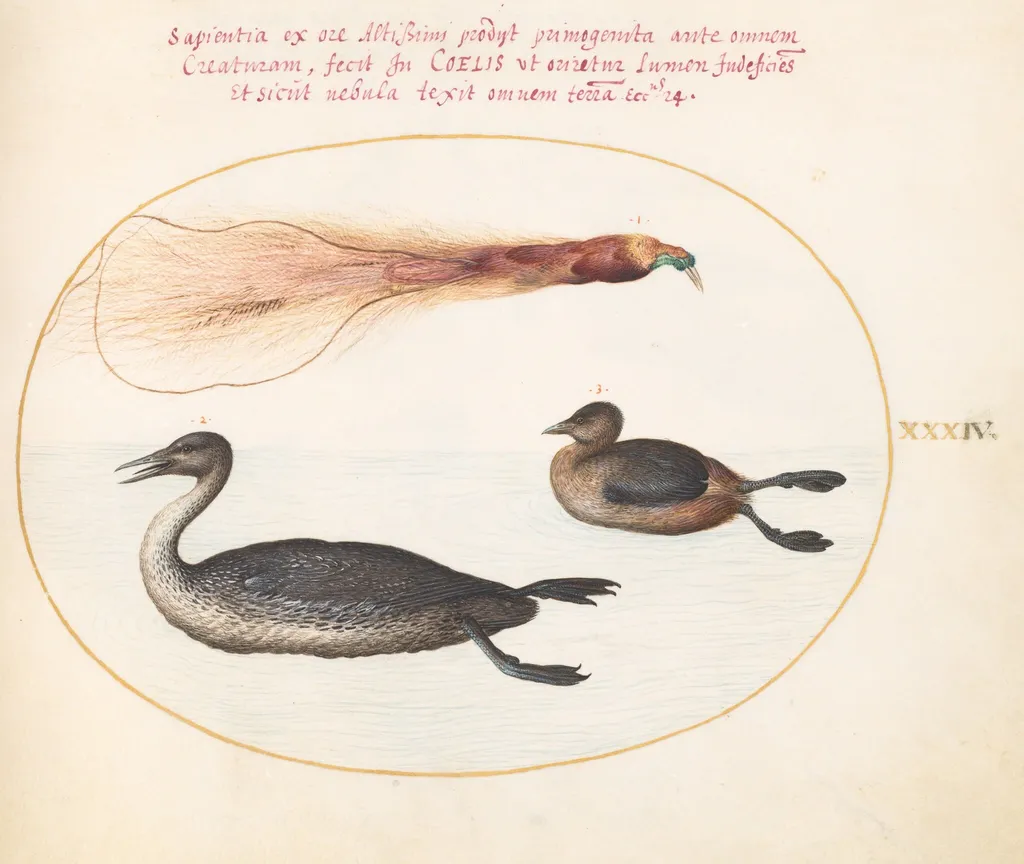
Plate 34: Bird of Paradise with Mereganser(?) and Grebe(?) is a gouache drawing by the Renaissance artist Joris Hoefnagel. It dates from 1594 and is held in the collection of the National Gallery of Art.
- Inscription
- Inscribed:Upper center in red/violet ink: Sapientia ex ore Altissimi prodyt primogenita ante omnem / Creaturam, fecit In COELIS ut oriretur lumen Indeficie[n]s / Et sicut nebula texit omnem terra[m] Ecc[us] 24. (“Wisdom came forth from the mouth of the most high, the firstborn before all creatures. And caused an unfailing light to rise in the heavens and cover all the land like a mist.” Ecclesiasticus 24:5-6) (Latin Vulgate Bible); center right in (gold?): XXXIV.; birds in image numbered .1., .2., and .3., in red ink Facing page: Upper center in black ink: Nam prius incipient turres vitare columbae, / Aiitra f[a]er[a]e, pecudes gramina, Mergus aquas. / Quam male Sepr[a]estet Veteri grecinus amico.; Lower center in black ink: Aequor amat, nomenq[ue] manet, quia mergitur illi.
About this work
Overview
Executed with precision, it depicts three waterfowl within a circular frame, combining decorative elements with observational detail.
Created around 1594, this watercolor and gold-painted drawing on parchment is one of Joris Hoefnagel’s natural history studies. Executed with precision, it depicts three waterfowl within a circular frame, combining decorative elements with observational detail. The work reflects the transition from medieval manuscript illumination to early modern naturalism, marking Hoefnagel as a key figure in the evolution of scientific illustration in northern Europe.
Subject & Meaning
The central figure is a bird of paradise, distinguished by its vivid red plumage and elongated tail feathers, rarely seen in Europe and likely based on imported specimens or descriptions. Flanking it are a merganser and a grebe, both waterbirds rendered with anatomical care. The grouping suggests a comparative study of avian diversity, emphasizing exoticism alongside familiar species, possibly to convey the breadth of the natural world as understood through global exchange.
Technique & Style
Hoefnagel employed fine watercolor washes and meticulous brushwork to capture feather texture and color variation, enhanced by delicate gold leaf outlining the circular composition. The parchment surface allowed for luminous effects, while the restrained palette highlights the contrast between the radiant bird of paradise and the muted tones of the waterfowl. This technique merges artistic refinement with a documentary impulse, characteristic of late Renaissance naturalist illustration.
History & Provenance
The plate likely originated as part of a larger, unpublished manuscript commissioned by a European collector or scholar interested in natural curiosities. Hoefnagel’s work was circulated among intellectual circles, influencing later naturalists. Though the full manuscript’s fate is uncertain, surviving sheets like this one were preserved in private collections and eventually entered institutional holdings, valued for their historical and scientific significance.
Context
In the late 16th century, European interest in global biodiversity surged due to expanding trade and exploration. Hoefnagel’s illustrations responded to this curiosity, translating distant specimens into accessible visual records. His work bridged the traditions of medieval illumination and emerging empirical science, predating the formalization of zoology and offering a visual language for natural history before the advent of printed encyclopedias.
Legacy
Hoefnagel’s detailed avian studies influenced subsequent generations of naturalists and illustrators, contributing to the development of scientific drawing as a discipline. His integration of aesthetic precision with biological accuracy helped shape how nature was visually documented in Europe. Though not widely published in his lifetime, his manuscripts became reference points for later works in ornithology and botanical illustration.
Own this work as a print
Artist & collection

Artist
Joris Hoefnagel or Georg Hoefnagel (1542 – 24 July 1601) was a Flemish painter, printmaker, miniaturist, draftsman and merchant.

 Forum Vulcani: The Hot Springs at Pozzuoli
 Plate 76: Insects with a Pink and Cream Columbine
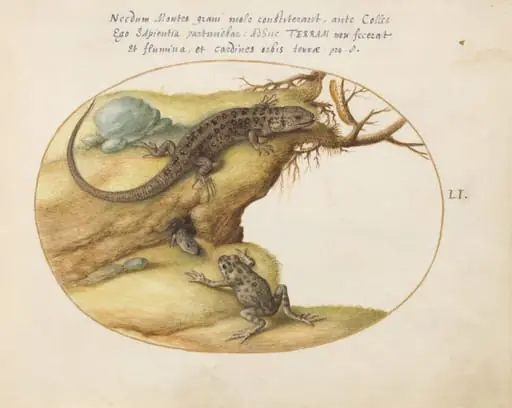 Plate 51: Two Sand Lizards, a Common Parsley Frog(?), and a Caterpillar
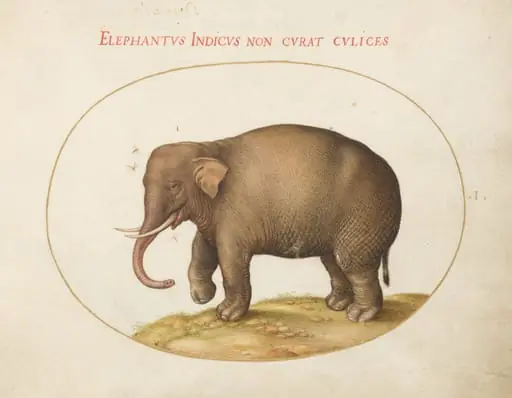 Plate 1: Elephant with Insects
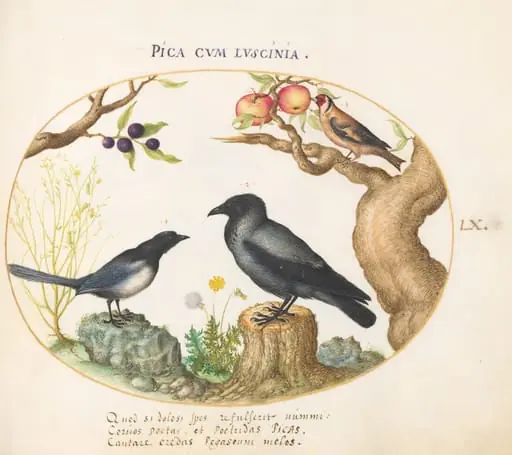 Plate 60: Magpie, Crow, and Goldfinch
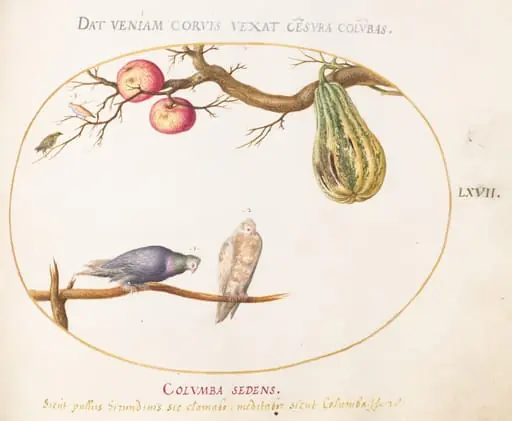 Plate 67: Two Doves beneath a Gourd and Apples
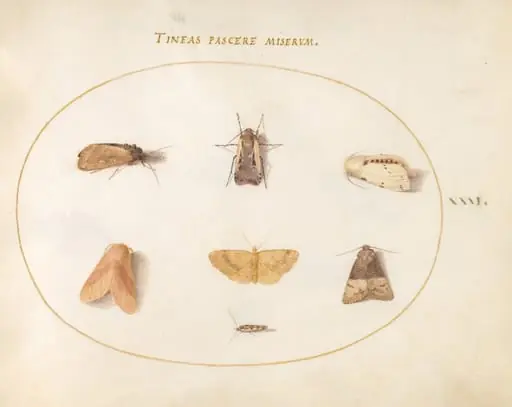 Plate 31: Seven Moths
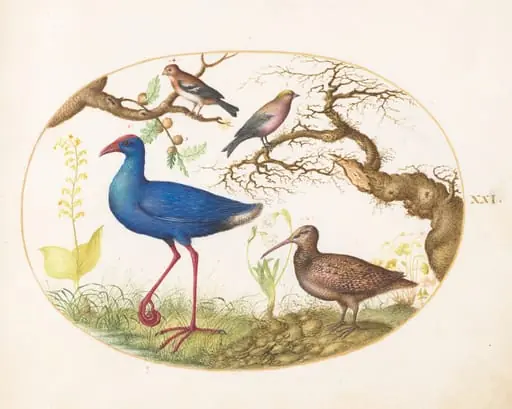 Plate 21: Swamp Hen and Woodcock with a Streaked Rosefinch, a Finch, and Oak Galls
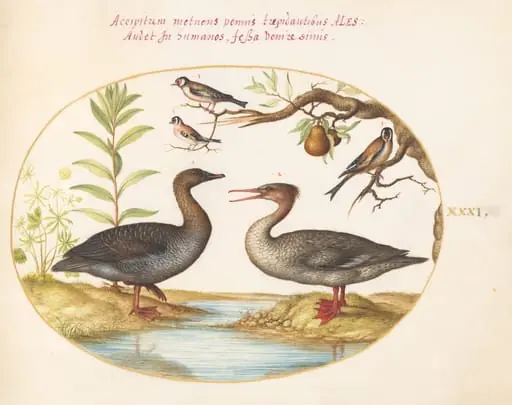 Plate 31: Duck, Merganser, and Three Goldfinches
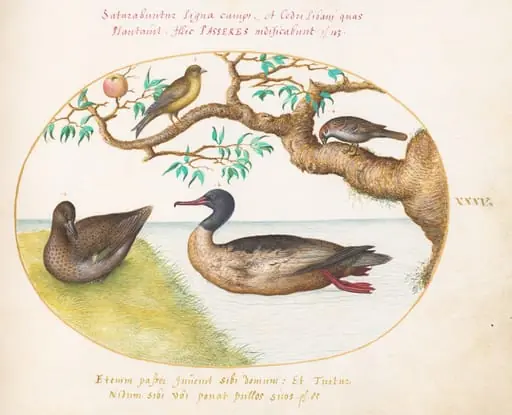 Plate 35: Female Green-Winged Teal, Red-Breasted Merganser(?), Sparrow, and a Greenfinch(?)
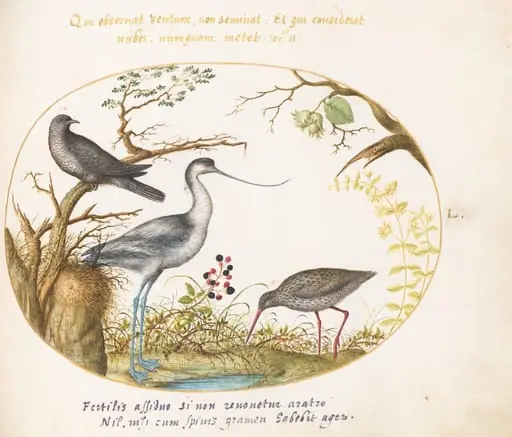 Plate 50: An Avocet with Two Other Birds
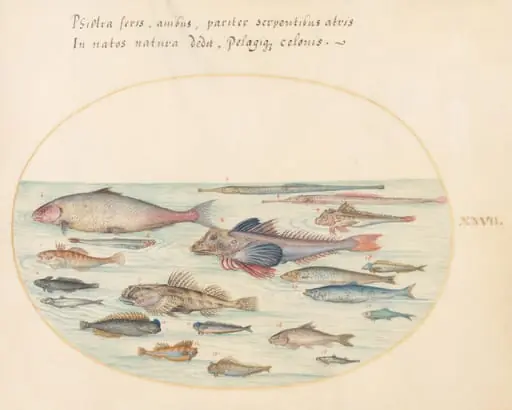 Plate 27: Blennies, Scorpion Fish, and Other Fish
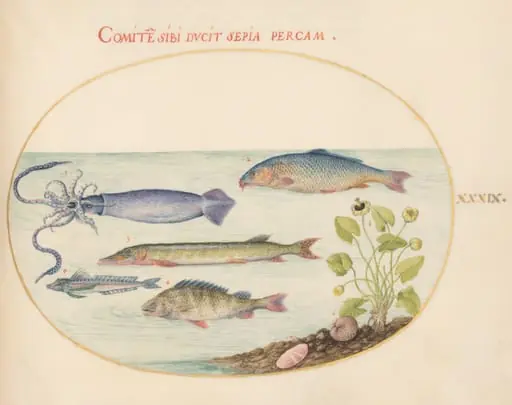 Plate 39: Squid, Gurnard, Pike, and Other Fish
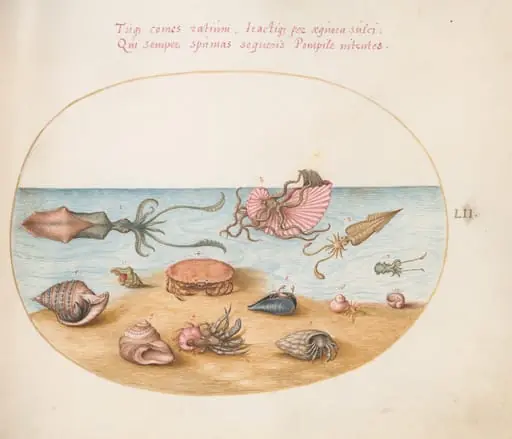 Plate 52: An Argonaut, Squid, Hermit Crabs, Shells, and a Crab
 Plate 38: Merganser with Two Other Waterfowl and a Garland of Melons and Gourds
 Plate 45: Spotted Nutcracker and Shore Birds
 Plate 26: Gurnards, Dragonets, and Other Fish