Artwork
Plate 47: Nine Crabs
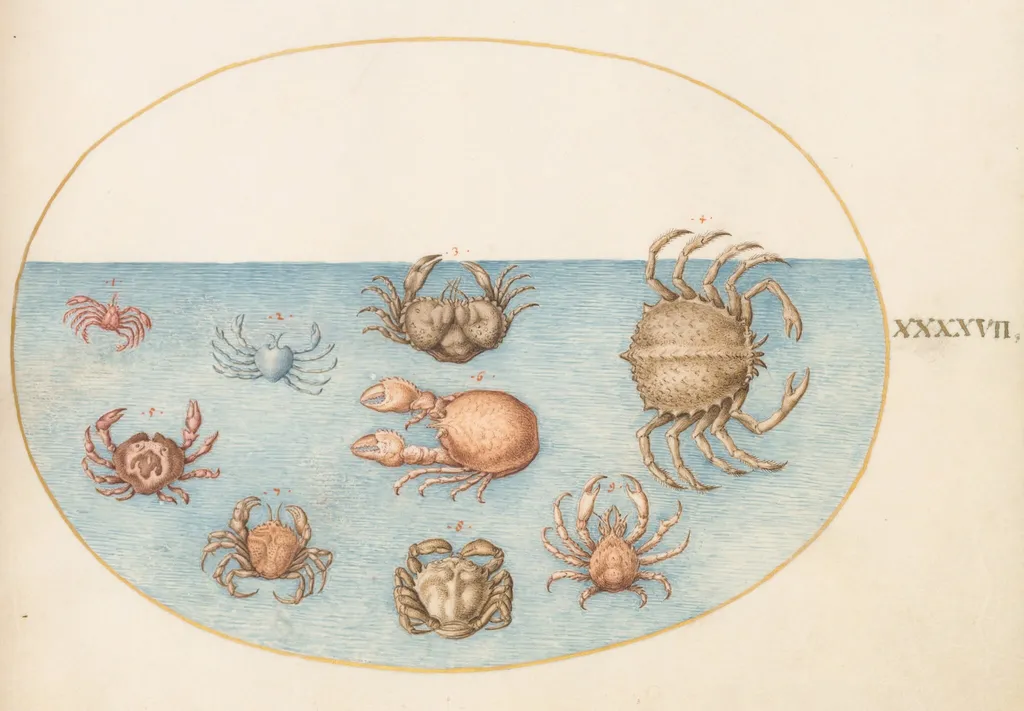
Plate 47: Nine Crabs is a gouache drawing by the Renaissance artist Joris Hoefnagel. It dates from 1594 and is held in the collection of the National Gallery of Art.
- Inscription
- Inscribed:Crustaceans in image numbered .1., .2., .3, .4., .5., .6., .7., .8., and .9., in red ink; center right in brown ink: XXXXVII. Facing page: upper center in black ink: Quid folia arboribus, pleno quid sydera Coelo, / In freta collectas, alta quid addis aquas?; lower center in red ink: Dominus faciet homines sicut pisces maris: / et quasi reptile non habens principem.habcuc.1. (“The Lord makes men as the fishes of the sea and as the creeping things that have no ruler.” Habakkuk 1:14) (Latin Vulgate Bible)
About this work
Overview
Plate 47: Nine Crabs is a watercolor and gold paint drawing on parchment created by Joris Hoefnagel around 1594. It showcases the artist's meticulous rendering of natural subjects.
Subject & Meaning
The drawing depicts nine crabs of varying sizes and orientations within a blue oval pool, surrounded by a gold border. The crabs are carefully detailed, conveying a sense of movement and diversity.
Technique & Style
Hoefnagel employed watercolor and gold paint to achieve a high level of detail and visual contrast. The use of these mediums reflects his background in manuscript illumination and natural history illustration.
History & Provenance
Joris Hoefnagel, a Flemish artist with a mercantile background, contributed to the development of topographical drawing and floral still-life as a genre in northern Europe. His work on Plate 47: Nine Crabs exemplifies his detailed and scientific approach to natural subjects.
Own this work as a print
Artist & collection

Artist
Joris Hoefnagel or Georg Hoefnagel (1542 – 24 July 1601) was a Flemish painter, printmaker, miniaturist, draftsman and merchant.

 Forum Vulcani: The Hot Springs at Pozzuoli
 Plate 76: Insects with a Pink and Cream Columbine
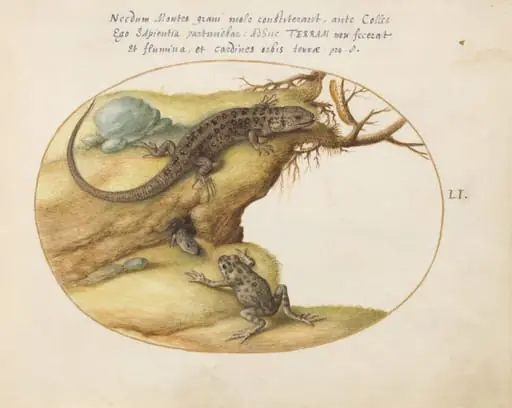 Plate 51: Two Sand Lizards, a Common Parsley Frog(?), and a Caterpillar
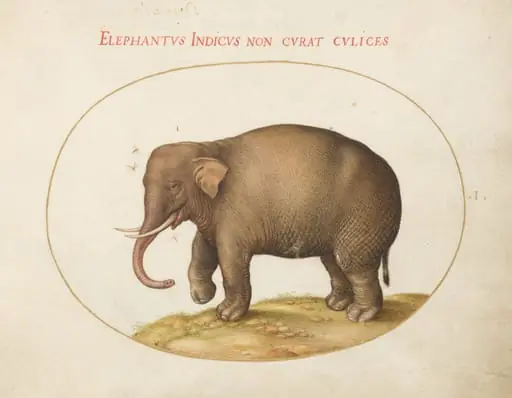 Plate 1: Elephant with Insects
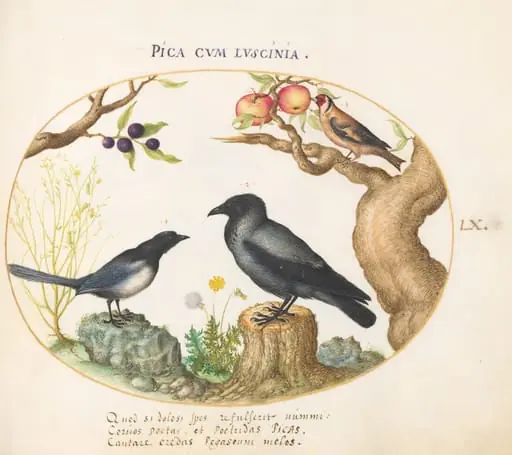 Plate 60: Magpie, Crow, and Goldfinch
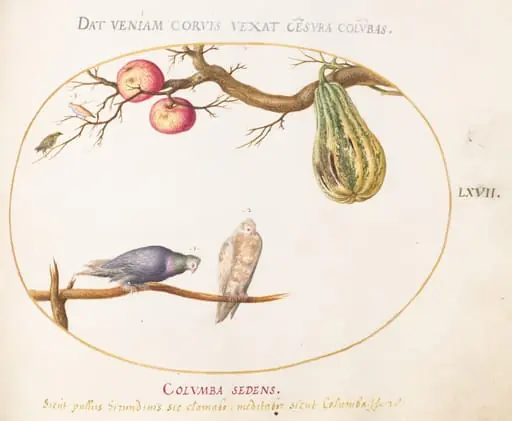 Plate 67: Two Doves beneath a Gourd and Apples
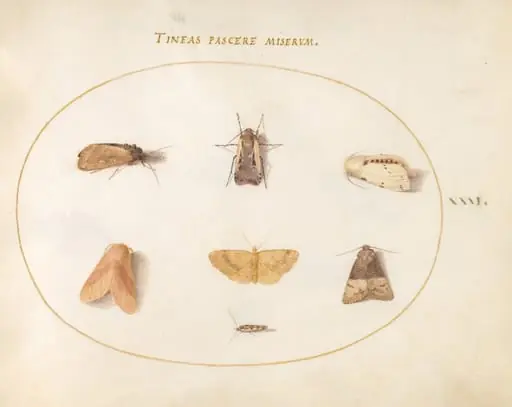 Plate 31: Seven Moths
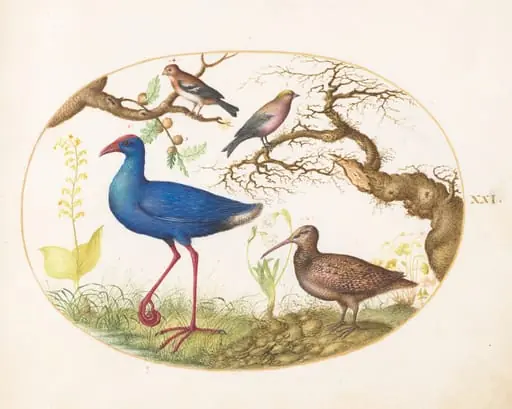 Plate 21: Swamp Hen and Woodcock with a Streaked Rosefinch, a Finch, and Oak Galls
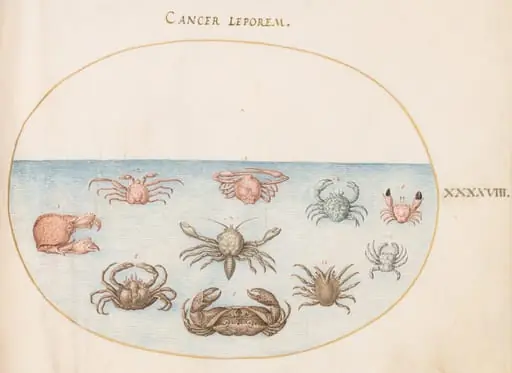 Plate 48: Ten Crabs
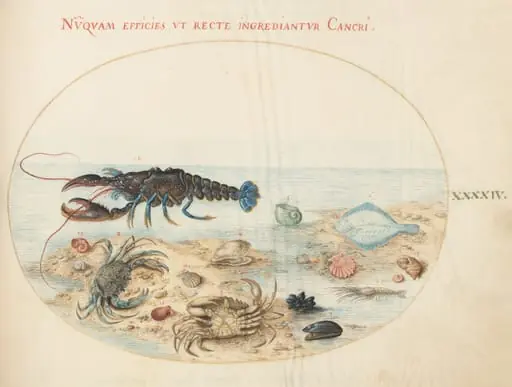 Plate 44: Lobster, Two Crabs, Scallop Shells, and Other Sea Life
 Plate 46: Two Crabs with Seashells
 Plate 52: An Argonaut, Squid, Hermit Crabs, Shells, and a Crab
 Plate 49: Mantis Shrimp and the Claw of a European Crayfish
 Plate 39: Squid, Gurnard, Pike, and Other Fish
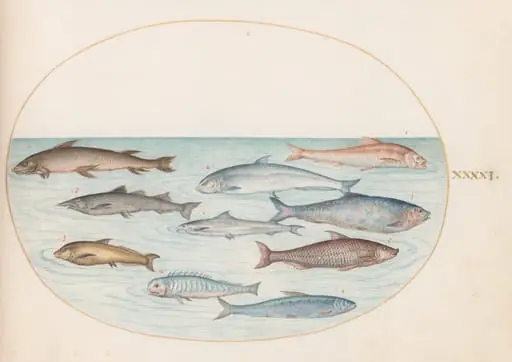 Plate 41: Whitefish(?) and Other Fish
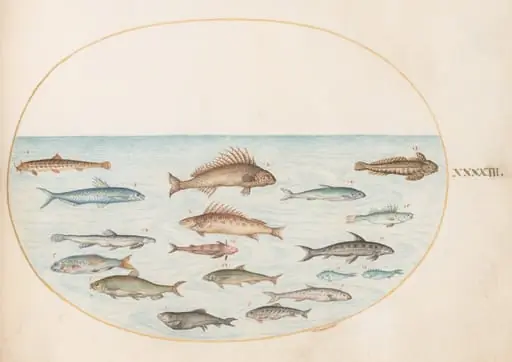 Plate 43: Fifteen Fish
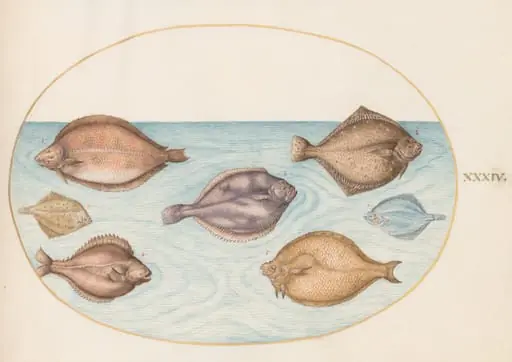 Plate 34: Seven Flatfish