Artwork
Plate 75: A Fly and Other Insects with an Iris
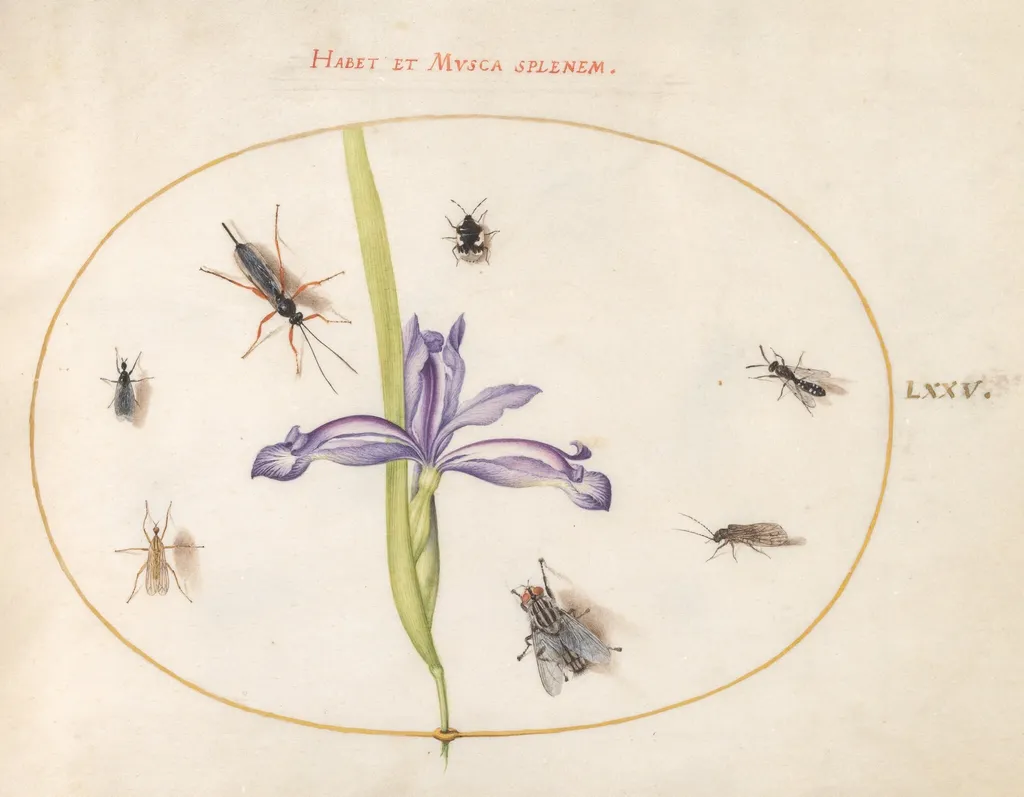
Plate 75: A Fly and Other Insects with an Iris is a gouache drawing by the Renaissance artist Joris Hoefnagel. It dates from 1594 and is held in the collection of the National Gallery of Art.
- Inscription
- Inscribed:Upper center in red ink: HABET ET MVSCA SPLENEM. (“The fly also has a spleen (i.e, for laughing).” Erasmus,_ Adages_, 3.5.7) (trans. Vignau-Wilberg 1994, 62); center right in brown ink: LXXV. Facing page: Upper center in red ink: Undiq[ue] Musca suas fert alas, undiq[ue] vivit: / Musca per Hispaniam, Musca su[per][pra] Italiam.
About this work
Overview
Created circa 1594 by Joris Hoefnagel, this small work combines watercolor and gold pigment on a sheet of parchment. The composition centers on a purple iris with a slender green stalk and three lance‑shaped leaves, encircled by a thin golden rim that separates the botanical subject from a light‑toned background.
Subject & Meaning
Six diminutive insects, identified as flies and beetles, are positioned around the iris, their placement suggesting a study of natural detail rather than narrative content. A Latin inscription above the scene, “Habet et Musca splenem,” translates to “the fly has a spleen,” an enigmatic remark that may reference contemporary anatomical curiosity or a symbolic observation of the insect’s anatomy.
Technique & Style
Hoefnagel employed transparent watercolor washes layered to achieve depth, a method known as glazing, while the gold paint outlines and accents the border and select details, providing a luminous contrast. The delicate rendering of the iris petals and insect anatomy reflects the artist’s meticulous observation, characteristic of late‑sixteenth‑century natural‑history illustration.
History & Provenance
As one of the final practitioners of manuscript illumination, Hoefnagel’s work bridges the decorative manuscript tradition and the emerging independent still‑life genre in Northern Europe. His precise botanical and entomological studies, such as this plate, contributed to the period’s growing interest in scientifically informed art.
Context
The piece belongs to a broader corpus of Hoefnagel’s illustrated manuscripts, which combined artistic elegance with empirical observation. Produced at the close of the Renaissance, it reflects the era’s fascination with cataloguing nature, a precursor to the more systematic natural‑history publications of the seventeenth century.
Own this work as a print
Artist & collection

Artist
Joris Hoefnagel or Georg Hoefnagel (1542 – 24 July 1601) was a Flemish painter, printmaker, miniaturist, draftsman and merchant.

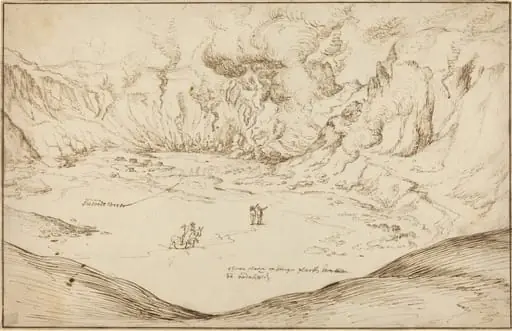 Forum Vulcani: The Hot Springs at Pozzuoli
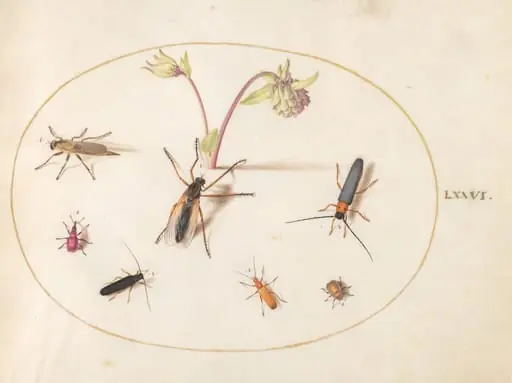 Plate 76: Insects with a Pink and Cream Columbine
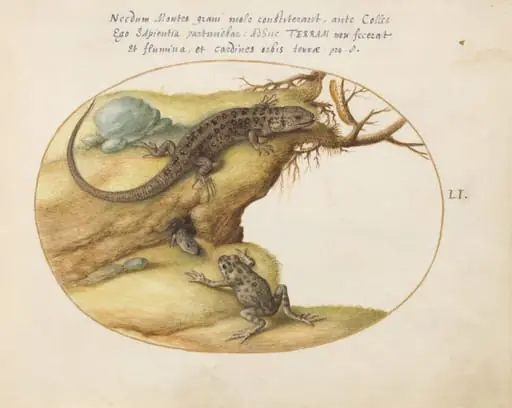 Plate 51: Two Sand Lizards, a Common Parsley Frog(?), and a Caterpillar
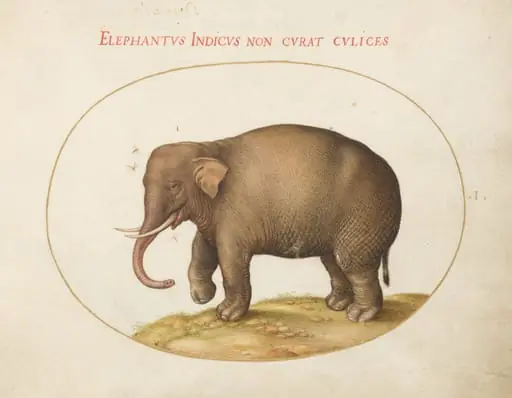 Plate 1: Elephant with Insects
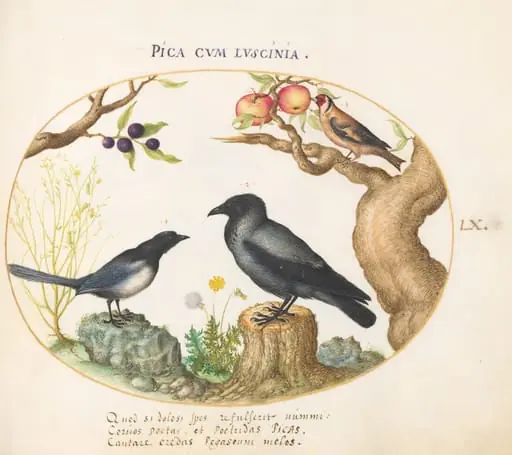 Plate 60: Magpie, Crow, and Goldfinch
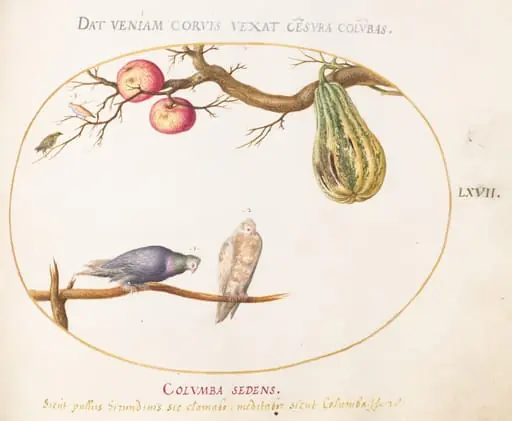 Plate 67: Two Doves beneath a Gourd and Apples
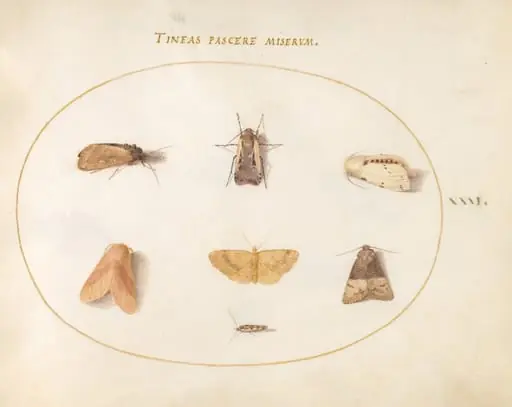 Plate 31: Seven Moths
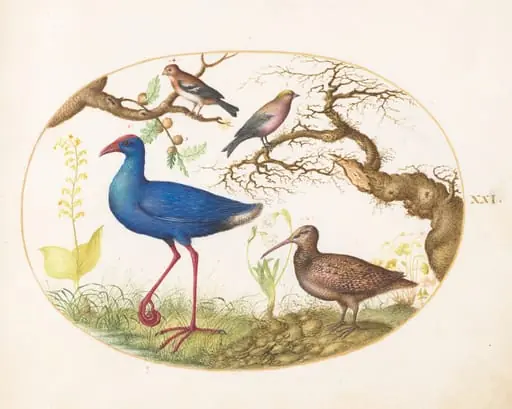 Plate 21: Swamp Hen and Woodcock with a Streaked Rosefinch, a Finch, and Oak Galls
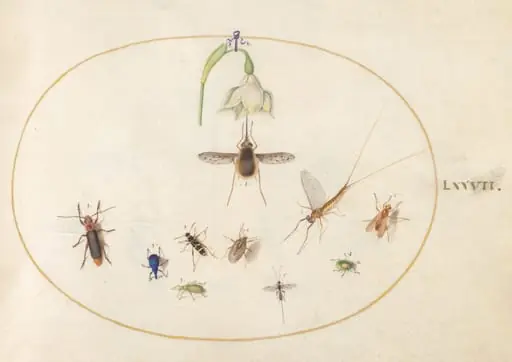
- Plate 77: Dotted Bee Fly with a White Flower, a Mayfly, a Blue Weevil, and Other Insects
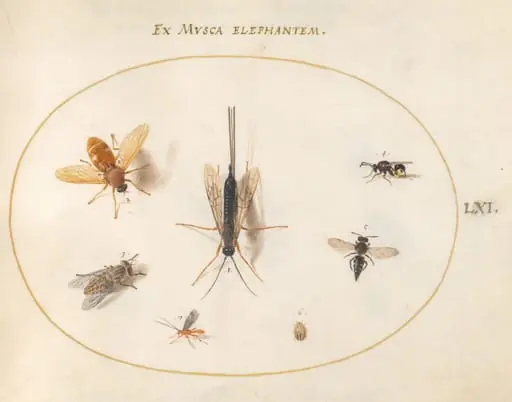 Plate 61: Seven Insects, Including Flies
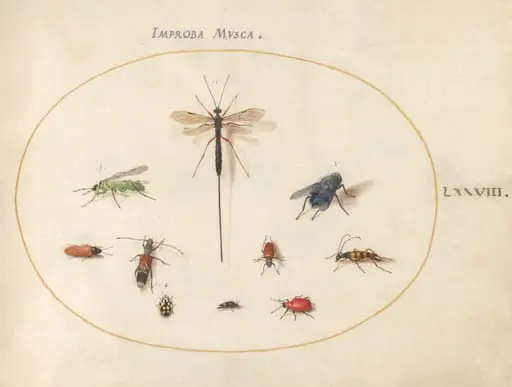 Plate 78: Ten Insects, Including a Blue Fly
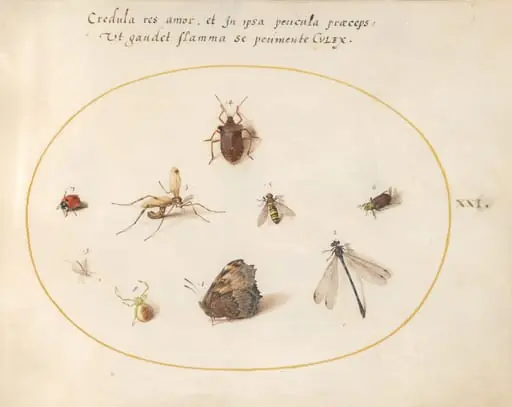 Plate 21: A Butterfly with a Dragonfly, a Ladybug, and Five other Insects
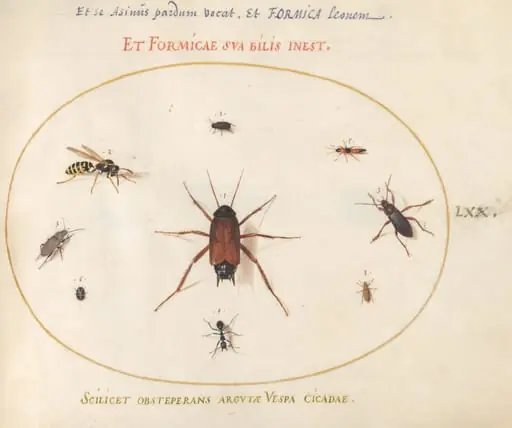 Plate 70: A Roach Surrounded by Insects
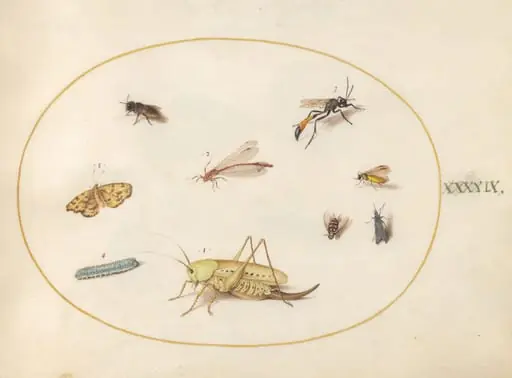 Plate 49: A Grasshopper, a Caterpillar, a Butterfly, a Moth, and Other Insects
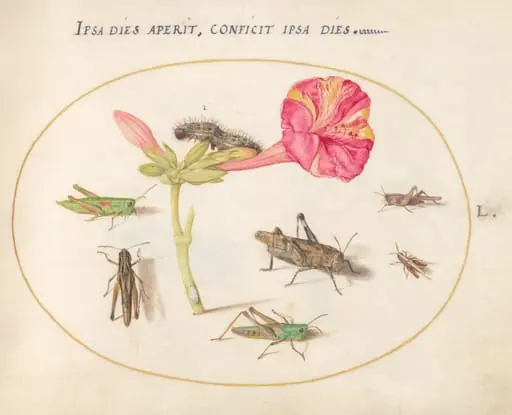 Plate 50: Grasshoppers, a Caterpillar, and a Scale Insect with a Four O'Clock Flower
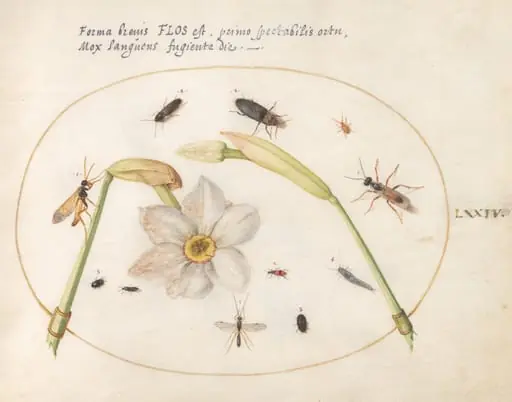 Plate 74: Insects with White Daffodils
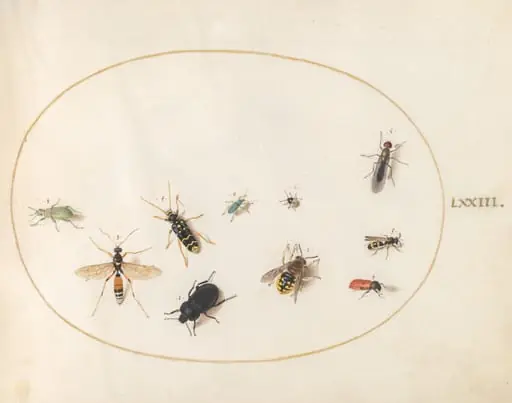 Plate 73: Ten Insects
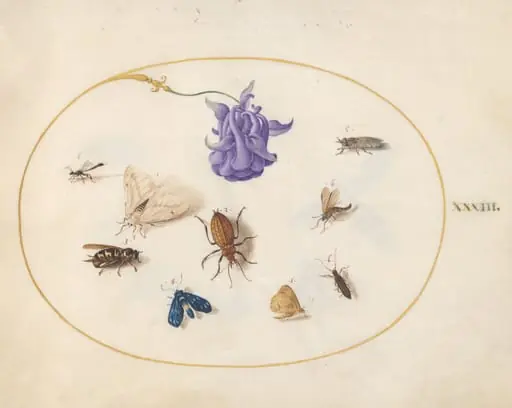 Plate 33: Moth and Butterfly with other Insects and a Columbine Flower
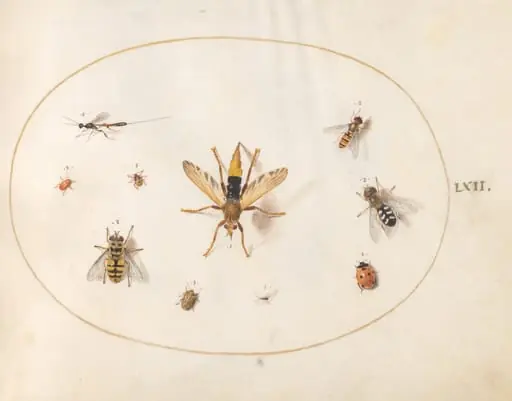 Plate 62: Ten Insects
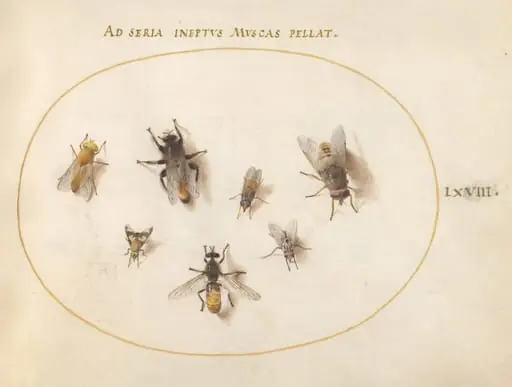 Plate 68: Seven Bees and Flies