Artwork
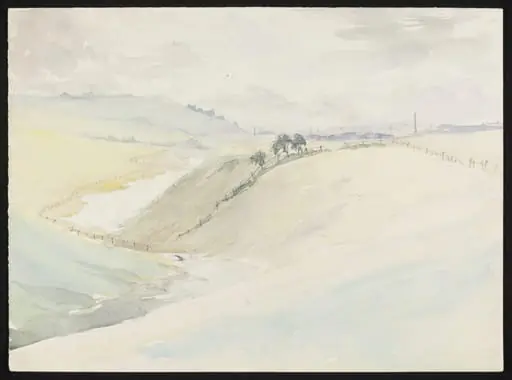
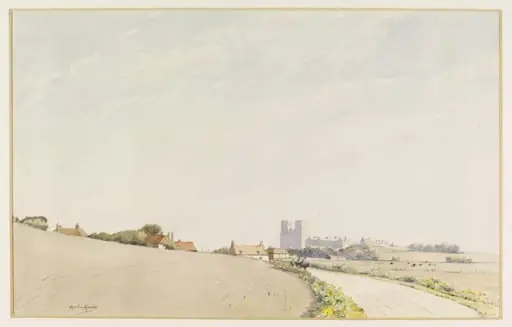
Church and Pigs Lee, Walmersley
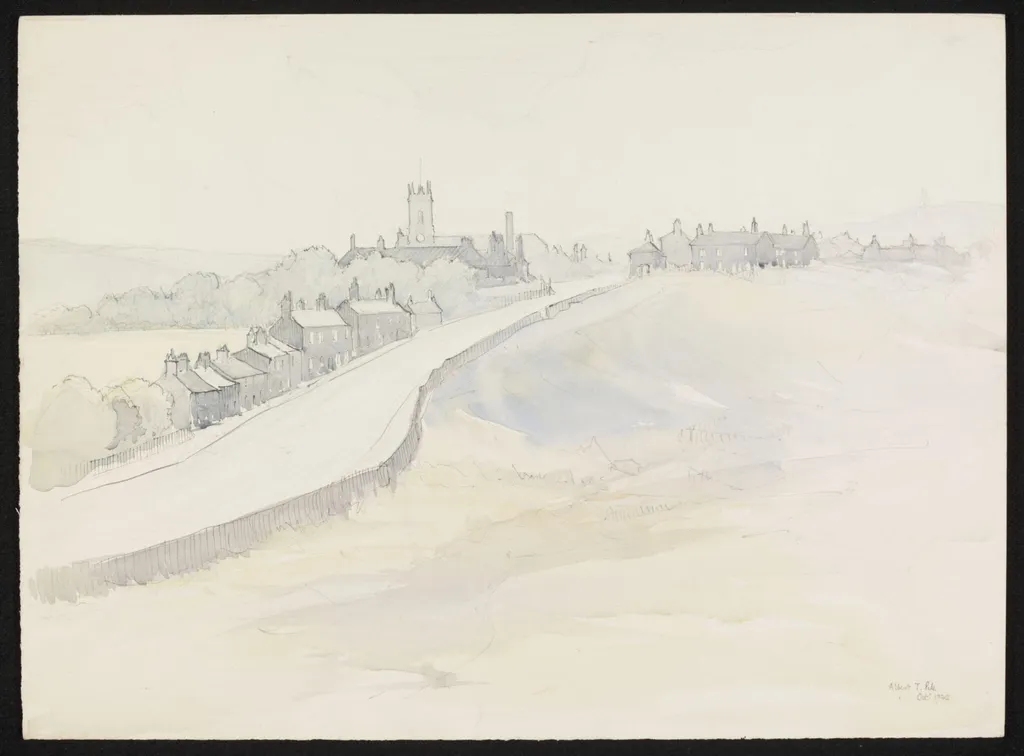
Church and Pigs Lee, Walmersley is a watercolor work on paper by the Art Brut artist Pile. It dates from 1942 and is held in the collection of the Victoria and Albert Museum.
About this work
Overview
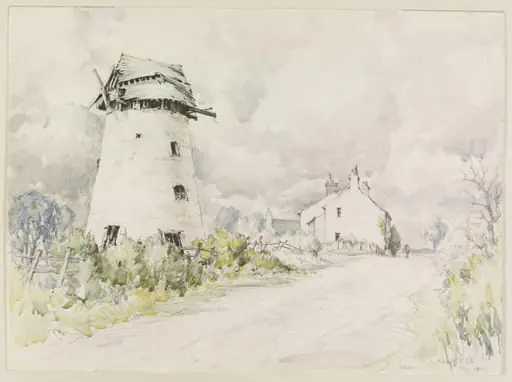
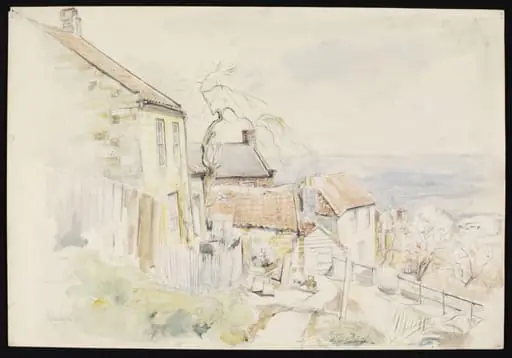
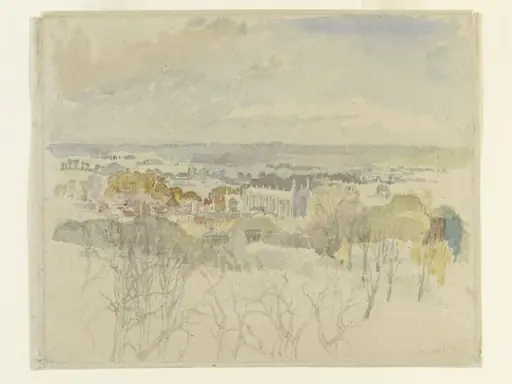
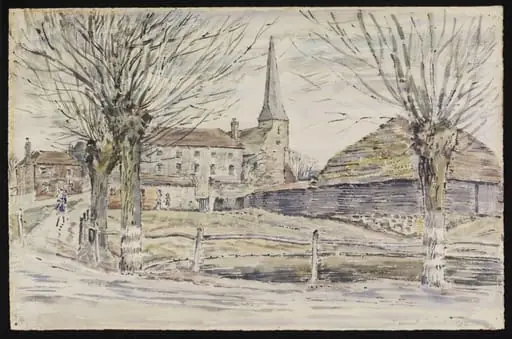
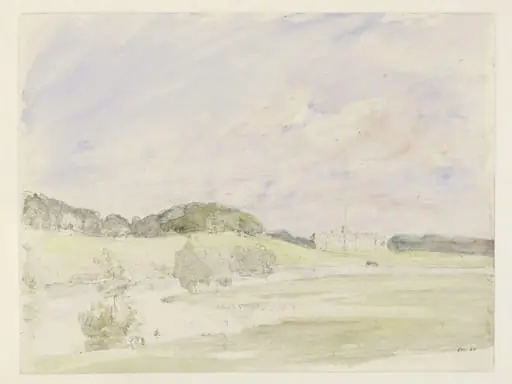
Created in 1942, this watercolour by Pile captures a modest hillside lane in the village of Walmersley, Lancashire. A solitary church tower rises above a patchwork of fields, while a winding road, flanked by a low fence, leads the eye through the composition. The scene is rendered in muted washes that convey a quiet, almost desolate atmosphere, suggesting a moment paused in everyday rural life.
Subject & Meaning
The work portrays the everyday landscape of a small English village, emphasizing the relationship between the built environment and the surrounding farmland. By foregrounding the church, a traditional focal point, against an expansive, empty field, the painting reflects themes of continuity and isolation, hinting at the resilience of local heritage amid broader societal changes.
Technique & Style
Pile employs a restrained palette of soft watercolour washes, focusing on broad shapes and the play of light rather than intricate detail. The composition relies on tonal gradations to suggest depth, while the minimal line work defines structures such as the fence and road. This approach creates a calm, contemplative mood and highlights the simplicity of the rural setting.
History & Provenance
The piece was produced under the auspices of the Recording Britain project, a wartime scheme funded by the Pilgrim Trust and overseen by Sir Kenneth Clark.
The piece was produced under the auspices of the Recording Britain project, a wartime scheme funded by the Pilgrim Trust and overseen by Sir Kenneth Clark. Artists were commissioned to document locales considered vulnerable to wartime damage or modernization. Pile’s signed work entered the project's archive, joining a collection of over 1,500 pieces by 97 contributors that collectively record England’s mid‑20th‑century landscape.
Context
Recorded during the early 1940s, the painting reflects the urgency of preserving visual records of Britain’s countryside at a time when aerial bombing and post‑war redevelopment threatened traditional scenes. The emphasis on ordinary village life aligns with the project's aim to capture the nation’s cultural fabric before it could be altered by conflict or industrial progress.
Artist & collection