Artwork
Egmont and Hoorn
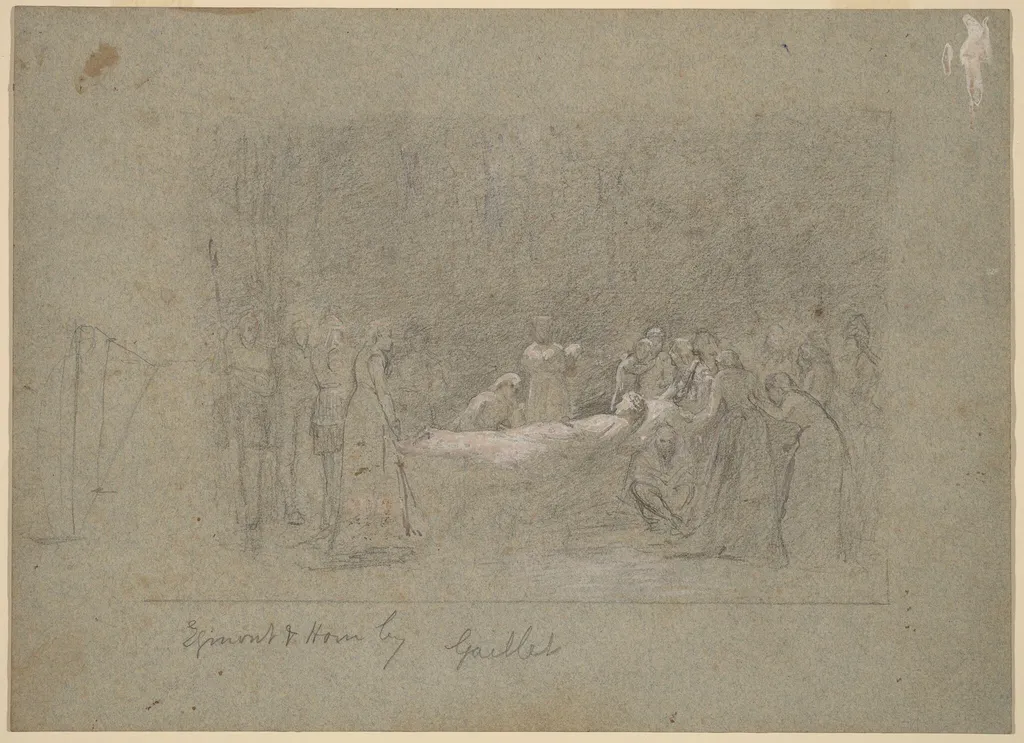
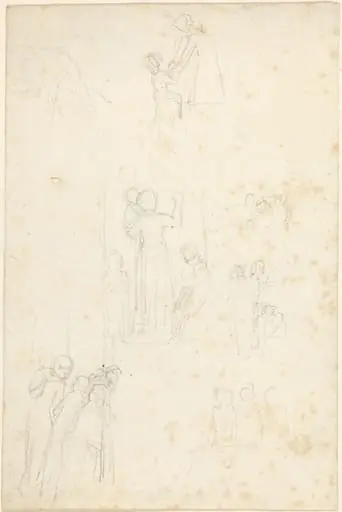
Egmont and Hoorn is a graphite drawing by the Romanticist artist Thomas Hovenden. It dates from 1868 and is held in the collection of the National Gallery of Art.
- Inscription
- Inscribed:by unknown hand, lower left in graphite: Egmont & Horn by Gaillet
About this work
Overview
Thomas Hovenden’s 1868 drawing titled Egmont and Hoorn is executed in graphite with white heightening on blue‑gray paper. The work measures a modest size and presents a tightly composed interior scene, rendered in monochrome tones that emphasize line and subtle tonal contrast.
Subject & Meaning
The composition shows a small group gathered around a bedside where a man lies covered by a plain white sheet. A kneeling woman, head bowed, dominates the foreground, while other figures stand or sit with downcast eyes, conveying a collective atmosphere of grief and solemn respect.
Technique & Style
Hovenden employs delicate graphite shading to model the figures, using white heightening to suggest the pallor of the sheet and the faint illumination of the room. The restrained palette and emphasis on emotional expression align the drawing with Romantic sensibilities, focusing on interior feeling rather than external detail.
Context
Created shortly after the American Civil War, the work reflects a broader 19th‑century interest in private mourning rituals. Though the title references historical figures, the drawing does not depict a specific narrative episode, instead using the setting to explore universal themes of loss and reverence.
Own this work as a print
Artist & collection

Artist
Thomas Hovenden (December 28, 1840 – August 14, 1895) was an Irish-born painter and teacher who spent most of his life in the United States.

- Sketches with a Hooded Figure (Virgil and Beatrice?)
 Untitled
 Duel after the Masked Ball (recto)
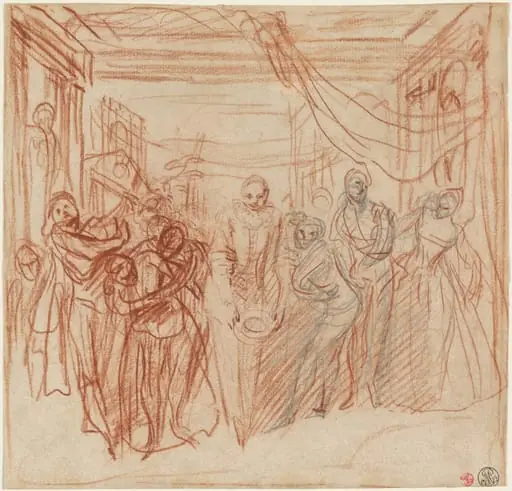 Italian Comedians Taking Their Bows
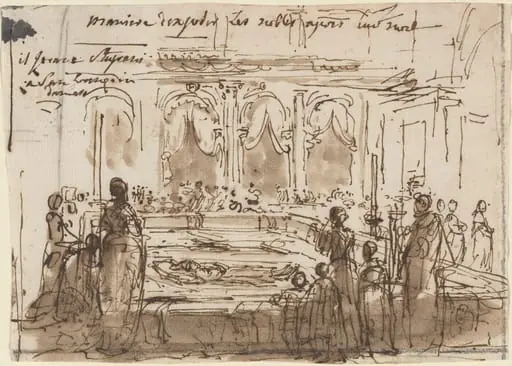 Maniere d'exposer les nobles apres leur mort
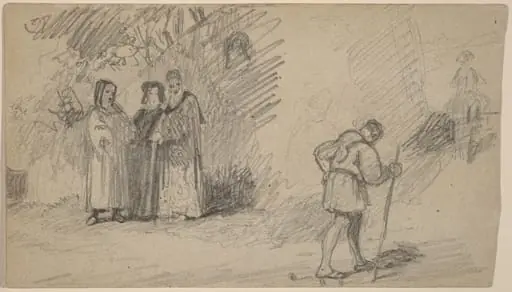 Son and the Donkey
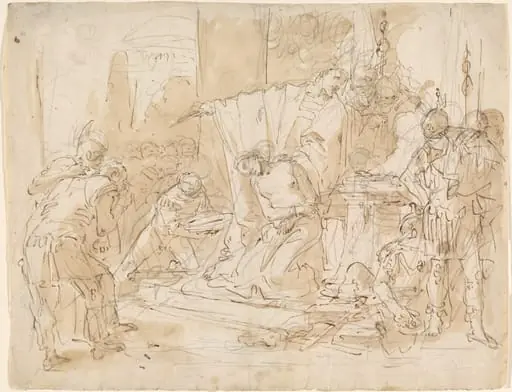 The Sacrifice of Iphigenia (recto) / Study of a Male Nude (verso)
 Reviving
 Study for "The Death of the Earl of Chatham"
 Sketch of the Dead Christ Lying by the Sepulchre
 Aeneas Shown the Body of Pallas from Virgil's "Aeneid"
 Sheet of Studies