Artwork
Album of Landscape Paintings Illustrating Old Poems: Children Playing Blindman's Buff in a Garden
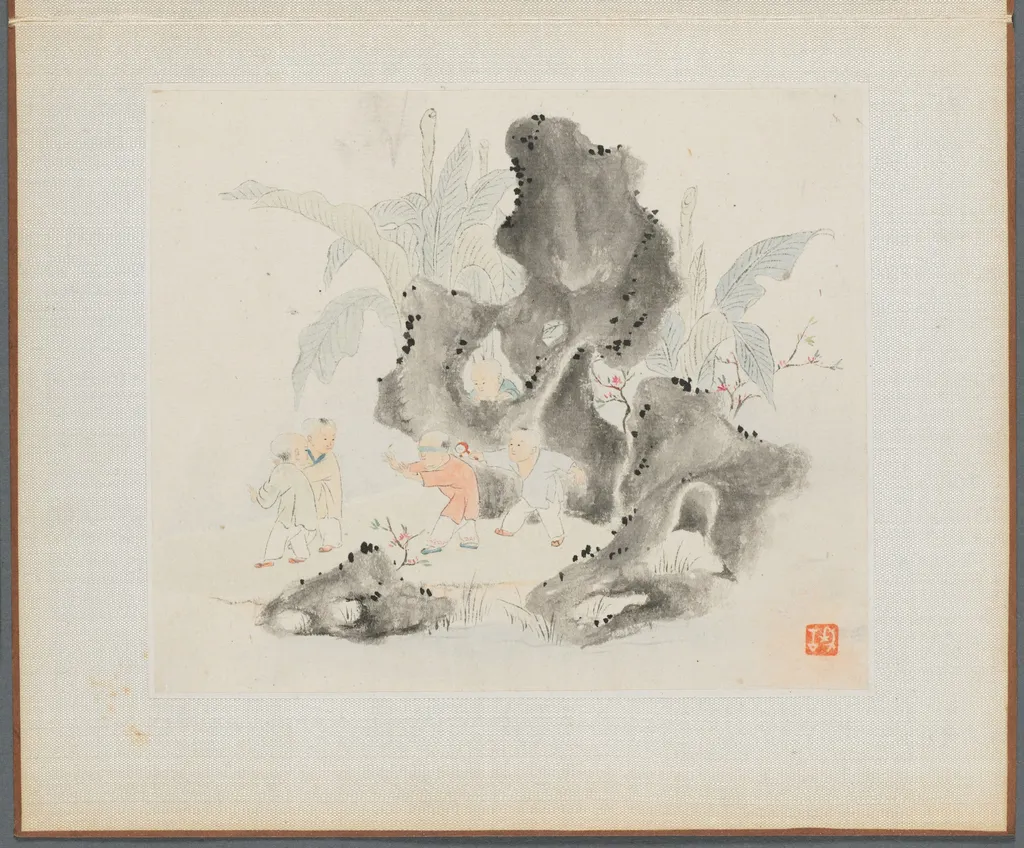
Album of Landscape Paintings Illustrating Old Poems: Children Playing Blindman's Buff in a Garden is an unspecified painting by the Chinese Orthodox School artist Hua Yan. It dates from 1745 and is held in the collection of the Cleveland Museum of Art.
About this work
Subject & Meaning
The composition integrates the figures into a natural environment, reflecting the artist's approach to combining human activity with landscape elements.
Created in 1745 by Hua Yan, this landscape painting depicts children engaged in the game of blindman's buff within a garden setting. As part of an album illustrating old poems, the work uses this specific genre of playful interaction to visualize literary themes. The scene captures a moment of innocent recreation, where the participants navigate the garden space while blindfolded, embodying the spirit of the poem it accompanies.
The composition integrates the figures into a natural environment, reflecting the artist's approach to combining human activity with landscape elements.
History & Provenance
The album of landscape paintings illustrating the poem "Children Playing Blindman's Buff in a Garden" was executed in 1745 in China by the Qing‑period painter Hua Yan (1682–c.1765). It is classified as a landscape painting and was produced as part of a series of works illustrating classical poems. The work entered the collection of the Cleveland Museum of Art, where it remains on view; its accession record (1982.68.9) indicates acquisition by the museum. No earlier ownership records are documented.
The album of landscape paintings illustrating Old Poems, specifically the scene of children playing blindman’s buff in a garden, is housed in the Cleveland Museum of Art. Its accession number is 1982.68.9, reflecting its inclusion in the museum’s collection since at least 1982. The work was created in 1745 by the Chinese painter Hua Yan, who was active in the Qing dynasty.
No exhibition records are cited in the available documentation, indicating that the piece has not been listed in publicly documented exhibitions to date.
Overview
Created in 1745, this work is a page from Hua Yan's album of landscape paintings illustrating old poems, specifically depicting the scene of children playing blindman's buff in a garden. The composition balances a rugged natural setting with a lively human interaction. Hua Yan renders the surrounding trees and rocks using loose, dark brushstrokes that establish a textured, atmospheric background.
In contrast, the figures are simplified into bright, distinct shapes of pink and white, drawing the viewer's eye to the central action. One child stands with hands covering their eyes, embodying the role of the seeker, while the other children arrange themselves around the space, suggesting movement and playful evasion. This piece exemplifies Hua Yan's mature style within the 18th-century Chinese literati tradition, where he frequently blended poetic allusion with genre scenes of daily life.
The artist's approach here avoids rigid formalism, favoring an expressive economy of line and color that captures the spontaneity of childhood play. As part of an album dedicated to illustrating classical poetry, the work demonstrates how Hua Yan translated literary themes into visual narratives, prioritizing mood and character over strict topographical accuracy.
Technique & Style
Hua Yan employed distinct brushwork to differentiate elements within the composition. The garden's trees and rocks are rendered with loose, dark, almost calligraphic strokes, giving them an immediate, sketched quality. In contrast, the children are depicted with cleaner, more defined lines and brighter hues of pink and white.
This deliberate stylistic variation creates a dynamic visual tension, imbuing the scene with a sense of energy and immediacy.
Own this work as a print
Artist & collection

Artist
Hua Yan simplified Chinese: 华嵒; traditional Chinese: 華嵒; pinyin: Huà Yán; Wade–Giles: Hua Yen; courtesy name Qiu Yue (秋岳), sobriquets Xinluo Shanren (新罗山人), Dong Yuan Sheng (东园生), Buyi Sheng (布衣生), Ligou Jushi (离垢居士)and…

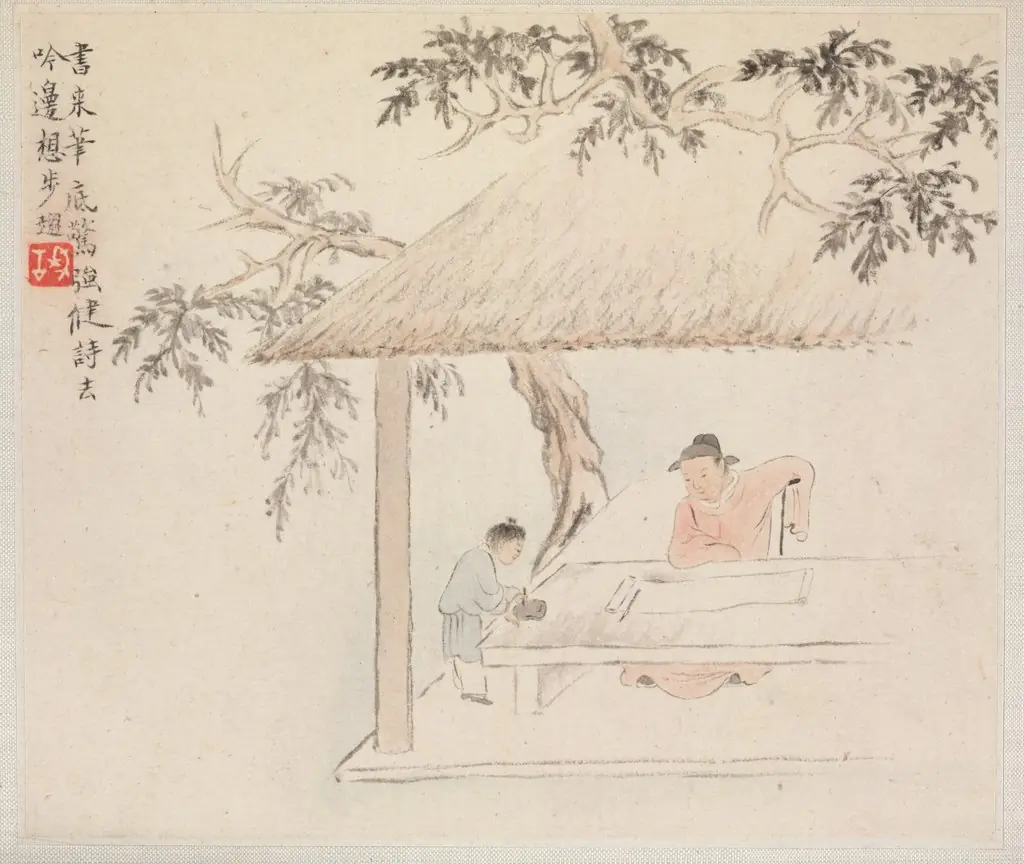 Album of Landscape Paintings Illustrating Old Poems: A Scholar at a Table with a Servant aside Preparing the Ink
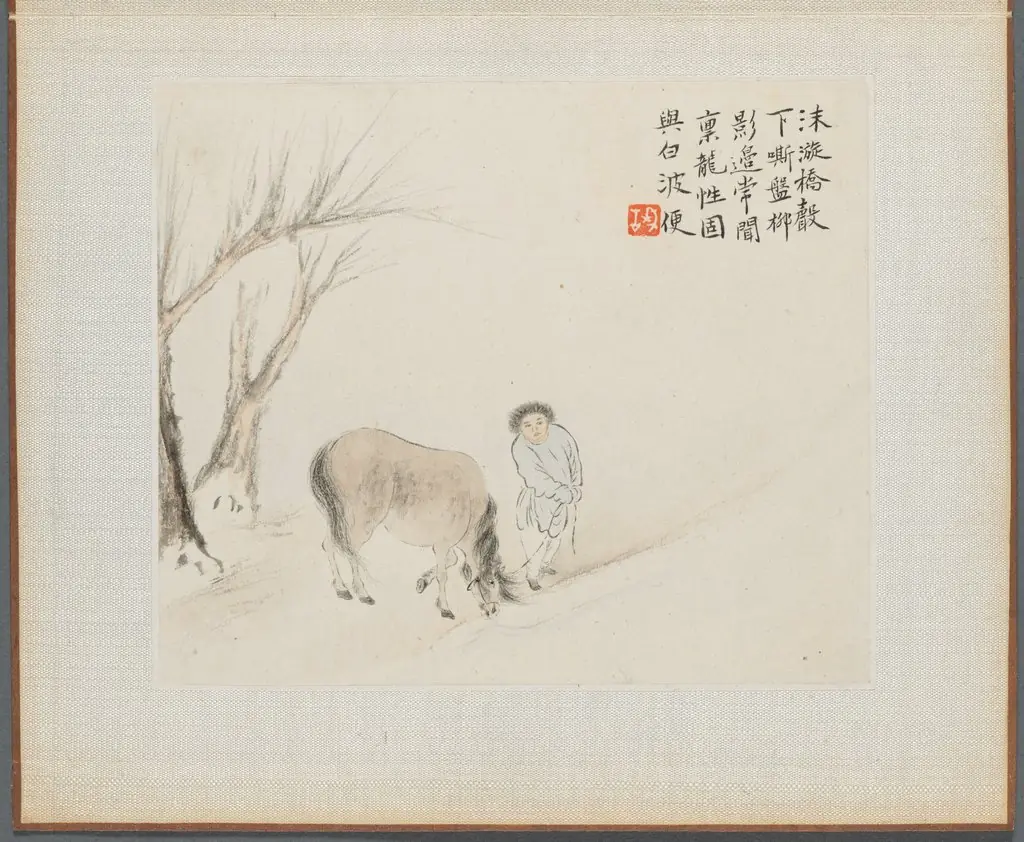 Album of Landscape Paintings Illustrating Old Poems: Boy Holding a Horse
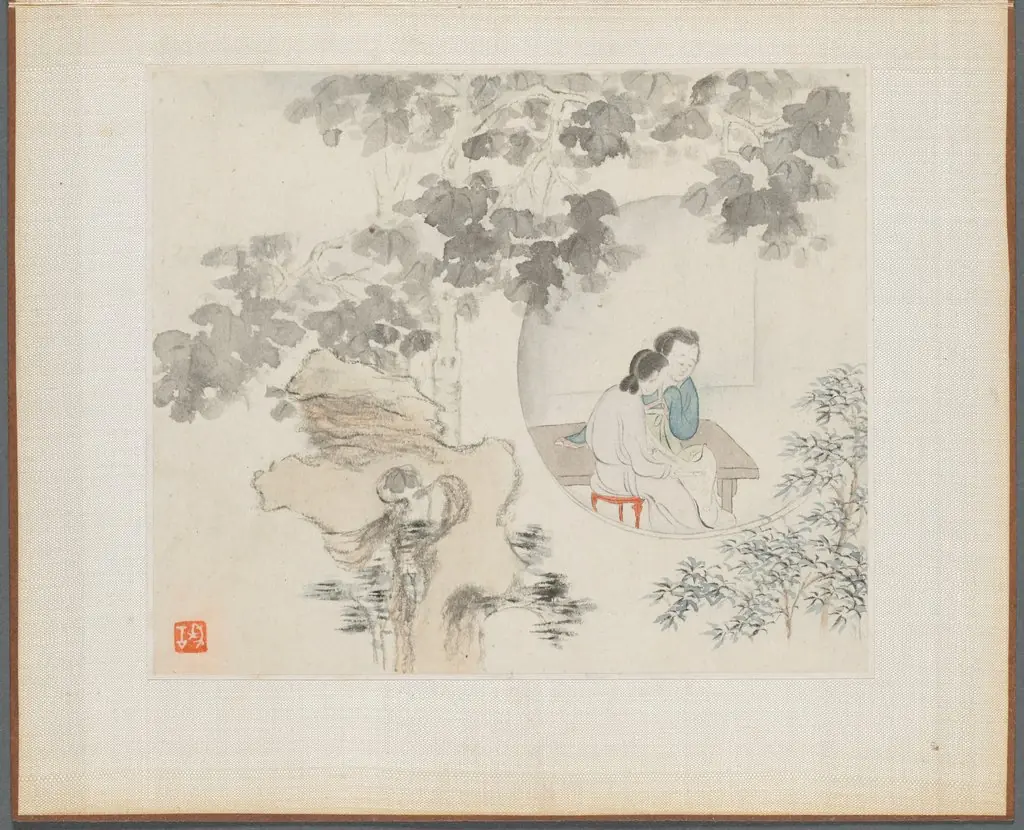 Album of Landscape Paintings Illustrating Old Poems: Two Women with Needlework in a Garden
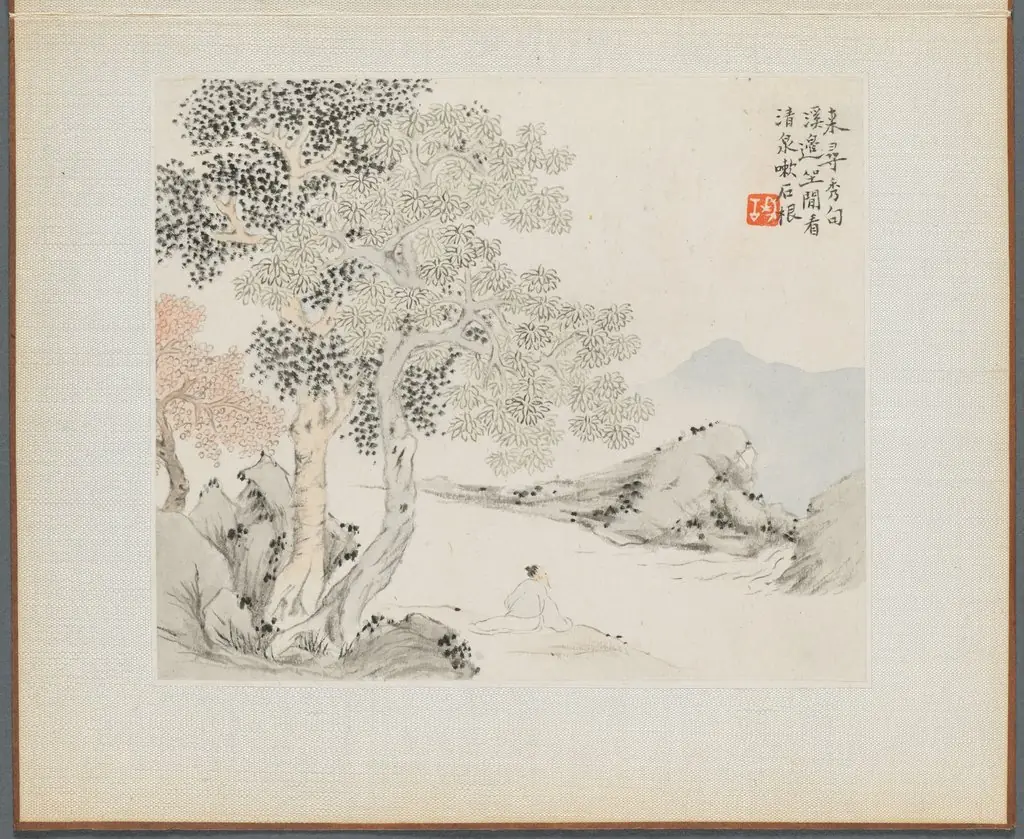 Album of Landscape Paintings Illustrating Old Poems: Three Big Trees, a Stream with an Old Man Sitting on the Bank
 清 華喦 白芍藥圖 軸|White Peony and Rocks
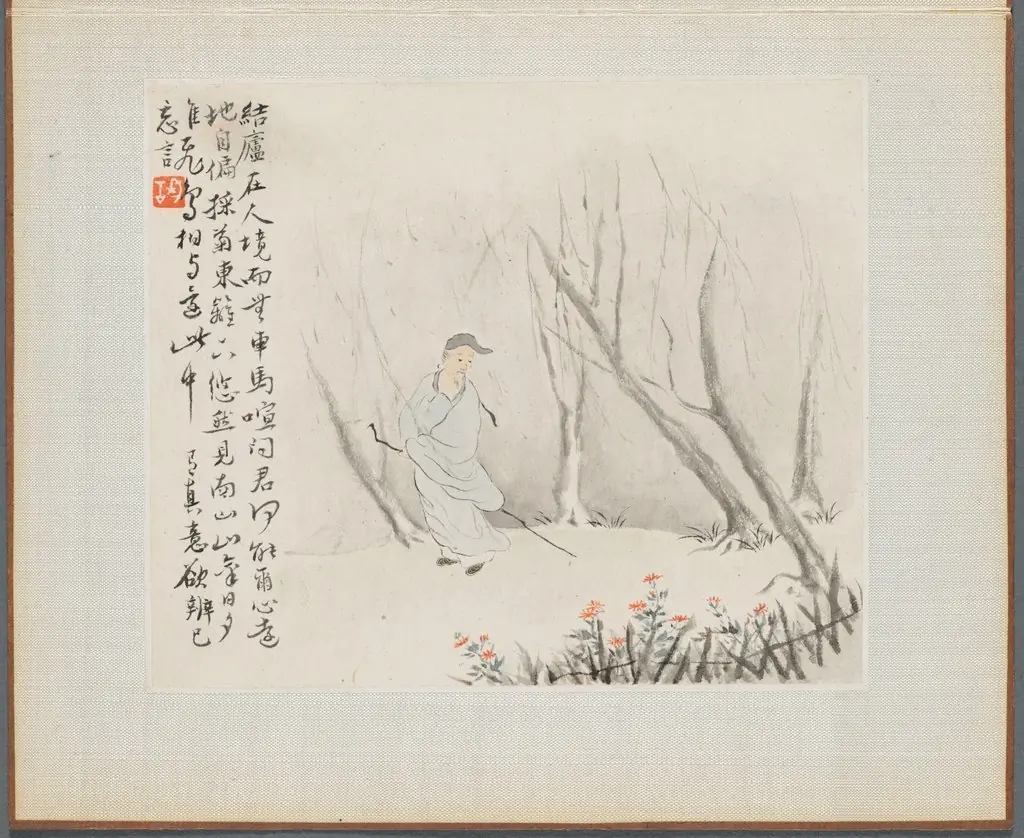 Album of Landscape Paintings Illustrating Old Poems: Man with a Staff Admires Chrysanthemums at a Fence
- Album of Landscape Paintings Illustrating Old Poems: Scholar watching Fish
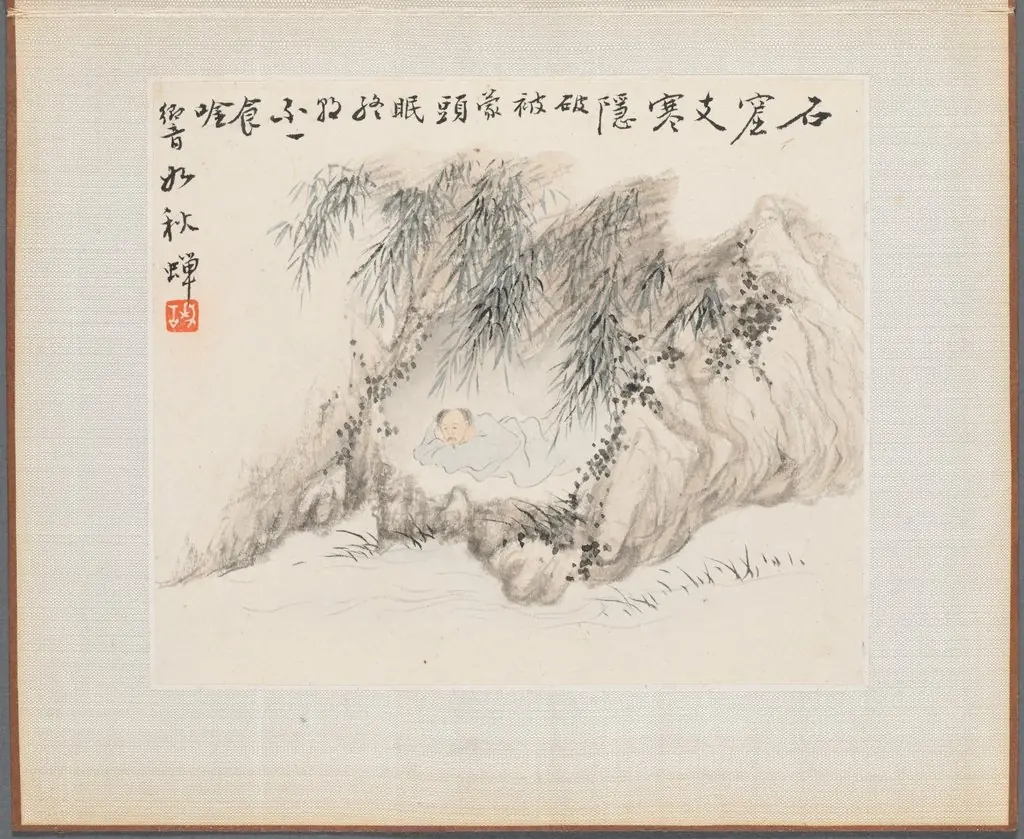 Album of Landscape Paintings Illustrating Old Poems: Man Resting under Bamboo
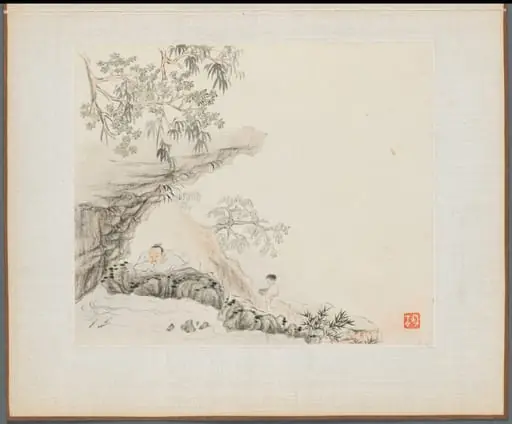 Album of Landscape Paintings Illustrating Old Poems: Scholar watching Fish
 Album of Landscape Paintings Illustrating Old Poems: A Man Reclining and Enjoying the View
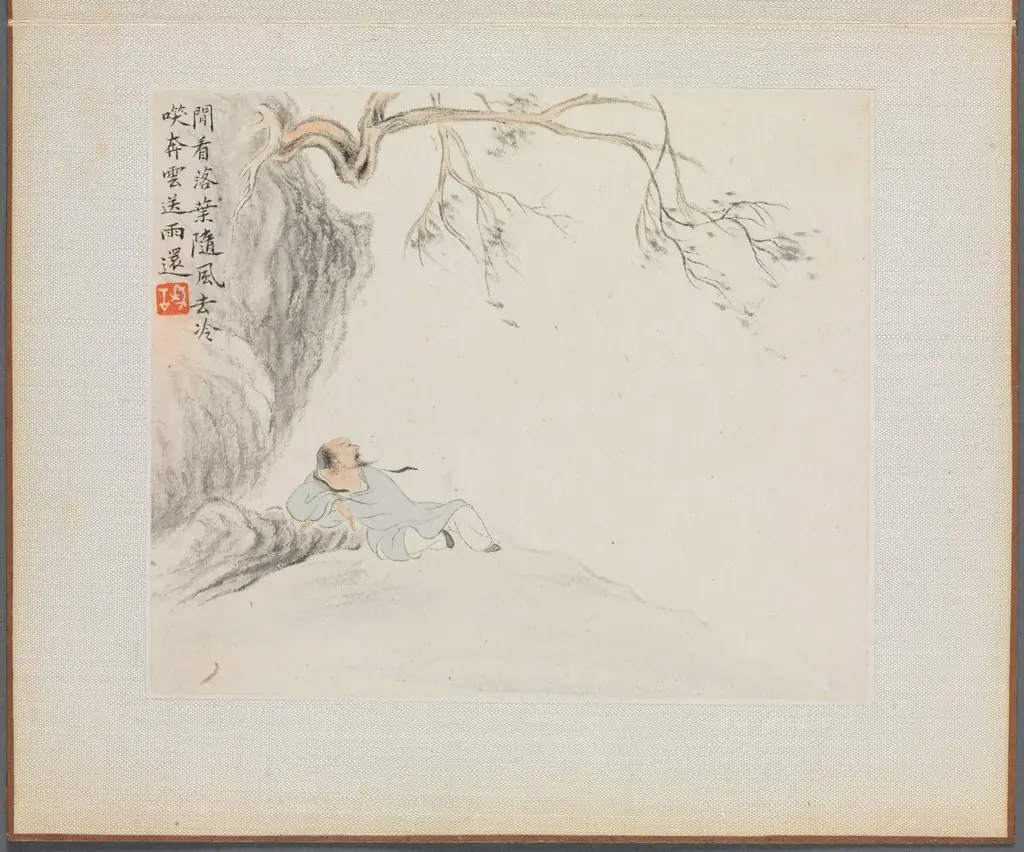 Album of Landscape Paintings Illustrating Old Poems: A Man Reclining and Enjoying the View
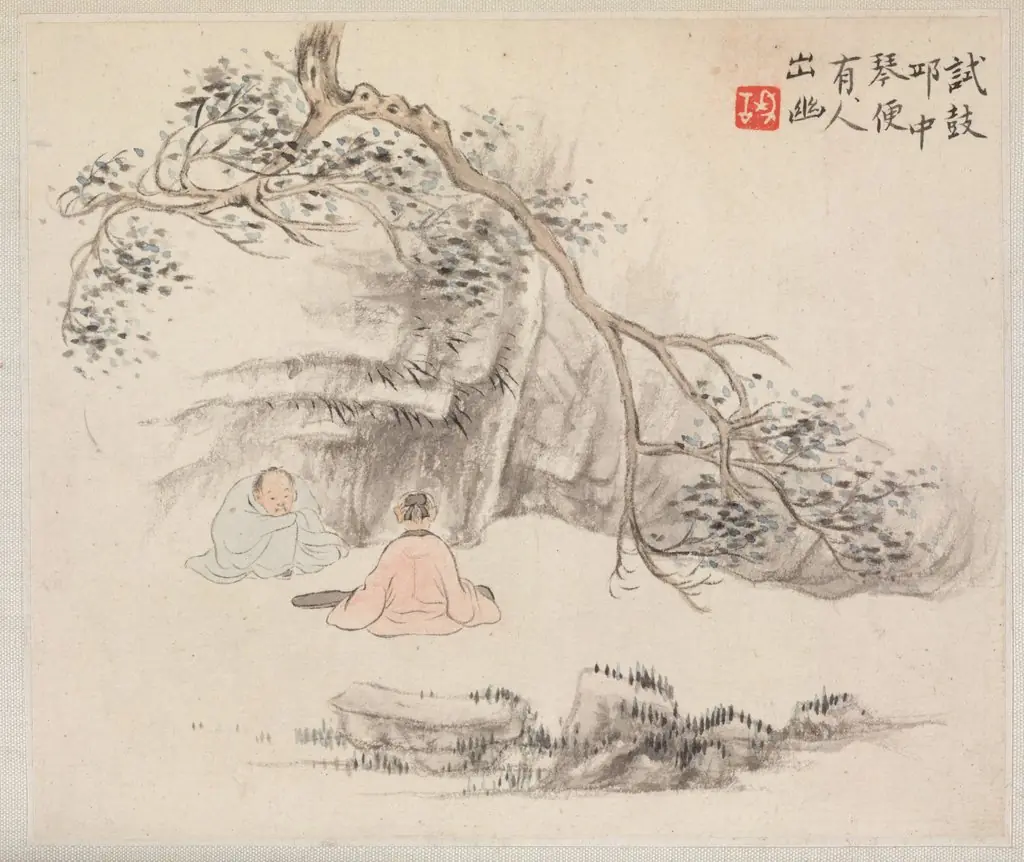 Album of Landscape Paintings Illustrating Old Poems: Listening to the Qin
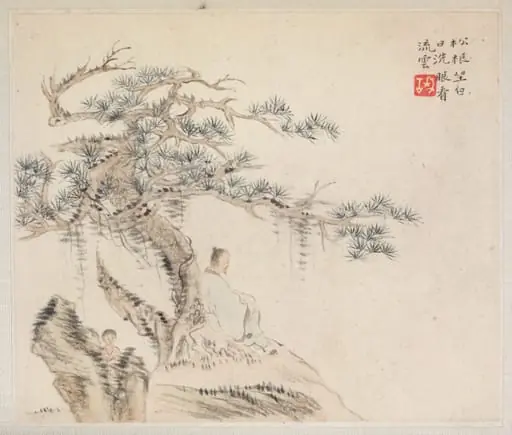 Album of Landscape Paintings Illustrating Old Poems: Scholar under a Pine Tree
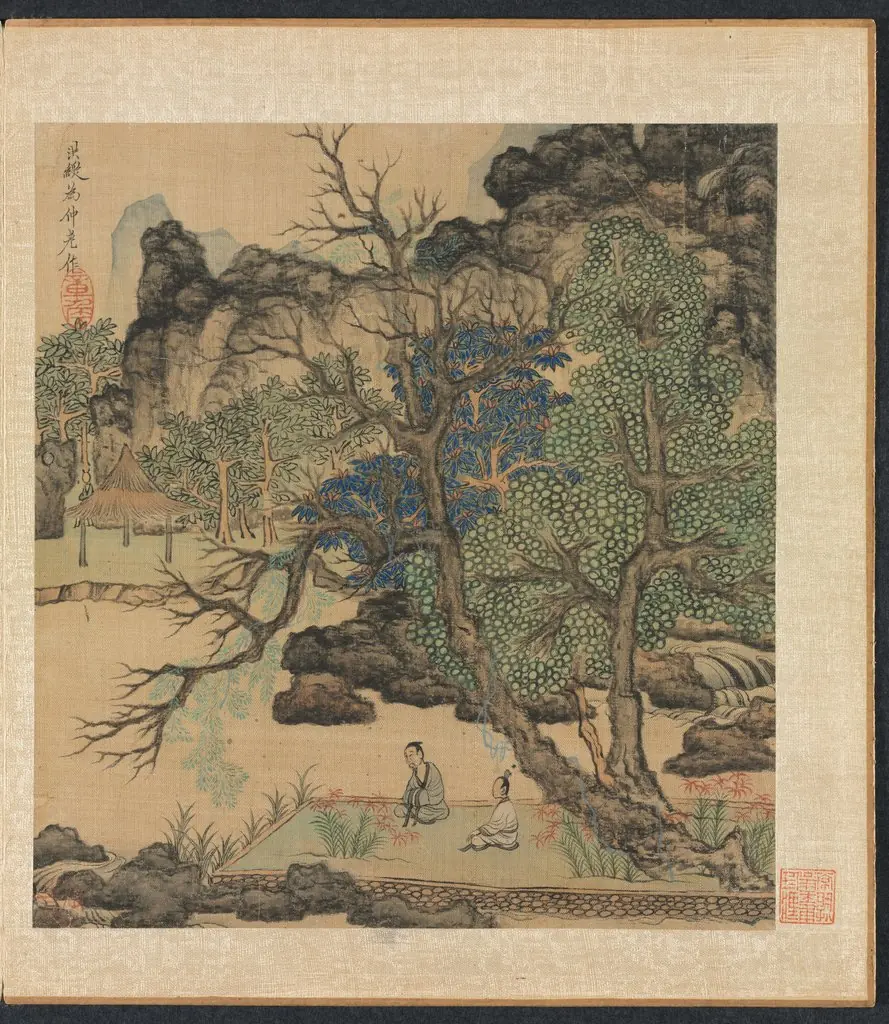 Paintings after Ancient Masters: Scholars in a Garden