Artwork
Album of Landscape Paintings Illustrating Old Poems: Three Big Trees, a Stream with an Old Man Sitting on the Bank
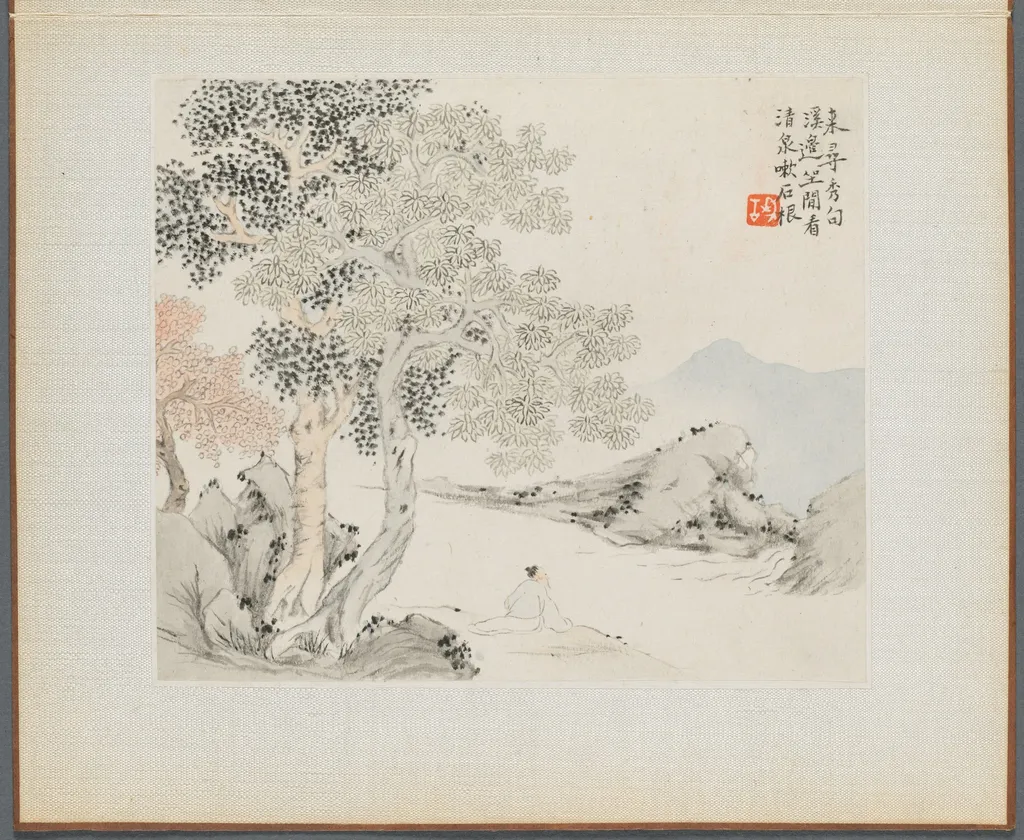
Album of Landscape Paintings Illustrating Old Poems: Three Big Trees, a Stream with an Old Man Sitting on the Bank is an unspecified painting by the Chinese Orthodox School artist Hua Yan. It dates from 1745 and is held in the collection of the Cleveland Museum of Art.
About this work
Subject & Meaning
The trees symbolize endurance and scholarly virtue, while the flowing water suggests the passage of time and the contemplative path of the hermit‑sage.
The painting shows three large trees beside a gentle stream where an elderly scholar sits, a composition typical of Qing‑era Chinese landscape that emphasizes harmony between humanity and nature. The trees symbolize endurance and scholarly virtue, while the flowing water suggests the passage of time and the contemplative path of the hermit‑sage. The seated figure embodies the Daoist ideal of quiet reflection and alignment with the natural world.
Executed in 1745 by Hua Yan, the work is classified as a landscape painting and is housed in the Cleveland Museum of Art, reflecting the period’s integration of poetic themes with visual symbolism.
History & Provenance
Painted in 1745 by the Chinese artist Hua Yan (1682–c. 1765), this landscape painting belongs to the Album of Landscape Paintings Illustrating Old Poems. The work is now held in the collection of the Cleveland Museum of Art, where it is catalogued as object number 1982.68.2. No further details regarding its commission, earlier ownership, or acquisition history are provided in the available sources.
Overview
This painting, titled Album of Landscape Paintings Illustrating Old Poems: Three Big Trees, a Stream with an Old Man Sitting on the Bank, was created by Hua Yan in 1745. As part of a larger album, this work presents a tranquil landscape scene. It is currently housed in The Cleveland Museum of Art.
The composition features prominent trees, a flowing stream, and a solitary figure, characteristic of traditional Chinese landscape painting.
Context
This particular painting exemplifies Hua Yan's artistic approach, known for integrating natural scenery with poetic undertones. As part of an album illustrating old poems, the artwork likely served to visually interpret classical verses, a common practice in Chinese literati painting. Hua Yan was recognized for his landscapes and his ability to evoke a sense of calm and contemplation through his brushwork and subject matter.
Own this work as a print
Artist & collection

Artist
Hua Yan simplified Chinese: 华嵒; traditional Chinese: 華嵒; pinyin: Huà Yán; Wade–Giles: Hua Yen; courtesy name Qiu Yue (秋岳), sobriquets Xinluo Shanren (新罗山人), Dong Yuan Sheng (东园生), Buyi Sheng (布衣生), Ligou Jushi (离垢居士)and…

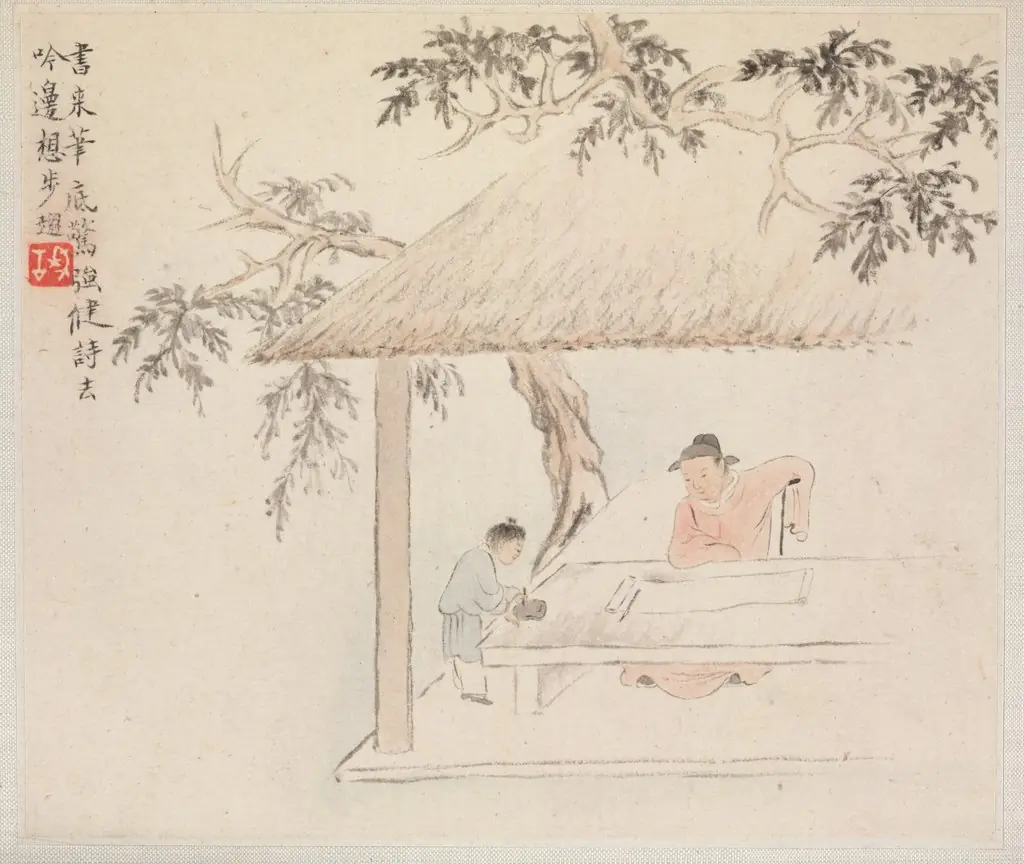 Album of Landscape Paintings Illustrating Old Poems: A Scholar at a Table with a Servant aside Preparing the Ink
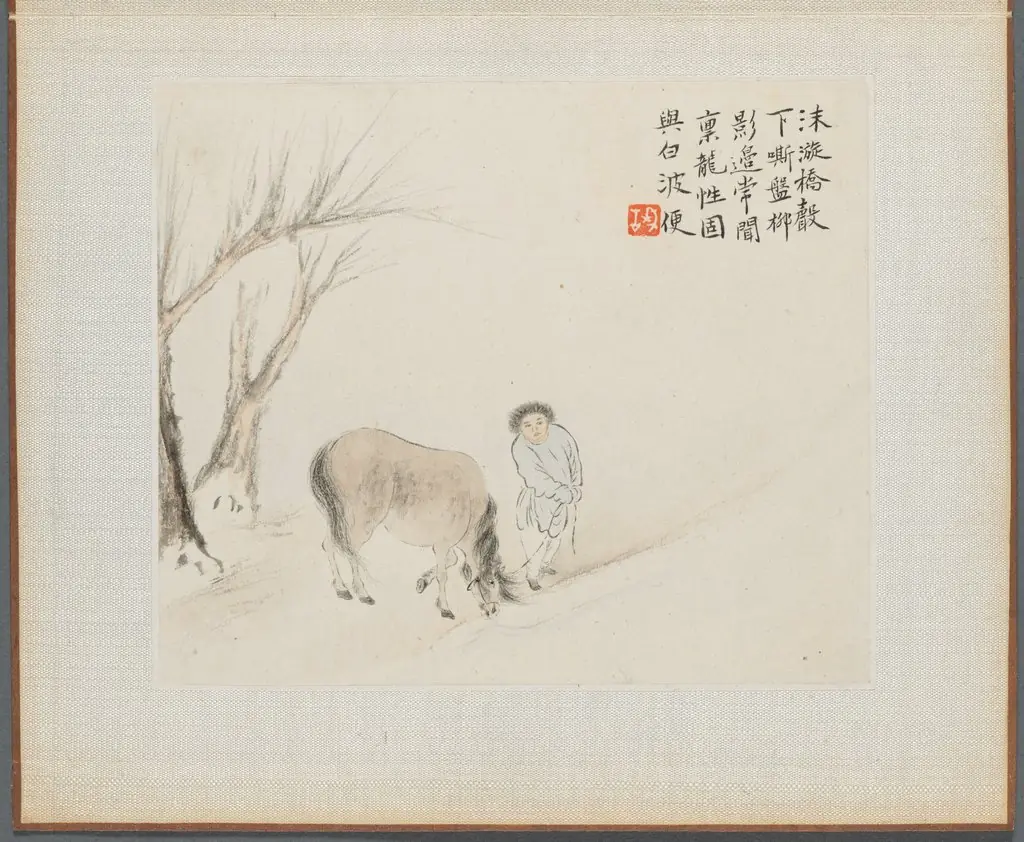 Album of Landscape Paintings Illustrating Old Poems: Boy Holding a Horse
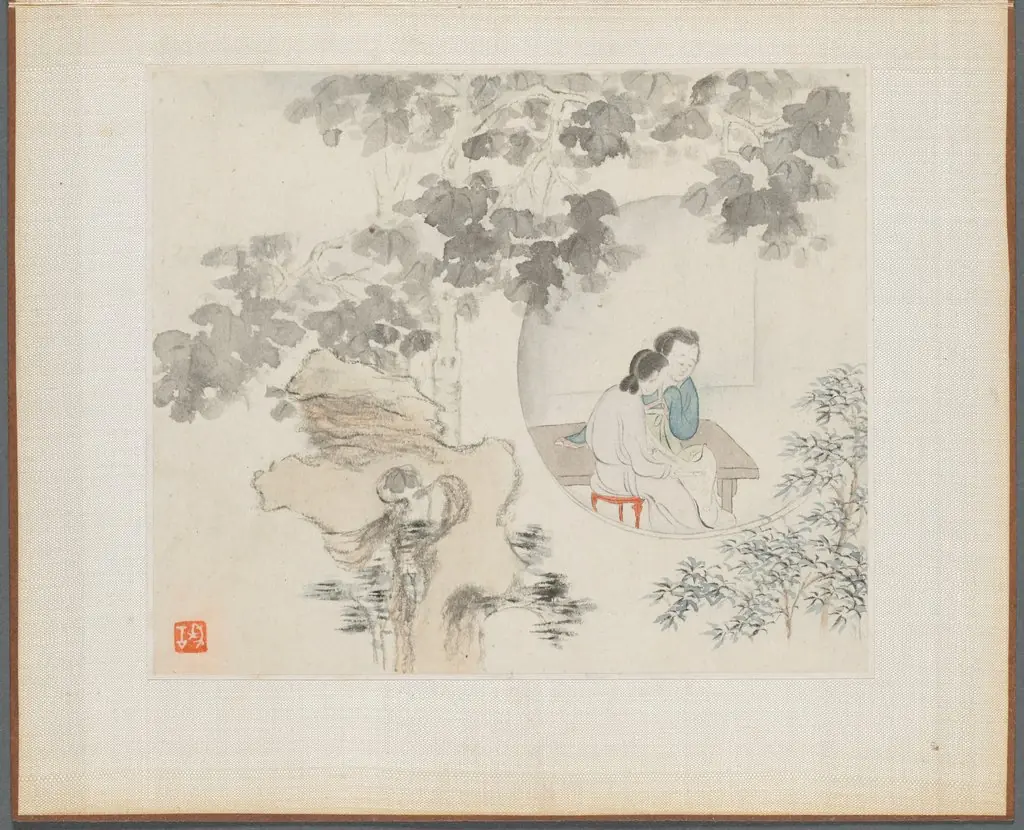 Album of Landscape Paintings Illustrating Old Poems: Two Women with Needlework in a Garden
 清 華喦 白芍藥圖 軸|White Peony and Rocks
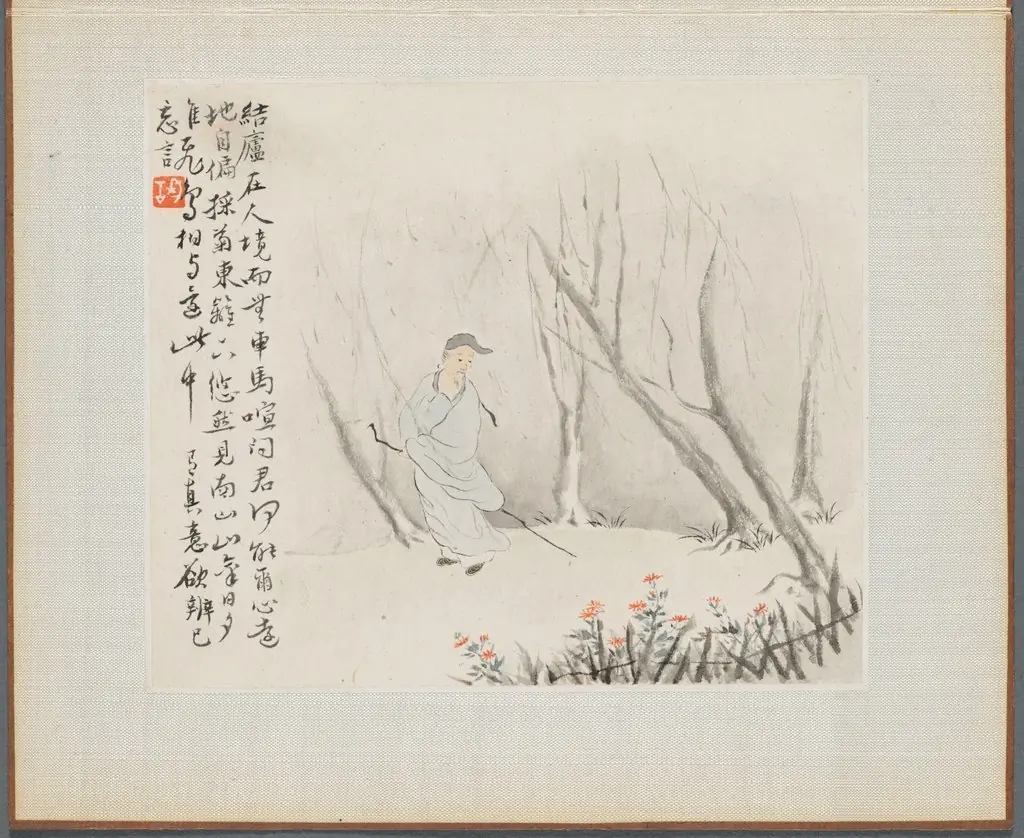 Album of Landscape Paintings Illustrating Old Poems: Man with a Staff Admires Chrysanthemums at a Fence
- Album of Landscape Paintings Illustrating Old Poems: Scholar watching Fish
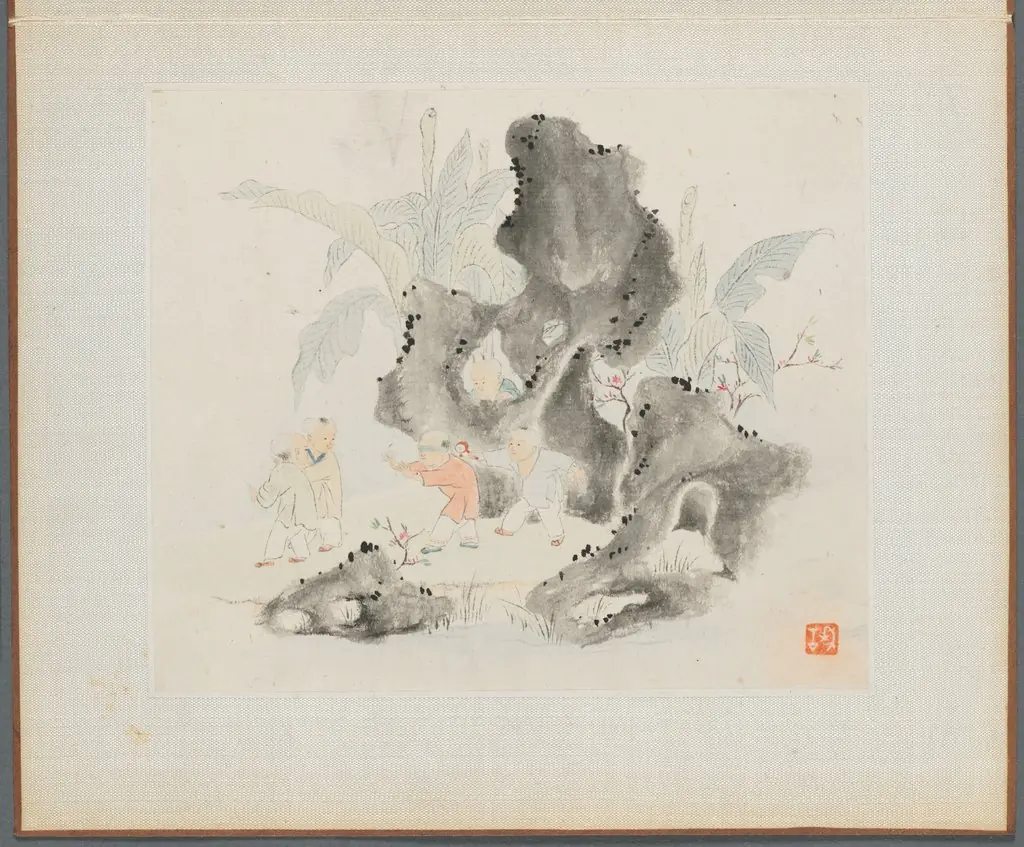 Album of Landscape Paintings Illustrating Old Poems: Children Playing Blindman's Buff in a Garden
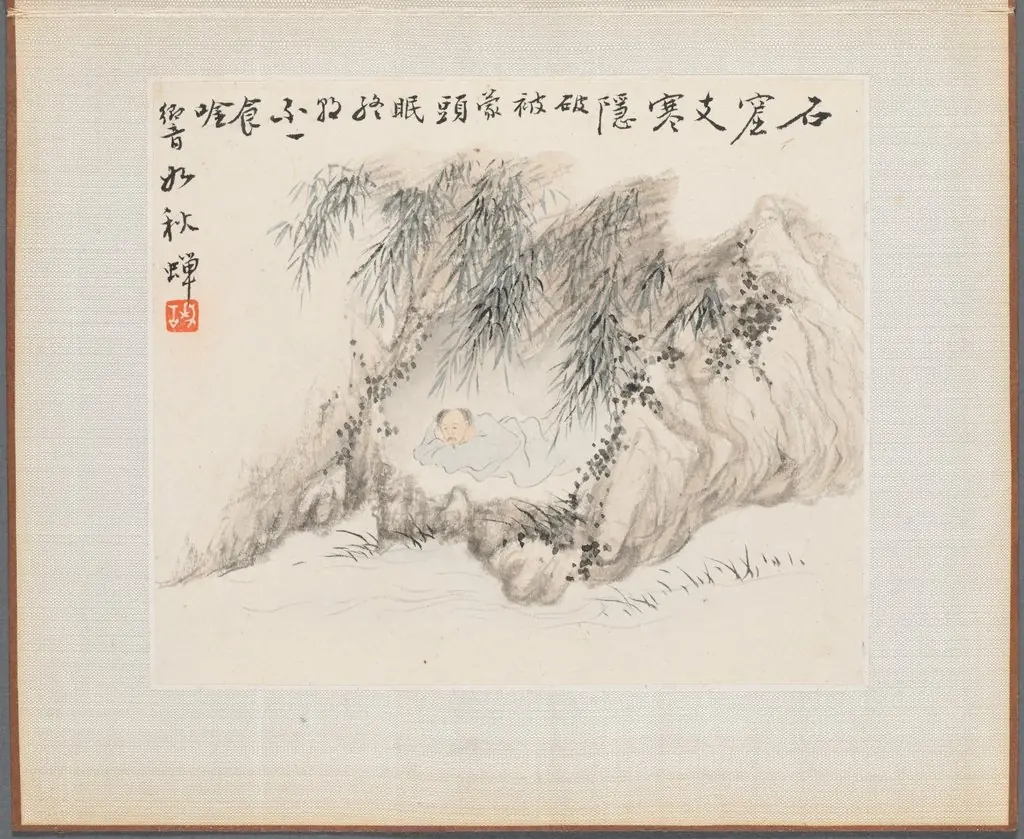 Album of Landscape Paintings Illustrating Old Poems: Man Resting under Bamboo
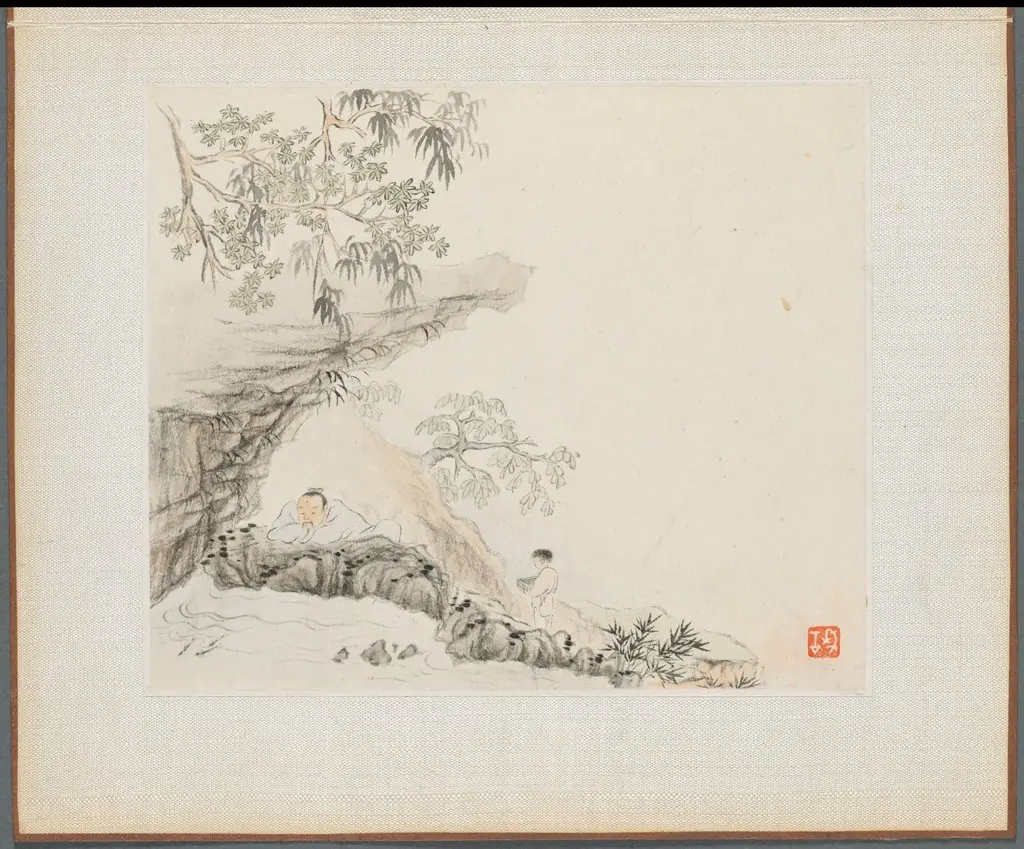
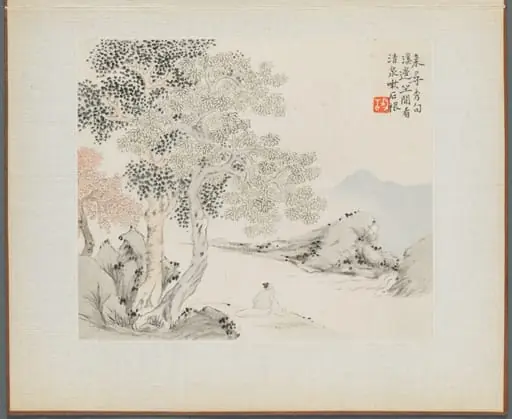 Album of Landscape Paintings Illustrating Old Poems: Three Big Trees, a Stream with an Old Man Sitting on the Bank
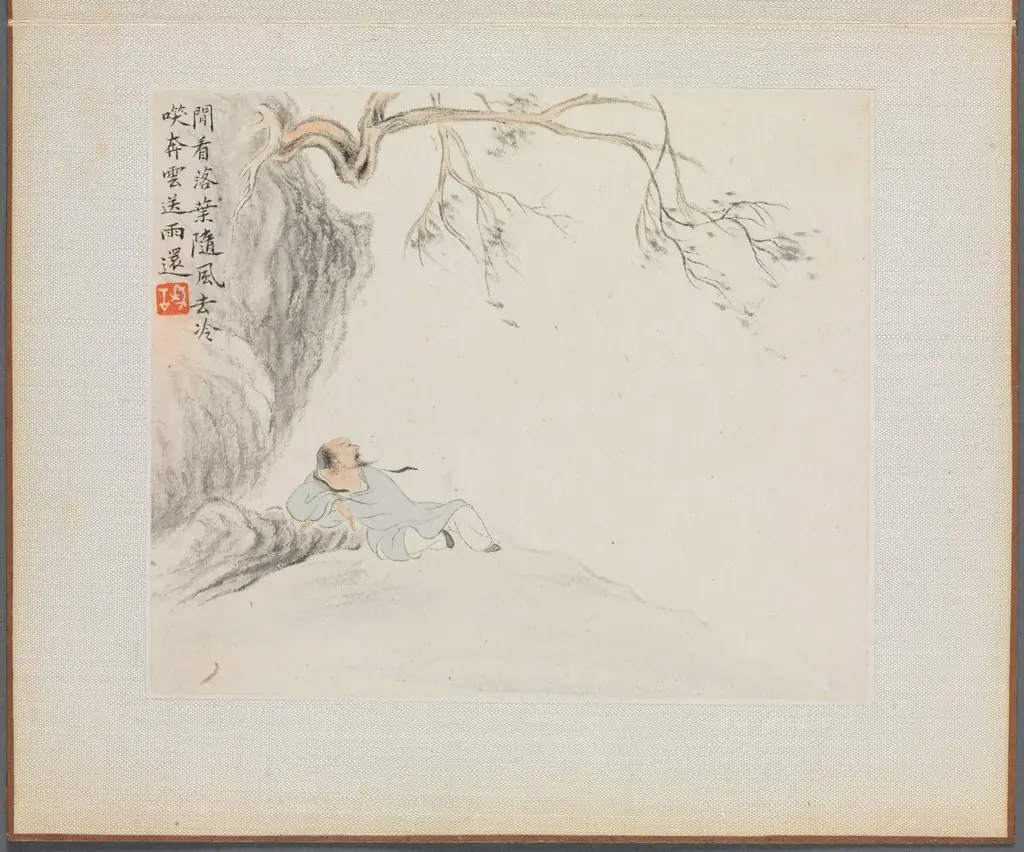 Album of Landscape Paintings Illustrating Old Poems: A Man Reclining and Enjoying the View
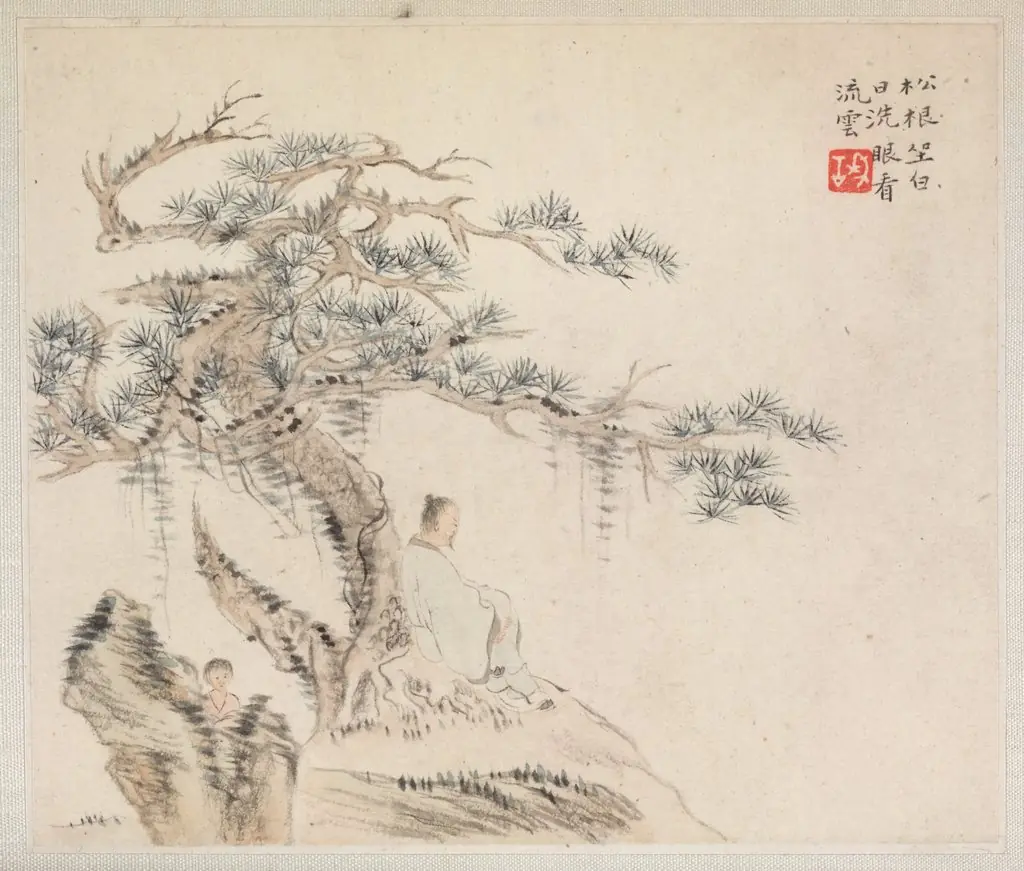 Album of Landscape Paintings Illustrating Old Poems: Scholar under a Pine Tree
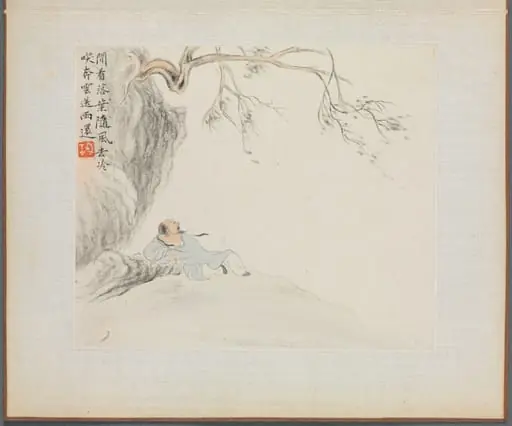 Album of Landscape Paintings Illustrating Old Poems: A Man Reclining and Enjoying the View
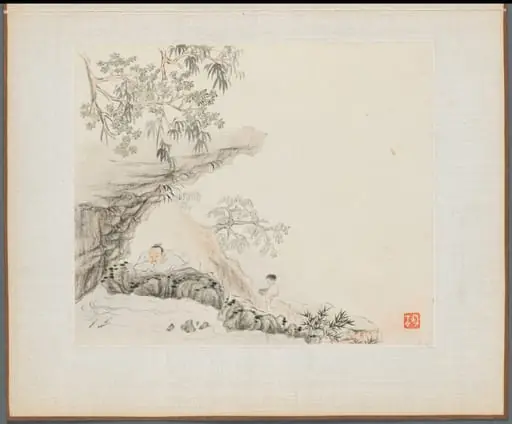 Album of Landscape Paintings Illustrating Old Poems: Scholar watching Fish
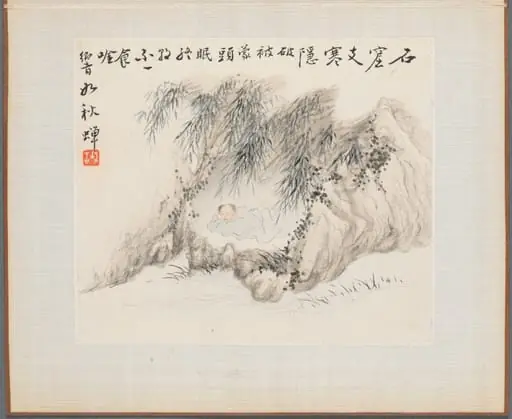 Album of Landscape Paintings Illustrating Old Poems: Man Resting under Bamboo
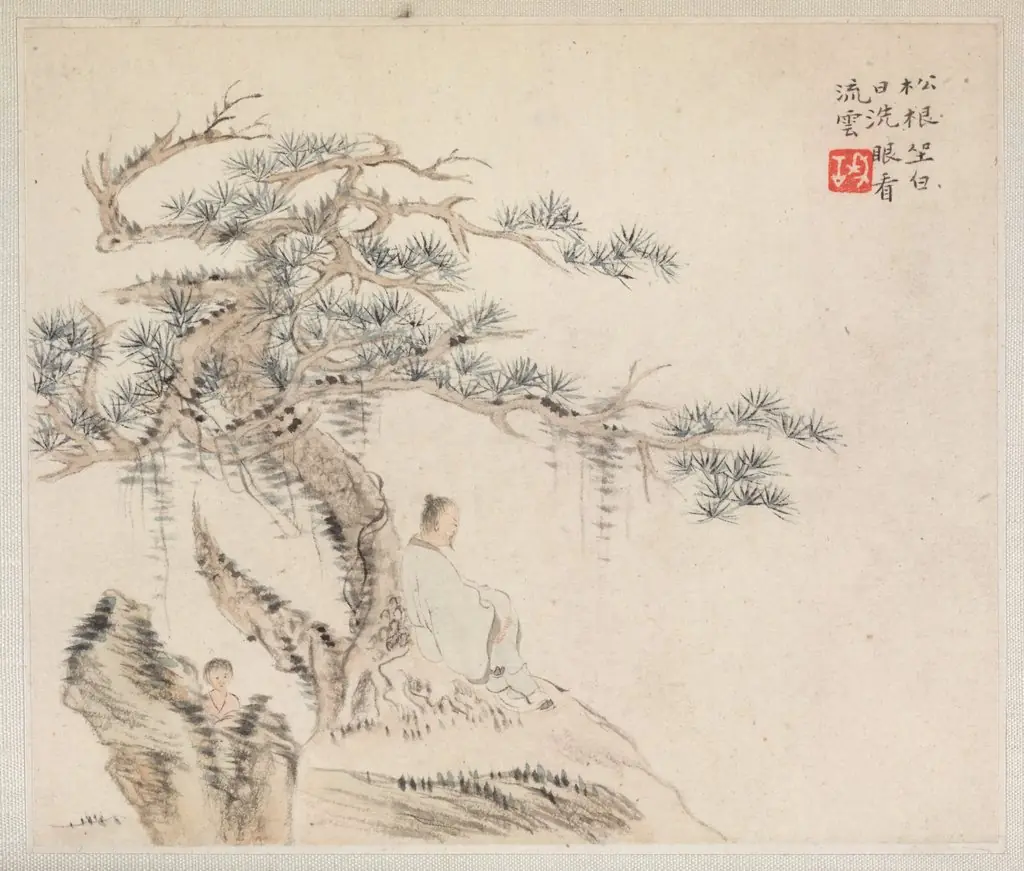 Album of Landscape Painting Illustrating Old Poems
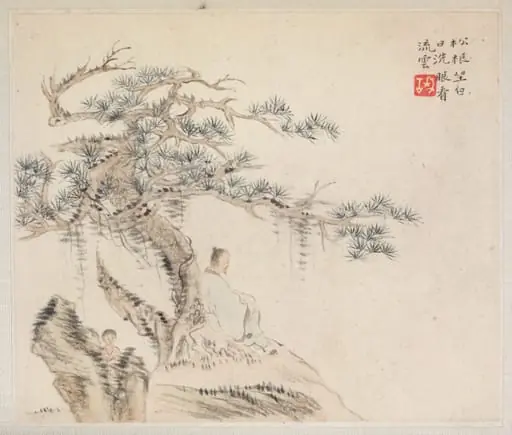 Album of Landscape Paintings Illustrating Old Poems: Scholar under a Pine Tree