Artwork
清 華喦 白芍藥圖 軸|White Peony and Rocks
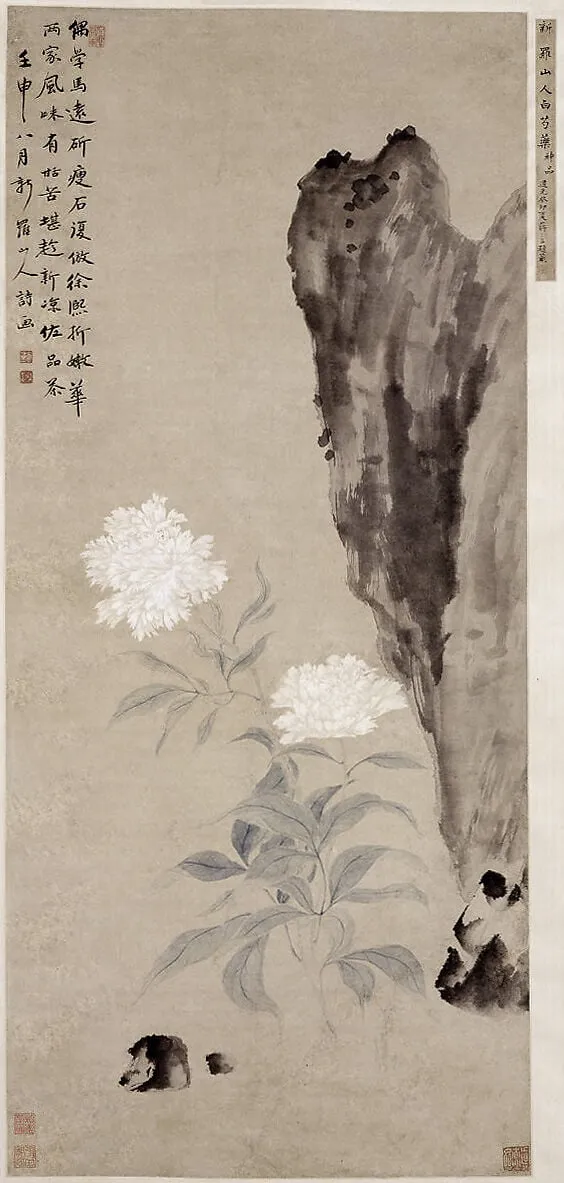
清 華喦 白芍藥圖 軸|White Peony and Rocks is an ink painting by the Qing dynasty painting artist Hua Yan. It dates from 1752 and is held in the collection of the Metropolitan Museum of Art.
About this work
He used fine brushstrokes to show every curl of the petals and every crack in the rock, no background, just empty space to let the flower breathe.
A single white peony blooms beside jagged rocks on a tall paper scroll. The petals are soft pink at the edges, the leaves deep green with tiny veins.
Hua Yan painted this in 1752, when artists often worked for the emperor. He used fine brushstrokes to show every curl of the petals and every crack in the rock, no background, just empty space to let the flower breathe.
Look up more paintings of peonies, china, Paeonia to see how other artists drew the same flower.
Technique & Style
Executed in 1752 by Hua Yan, White Peony and Rocks is a hanging scroll created using ink and color on paper. The artwork exemplifies traditional Chinese painting techniques through its application of ink and pigments on a paper support, structured for vertical display. Stylistically, the piece merges botanical representation with landscape elements, portraying a peony (Paeonia) alongside rocks.
This formal composition reflects the conventions of Qing dynasty painting, balancing delicate color work with ink-based depictions of natural forms to integrate flora within a broader landscape setting.
History & Provenance
Created in 1752 by the Chinese artist Hua Yan (1682–c. 1765), this hanging scroll depicts white peonies rendered in ink and color on paper. The work originated in China during the Qing dynasty. The painting is currently held in the collection of the Metropolitan Museum of Art.
Specific details regarding its original commission or complete chain of private ownership prior to museum acquisition are not provided in the available records. No specific accession number or exhibition history is documented in the available sources.
Context
The hanging scroll dated 1752 by Hua Yan portrays a white peony (Paeonia) rendered in ink and color on paper. As a Qing-period flower subject, it exemplifies the refined botanical interest found in imperial art. Its inclusion in the Metropolitan Museum of Art's collection has made it a reference point for scholars examining eighteenth-century Chinese painting and the development of the flower-and-bird genre.
Overview
Hua Yan's painting, White Peony and Rocks, created in 1752, is rendered with ink and color on a hanging scroll. This work exemplifies a traditional Chinese painting format, focusing on a singular floral subject. It presents a detailed depiction of a white peony in bloom, accompanied by rugged rock formations, characteristic of the artist's refined approach to nature studies.
Subject & Meaning
The composition centers on a single white peony, its delicate petals subtly tinged with pink at the edges, contrasting with the deep green of its intricately veined leaves. This vibrant bloom emerges alongside sharply defined, jagged rocks. The peony, often a symbol of prosperity and honor in Chinese culture, is presented here with a sense of quiet dignity, its beauty emphasized by the starkness of its surroundings.
Artist & collection

Artist
Hua Yan simplified Chinese: 华嵒; traditional Chinese: 華嵒; pinyin: Huà Yán; Wade–Giles: Hua Yen; courtesy name Qiu Yue (秋岳), sobriquets Xinluo Shanren (新罗山人), Dong Yuan Sheng (东园生), Buyi Sheng (布衣生), Ligou Jushi (离垢居士)and…

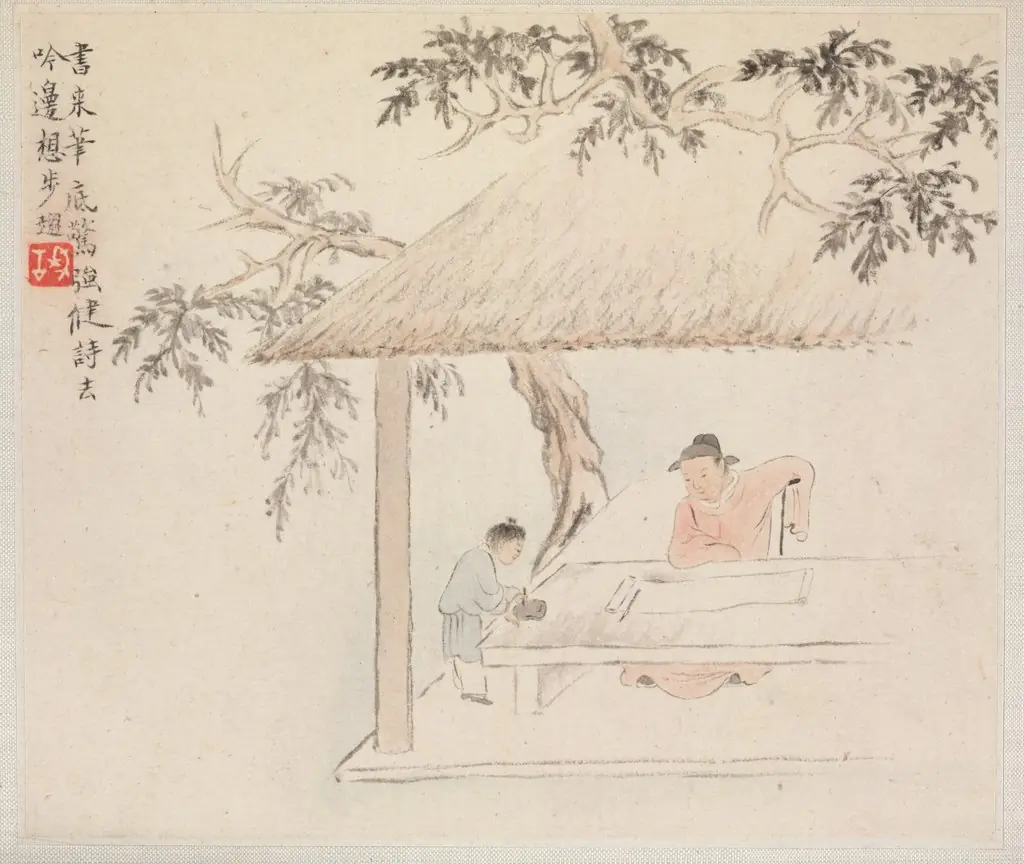 Album of Landscape Paintings Illustrating Old Poems: A Scholar at a Table with a Servant aside Preparing the Ink
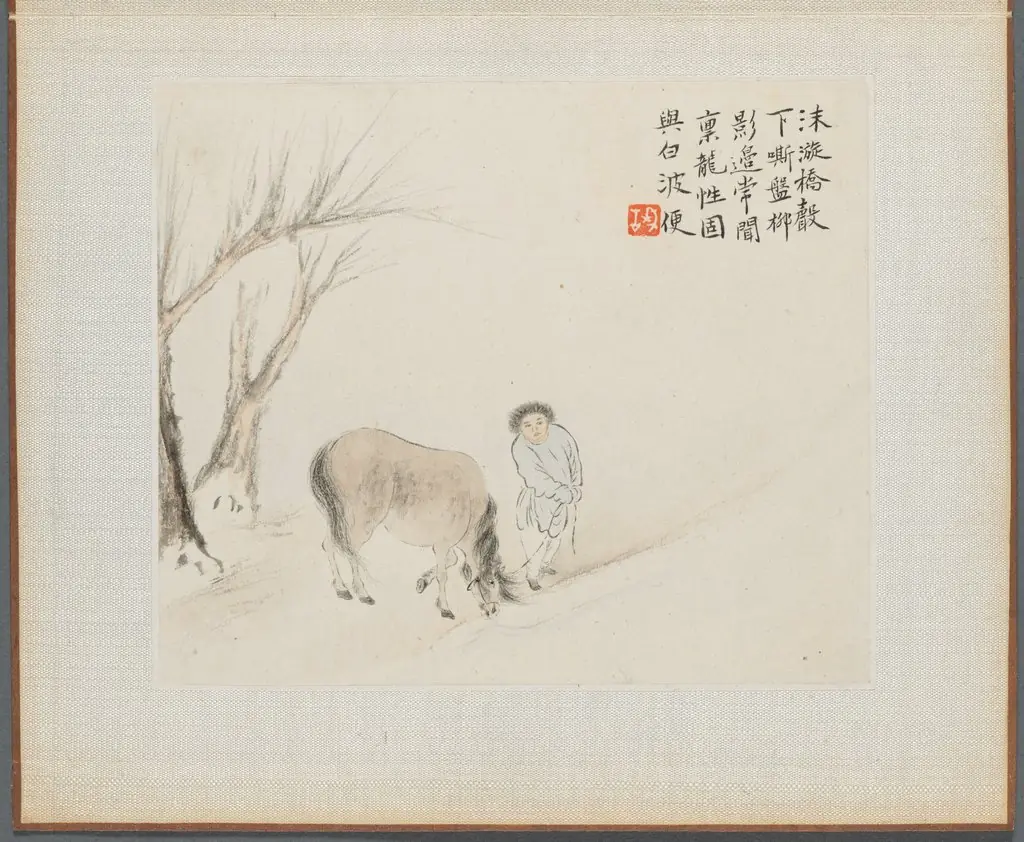 Album of Landscape Paintings Illustrating Old Poems: Boy Holding a Horse
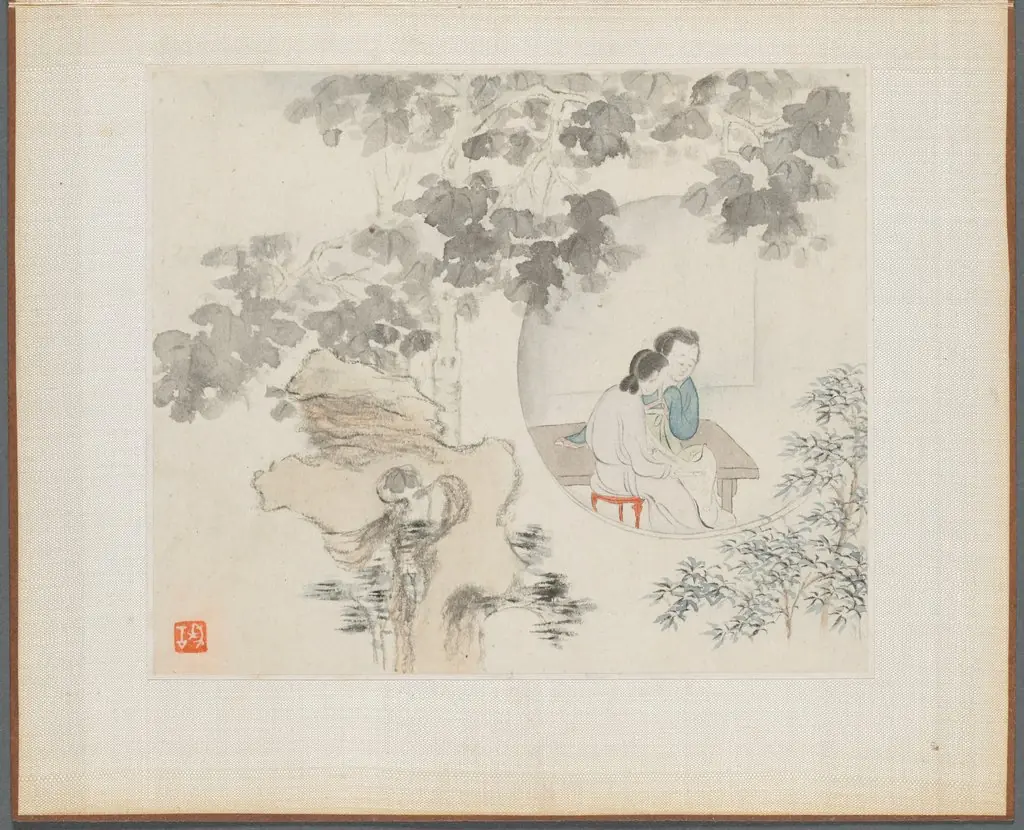 Album of Landscape Paintings Illustrating Old Poems: Two Women with Needlework in a Garden
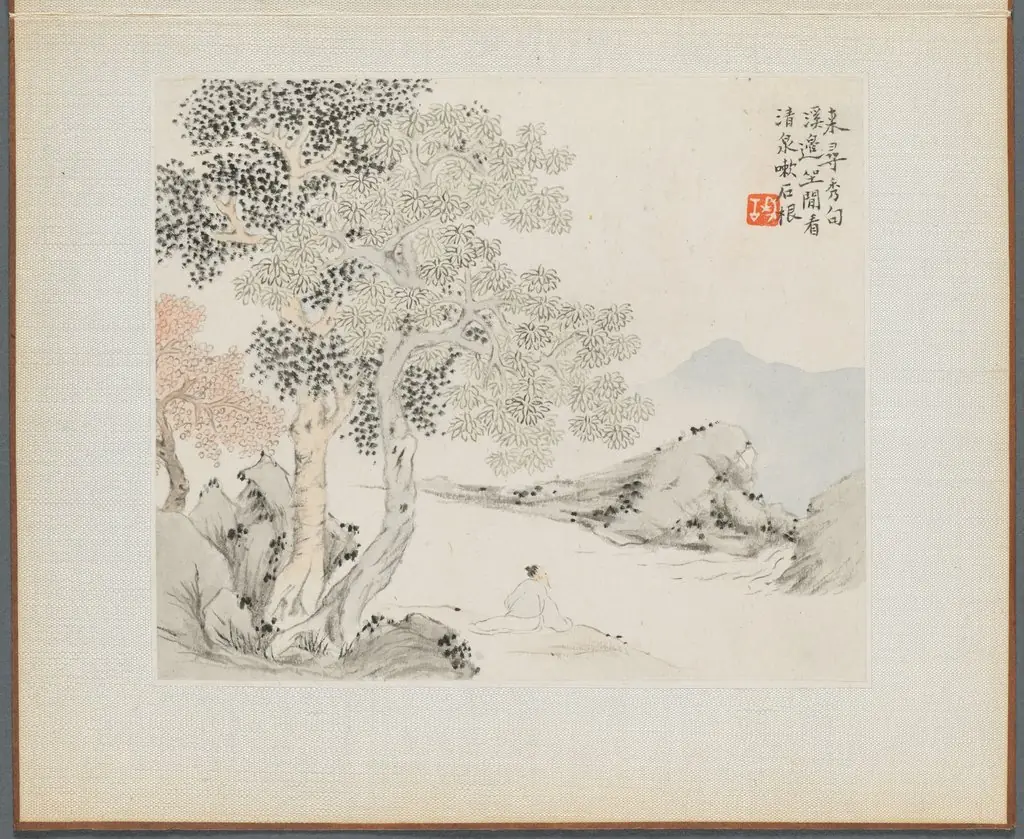 Album of Landscape Paintings Illustrating Old Poems: Three Big Trees, a Stream with an Old Man Sitting on the Bank
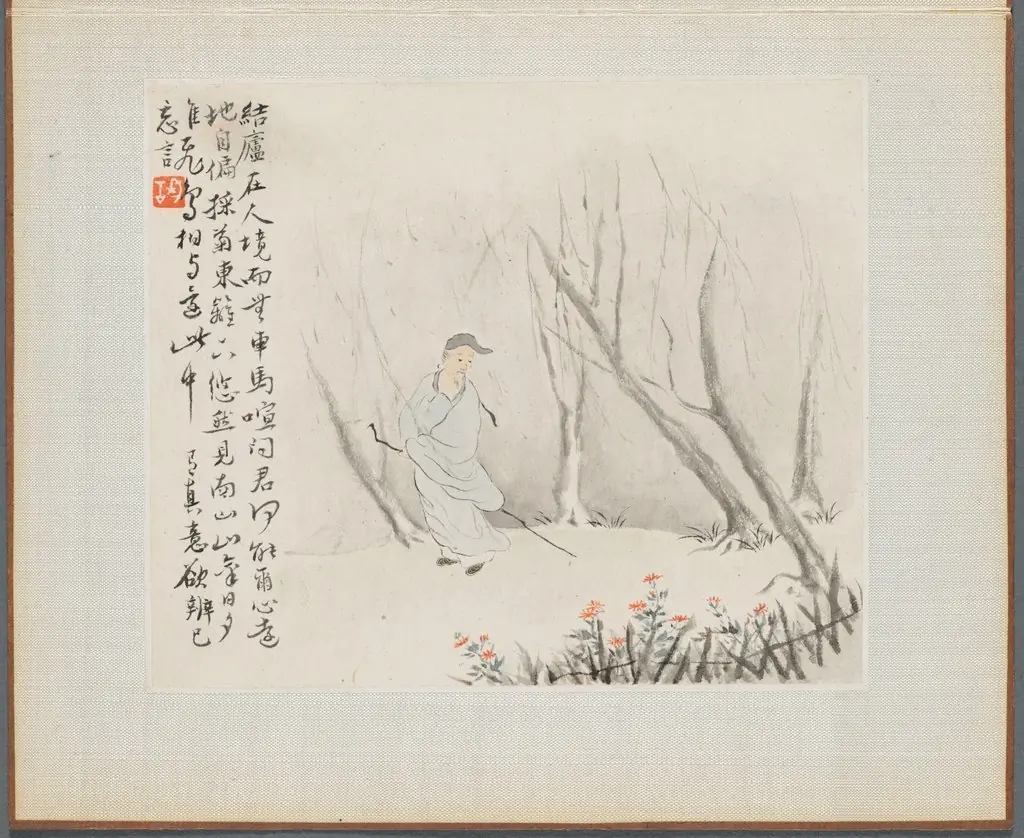 Album of Landscape Paintings Illustrating Old Poems: Man with a Staff Admires Chrysanthemums at a Fence
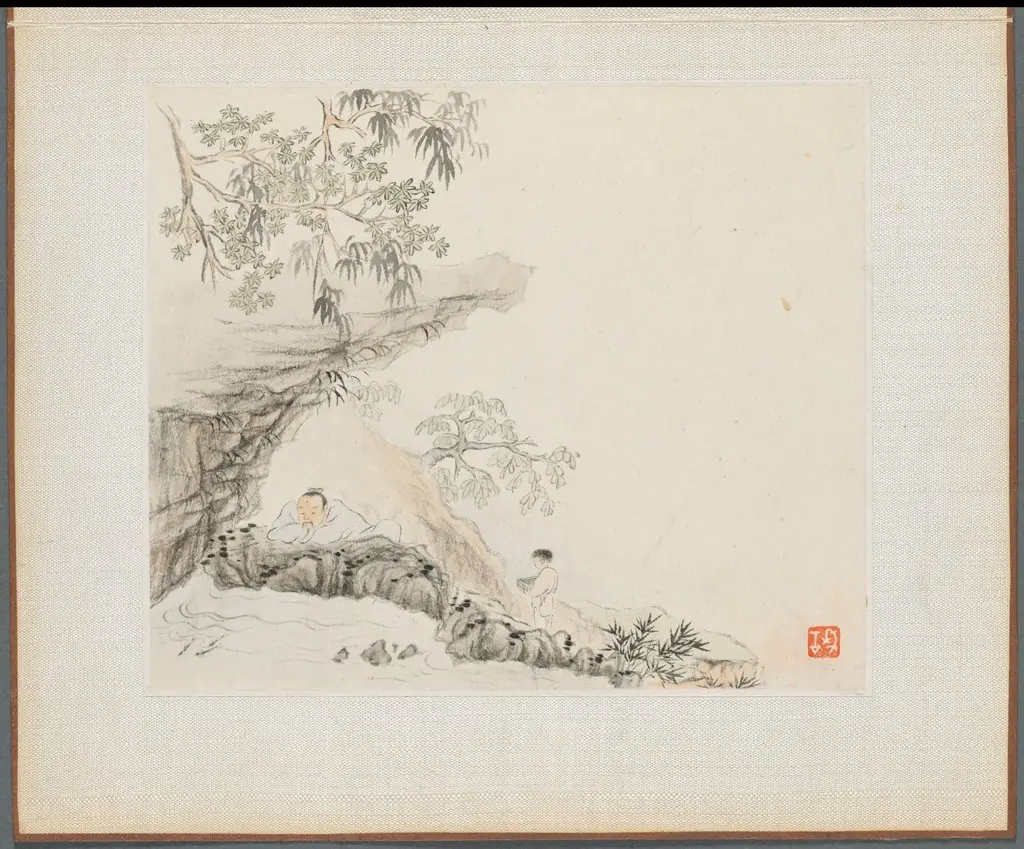 Album of Landscape Paintings Illustrating Old Poems: Scholar watching Fish
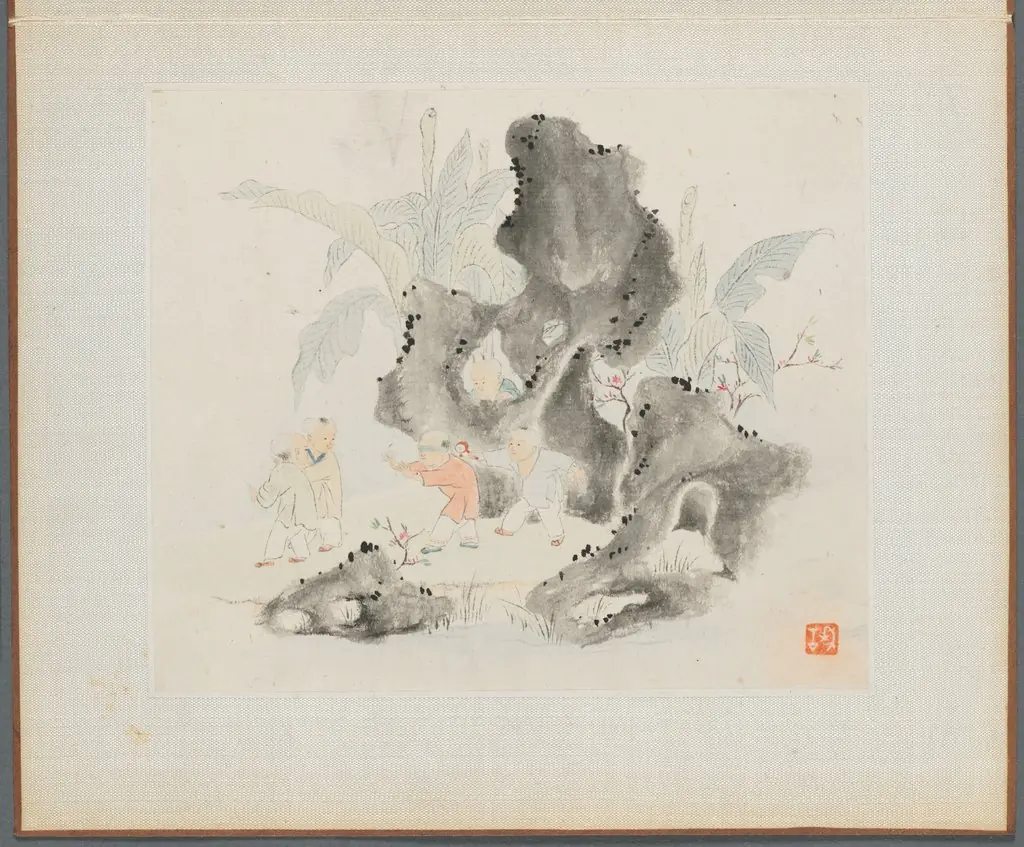 Album of Landscape Paintings Illustrating Old Poems: Children Playing Blindman's Buff in a Garden
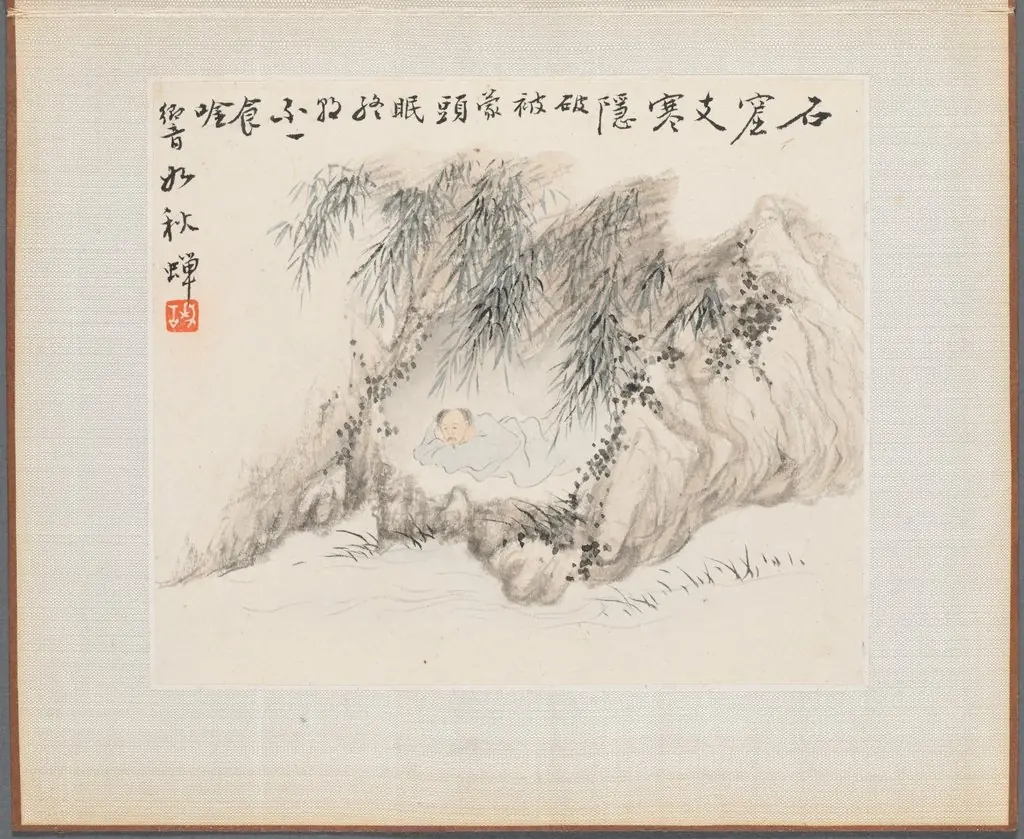 Album of Landscape Paintings Illustrating Old Poems: Man Resting under Bamboo