Artwork
明/清 黃向堅 萬里尋親圖 卷|Searching for My Parents
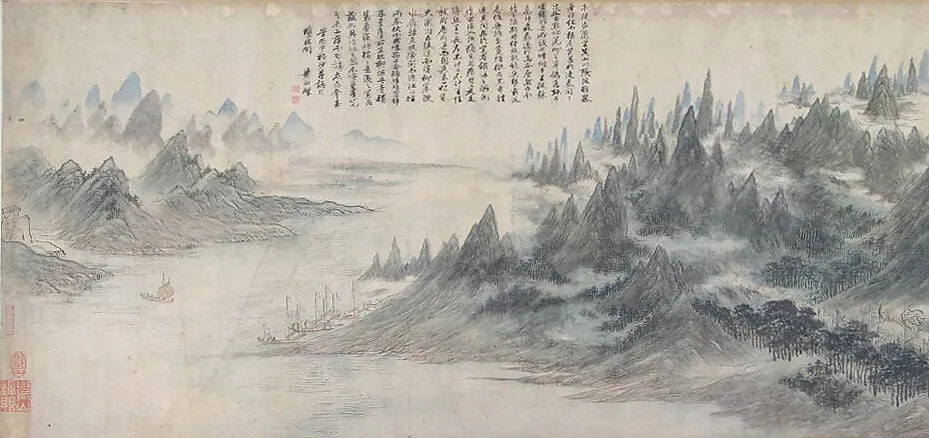
明/清 黃向堅 萬里尋親圖 卷|Searching for My Parents is an ink painting by the Baroque artist Huang Xiangjian. It dates from 1656 and is held in the collection of the Metropolitan Museum of Art.
About this work
Technique & Style
Created in China in 1656, the piece belongs to the landscape genre and portrays a mountainous terrain, reflecting the formal conventions of the period.
The work is executed as a handscroll using ink and polychrome pigments on a silk support, a technique typical of mid‑seventeenth‑century Chinese landscape painting. Its subject consists of a stylized mountain vista rendered in layered brushwork that emphasizes atmospheric depth and compositional balance. Created in China in 1656, the piece belongs to the landscape genre and portrays a mountainous terrain, reflecting the formal conventions of the period.
As part of the Metropolitan Museum of Art’s collection, the scroll’s material execution and iconography illustrate the artist’s mastery of ink‑color modulation and spatial arrangement within the handscroll format.
History & Provenance
Searching for My Parents is a handscroll painted in 1656 by the Chinese artist Huang Xiangjian using ink and color on silk. The work belongs to the landscape genre and portrays a mountainous scene, as recorded in its descriptive metadata. It was created in China and entered the collection of the Metropolitan Museum of Art, which currently holds the piece in its galleries.
No documentation of an earlier commission or ownership sequence beyond the museum’s acquisition is provided in the available records. The dating of 1656 derives from the work’s inception field, and its material medium aligns with contemporary Qing‑era scroll painting practices.
The handscroll Searching for My Parents by Huang Xiangjian, dated 1656, is held in the collection of the Metropolitan Museum of Art, where it is classified as a painting in the landscape genre. Its association with the Metropolitan Museum of Art is documented in structured records identifying the institution as both the collection and the location of the work. No specific inventory or accession number is recorded in the available sources, and no exhibition history is documented for this handscroll.
Overview
Searching for My Parents (萬里尋親圖) is a handscroll painting created by Huang Xiangjian in 1656, during the transition between the Ming and Qing dynasties. Executed with ink and color on silk, this work presents an expansive landscape that viewers experience by unrolling it gradually. The scroll visually narrates a journey through mountainous terrain, characterized by its intricate details and evocative atmosphere.
Subject & Meaning
The painting's central theme revolves around a solitary figure traversing a vast, rugged landscape. This individual, depicted with worn clothing and carrying a simple bundle, represents the artist himself. Huang Xiangjian undertook an arduous 1,600-mile trek to locate his parents amidst wartime upheaval.
Each rendered rock, tree, and bridge within the scroll serves as a visual testament to the memories and experiences of this profound personal quest.
Context
Huang Xiangjian's work stands within the rich tradition of Chinese landscape painting, an art form deeply rooted in philosophical and personal expression. While depicting natural scenery, these works often convey inner states, historical narratives, or moral ideals. Searching for My Parents exemplifies this tradition by using the natural world not merely as a backdrop, but as a direct reflection of the artist's lived experience and emotional journey.
Artist & collection

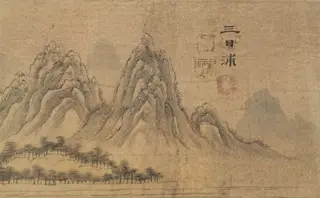 Samil-Po (Samil Harbor)
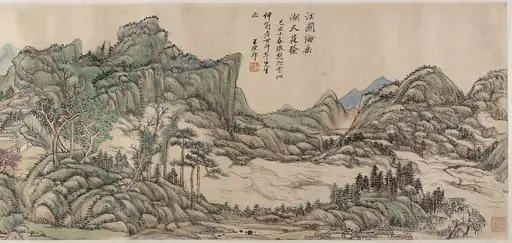 清 王原祁 江國垂綸圖 卷|Fishing in River Country at Blossom Time
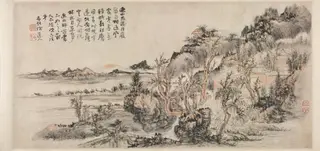 Spring Landscape
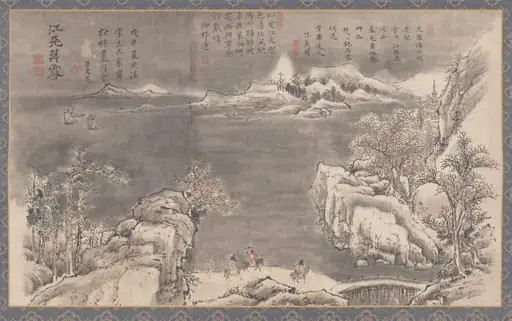 Evening Snow Blending River and Sky, from Eight Views of Xiao-Xiang
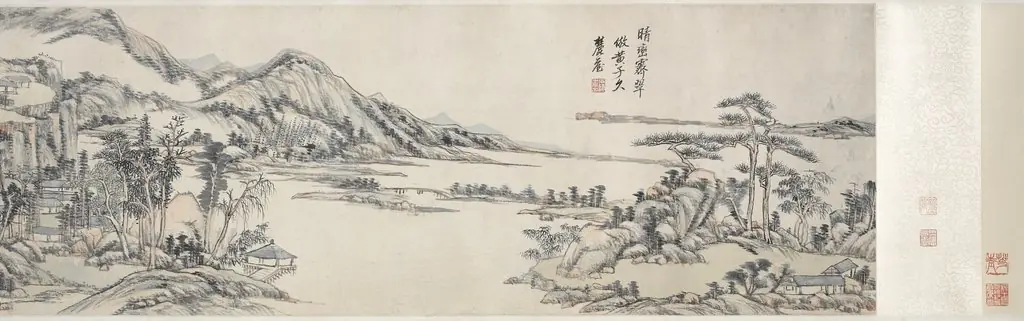 Green Peaks under Clear Sky: After Huang Gongwang
 明/清 李在 董巨馬夏合風山水圖 卷|Landscape after Dong Yuan, Juran, Ma Yuan, and Xia Gui
 清 程庭鷺 山水 冊頁|Landscape
 清 王原祁 輞川圖 卷|Wangchuan Villa
 Streams and Mountains without End
 Landscape