Artwork
Spring Landscape
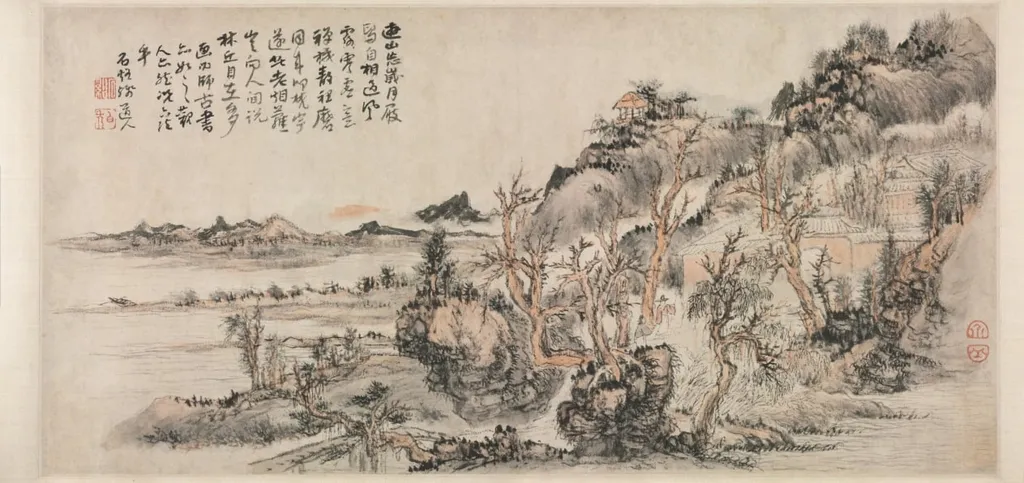
Spring Landscape is an unspecified painting by the Baroque artist Kun Can. It dates from 1666 and is held in the collection of the Cleveland Museum of Art.
- Accession no.
- 1966.367
- Credit line
- Purchase from the J. H. Wade Fund
About this work
Overview
Spring Landscape is an ink painting on paper attributed to the 17th‑century monk‑artist Kuncan, one of the group known as the “Four Monks.” The composition presents a jagged mountain ridge, a cascading waterfall, and a diminutive figure traversing a narrow path, all rendered in a spontaneous, unrefined manner that emphasizes the immediacy of the scene.
Subject & Meaning
The work is accompanied by a brief inscription in verse, reflecting a chance encounter in the wilderness. The poem speaks of wandering through mountains, the chill of wind and dew, and the quiet patience required for Chan insight, suggesting that the solitary traveler embodies a contemplative search for spiritual clarity amid nature’s transience.
Technique & Style
Kuncan employs a rugged, rustic brushwork characteristic of his landscape oeuvre, favoring swift, irregular strokes that convey texture and movement. The ink is applied with varying density, creating a misty atmosphere where edges dissolve, reminiscent of the Chinese equivalent of sfumato, allowing cliffs and water to merge into an ambiguous, almost lyrical space.
History & Provenance
The painting originated as part of a larger album commissioned by Cheng Zhengkui, an active poet‑painter between 1630 and 1674, who shared Kuncan’s literary interests. The collaborative nature of the piece, artist and patron exchanging visual and poetic ideas, underscores the intertwined practices of painting and poetry in mid‑Ming scholarly circles.
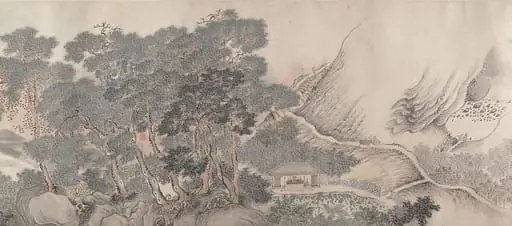
Artist & collection
Artist
Kun Can (髡殘, Buddhist name; common name: 劉石谿 (Liu Shixi or Liu Jieqiu)) (1612 to after 1674) was a Chinese Buddhist monk and painter during Ming and Qing dynasties.

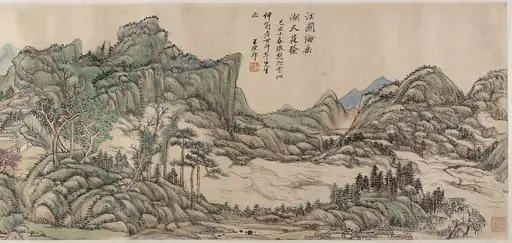 清 王原祁 江國垂綸圖 卷|Fishing in River Country at Blossom Time
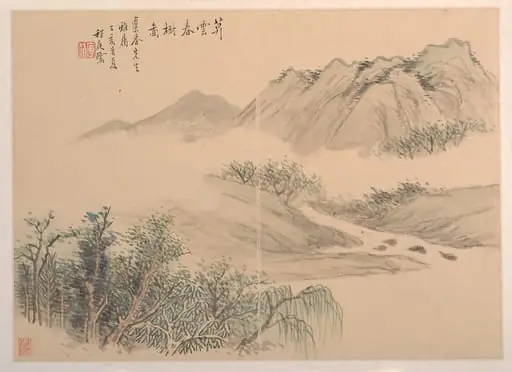 清 程庭鷺 山水 冊頁|Landscape
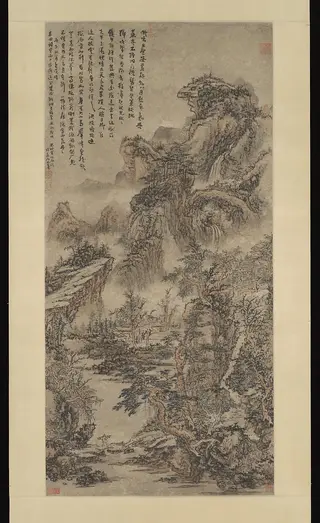
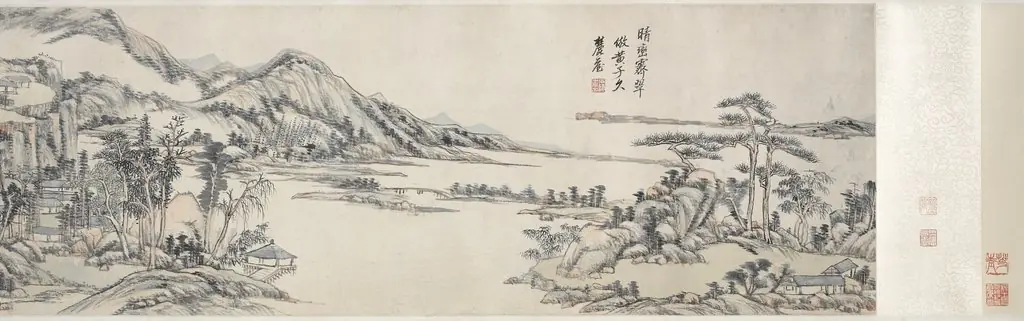 Green Peaks under Clear Sky: After Huang Gongwang
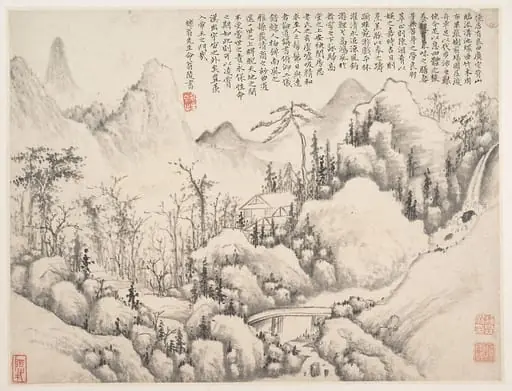 清 施霖 山莊圖 冊頁|Mountain Retreat, leaf from Album for Zhou Lianggong
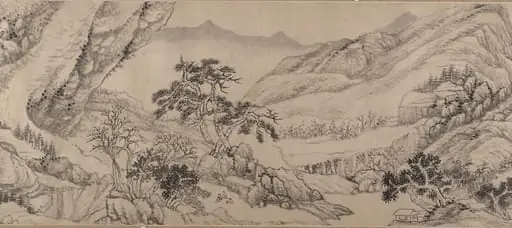 清 柳堉 山水圖 卷|Traveling Amid Streams and Mountains
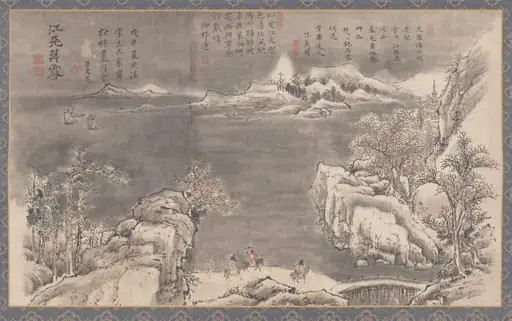 Evening Snow Blending River and Sky, from Eight Views of Xiao-Xiang
 Autumn Mist in the Countryside