Artwork
清 王原祁 江國垂綸圖 卷|Fishing in River Country at Blossom Time
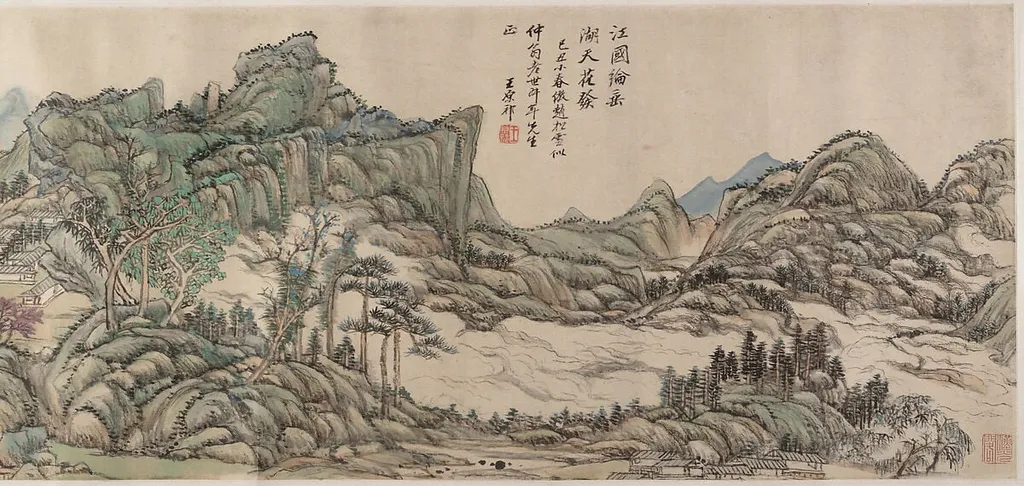
清 王原祁 江國垂綸圖 卷|Fishing in River Country at Blossom Time is an ink painting by the Baroque artist Wang Yuanqi. It dates from 1709 and is held in the collection of the Metropolitan Museum of Art.
About this work
A long scroll of soft gray mountains, pink peach blossoms, and a quiet river where a man fishes from a small boat. Wang Yuanqi painted it in 1709 in ink and a little color, layering tiny strokes to build the misty hills. Made to be unrolled a section at a time, it moves like a slow walk through the countryside.
Technique & Style
The technical execution uses layered washes of color to suggest depth, reflecting the medium’s ink‑and‑color handling on paper.
The work is a handscroll painted in ink and color on paper, created in China in 1709. Its dimensions are 26 cm in height by 146.1 cm in width. The painting belongs to the landscape genre and depicts a mountainous river scene.
Formal qualities include a composition that guides the eye along a winding river flanked by stylized cliffs and foreground foliage, typical of Qing landscape scrolls. The technical execution uses layered washes of color to suggest depth, reflecting the medium’s ink‑and‑color handling on paper.
History & Provenance
Created in 1709, the handscroll Fishing in River Country at Blossom Time is an ink and color on paper landscape painting by the artist Wang Yuanqi. The work, measuring 26 cm in height and 146.1 cm in width, depicts mountainous and riverine scenery. Currently held in the collection of the Metropolitan Museum of Art in New York, the piece represents a significant example of Qing dynasty landscape art.
The specific commission details or the original ownership chain prior to its arrival at the museum are not detailed in the available records, though its creation date is firmly established as 1709.
Fishing in River Country at Blossom Time is held in the collection of the Metropolitan Museum of Art, as recorded in the Wikidata entry for the work. The painting, executed by Wang Yuanqi in 1709, is classified as a painting within the museum's holdings. No specific inventory or accession number is provided in the available sources, and no exhibition history is documented.
The handscroll, rendered in ink and color on paper, is located at the Metropolitan Museum of Art according to the cited record.
Overview
Fishing in River Country at Blossom Time is a handscroll executed by the Qing dynasty master Wang Yuanqi in 1709. Rendered in ink and light color on paper, the work depicts a serene river landscape characterized by soft, misty mountains and blooming peach trees. The composition follows the traditional handscroll format, designed to be unrolled sequentially to reveal a continuous narrative of the river valley.
Wang Yuanqi employs his signature technique of layering tiny, repetitive brushstrokes, often described as cross-hatching or 'dragon scales,' to construct the volumetric forms of the hills and create a textured, atmospheric depth. A solitary figure fishes from a small boat, anchoring the human presence within the vast, rhythmic natural setting. Created late in the artist's career, this piece exemplifies his mature style, which prioritizes the structural reorganization of classical forms over direct observation of nature.
The work reflects the orthodox school's emphasis on mastering past masters while asserting individual compositional logic, serving as a refined meditation on the harmony between humanity and the landscape.
Subject & Meaning
The painting depicts an idealized natural setting, emphasizing tranquility and harmony. The presence of a solitary fisherman amidst blossoming trees and a quiet waterway suggests themes of contemplation, withdrawal from urban life, and a connection with the natural world. This subject matter aligns with traditional Chinese landscape painting, which often served as a means for viewers to engage with an imagined, peaceful rural escape.
Context
As a handscroll, "Fishing in River Country at Blossom Time" is inherently designed for an intimate and sequential viewing experience. The format dictates that the artwork is unrolled slowly, revealing segments of the landscape one at a time. This deliberate pacing allows the viewer to embark on a visual journey through the depicted scenery, creating a sense of a leisurely stroll through the countryside rather than a static, instantaneous observation.
Artist & collection


 Spring Landscape
 Landscape with Streams and Mountains
 清 程庭鷺 山水 冊頁|Landscape
 Folded Hills and Layered Peaks
 明 佚名 傳文伯仁 山水圖 卷|Landscape
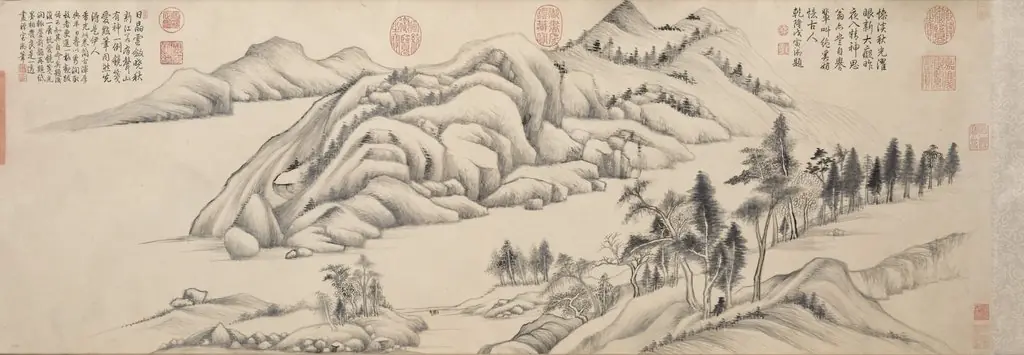 River and Mountains on a Clear Autumn Day
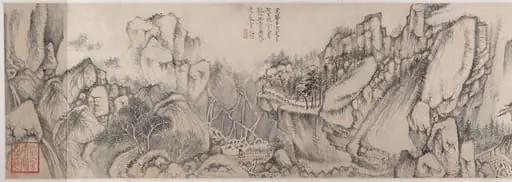 明 趙左 谿山無盡圖 卷|Streams and Mountains without End
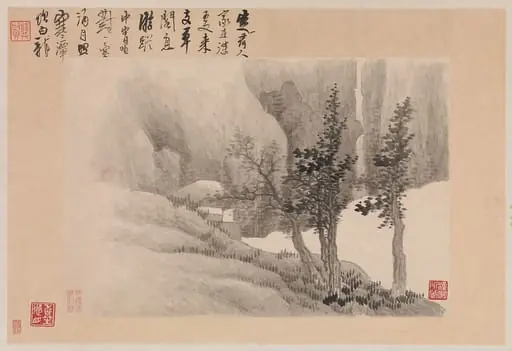 清 龔賢 自題山水十六開 冊|Landscapes with Poems
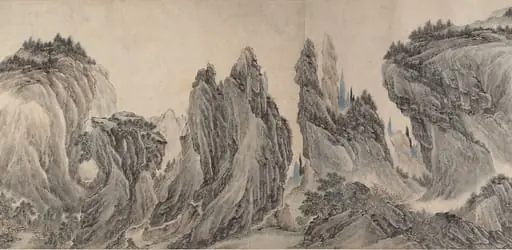 明/清 李在 董巨馬夏合風山水圖 卷|Landscape after Dong Yuan, Juran, Ma Yuan, and Xia Gui
 清 施霖 山莊圖 冊頁|Mountain Retreat, leaf from Album for Zhou Lianggong