Artwork
Still Life
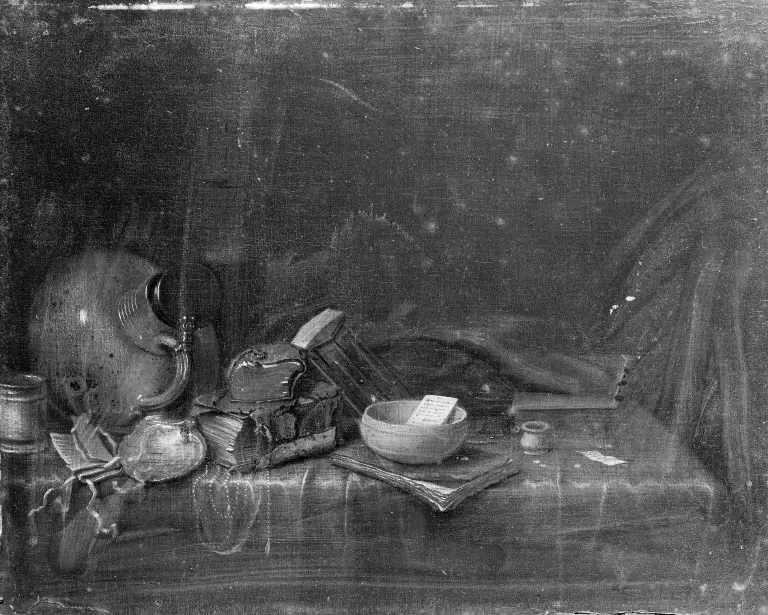
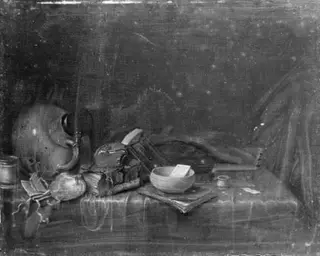
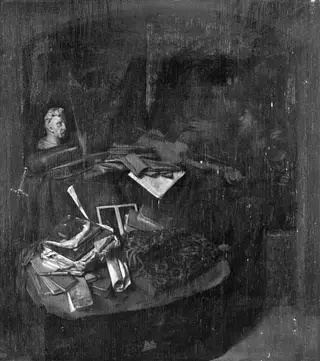
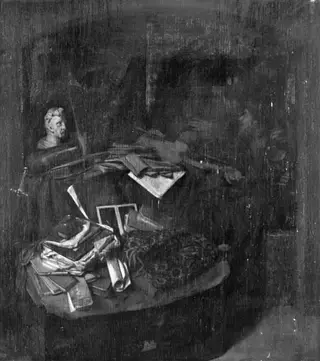
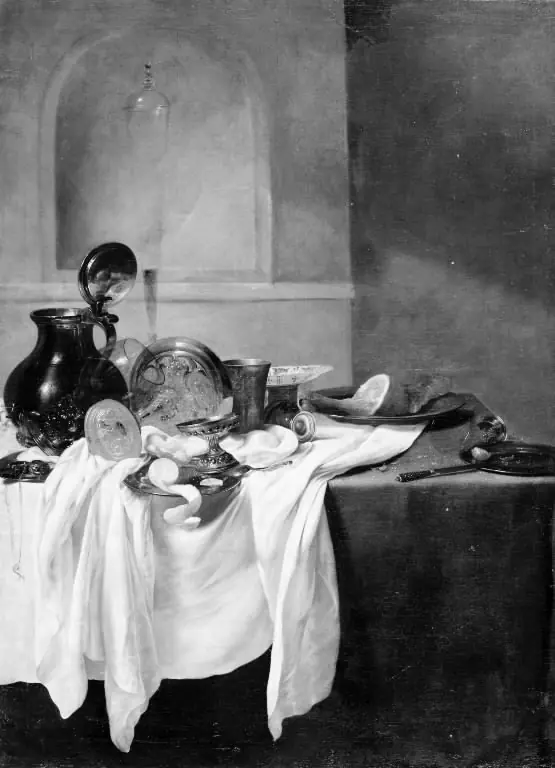
Still Life is an oil painting by the Dutch Golden Age artist Hubert van Ravesteyn. It dates from 1653 and is held in the collection of the Statens Museum for Kunst.
About this work
Subject & Meaning
5 cm in width, the work fits the typical scale of private devotional still lifes intended for intimate viewing.
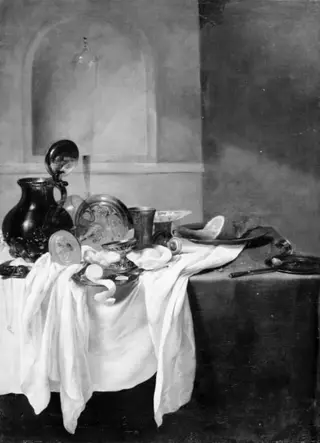
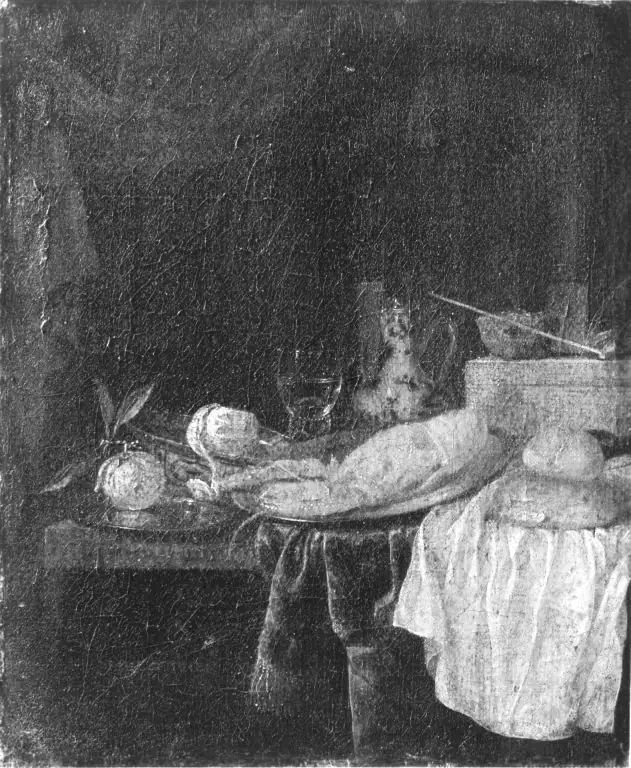
The painting presents a modest arrangement of a stoneware vessel and an open book, a conventional grouping within Dutch Golden Age still life that emphasizes domestic order and the transience of material wealth. The stoneware, rendered with careful brushwork, recalls the tactile realism prized by collectors, while the book, a common emblem of learning and piety, invites contemplation of intellectual pursuit amid everyday objects. Together these elements suggest a meditation on the balance between material comfort and spiritual reflection, a theme recurrent in 17th‑century Dutch domestic imagery.
Measured at 20.5 cm in height and 25.5 cm in width, the work fits the typical scale of private devotional still lifes intended for intimate viewing.
Technique & Style
Hubert van Ravesteyn's Still Life, dated 1653, is executed in oil paint on an unspecified support. The work measures 20.5 cm in height and 25.5 cm in width. As a genre painting, it depicts a composition of stoneware and a book. The piece is currently held in the collection of the Statens Museum for Kunst.
History & Provenance
Hubert van Ravesteyn painted Still Life in 1653, an oil on canvas measuring 20.5 by 25.5 centimeters, depicting stoneware and a book. The work entered the collection of the Statens Museum for Kunst, where it remains today.
Legacy
Hubert van Ravesteyn's 1653 still life, housed in Copenhagen's Statens Museum for Kunst, exemplifies Dutch Golden Age genre painting with its precise rendering of stoneware and book. While specific later influence or reputation details are not documented in the provided sources, the work's inclusion in the museum's collection and its classification as a canonical example of 17th-century Dutch still life underscore its enduring presence within institutional art historical narratives.
Overview
Hubert van Ravesteyn’s Still Life (1653) is an oil painting that presents a modest arrangement of everyday objects on a darkened surface. The composition centers on a helmet, an open book, a white stoneware bowl covered with a cloth, a small jug, and a sheet of paper, all set against an almost black background that isolates the items from any surrounding detail.
Context
Still Life fits within a broader Dutch tradition of modest still‑life compositions that celebrated ordinary objects with meticulous detail. In the mid‑17th century, such works often served both decorative and moral purposes, reflecting a cultural interest in the virtues of sobriety, industry, and the fleeting nature of material possessions.
Artist & collection
Artist
Hubert van Ravesteyn was a Dutch painter of interiors and cattle, the son of Herman van Ravesteyn.