Artwork
Allegory of the Catholic Faith
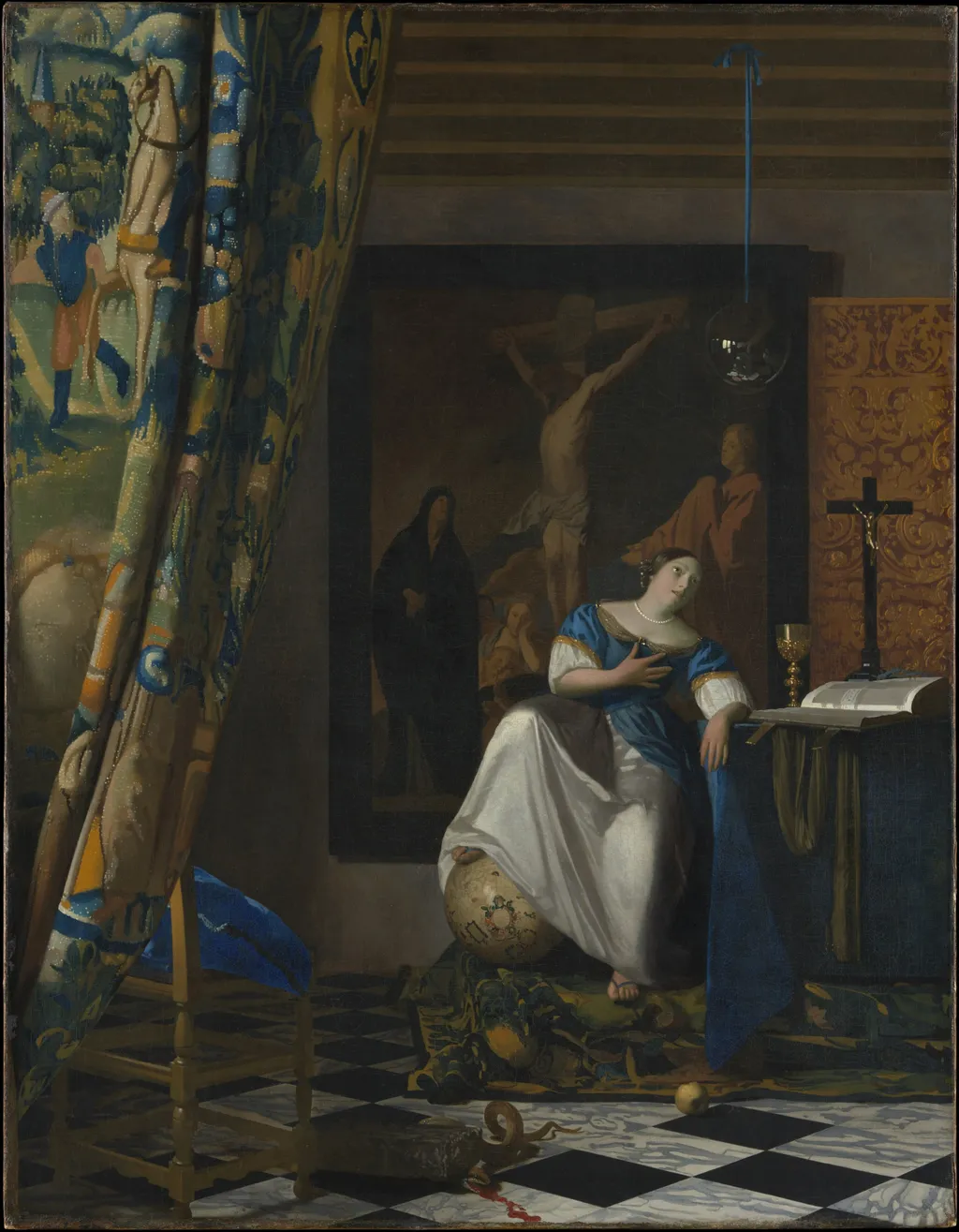
Allegory of the Catholic Faith is an oil painting by the Dutch Golden Age artist Johannes Vermeer. It dates from 1670 and is held in the collection of the Metropolitan Museum of Art.
About this work
The Metropolitan Museum of Art acquired the canvas in 1931 through the Friedsam Collection.
Behind a drawn tapestry in a dim Dutch interior, a woman in white and blue satin presses one hand to her heart and plants her foot on a terrestrial globe made by Hendrick Hondius. Johannes Vermeer painted this scene around 1670–1672, at a time when public Mass was forbidden in the Dutch Republic, filling the room with coded Catholic symbolism: a chalice, crucifix, and a Crucifixion after Jacob Jordaens. The Metropolitan Museum of Art acquired the canvas in 1931 through the Friedsam Collection.
Subject & Meaning
The allegorical figure of Faith is depicted as a woman in white and blue robes, white for purity, blue for the heavens, with her hand on her heart to indicate that faith resides within. She rests her right foot on a terrestrial globe, symbolizing her dominion over the world. A suspended glass sphere represents the divine realm or heaven.
At her feet, a crushed snake and a bitten apple signify the defeat of the Devil and original sin, while a cornerstone (Christ) crushes evil. On the table beside her, a chalice, crucifix, and open book (likely the Missale Romanum) evoke the Eucharist and the Catholic Mass, reinforced by a background painting of the Crucifixion by Jacob Jordaens. Vermeer drew these symbols primarily from Cesare Ripa's Iconologia, adapting them to create a complex allegory of Catholic belief, possibly for a private Jesuit patron.
Technique & Style
Painted in oil on canvas, Allegory of the Catholic Faith is among Vermeer's largest works at 114.3 × 88.9 cm. Characteristic of his late style, the painting exhibits a simplification and hardening of light, with the probable use of a camera obscura to render blurred optical effects on foreground elements such as the tapestry. The canvas lacks a signature, and the handling reflects a shift toward a more emblematic and less naturalistic execution than earlier interiors.
History & Provenance
Painted around 1670–1672 (possibly as late as 1674), Allegory of the Catholic Faith is one of Vermeer's last works and was likely commissioned by a private Catholic patron or a Jesuit order, reflecting Vermeer's own conversion to Catholicism. The earliest recorded owner was Herman Stoffelsz van Swoll (1632–1698), a Protestant postmaster; after his death, the painting was sold at auction in Amsterdam in 1699. It subsequently appeared at Amsterdam auctions in 1718, 1735, and 1749.
By the early 19th century, the canvas had reached Austria and later entered Russian collections, including those of Ilya Ostroukhov and Dmitry Shchukin in Moscow. In 1899, Abraham Bredius acquired it in Berlin for 700 marks. Bredius lent it to the Mauritshuis (until 1923) and then to Museum Boijmans Van Beuningen.
In 1928, Bredius sold the painting to American collector Michael Friedsam, who bequeathed it in 1931 to the Metropolitan Museum of Art, where it remains.
The painting is in the collection of the Metropolitan Museum of Art in New York, where it has been housed since its bequest in 1931 as part of the Friedsam Collection. The museum's accession number is not provided in the available sources. It was included in the exhibition "Vermeer and the Masters of Genre Painting. Inspiration and Rivalry."
Context
Allegory of the Catholic Faith is one of only two history paintings by Johannes Vermeer, the other being The Art of Painting, and both depart from his more typical genre scenes. Painted in his late period, around 1670–1674, it is often considered his final work. The painting reflects Vermeer's personal context: though Protestant-born, he converted to Catholicism upon marriage and may have produced this allegory for a Jesuit patron or a clandestine church.
Scholarship has focused on its dense iconography drawn from Cesare Ripa's Iconologia, with art historian Arthur K. Wheelock Jr. noting the Eucharistic emphasis of the chalice and crucifix arrangement. Critics, however, have sometimes faulted the composition for placing a theatrical figure and a crushed snake within an otherwise ordinary Dutch interior. The work's simplified, hardened light is characteristic of Vermeer's late style, possibly aided by a camera obscura.
Overview
Johannes Vermeer's Allegory of the Catholic Faith, painted around 1670–1672, stands out in his limited body of work as one of only two history paintings. This oil on canvas depicts a woman personifying the Catholic Church within a domestic setting, which is replete with symbolic elements. The artwork offers a complex religious narrative, departing from the genre scenes for which Vermeer is best known. It was eventually acquired by the Metropolitan Museum of Art in 1931.
Own this work as a print
Artist & collection
Artist
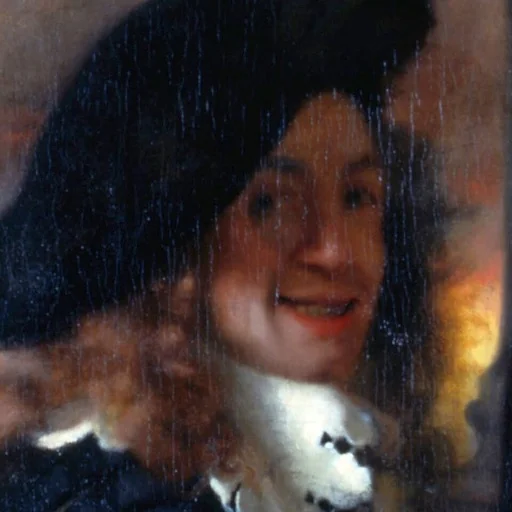
Johannes Vermeer ( vər-MEER, vər-MAIR, Dutch:; see below; also known as Jan Vermeer; October 1632 – 15 December 1675) was a Dutch painter who specialized in domestic interior scenes of middle-class life.


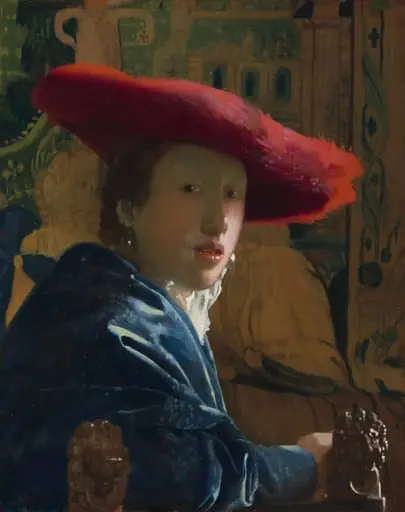
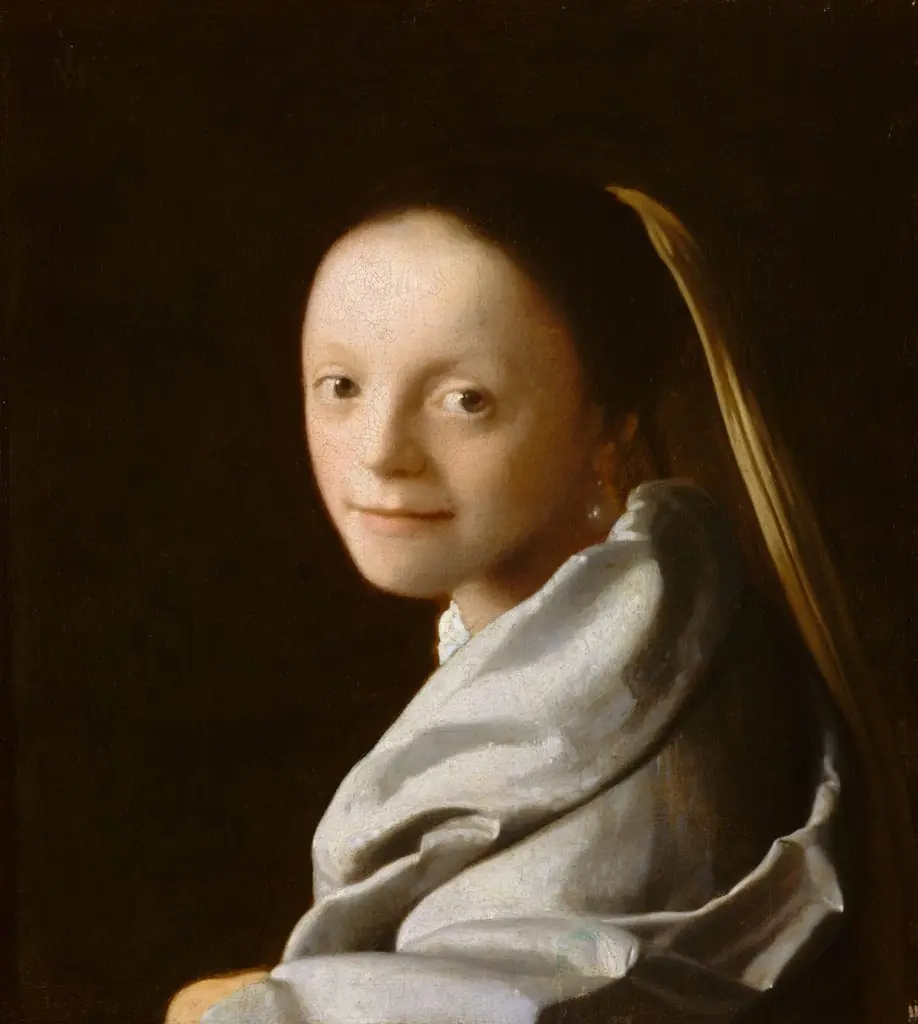
- Girl peeling an apple
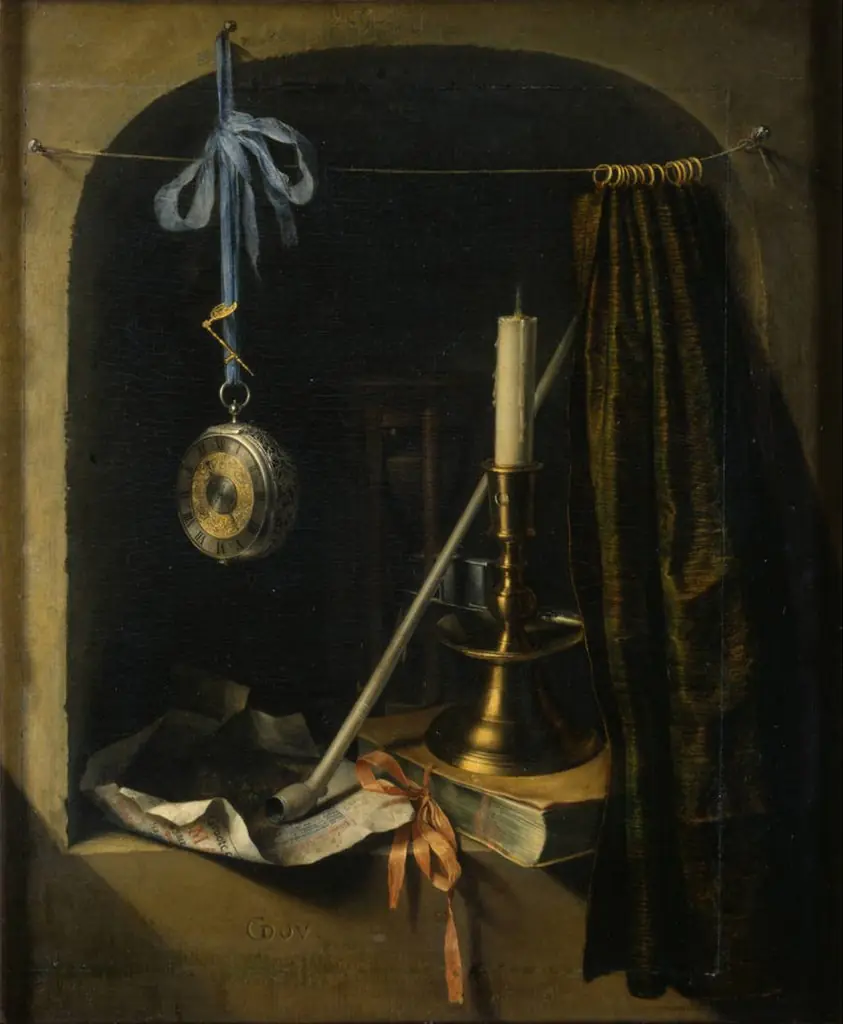 Still life with candle and watch
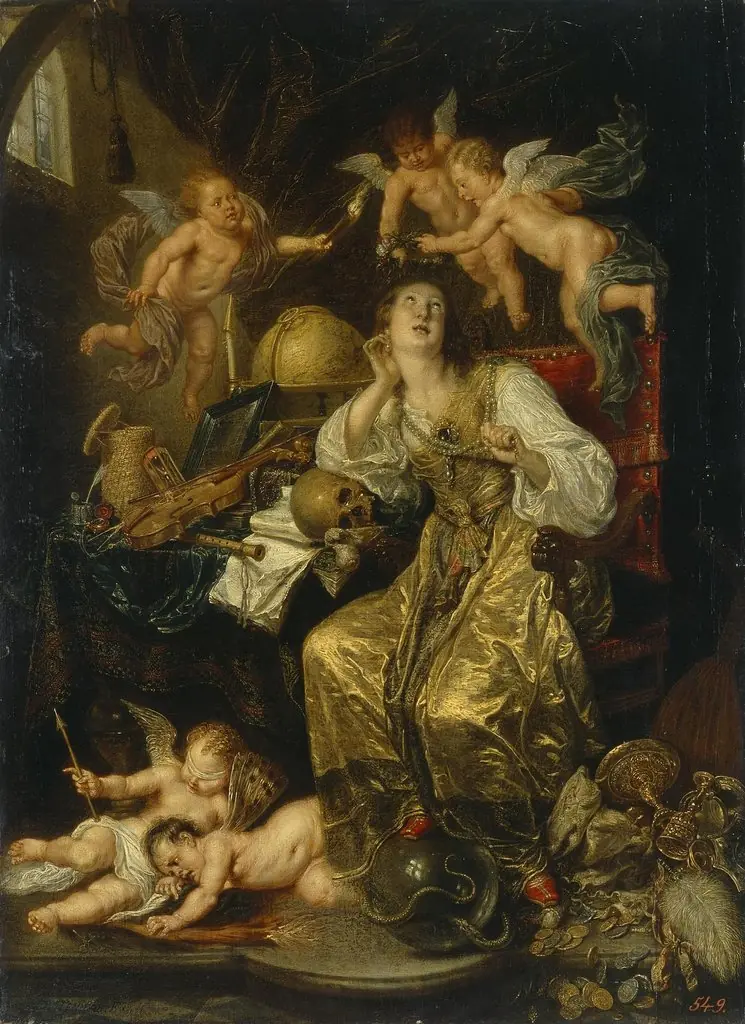 Allegory of Prudence Triumphing Over Vanity (Allegory of Faith)
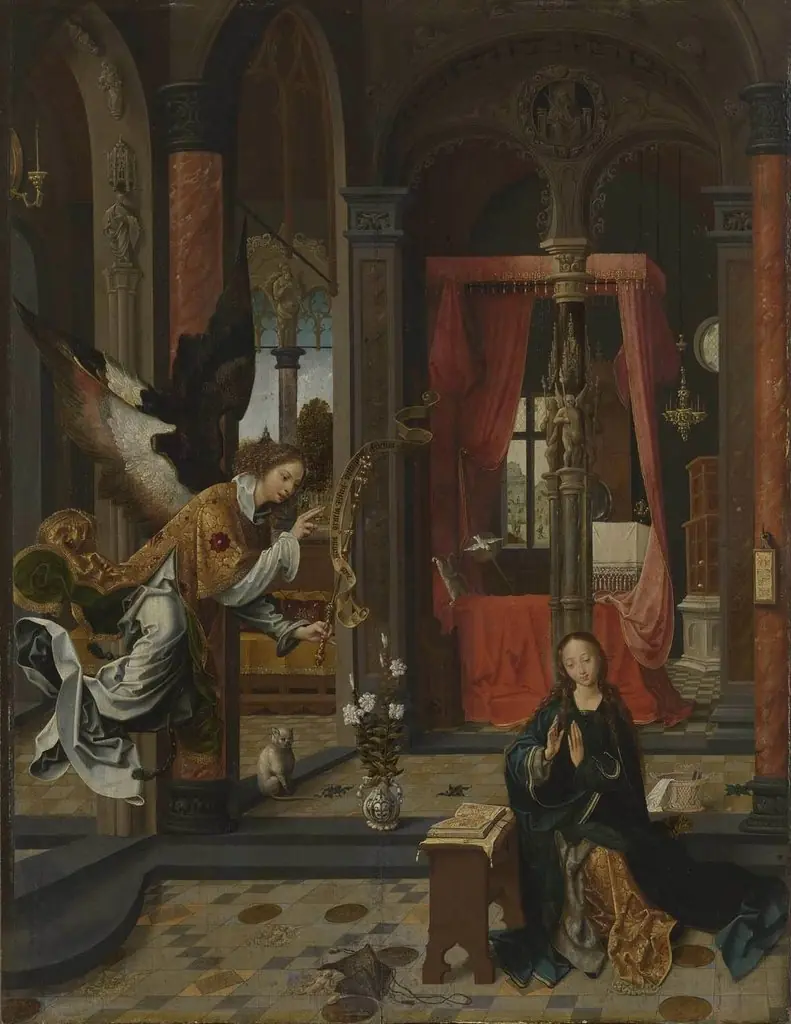 Verkündigung an Maria (nach)
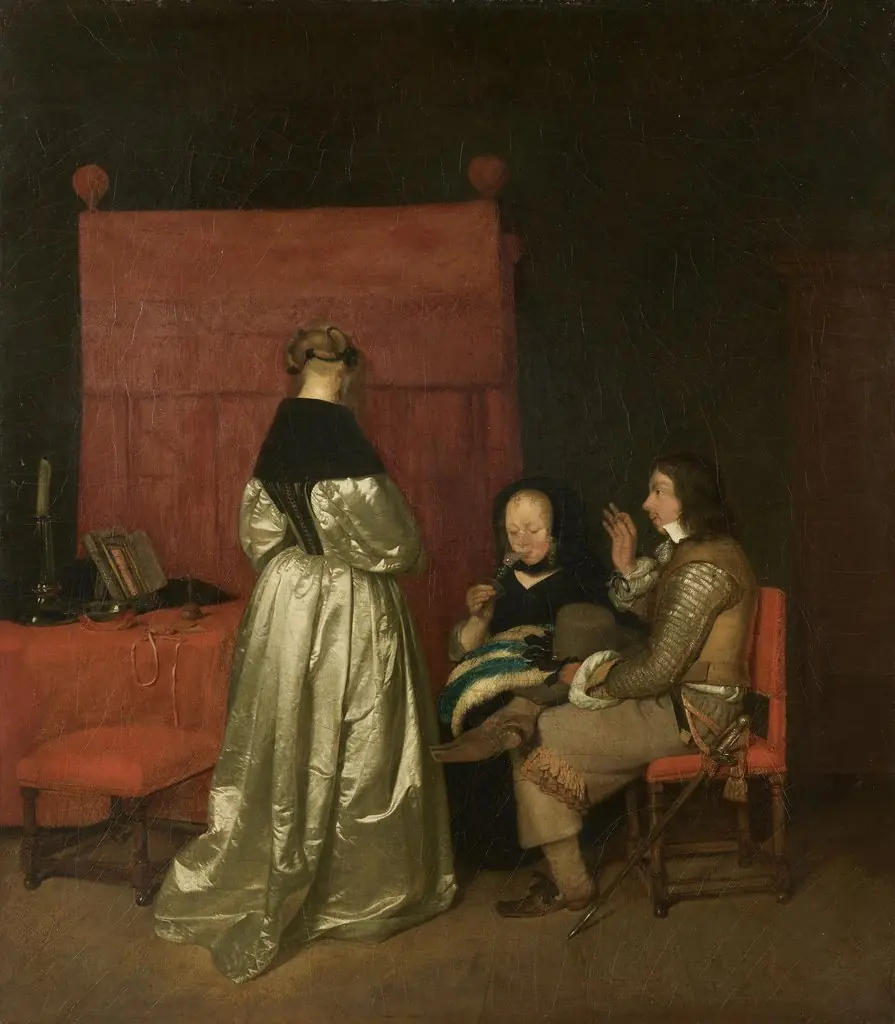 The Galant Conversation
 Maria van Suchtelen
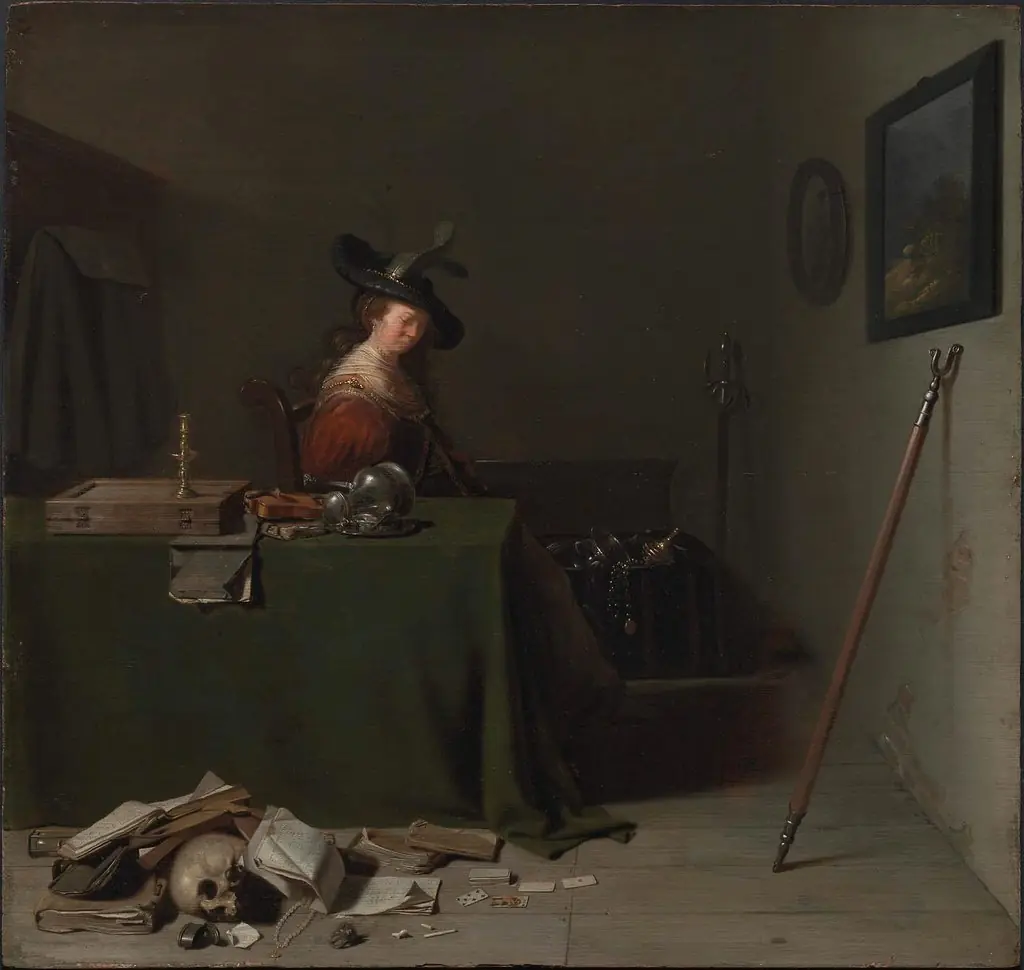 Woman Seated at a Table (Vanitas)
 Epitaph of Katarzyna Jurgiewic, from the St Mary's Church in Krakow
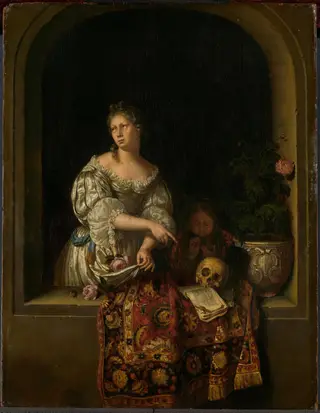 Allegory of Transience
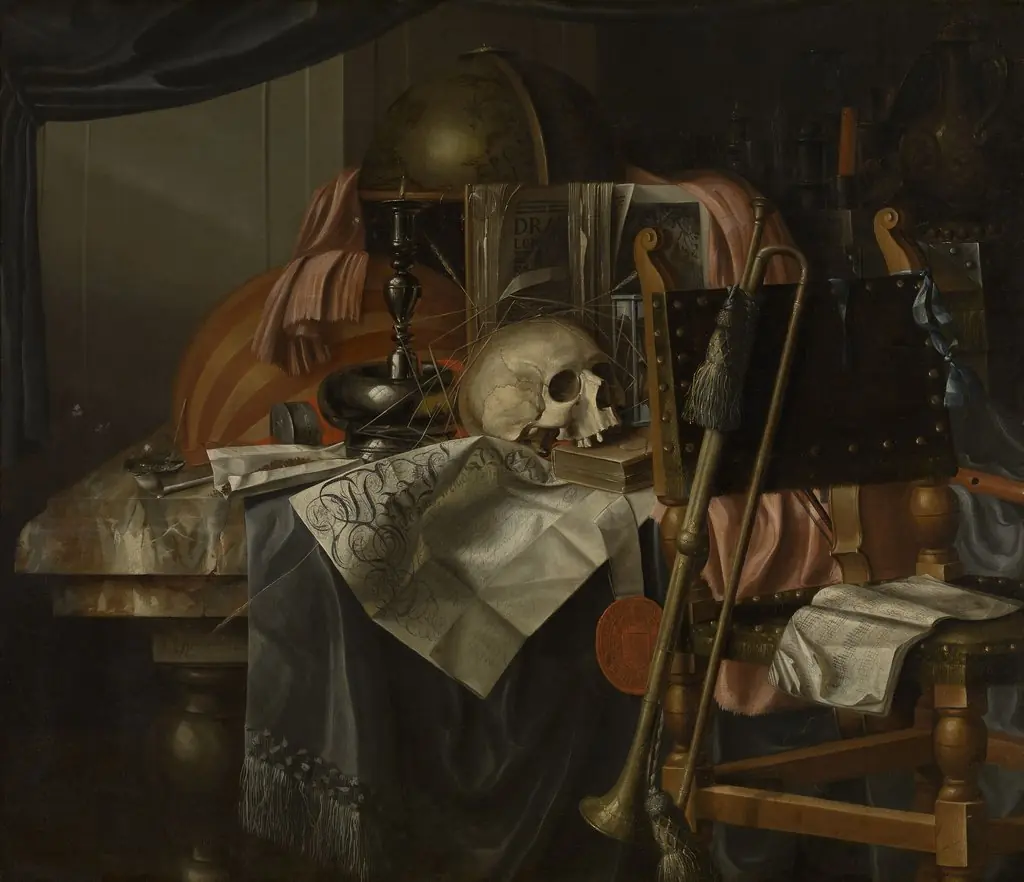 Vanitas
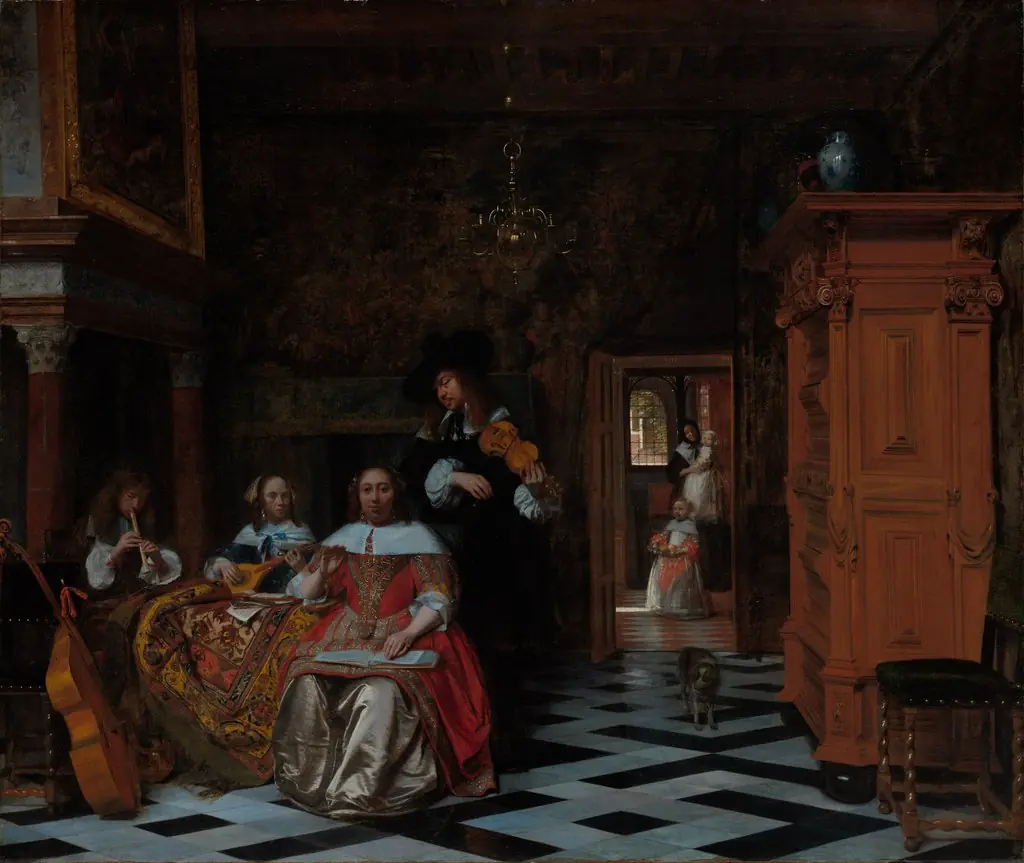 Portrait of a family making music
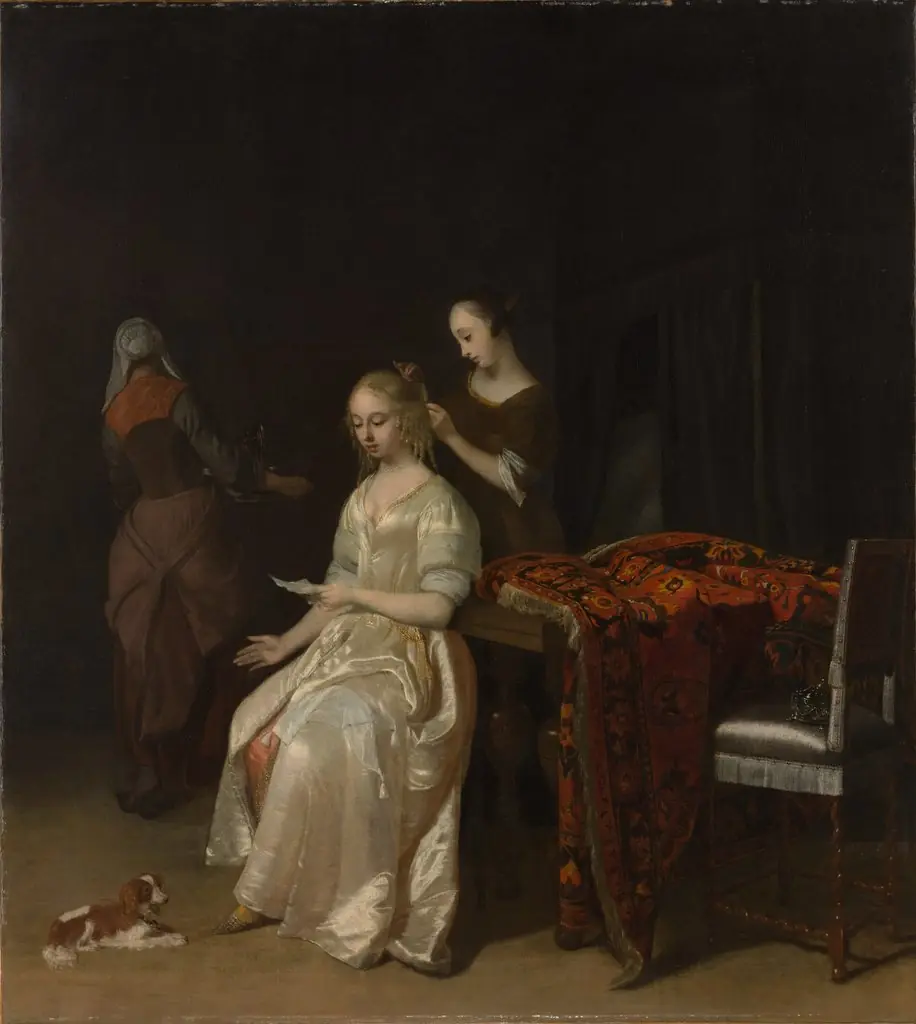 The Love Letter
 Studied in the How to Look at a Painting course
  Studied in the Dutch Golden Age course