Artwork
Calm (Calme)
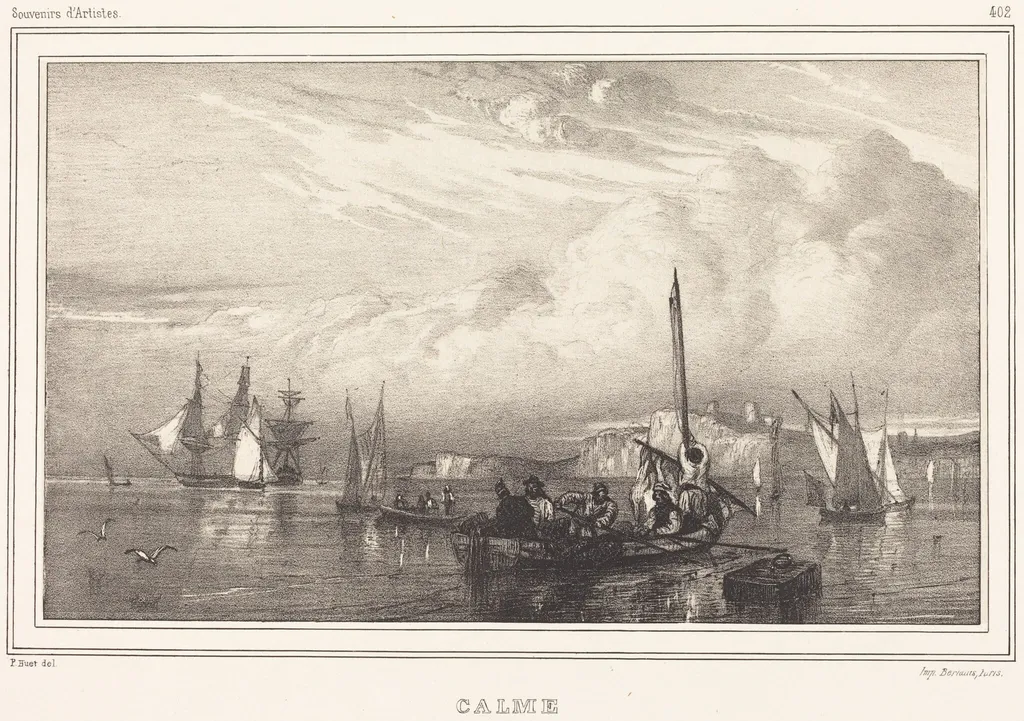
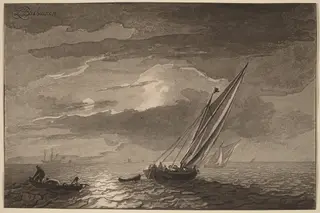
Calm (Calme) is an ink print by the Romanticist artist Paul Huet. It dates from 1832 and is held in the collection of the National Gallery of Art.
About this work
Overview
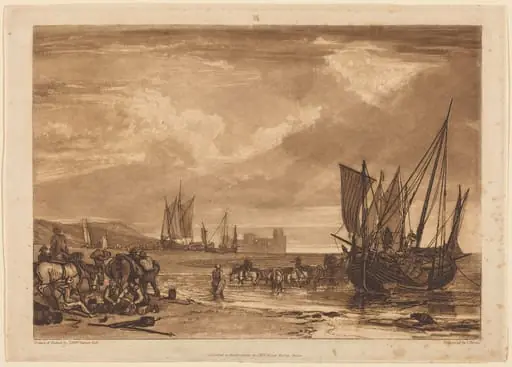
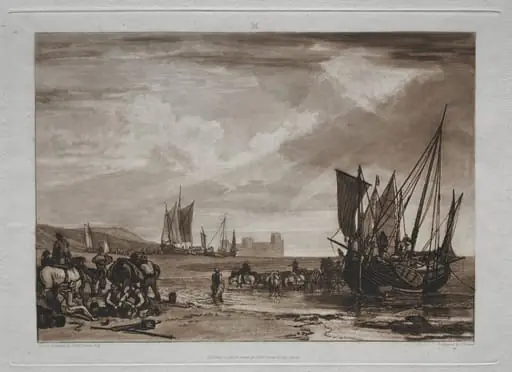
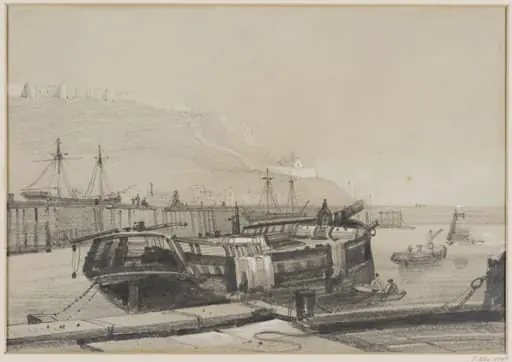
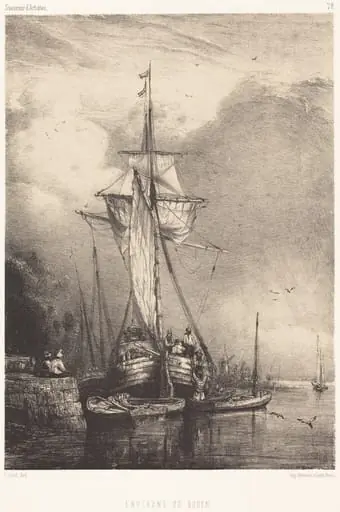
Calm (Calme) is a lithograph by Paul Huet, dated 1832. It depicts a quiet harbor at daybreak, where the stillness of the water contrasts with the presence of multiple vessels. The composition balances active human movement in the foreground with the still, towering sails of larger ships in the distance. The title, inscribed at the base, reinforces the tranquil mood conveyed through the scene.
Subject & Meaning
The absence of wind or turbulence in the water, paired with the soft sky, suggests a pause in routine, neither departure nor arrival, but a fleeting stillness.
The scene captures a moment of suspended activity in a working harbor. A small rowboat carries passengers, their postures relaxed, while larger sailing ships remain anchored or gently drifting. The absence of wind or turbulence in the water, paired with the soft sky, suggests a pause in routine, neither departure nor arrival, but a fleeting stillness. The French word 'Calme' anchors the emotional tone, inviting contemplation over narrative.
Technique & Style
Huet employed lithography, a process allowing direct drawing on limestone with greasy materials. The medium’s capacity for fine tonal gradations enabled subtle rendering of clouds and water reflections. Lines are delicate, avoiding sharp definition, which enhances the hazy, atmospheric quality. The technique favored spontaneity, aligning with Huet’s interest in capturing transient natural conditions.
History & Provenance
Created in 1832, this print emerged during Huet’s early engagement with landscape and maritime subjects. It was likely produced as part of a series or standalone print for collectors interested in Romantic-era naturalism. No documented ownership chain is widely recorded, but its survival suggests it was preserved within French artistic circles of the period.
Context
In the 1830s, French artists increasingly turned to everyday scenes of nature and labor, moving away from grand historical themes. Huet, influenced by the Barbizon precursors, focused on atmospheric effects and quiet moments in the landscape. This print reflects a broader shift toward intimate, observational art, where mood and light carried more weight than narrative drama.
Legacy
Though not among Huet’s most widely reproduced works, Calm exemplifies his contribution to the evolution of French printmaking. It demonstrates how lithography could convey poetic realism before the rise of Impressionism. The print remains a quiet reference point in studies of early 19th-century landscape aesthetics and the role of print in disseminating naturalist vision.
Own this work as a print
Artist & collection