Artwork
Le Bas Meudon (A Curve of the Seine near Paris)
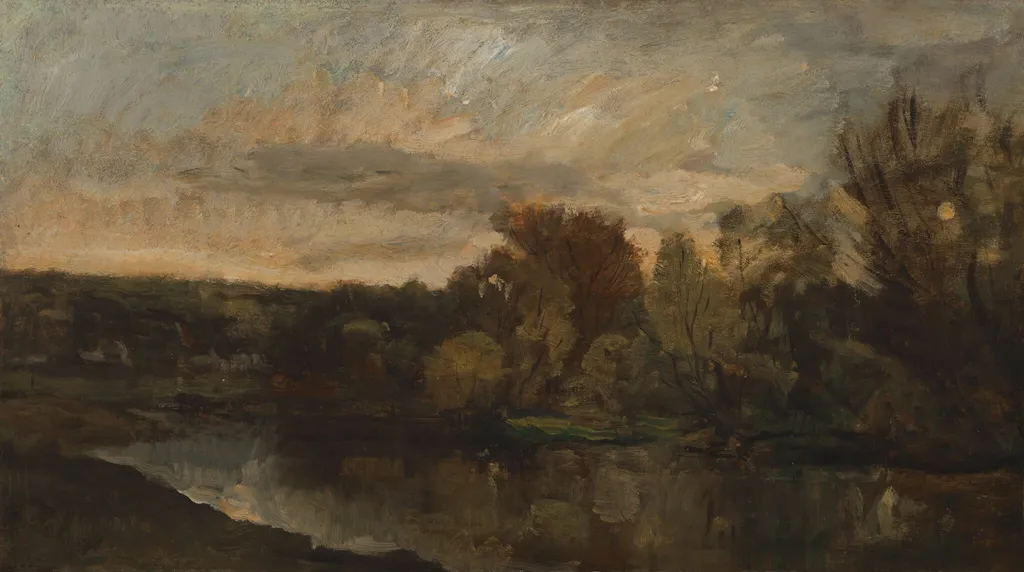
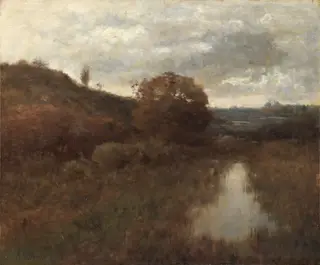
Le Bas Meudon (A Curve of the Seine near Paris) is an oil painting by the French Romanticist artist Paul Huet. It dates from 1826 and is held in the collection of the National Gallery of Art.
About this work
Technique & Style
Executed in 1826, this work is an oil painting applied to a wood support.
Executed in 1826, this work is an oil painting applied to a wood support. The composition measures approximately 29.2 by 51.4 centimeters. While the piece entered the National Gallery of Art's collection following a period of misattribution to Charles-François Daubigny under the title The Creek, it is currently recognized as a creation by Paul Huet depicting a curve of the Seine near Paris.
The small scale and choice of a wooden panel rather than canvas suggest a study or intimate landscape format typical of the artist's approach during this period.
History & Provenance
The work was painted in 1826 by Paul Huet, depicting a curve of the Seine near Paris. It entered the collection of Edward C. Walker and his wife Mary Griffin Walker of Willistead Manor, Ontario, who bequeathed it to the Corcoran Gallery of Art in Washington in 1937. The painting was later acquired by the National Gallery of Art in 2015.
The painting entered the National Gallery of Art in Washington, D.C. in 2015, having been acquired from the Corcoran Gallery of Art, which had previously held the work.
Its provenance traces to Edward C. Walker (d. 1915) and Mary Griffin Walker (1855–1937) of Willistead Manor, Walkerville, Ontario, and Washington. The Walkers bequeathed the work to the Corcoran Gallery of Art on 4 May 1937, at which point it was recorded under the title _The Creek_ and attributed to Charles François Daubigny. It was later reattributed to Paul Huet and re-titled _Le Bas Meudon (A Curve of the Seine near Paris)_, before joining the National Gallery of Art's collection in 2015.
Overview
Paul Huet’s early work, Le Bas Meudon (A Curve of the Seine near Paris), dates to around 1826 and is executed in oil on a wooden panel. The composition presents a stretch of the Seine flanked by trees beneath a cloudy sky, rendered in a palette of subdued browns, muted greens and soft grays that convey a quiet, atmospheric mood.
Subject & Meaning
The scene captures a tranquil riverside bend, emphasizing the interplay of water, foliage and sky. By focusing on the fleeting qualities of light and weather, Huet invites contemplation of nature’s transitory character, a concern typical of early Romantic landscape painting that seeks emotional resonance over precise topographical detail.
Artist & collection


- A View of Lake Vejl near Silkeborg, Jutland
 Landscape with a bunch of trees
 Landscape on the River Oise
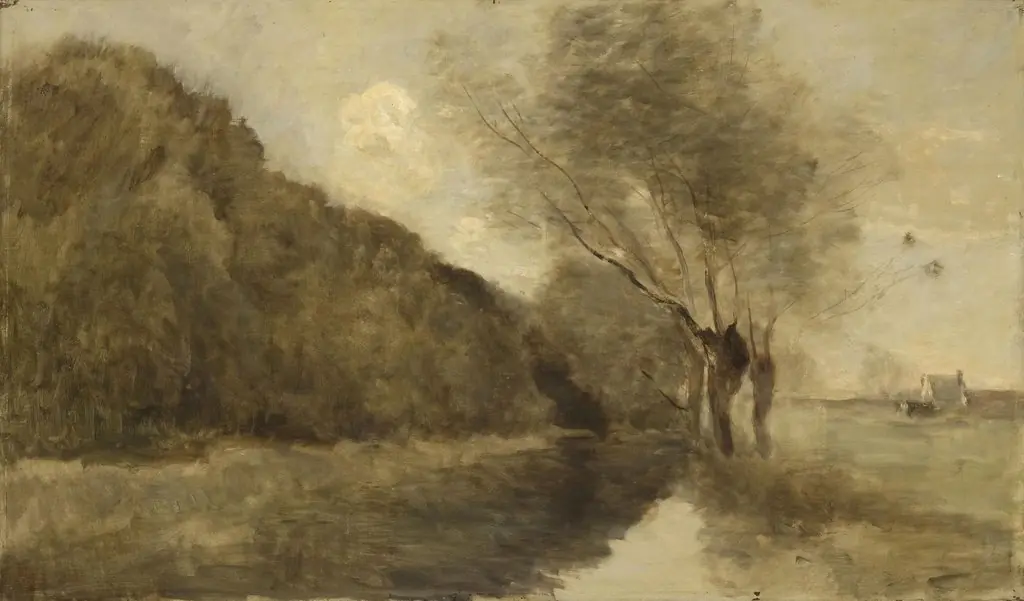 Landscape with a Stream and Willows near Gisors
 Autumn Landscape and Pool
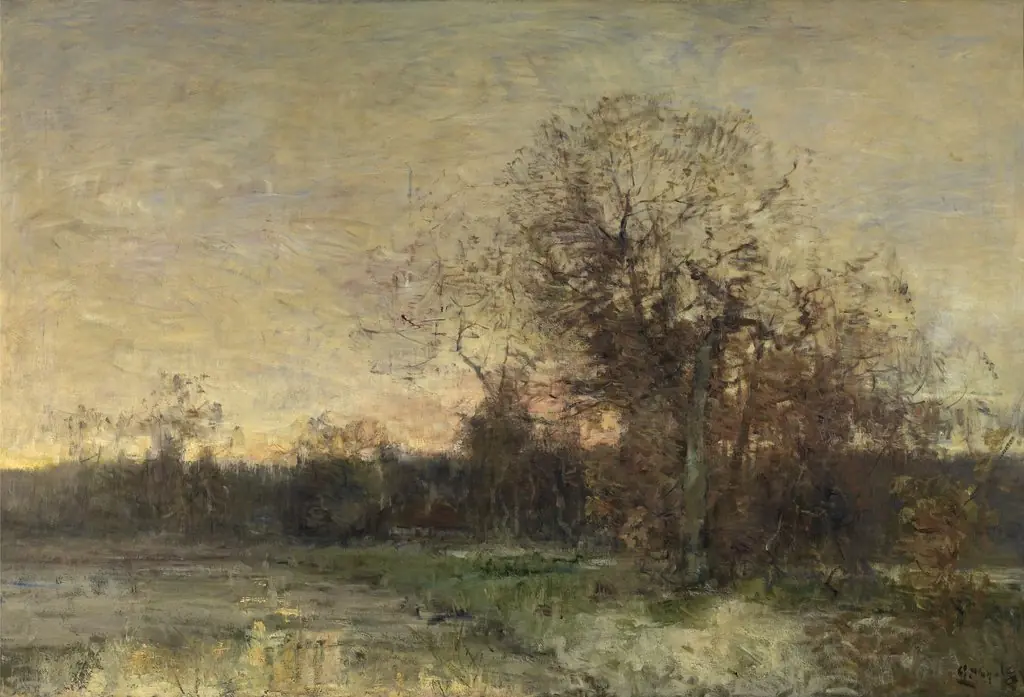 The Pond in Ixelles
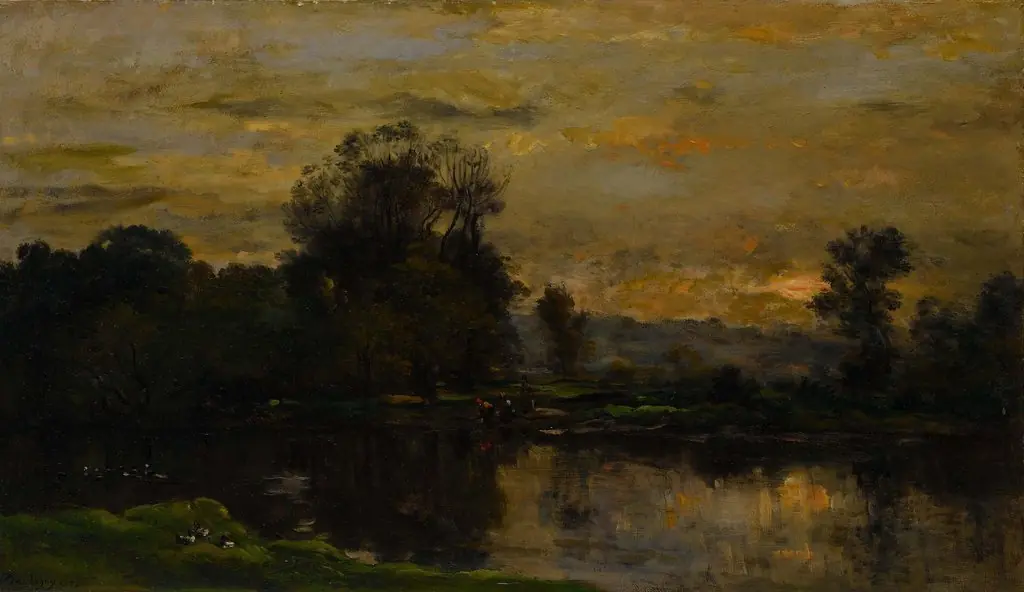 Landscape with Ducks
 Gray Day on the Esopus
 Gray Day on the Esopus
 Landscape with a Village
 Washerwomen at the Oise River near Valmondois
 Autumn Landscape and Pool