Artwork
The Seconda Macchina for the Chinea of 1741: Neptune and Amphitrite
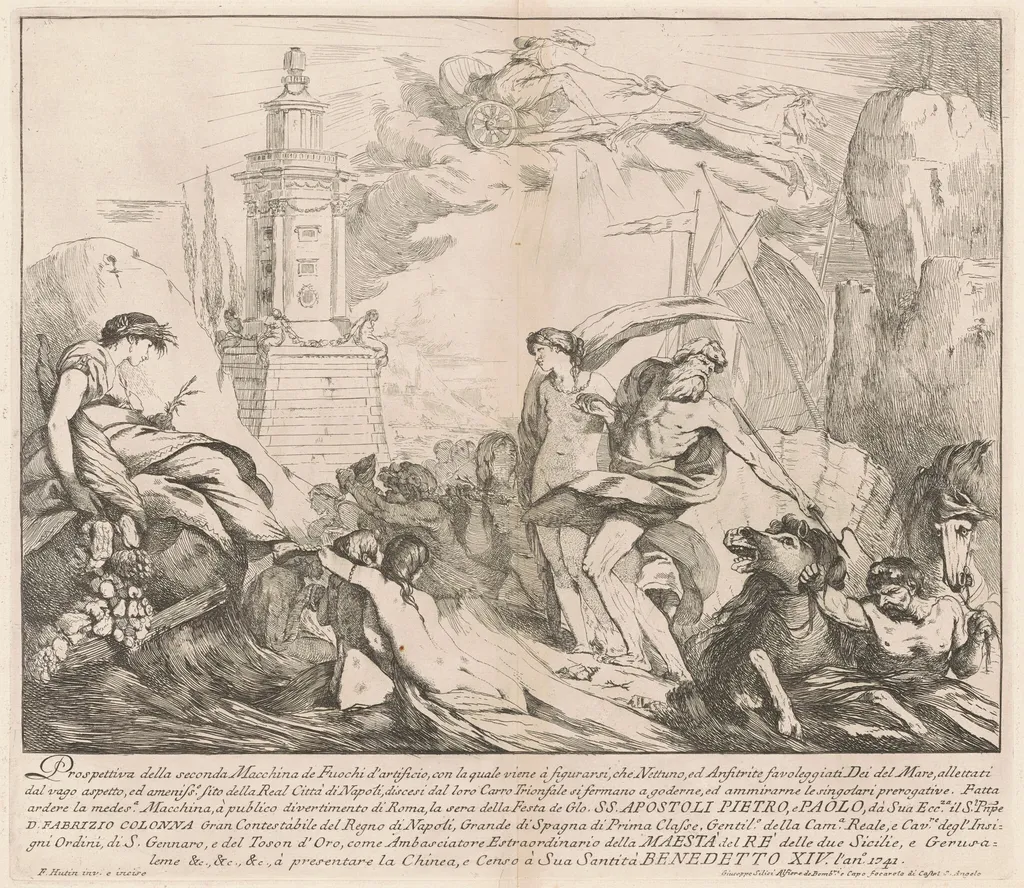
The Seconda Macchina for the Chinea of 1741: Neptune and Amphitrite is an ink print by the Baroque artist François Hutin. It dates from 1741 and is held in the collection of the National Gallery of Art.
- Inscription
- Inscribed:Lettered LL: "F. Hutin inc. e incise" Lettered LC: "Prospettiva della seconda Macchina de Fuochi d'artificio con la quale viene a figurarsi che Nettuno e Anfitrite [...] l'an.o 1741"
About this work
Overview
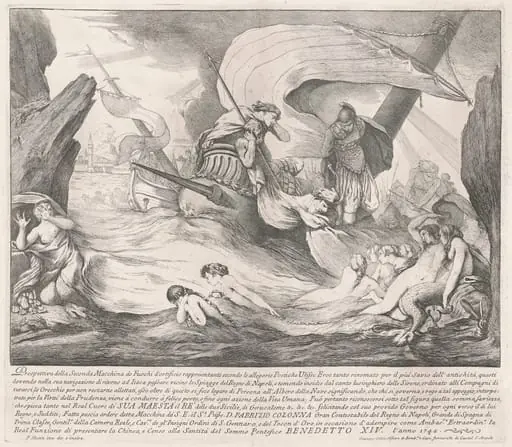
François Hutin’s 1741 etching titled The Seconda Macchina for the Chinea of 1741: Neptune and Amphitrite depicts a ceremonial procession. A chariot, richly adorned with shells and marine foliage, is drawn by sea‑creatures while the deities Neptune and Amphitrite steer it. Below, a crowd watches from a city wall, and a tall column rises on a raised platform amid swirling clouds.
Subject & Meaning
The work illustrates the mythological pair Neptune, god of the sea, and Amphitrite, his consort, presiding over a public celebration. Their presence on a sea‑themed chariot underscores the maritime symbolism of the event, while the assembled onlookers convey the communal nature of the festivity, linking divine protection with civic display.
Technique & Style
Executed as an etching, Hutin employs fine line work to render the intricate shells, sea‑plants, and the texture of the clouds. The contrast between the dark outlines and the lighter background creates depth, allowing the crowded foreground and the towering column to be distinguished clearly within a compact composition.
History & Provenance
Created for the 1741 Chinea, an annual tribute from the Kingdom of Naples to the Pope, the print served as a visual record of the pageant. It was likely distributed among participants and patrons of the ceremony, and later entered private collections before being acquired by the museum that now houses it.
Context
The Chinea celebrations were elaborate spectacles staged in Rome, featuring processions, fireworks, and allegorical tableaux. Hutin’s etching captures one of the “macchine” – elaborate moving stages – that were central to the event, reflecting the 18th‑century fascination with theatricality and the use of mythological imagery to convey political allegiance.
Own this work as a print
Artist & collection