Artwork
Shop Window
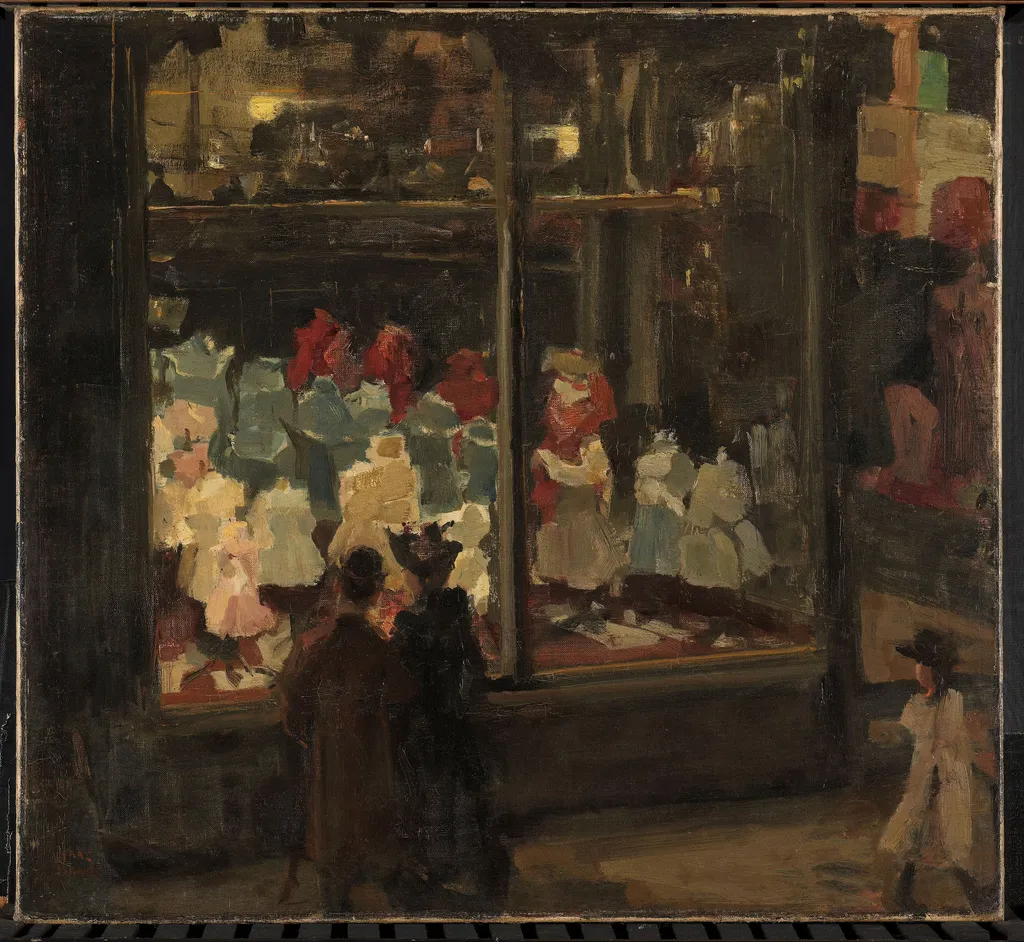
Shop Window is an oil painting by the Impressionist artist Isaac Israëls. It dates from 1898 and is held in the collection of the Rijksmuseum.
About this work
Subject & Meaning
The painting shows a brightly lit shop window displaying children's clothing at night, viewed from a rented first-floor room across the street.
The painting shows a brightly lit shop window displaying children's clothing at night, viewed from a rented first-floor room across the street. A couple examines the display, while a girl appears to enter the scene as if captured in a snapshot. The composition uses loose, impressionistic brushwork to depict a fleeting moment, with vivid colors and strong contrasts between artificial light and dark surroundings, reflecting the influence of urban modernization and photography. Israëls' interest in fashion and retail spaces symbolized a dreamlike escape from everyday life, a theme he explored through depictions of store windows and fashion houses, often commissioned by entrepreneurs. The work draws on Dutch traditions of night scenes but reinterprets them with contemporary artificial lighting, aligning with Impressionist goals of capturing transient impressions.
Technique & Style
Shop Window is an oil painting on canvas, measuring 59 by 64 centimeters. Executed between 1894 and 1898, the work exemplifies Isaac Israëls' characteristic loose, impressionistic technique. The composition appears highly sketchy and rapidly applied, utilizing large areas of color punctuated by bright accents to capture a fleeting moment.
Visually, the painting relies on sharp contrasts between the dark surroundings and the luminous, artificially lit shop window. Dresses arranged by color create diagonal strips of red, light blue, and white, while reflections in the glass enhance the sense of a dreamlike atmosphere. This handling reflects the influence of photography and aims to depict a spontaneous, accidental scene akin to a snapshot, emphasizing the effects of modern gas lighting on the urban night scene.
History & Provenance
Isaac Israëls created the oil-on-canvas painting *Shop Window* between 1894 and 1898. The work was conceived indoors from a rented room on the first floor above a haberdashery on Amsterdam's Nieuwendijk, which the artist had secured in 1893 to observe street life without painting directly outdoors. From this vantage point, Israëls depicted the illuminated window of the children's clothing store Bahlmann & Co, situated to the right of a neighboring hat shop he had previously painted. Although Israëls had sought permission to work en plein air as early as 1891, he did not fully commit to outdoor painting until 1894; consequently, this piece reflects his studio-based approach to capturing urban night scenes. The work is currently held by the Rijksmuseum in Amsterdam as part of the legacy of the art collector couple Drucker-Fraser.
Shop Window is held in the collection of the Rijksmuseum in Amsterdam, where it is displayed in hall 1.18. The painting forms part of the legacy of the art-collecting couple Drucker-Fraser, who bequeathed it to the museum.
No exhibition history beyond its placement in the Rijksmuseum's permanent collection is documented in the available sources.
Context
Critical reception of *Shop Window* situates the painting within the Dutch Impressionist milieu, where Isaac Israëls’s loose, sketch-like handling and focus on fleeting urban moments aligned with broader Impressionist aims. Scholars note the work’s kinship with George Hendrik Breitner’s night scenes, particularly in its treatment of artificial gas lighting and shop-window displays as motifs emblematic of modernity. The painting’s snapshot quality and emphasis on transience reflect the influence of contemporaneous photography, a medium both painters engaged with.
Within Israëls’s oeuvre, *Shop Window* exemplifies his enduring fascination with fashion and urban spectacle, themes he later expanded in Parisian couture settings. Its placement in the Rijksmuseum’s holdings underscores its significance in the canon of late-19th-century Dutch cityscapes, where artificial illumination and consumer culture intersect with Impressionist technique.
Own this work as a print
Artist & collection
Artist
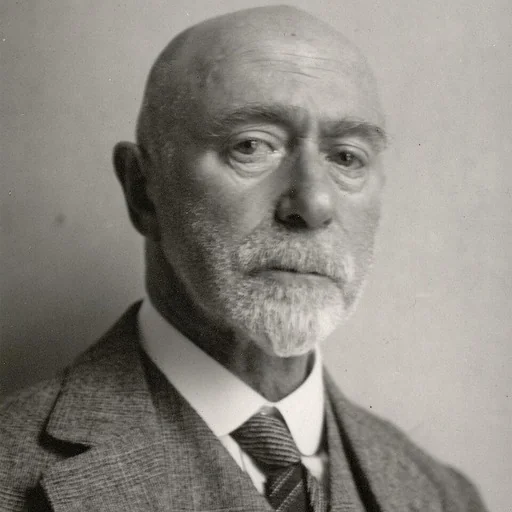
Isaac Lazarus Israëls (Dutch pronunciation:; 3 February 1865 – 7 October 1934) was a Dutch painter associated with the Amsterdam Impressionism movement.

 Sketch for the painting “Potocka in Bakhchisaray”
 Maple Street, London
 Street fragment. From the journey to Constantinople
 Roman amphitheatre, sketch
 La piață
 Damascus – Jarta. From the journey to Palestine
 Night on Boardwalk
 The Antique Shop
 Amsterdams Stadsgezicht
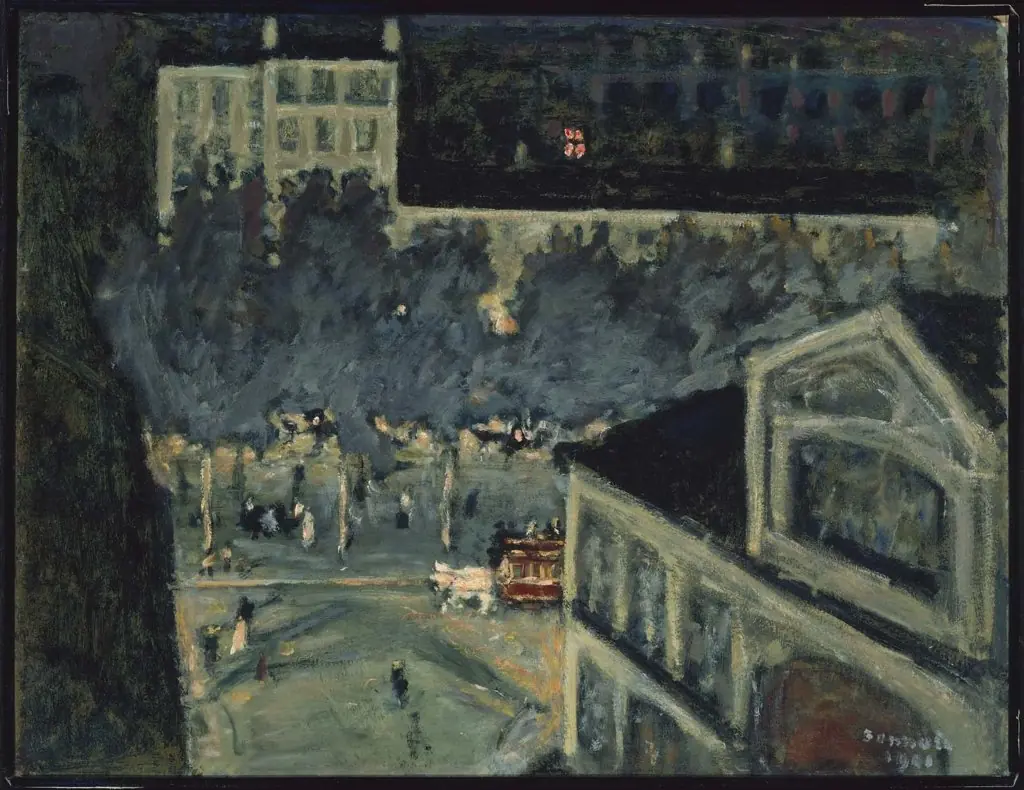 Paris Boulevard at Night
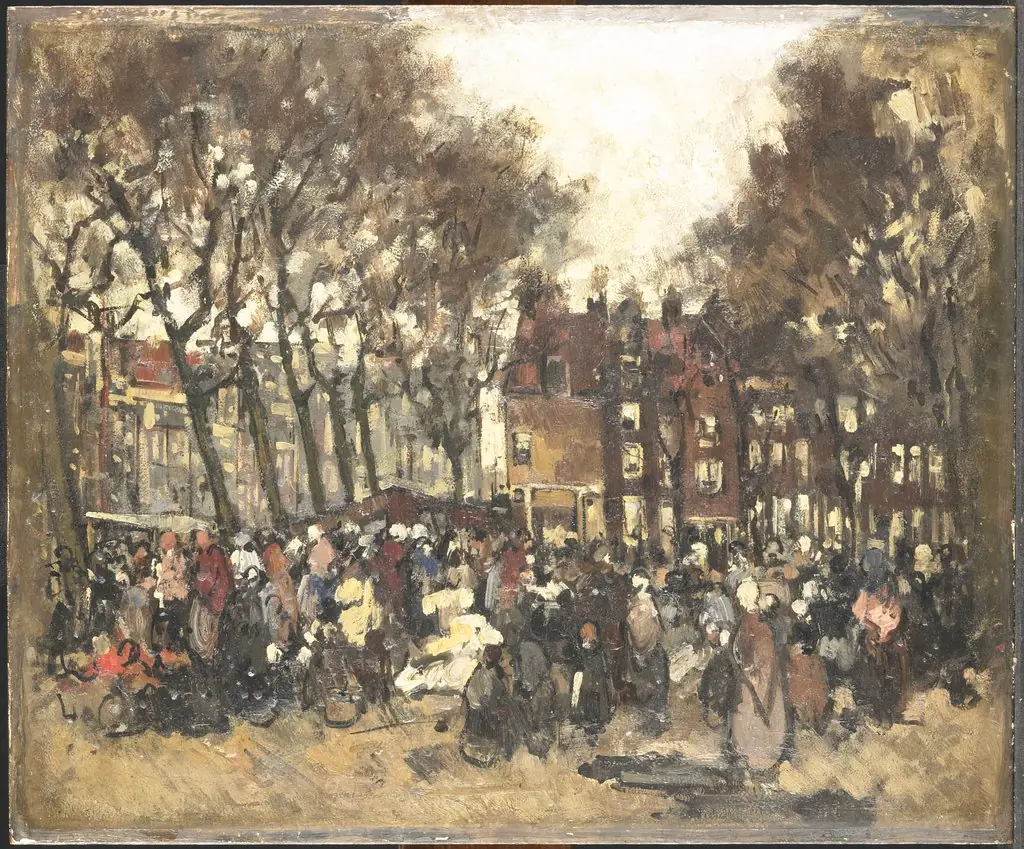 De Noordermarkt te Amsterdam
- Fruit Shop