Artwork
Hanshan and Shide (Japanese: Kanzan and Jittoku)
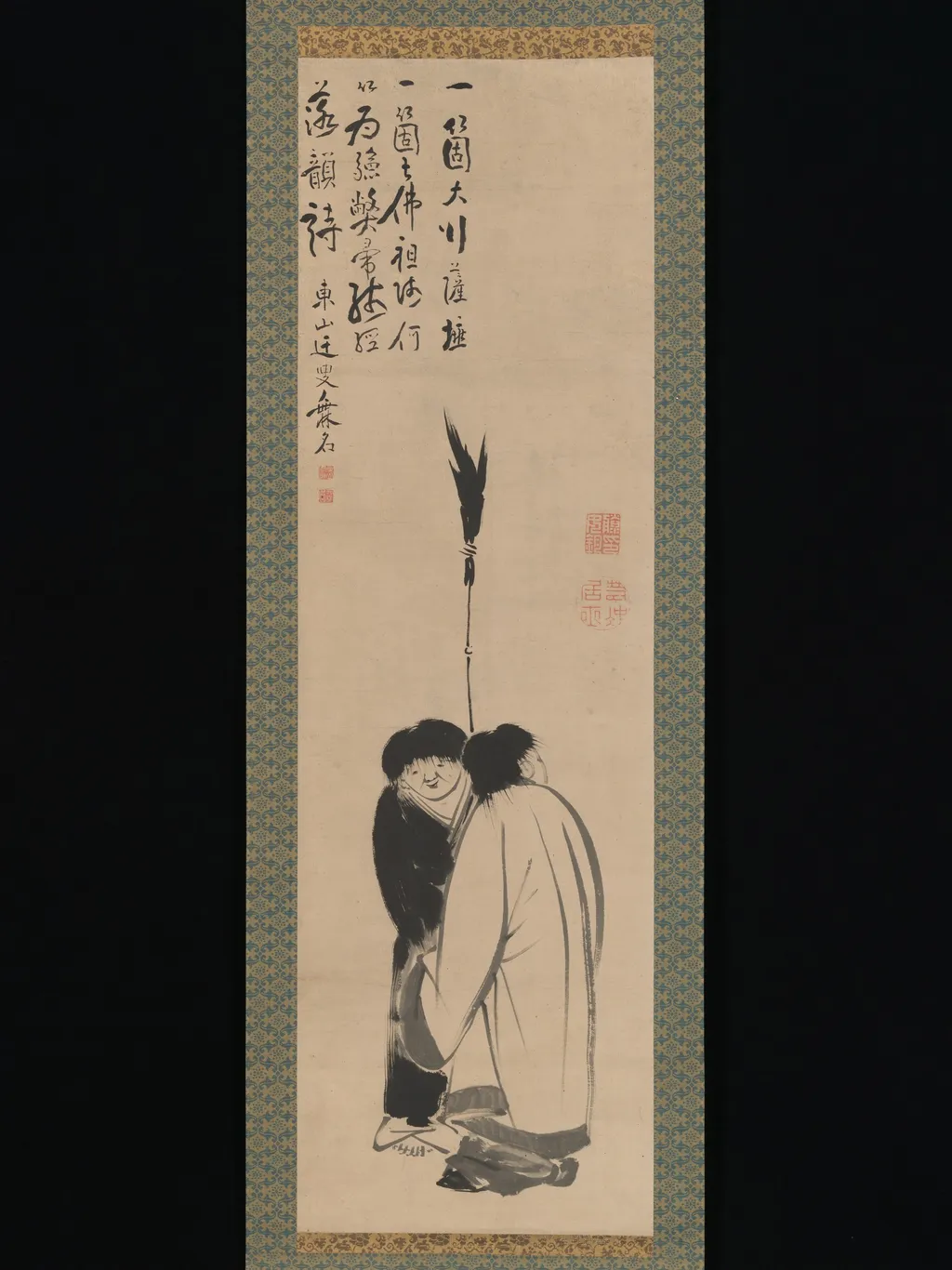
Hanshan and Shide (Japanese: Kanzan and Jittoku) is an unspecified painting by the Rinpa school artist Itō Jakuchū. It dates from 1792 and is held in the collection of the Metropolitan Museum of Art.
About this work
Technique & Style
Jakuchū’s handling combines fluid, calligraphic brushwork with delicate, controlled washes to articulate the paired figures and their rocky setting.
Executed in 1783, Hanshan and Shide is a hanging scroll painting on silk rendered in ink and light mineral colors. Jakuchū’s handling combines fluid, calligraphic brushwork with delicate, controlled washes to articulate the paired figures and their rocky setting. The composition balances bold ink contours against subtle color accents, particularly in the attenuated hands and sleeves, while the attenuated, angular figures and animated drapery exemplify the eccentric yet refined manner associated with the artist’s late period.
The scroll’s condition appears stable, with no evidence of major losses or abrasions in the primary image field.
History & Provenance
The painting Hanshan and Shide (Japanese: Kanzan and Jittoku) by Itō Jakuchū, dated 1783, is held in the collection of the Metropolitan Museum of Art in New York. The work depicts the figures of Kanzan and Jittoku and was created in Japan. The provided sources do not list a specific inventory or accession number, nor do they document any exhibition history for this piece.
Overview
Hanshan and Shide, painted by Itō Jakuchū in 1792, is a modestly sized work in the collection of the Metropolitan Museum of Art. Executed on paper with ink and subtle colour washes, the composition presents two figures against a light beige ground, framed by a brief inscription of Chinese characters at the top.
Subject & Meaning
The two figures represent the legendary Chinese Chan monks Hanshan and Shide, traditionally portrayed as wandering ascetics. In Jakuchū’s rendering, the monk in white stands forward while the monk in black supports him, their posture suggesting a moment of shared meditation or mutual guidance. The vertical feather‑topped implement between them may allude to a ceremonial staff, reinforcing their spiritual connection.
Context
In the late eighteenth century, Japanese painters often turned to Chinese literati themes, integrating them into native aesthetic conventions. Jakuchū’s depiction of Hanshan and Shide aligns with this trend, merging the contemplative ethos of Chan Buddhism with the precise, decorative sensibility characteristic of Edo‑period court painting.
Own this work as a print
Artist & collection


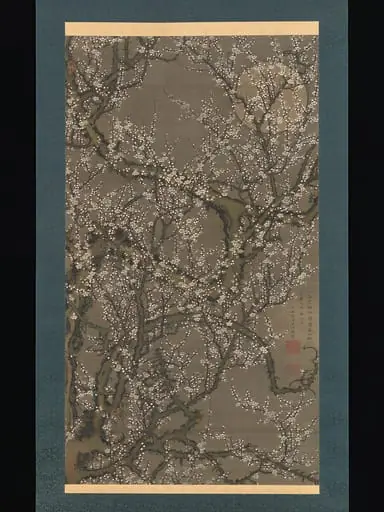
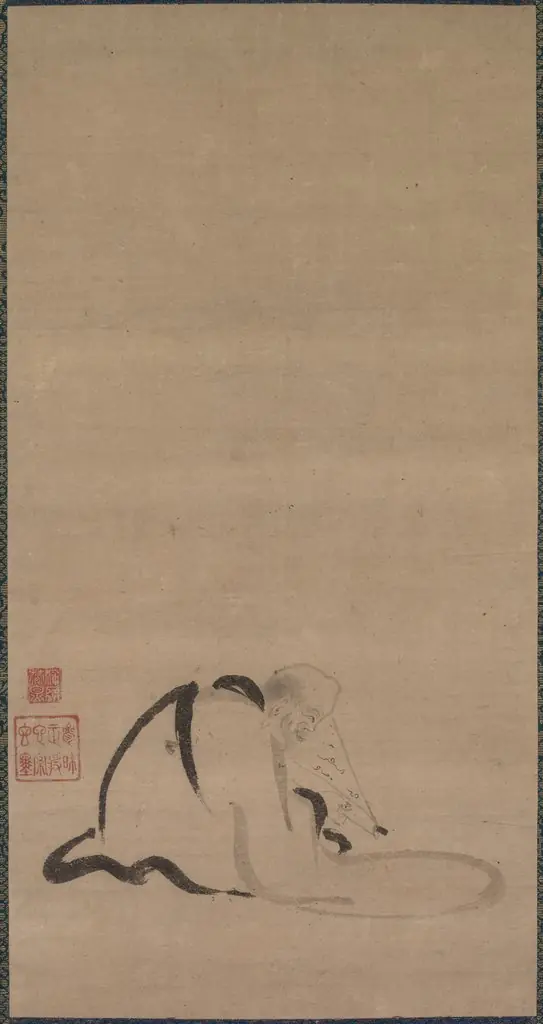 Seated Priest
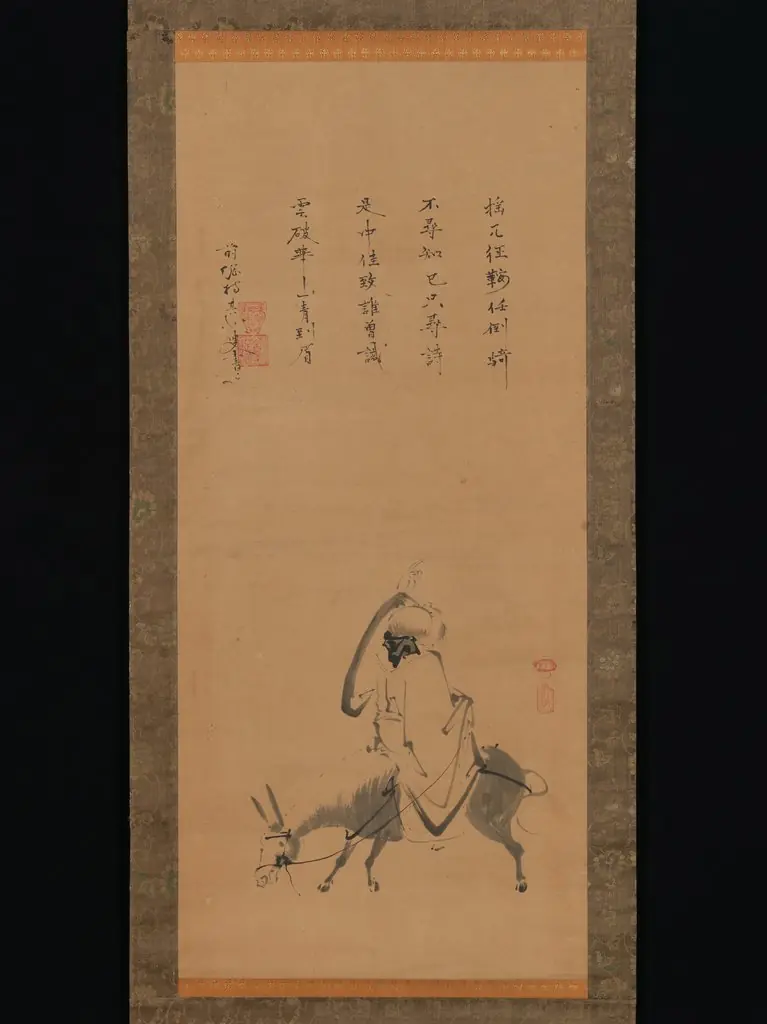 The Chinese Poet Pan Lang on a Donkey
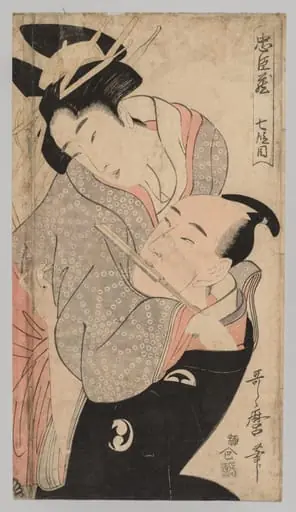 Man and Woman
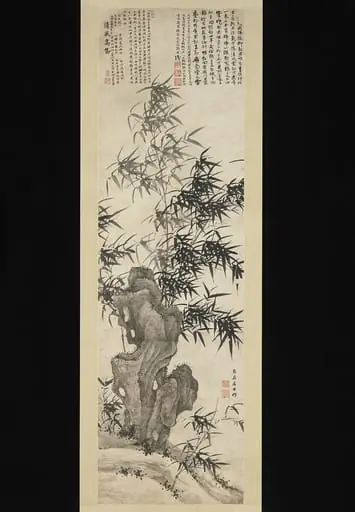 明 夏昶 清風高節圖 軸|Windblown bamboo
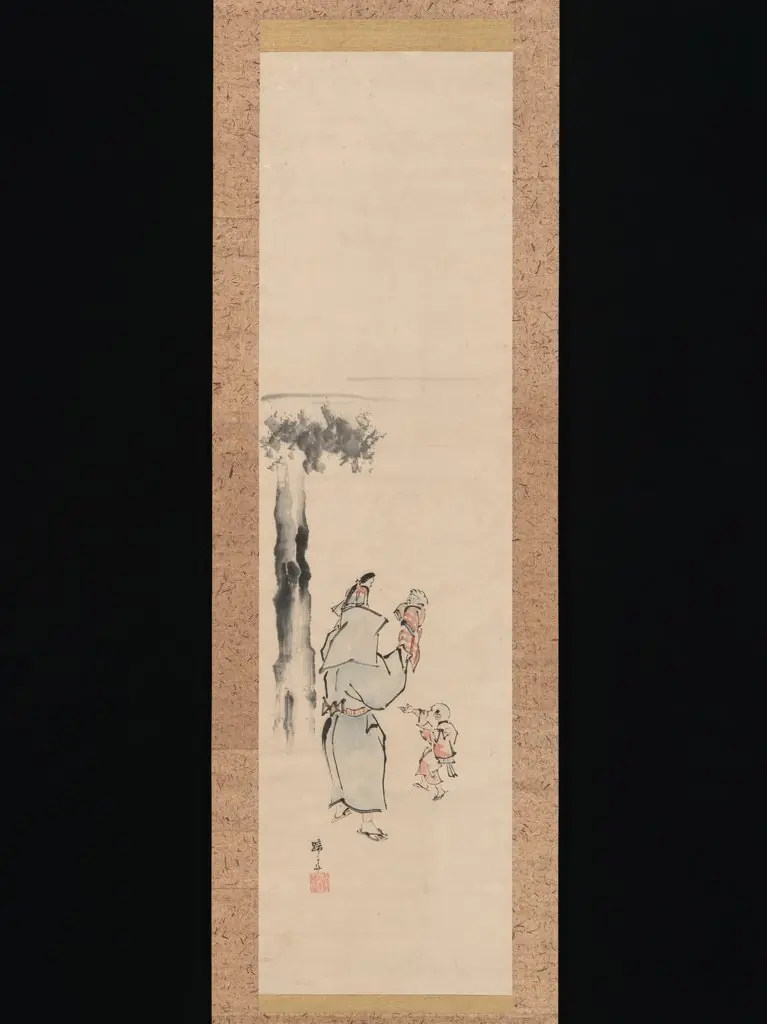 Puppeteer
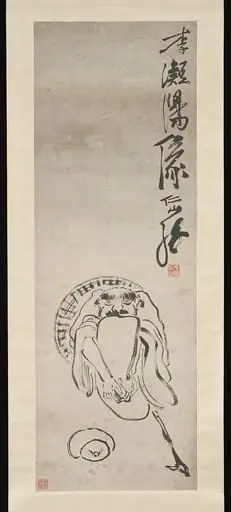 清 蘇仁山 李凝陽像 軸|The Immortal Li Tieguai
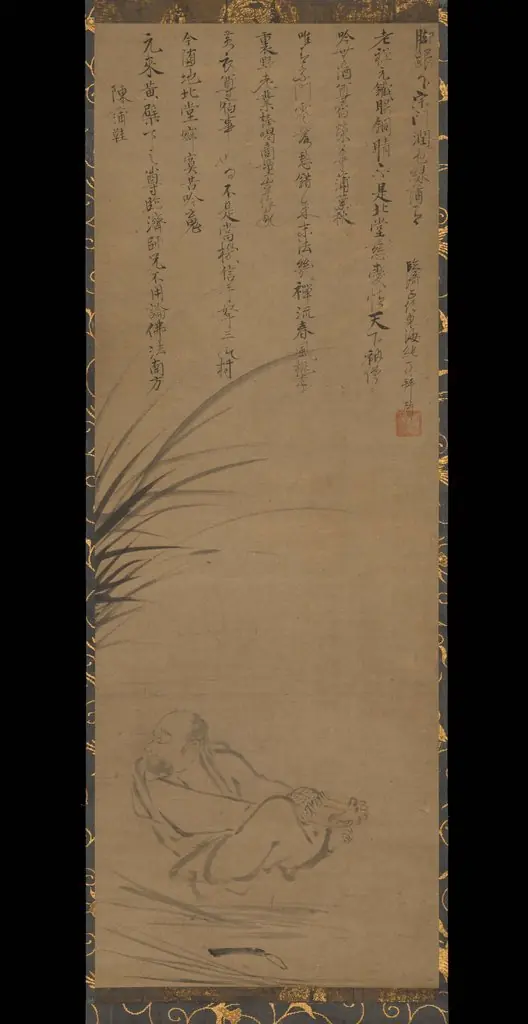 Inscription on the anonymous painting of Chen Puxie
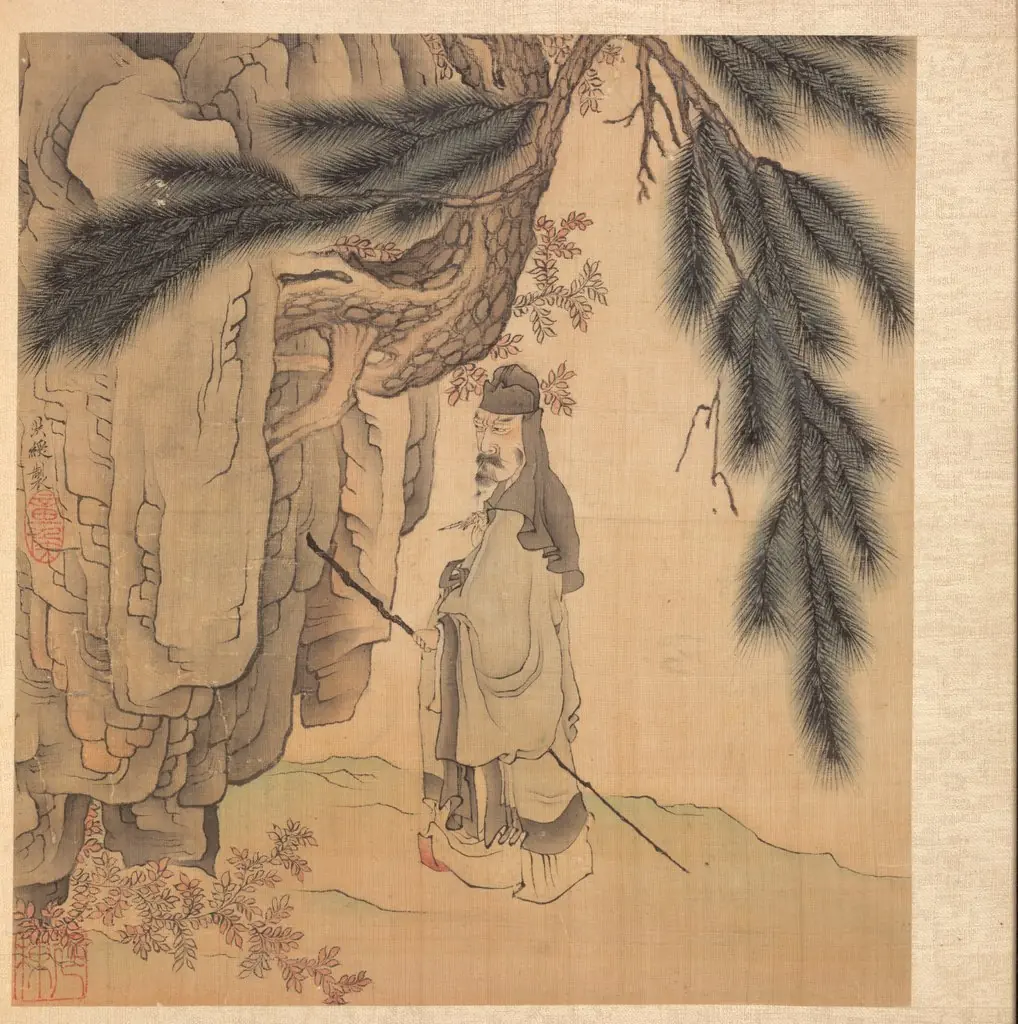 Paintings after Ancient Masters: Scholar with Staff and Brush
 Paintings after Ancient Masters: Scholar with Staff and Brush
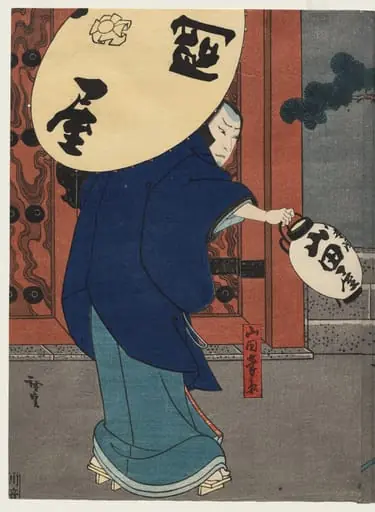 Nakamura Utaemon IV as Karaki Masaemon (From the series A Tale of Valor at Iga Pass)