Artwork
清 蘇仁山 李凝陽像 軸|The Immortal Li Tieguai
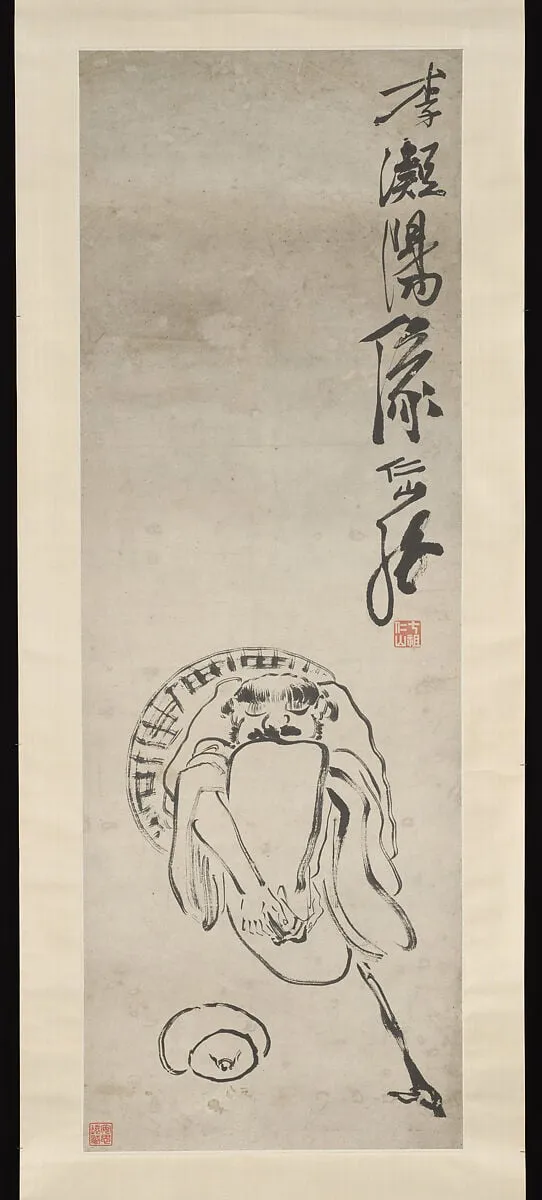
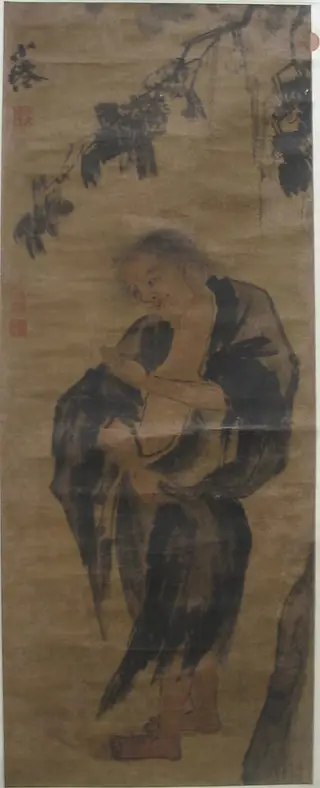
清 蘇仁山 李凝陽像 軸|The Immortal Li Tieguai is an ink painting by the Qing dynasty painting artist Su Renshan. It dates from 1831 and is held in the collection of the Metropolitan Museum of Art.
- Accession no.
- 1986.267.9
About this work
Subject & Meaning
The Immortal Li Tieguai is portrayed as a youthful male figure holding a gourd and a staff, embodying the Taoist ideal of transcendence and eternal life.
The Immortal Li Tieguai is portrayed as a youthful male figure holding a gourd and a staff, embodying the Taoist ideal of transcendence and eternal life. In this Qing‑era hanging scroll, the subject is identified as a man, confirming the depiction of the legendary healer and disciple of Laozi.
The composition uses the gourd and staff as symbols of medicine, abundance and spiritual power, reflecting the broader religious context of the period. As a religious painting created in 1831, the work illustrates the Metropolitan Museum of Art’s collection of Chinese devotional art and underscores the cultural reverence for immortality in Chinese visual culture.
Technique & Style
The work is executed as a hanging scroll in ink on paper, measuring 115.6 cm in height and 40 cm in width. The rendering emphasizes fluid, calligraphic linework to delineate the figure’s robes and accessories, while diluted ink wash subtly modulates volume and spatial recession. Stylistic accents include abbreviated landscape elements and abbreviated brushwork for the immortal’s gnarled staff and cloud forms, conveying both spontaneity and rhythmic structure within a restrained composition.
History & Provenance
The painting is dated to 1831, aligning with Su Renshan’s active period in the early nineteenth century.
Its medium as a hanging scroll in ink on paper situates it within literati religious portraiture traditions of Guangdong. The work depicts the Daoist immortal Li Tieguai, a subject frequently explored by Su Renshan in his figure paintings.
Overview
Created in 1831 during the Qing dynasty, this hanging scroll by the painter Su Renshan presents an ink rendering of Li Tieguai, one of the legendary Eight Immortals. Executed on paper with monochrome ink, the work measures the traditional format of a vertical scroll and focuses on a solitary, dynamic figure.
Context
Li Tieguaï belongs to a popular pantheon of Taoist immortals whose stories were widely illustrated in Chinese art. By the 1800s, such subjects were often rendered in vivid color; Su Renshan’s decision to work in stark ink reflects a personal aesthetic choice within that broader tradition.
Legacy
The piece exemplifies how ink techniques like cross‑hatching can animate spiritual subjects, influencing later artists who sought to capture the intangible qualities of mythic figures through minimalist means.
Artist & collection

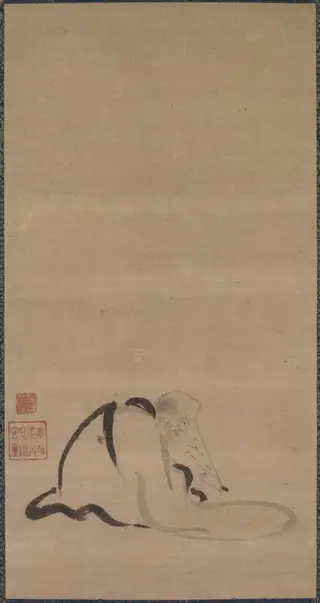 Seated Priest
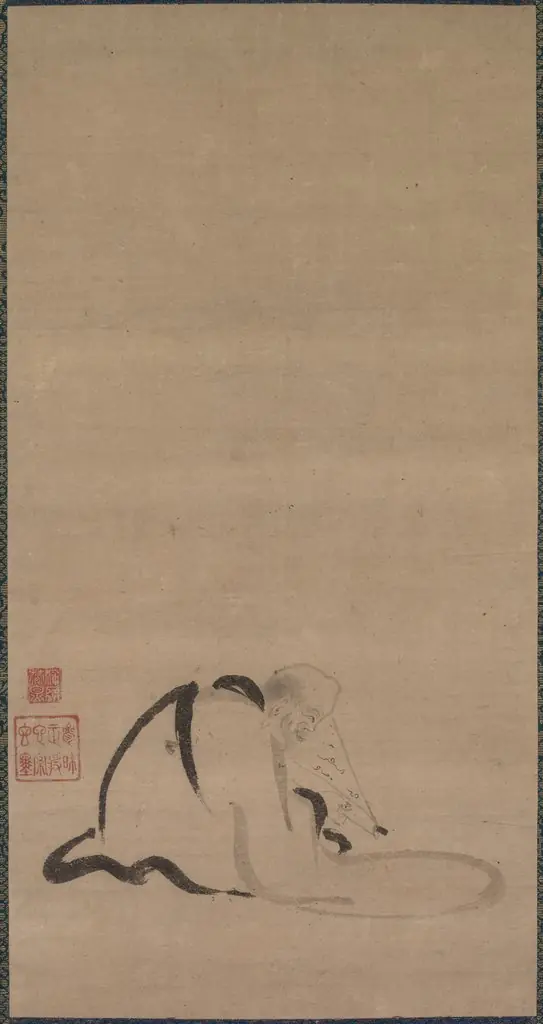 Seated Priest
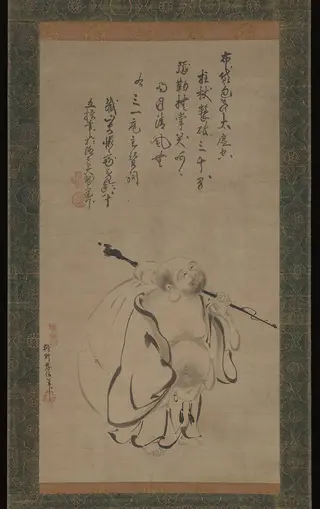 狩野孝信筆 布袋図「拄杖擊破三千界。彌勒撫掌笑呵呵,明月清風無。」|Hotei
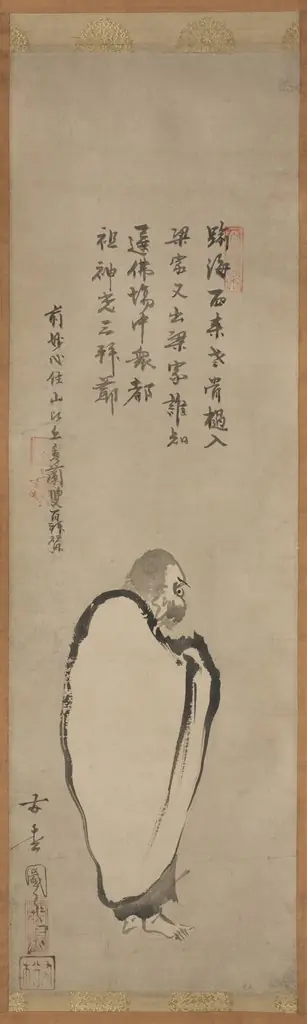 Figure of Daruma
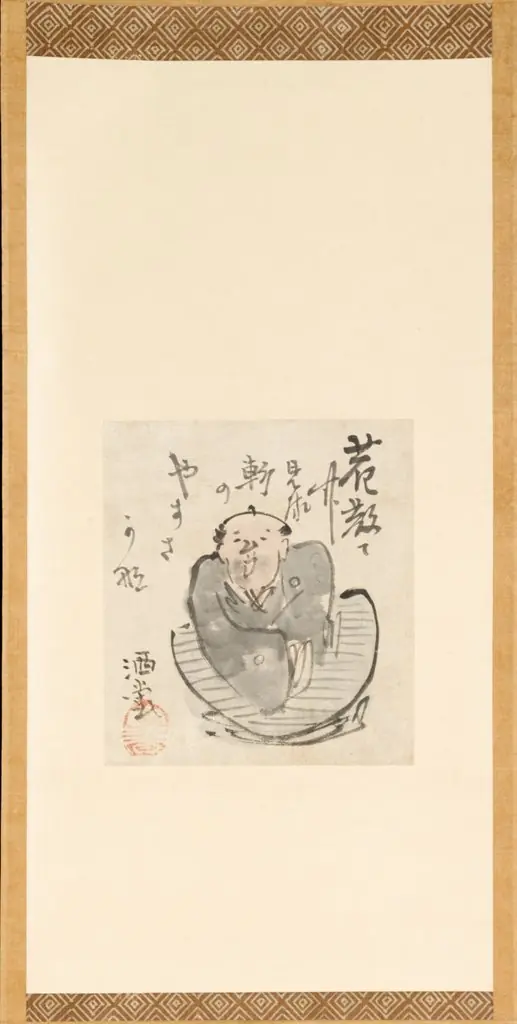 Portrait of Haiku Poet Shado
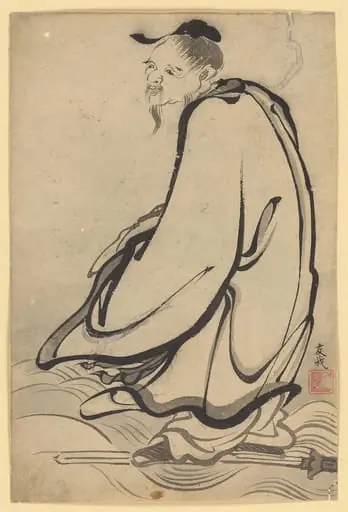 Untitled
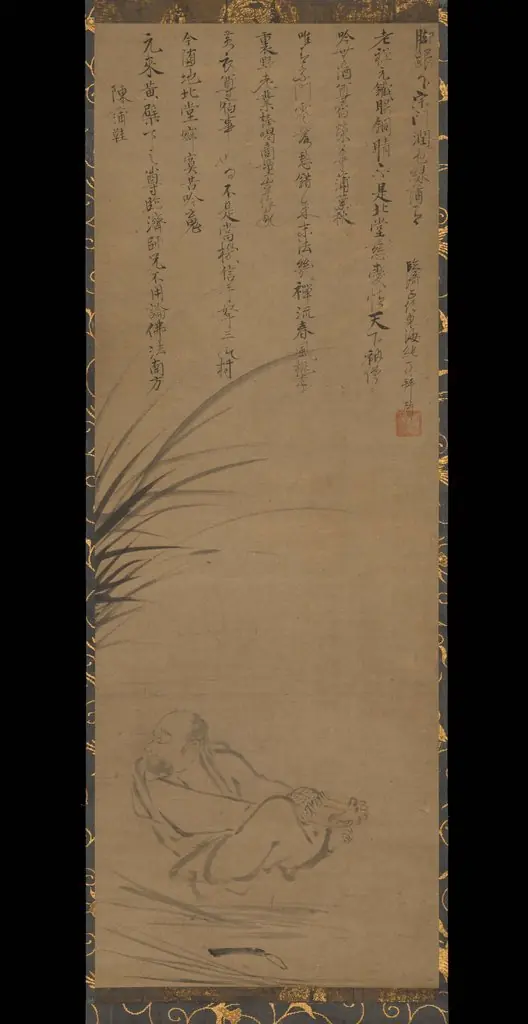 Inscription on the anonymous painting of Chen Puxie
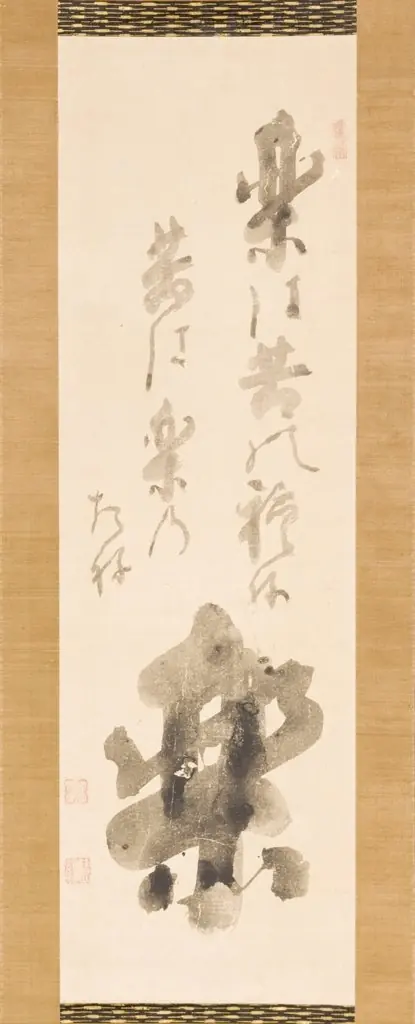 'JOY: In joy lie the seeds of sufferings; in sufferings lie the seeds of joy (RAKU: Raku wa kū no tane; Kū wa raku no tane)'
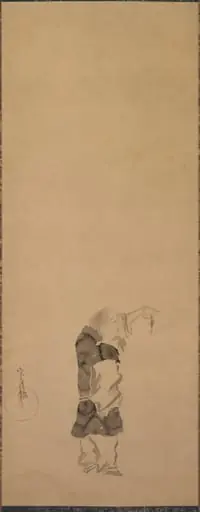 Kenshu, Monk with Shrimp
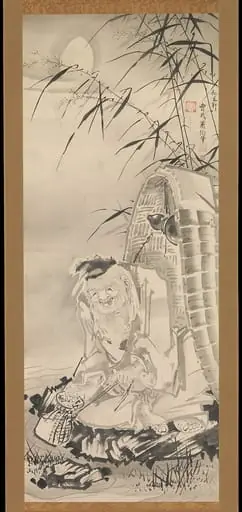 曽我蕭白筆 太公望図|Tōkaibō with a Fishing Basket