Artwork
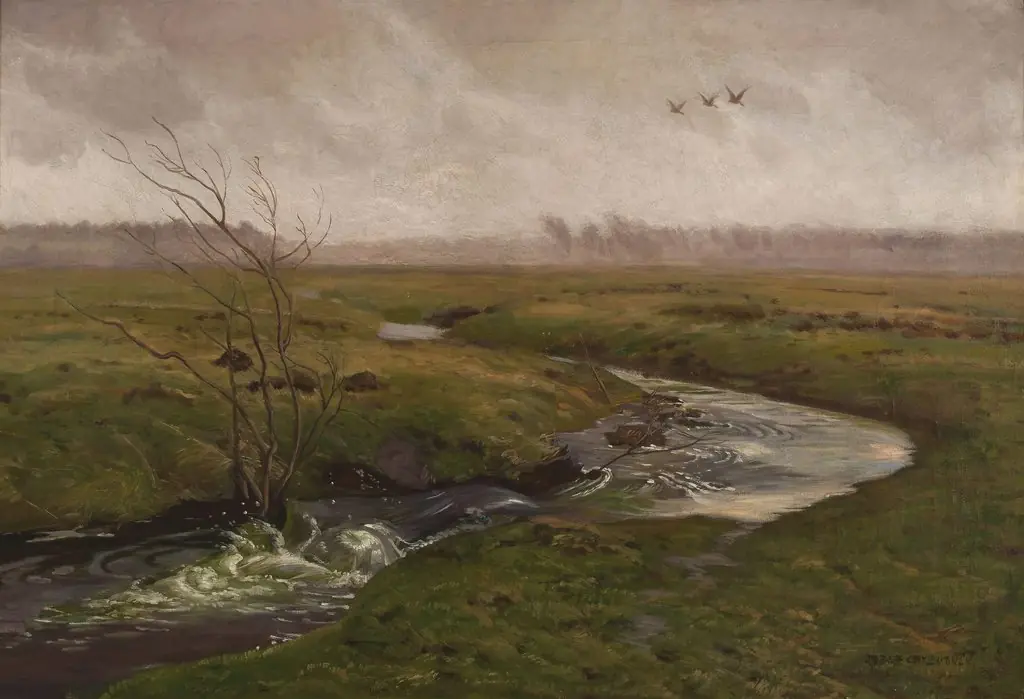
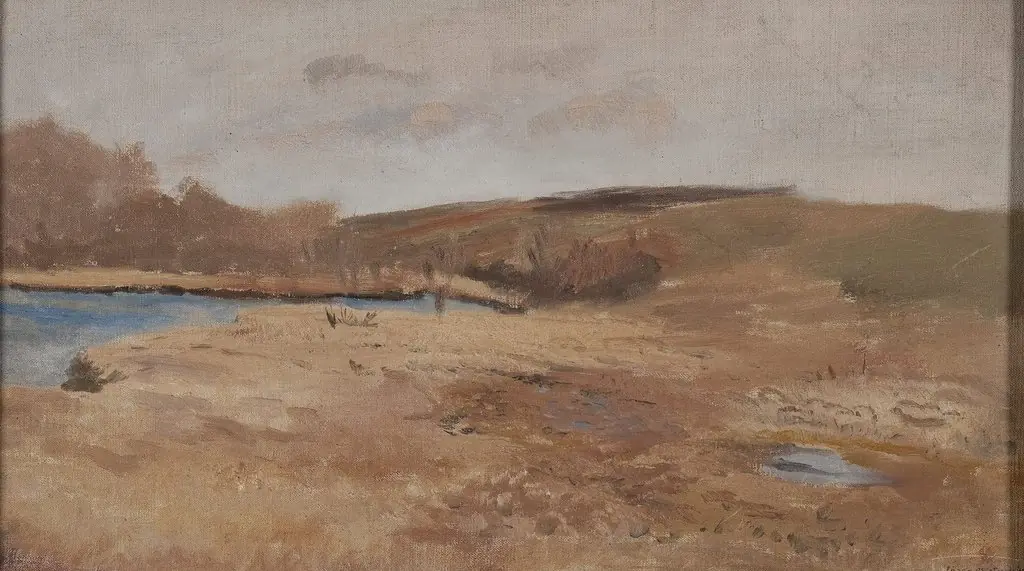
Rivulet in a Valley
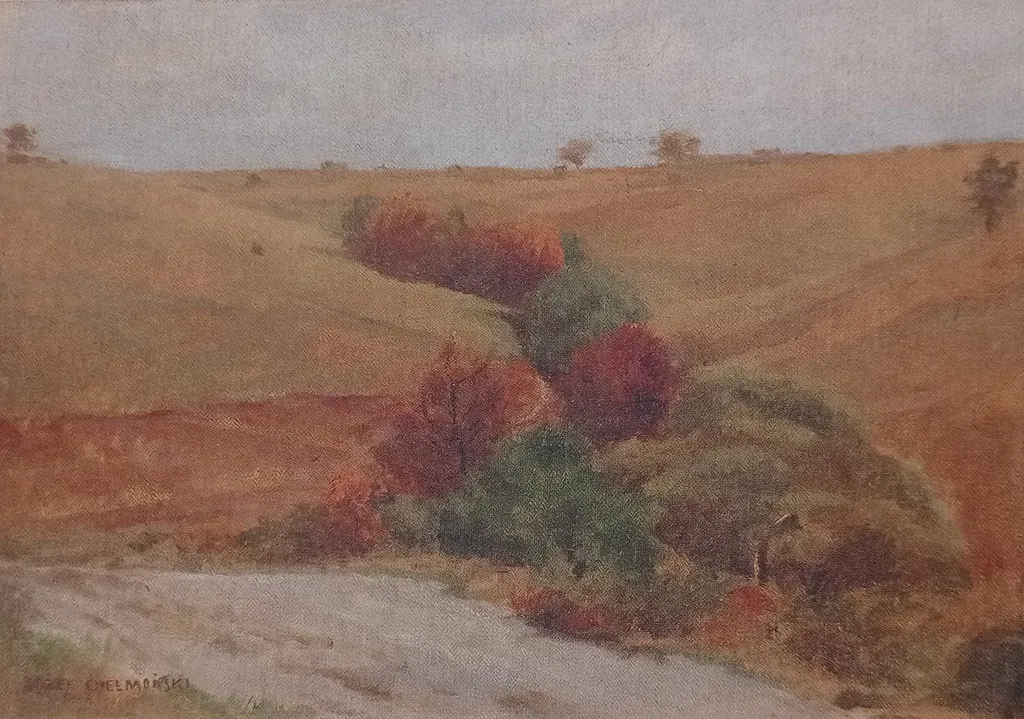
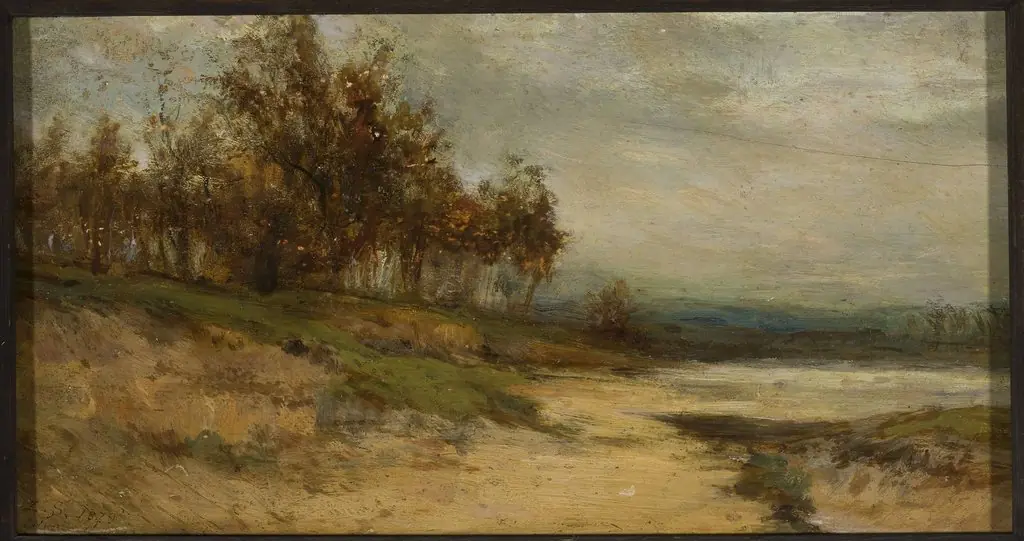
Rivulet in a Valley is an oil painting by the Post-Impressionist artist Józef Chełmoński. It dates from 1902 and is held in the collection of the National Museum in Kraków.
About this work
Overview
Rivulet in a Valley is an oil painting on paperboard by the Polish realist Józef Chełmoński, dated to 1902.
Rivulet in a Valley is an oil painting on paperboard by the Polish realist Józef Chełmoński, dated to 1902. Measuring 29 by 41 centimeters, the landscape resides in the collection of the National Museum in Kraków. Created during the artist's late period while living in the Masovian village of Kuklówka, the work exemplifies his shift toward intimate, contemplative landscapes devoid of human or animal figures, focusing instead on the quiet, unpeopled moods of the natural world.
Subject & Meaning
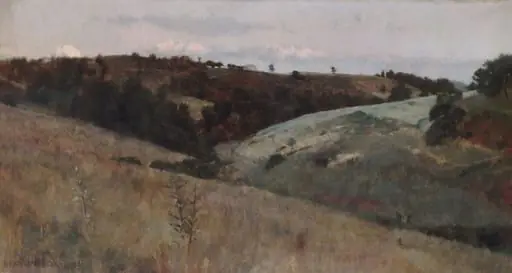
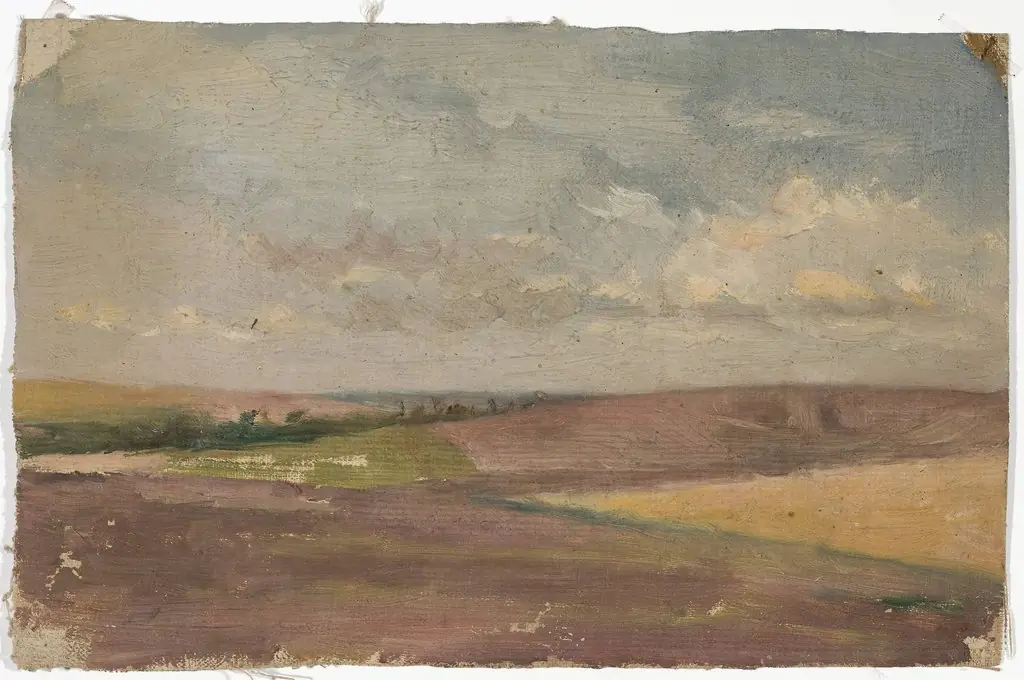
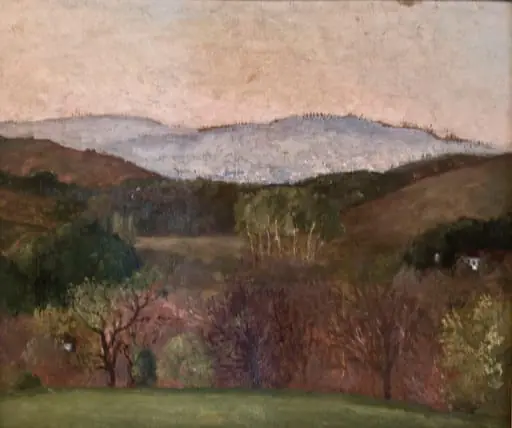
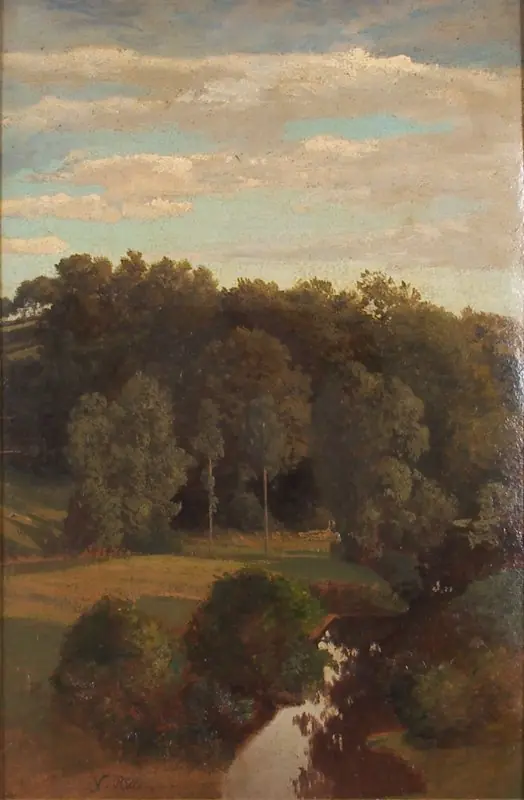
The painting depicts a dry valley bisected by a narrow, muted grayish watercourse. Sparse vegetation, rendered in patches of dull green and reddish-brown, clusters along the banks and dots the slopes, while a few indistinct trees appear on the distant horizon. Devoid of any human or animal presence, the composition captures the essence of untameable nature rather than landscape subjugated by human activity. This focus reflects Chełmoński's late period preoccupation with natura naturans, presenting a visual poem about the land itself, free from narrative elements, where the environment exists quietly outside the category of human time.
Technique & Style
Chełmoński employed a restrained, earthy palette dominated by tans, russets, dusty greens, and subdued violets, avoiding strong chromatic accents. Light is diffused and even, lacking sharp shadows or bright highlights to suggest an overcast atmosphere. His brushwork is fine and somewhat granular, utilizing soft, blended transitions rather than crisp definition. This free, broad manner of applying paint causes forms to dissolve into the hazy environment, creating a matte, unified finish. The technique extracts the expressive qualities of the landscape while eliminating irrelevant details, a hallmark of his late style that aligns him with the atmospheric sensitivity of early Symbolism.
History & Provenance
Created in 1902, Rivulet in a Valley dates to Chełmoński's mature period after he permanently returned to Poland. In 1889, he purchased a manor house in Kuklówka Zarzeczna, seeking an escape from modern urban civilization. The painting is executed in oil on paperboard and is signed in the lower left corner. It is currently held by the National Museum in Kraków. While specific exhibition records for this piece are not documented, Chełmoński faced rejection from juries during this era for submitting landscapes lacking human figures, such as those shown at the 1888 Zachęta Society autumn exhibition.
Context
Józef Chełmoński (1849-1914) was a leading figure of Polish Realism, classified within the Munich-Warsaw group of late positivism. His career unfolded in three phases: a Warsaw-Munich formative period, a successful Paris period, and a final Masovian phase. Although considered a realist, he was deeply influenced by the literary inspirations of Polish Romanticism, particularly Adam Mickiewicz. After achieving popularity in Paris with dynamic genre scenes, his return to Poland prompted a revival of his painterly vision through direct contact with native nature. Critics of his time often dismissed his late, unpopulated landscapes, yet modern scholarship regards his atmospheric sensitivity and emotional bond with the land as a precursor to Symbolism and a step toward liberating Polish painting from patriotic dependencies.
Legacy
Chełmoński's late landscapes, such as Rivulet in a Valley, represent a critical departure from the narrative-driven expectations of his contemporaries. By prioritizing the unpeopled, autonomous life of the natural world, these works laid a milestone in the history of Polish art, outlining a path toward modernity. His ability to sense slight changes in natural ambience and his focus on untameable nature shifted artistic focus away from idealized or purely patriotic perceptions of the world. Today, his late period output is recognized for its profound influence on the trajectory of Polish landscape painting, bridging the gap between late positivist realism and the atmospheric evocations of the Young Poland movement.
Own this work as a print
Artist & collection
Artist
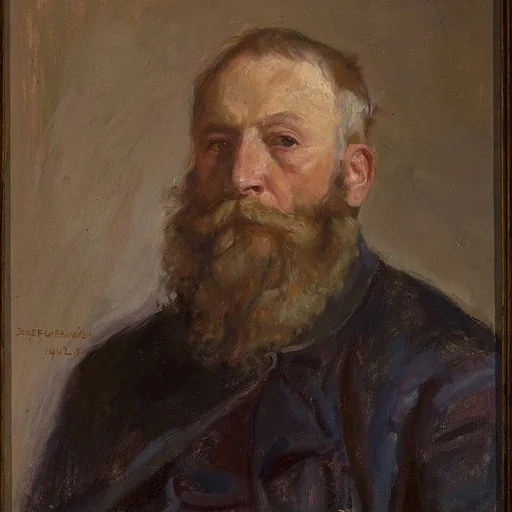
Józef Marian Chełmoński (7 November 1849 – 6 April 1914) was a Polish painter, known for his realistic paintings of landscapes, rural scenes and genre scenes presenting historical and social contexts of the late Romantic period in…