Artwork
Portrait of Stanisław Tondos
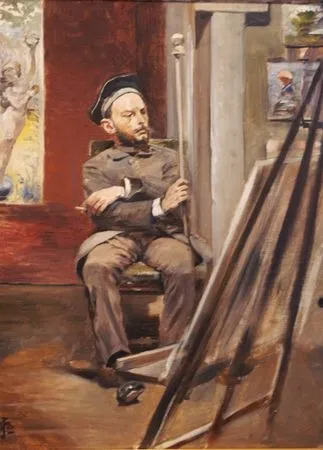
Portrait of Stanisław Tondos is an oil painting by the Post-Impressionist artist Jacek Malczewski. It dates from 1897 and is held in the collection of the National Museum in Kraków.
About this work
Overview
Portrait of Stanisław Tondos is an oil on canvas painting by the Polish artist Jacek Malczewski, created in 1893.
Portrait of Stanisław Tondos is an oil on canvas painting by the Polish artist Jacek Malczewski, created in 1893. The work measures 47 centimeters in height and 39 centimeters in width. It belongs to the portrait genre and is currently held in the collection of the National Museum in Kraków. The painting depicts its subject seated in a studio environment, capturing the figure of Tondos alongside an easel, and serves as a significant example of Malczewski's portraiture within the broader context of Polish Symbolism.
Subject & Meaning
The painting portrays Stanisław Tondos as a bearded man seated centrally in an artist's studio. He wears a dark cap, a brown suit, and black shoes, with his arms crossed while holding a long-handled tool in his right hand. His body turns toward an easel that dominates the right foreground, though his gaze drifts leftward in a thoughtful manner. Behind him, a deep red wall fills the left background, featuring a partially visible painted figure with a raised arm on a canvas or panel. To the right, a lighter wall displays small framed pictures. The inclusion of the easel and the partially visible artwork situates Tondos within the creative environment, reflecting on artistic identity and the act of creation.
History & Provenance
The internal corpus record for the painting dates the work to 1893, though some secondary sources propose alternative dates around 1902 or between 1910 and 1917. The painting is presently in the collection of the National Museum in Kraków. While the specific chain of ownership prior to its museum accession remains undocumented in the available sources, the broader history of Malczewski's oeuvre involves significant institutional acquisitions. The artist's son, Rafał Malczewski, sold all of his father's works left to him to the National Museum in Warsaw before World War II, which provides a plausible context for the transfer of Malczewski's paintings into public Polish collections.
Context
Jacek Malczewski is regarded as the father of Polish Symbolism and is one of the most revered painters in Poland, associated with the patriotic Young Poland movement. His creative output combined the predominant styles of his time with historical motifs of Polish martyrdom, romantic ideals of independence, Christian and Greek mythology, and folk tales. He studied at the School of Fine Arts in Kraków under Władysław Łuszczkiewicz and Jan Matejko, whose neo-romantic metaphor and patriotic themes greatly influenced him. Malczewski served as professor and later rector of the Academy of Fine Arts in Kraków. His art has drawn comparisons to that of Gustave Moreau, Arnold Böcklin, and Salvador Dalí, and he won awards at international exhibitions in Berlin, Munich, and Paris around the turn of the century.
Legacy
Malczewski's artistic legacy is defined by his role in establishing Poland's school of Symbolism, channeling national symbols and romantic literature into a distinct visual language. His paintings, including his portraits, remain central to the narrative of Polish art history. The artist's works entered major public collections, ensuring their preservation and study. Malczewski died in Kraków on October 8, 1929, and was buried at Skałka, Poland's national Panthéon, cementing his status as a national cultural figure. Today, his portraits and symbolic canvases continue to be widely reproduced and studied as foundational achievements of Polish modern art.
Artist & collection
Artist
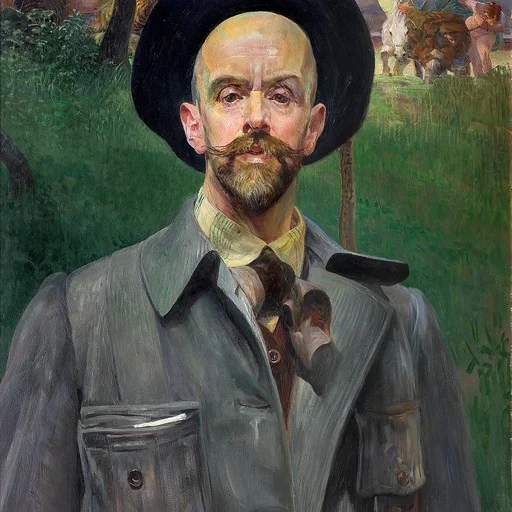
Jacek Malczewski (Polish:; 15 July 1854 – 8 October 1929) was a Polish symbolist painter who was one of the central figures of the patriotic Young Poland movement.

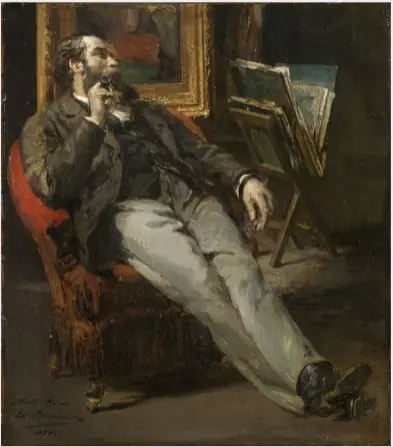 Portrait of Nathaniel Hone (1831-1917), Artist
 Portrait of the painter Vogels
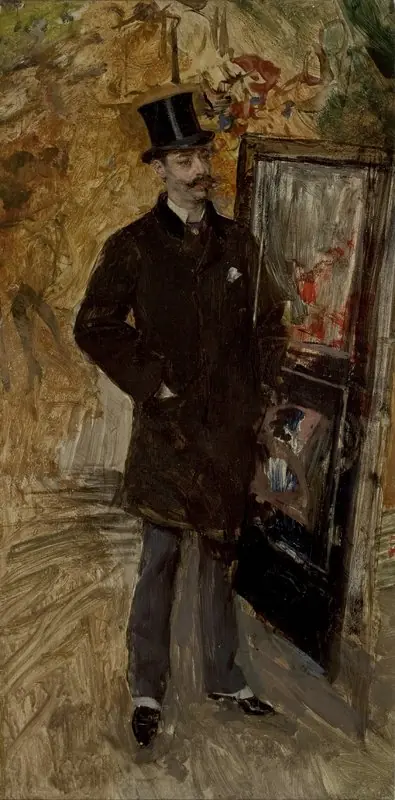 Retrato de homem com cartola: o poeta Hanvin, o homem do fígaro
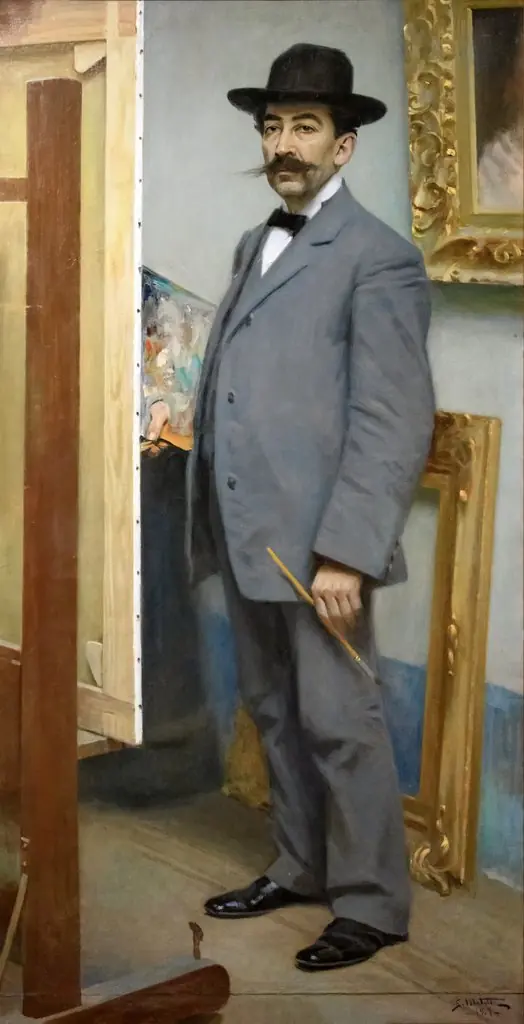 Autoretrat (Museu Nacional d'Art de Catalunya, inv 039928-000)
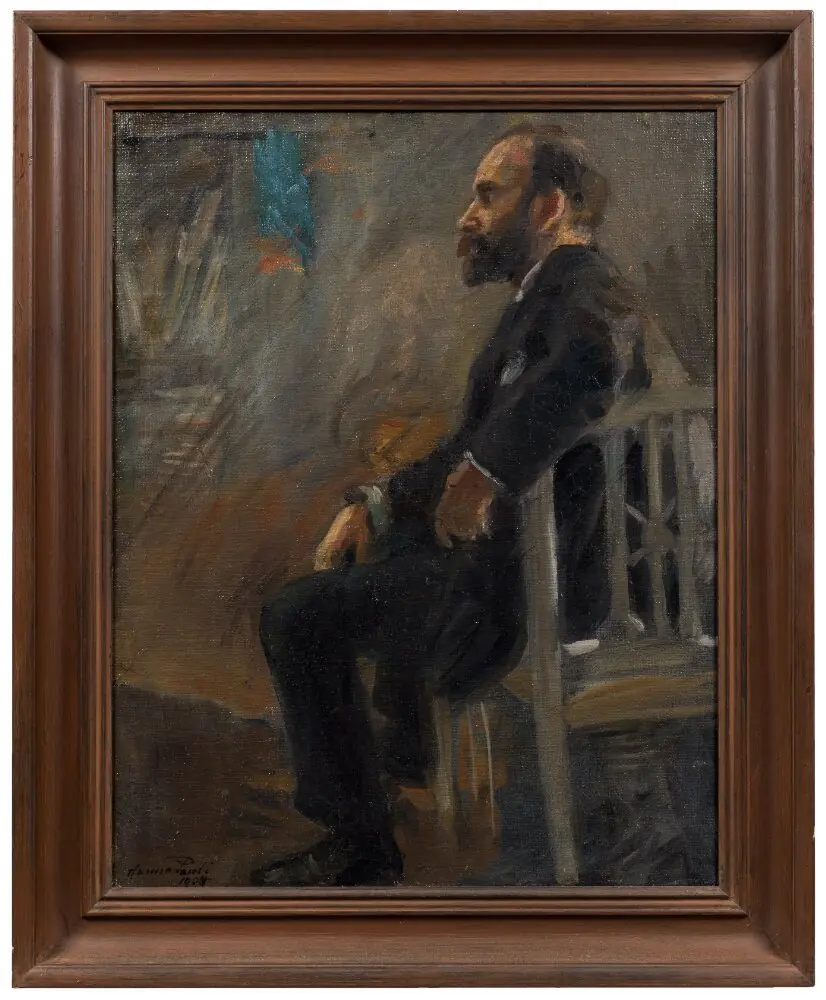 Klas Fåhraeus (1863-1944). Study for Friends (NM 1723)
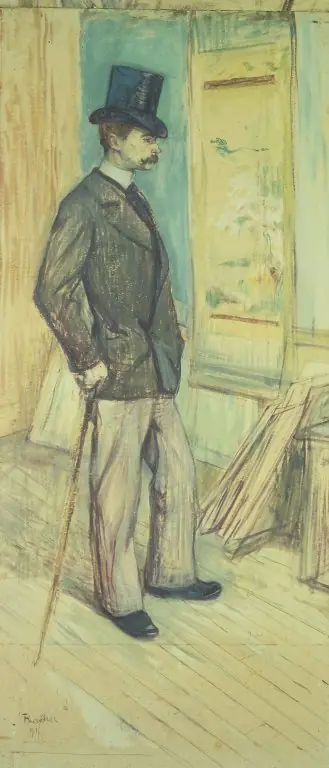 Portrait of M. Paul Sescau (Portrait de M. Paul Sescau)
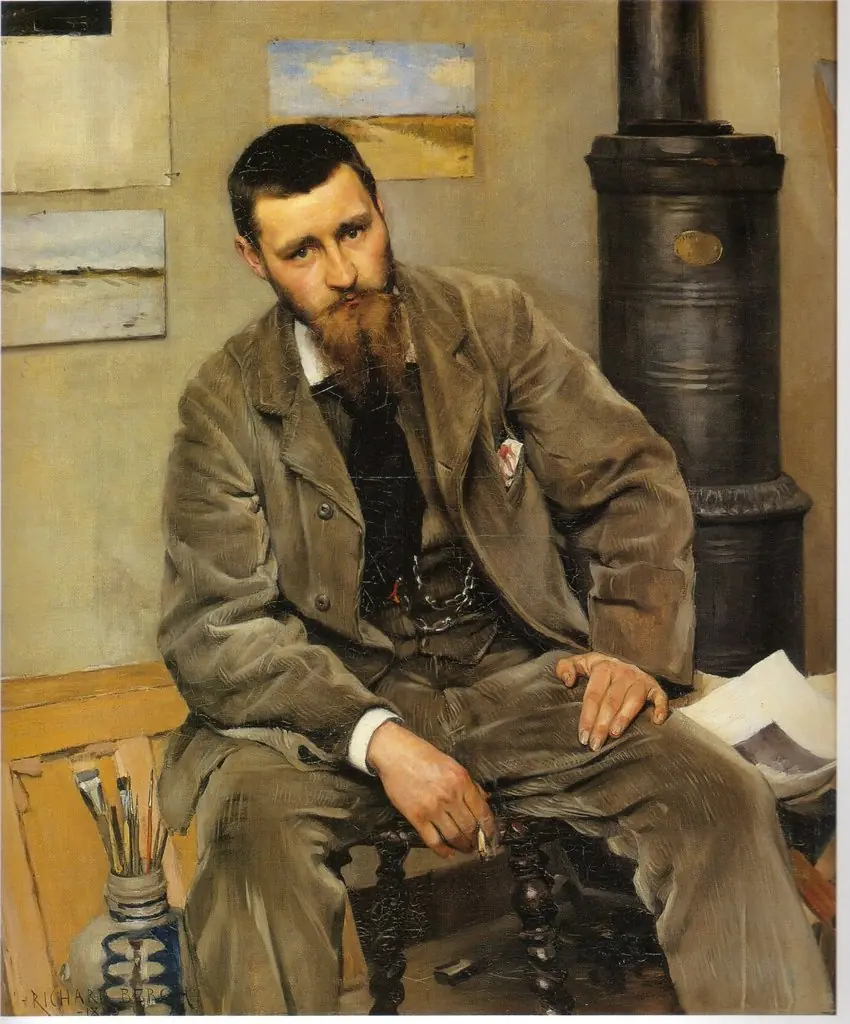 Portrait of the Painter Nils Kreuger
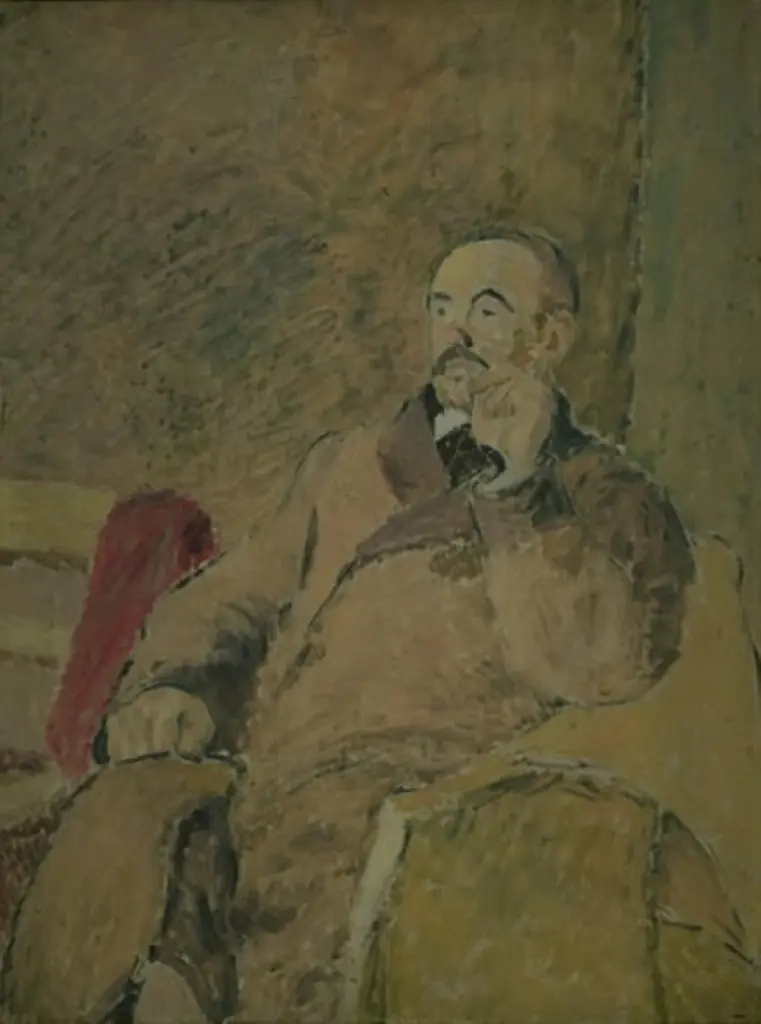 Portrait of the Artist's Father
 Portrait of the Artist's Father
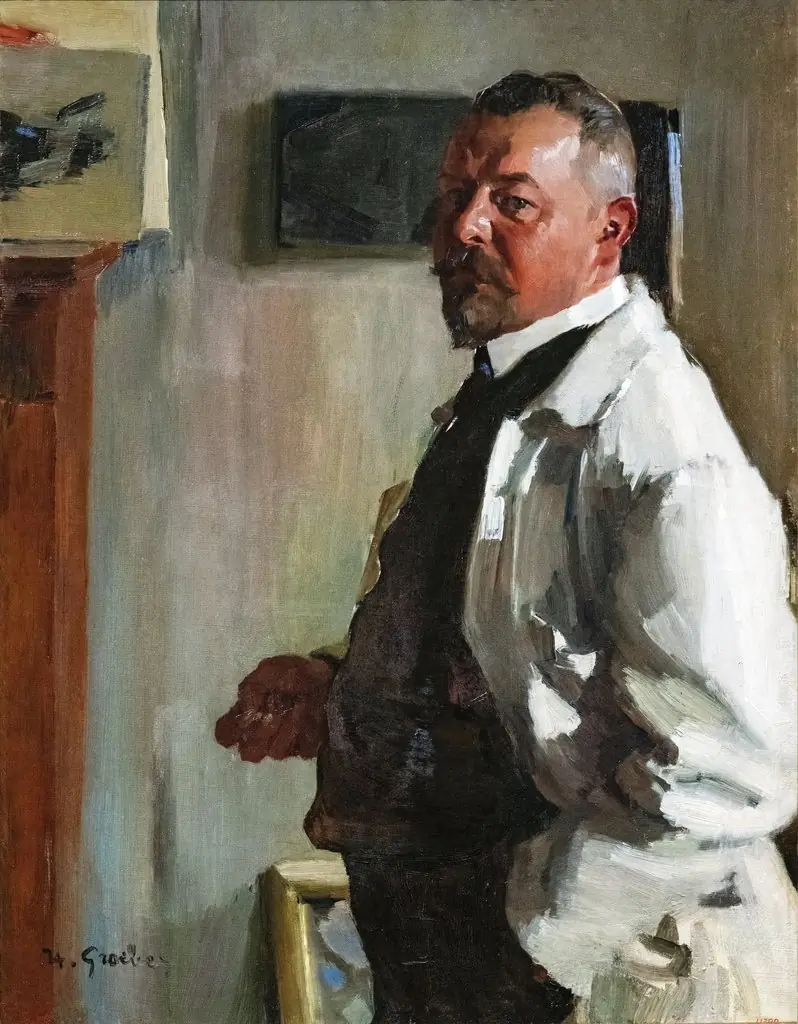 Retrat de l'escultor Beer (1846-1912)
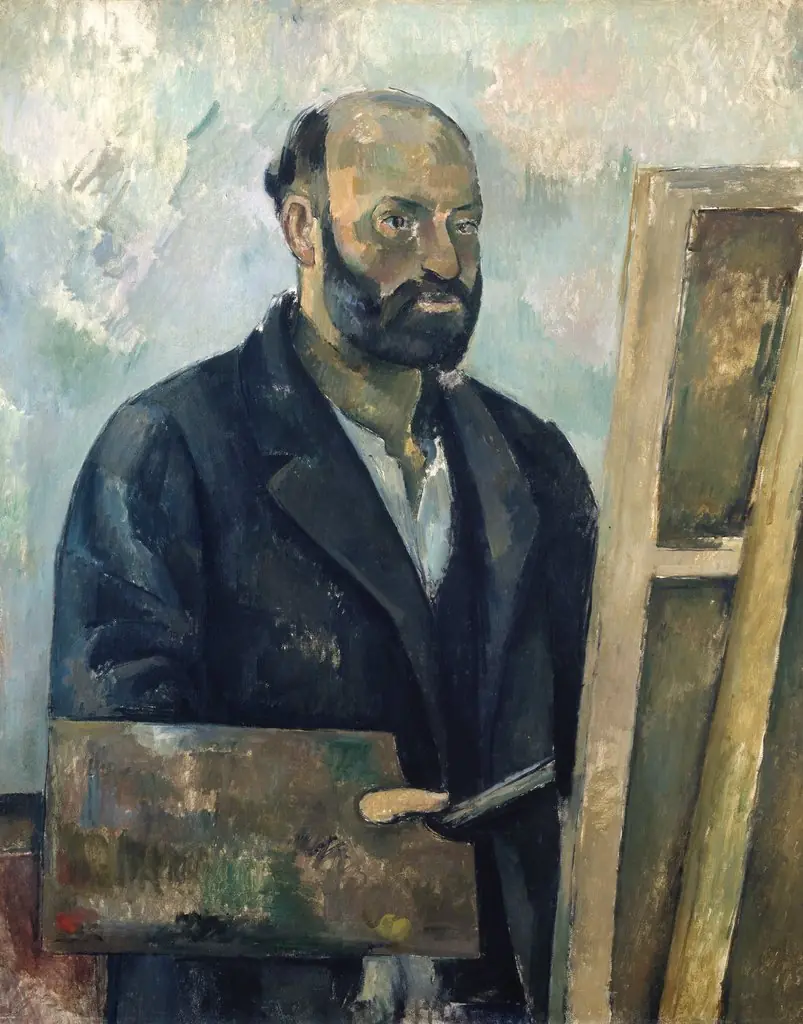 Self-Portrait with Palette