Artwork
Portret Stanisława Tomkowicza
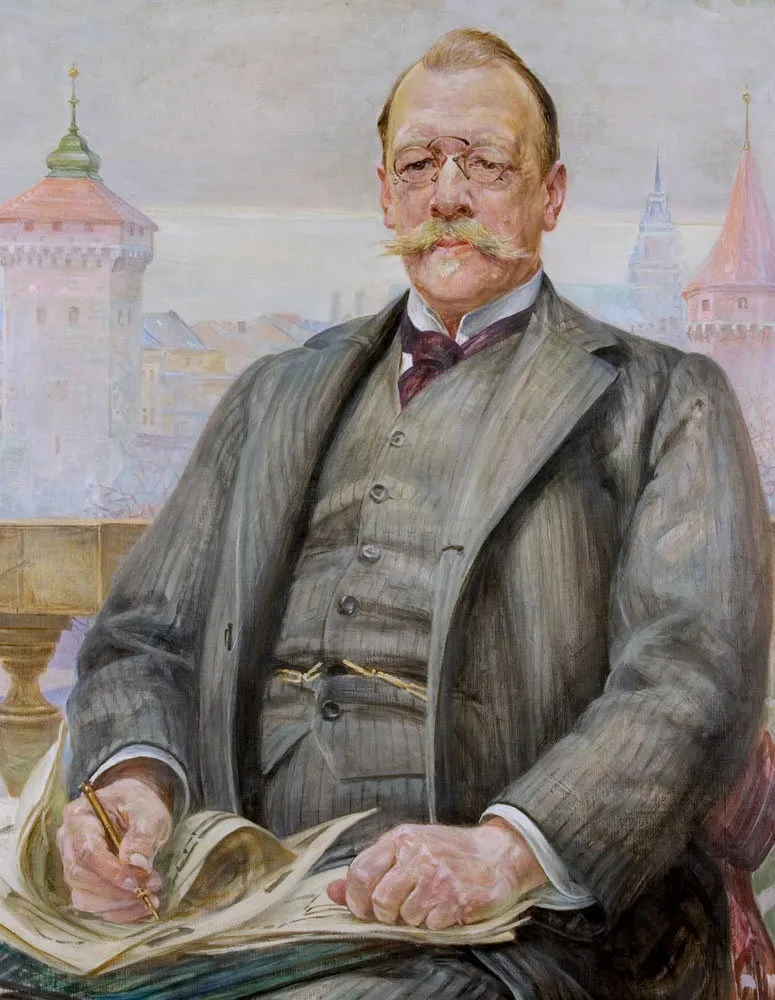
Portret Stanisława Tomkowicza is an oil painting by the Symbolist artist Jacek Malczewski. It dates from 1913 and is held in the collection of the National Museum in Kraków.
About this work
Overview
Portret Stanisława Tomkowicza is an oil on canvas portrait painted by Jacek Malczewski in 1913. Measuring 92 by 73 centimeters, the artwork depicts its titular subject, Stanisław Tomkowicz, and incorporates the cityscape of Kraków into the background. Created during Malczewski's mature period, the painting is held in the collection of the National Museum in Kraków.
Subject & Meaning
The inclusion of the pen, document, and specific urban backdrop underscores the sitter's intellectual or professional ties to the city.
The painting presents Stanisław Tomkowicz seated in the central foreground, positioned frontally to dominate the frame. He is dressed in a gray three-piece suit with a dark bow tie and white collar. His hands are engaged with an open book or document resting on his lap; his right hand holds a pen poised over the page, while his left hand presses the paper flat. He wears round wire-rimmed spectacles and sports a prominent waxed mustache, with receding light brown hair. Behind him stretches a hazy Kraków cityscape, featuring distinctive architecture including a round tower with a green copper dome and red roof to the left, a pointed Gothic spire in the center distance, and another red-roofed tower to the right. The inclusion of the pen, document, and specific urban backdrop underscores the sitter's intellectual or professional ties to the city.
Technique & Style
Executed in oil paint on canvas, the portrait employs a muted palette dominated by grays, soft browns, and dusty rose tones. Light falls evenly from the left, modeling the face and hands with soft shadows, avoiding strong chiaroscuro. Malczewski's brushwork is visible and fluid, applied more loosely in the background cityscape and with greater refinement in the rendering of the face and hands. The paint surface possesses a satin finish rather than a glossy one. This handling aligns with the broader stylistic qualities of Polish Symbolism, balancing descriptive detail with atmospheric, expressive brushwork.
History & Provenance
The artwork was created in 1913 and is currently housed in the National Museum in Kraków. The painting remains within the museum's collection as an example of Malczewski's portraiture from the era. Specific details regarding the commission, early ownership chain, and exhibition history prior to or following its accession by the museum are not documented in the available sources.
Context
Jacek Malczewski created this portrait during a significant phase of his career, shortly after he assumed the rectorship of the Academy of Fine Arts in Kraków in 1912, a position he held until the outbreak of World War I. A central figure of the Young Poland movement and Polish Symbolism, Malczewski was deeply embedded in the cultural and institutional life of Kraków. His wider oeuvre frequently merged historical motifs, national martyrdom, and classical mythology with Polish folklore. While he is renowned for elaborate, allegorical self-portraits and symbolic narratives, his portraits of contemporaries, such as this one, ground his practice in the specific intellectual milieu of his home city.
Legacy
As a work held by the National Museum in Kraków, the portrait contributes to the comprehensive preservation and understanding of Malczewski's portraiture alongside his more widely recognized symbolic paintings. Malczewski's broader legacy as a founder of Polish Symbolism and an influential educator endures, and his works continue to command significant attention, as evidenced by the record-setting auction prices for his paintings in the contemporary Polish art market. This portrait remains a document of the artist's immediate social circle and the urban landscape of Kraków during the early twentieth century.
Artist & collection
Artist
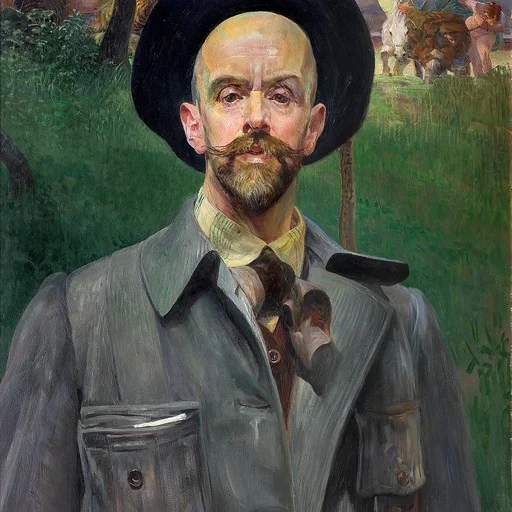
Jacek Malczewski (Polish:; 15 July 1854 – 8 October 1929) was a Polish symbolist painter who was one of the central figures of the patriotic Young Poland movement.

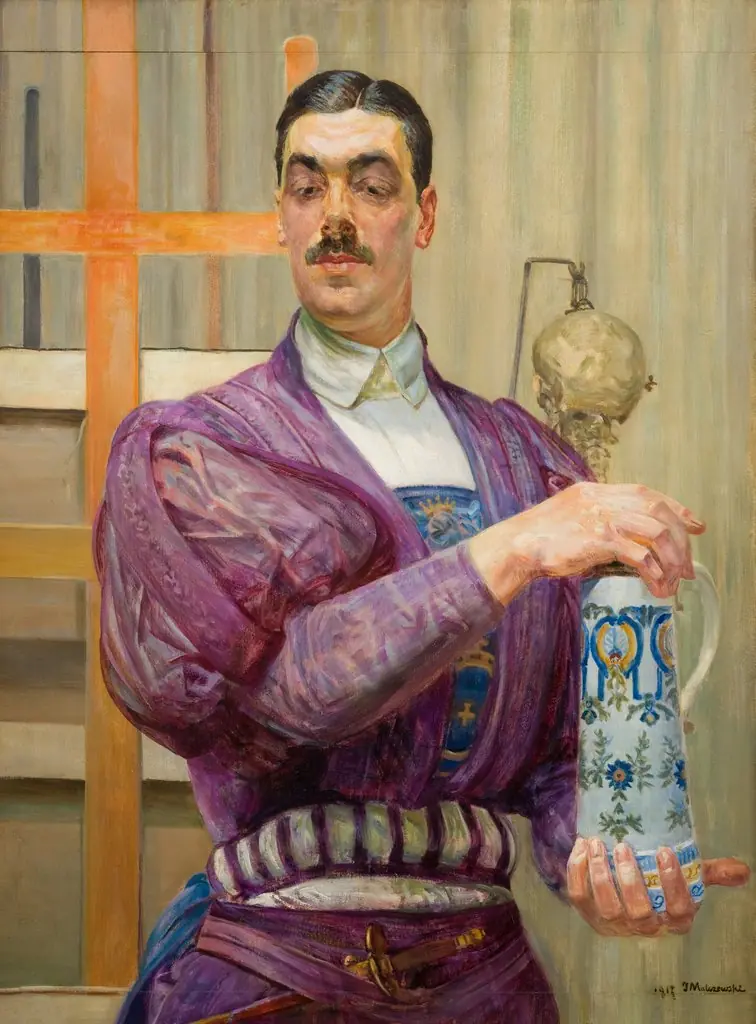
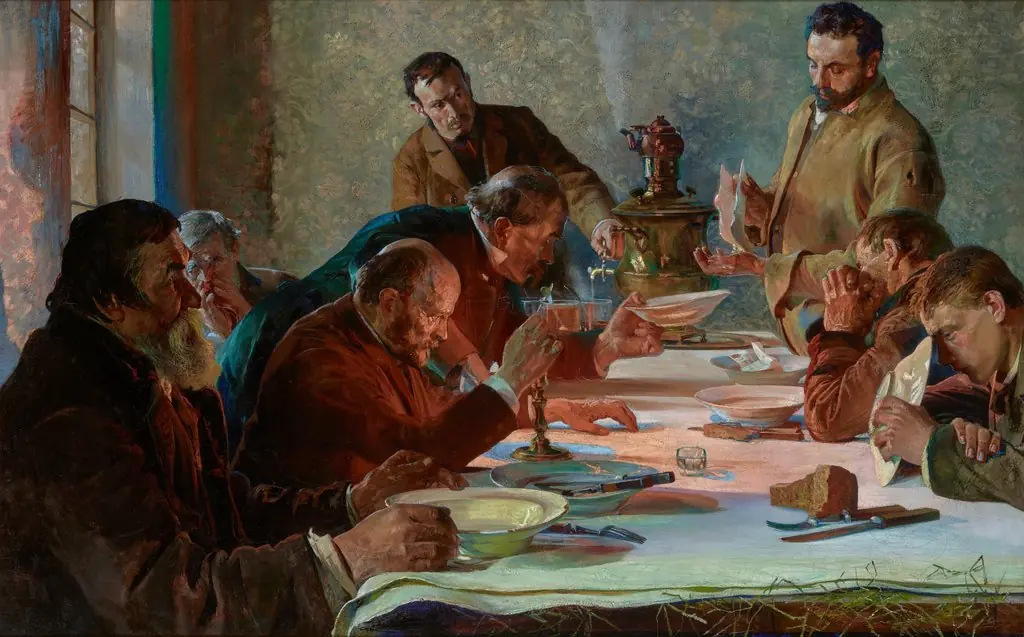
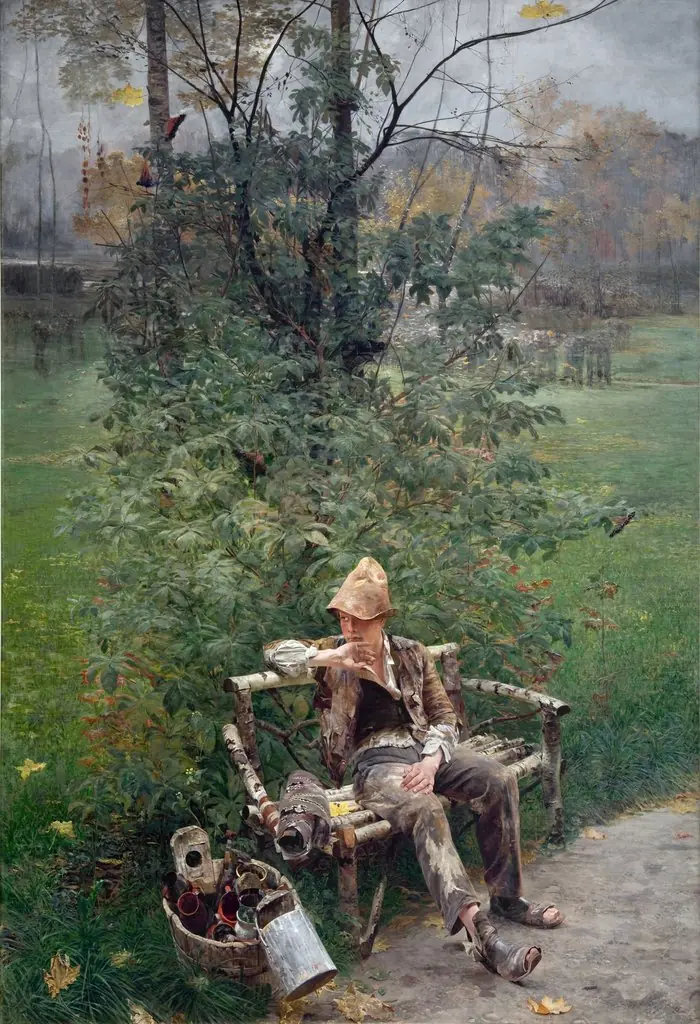
- Portrait of Józef Sare, Vice-President of the City of Krakow
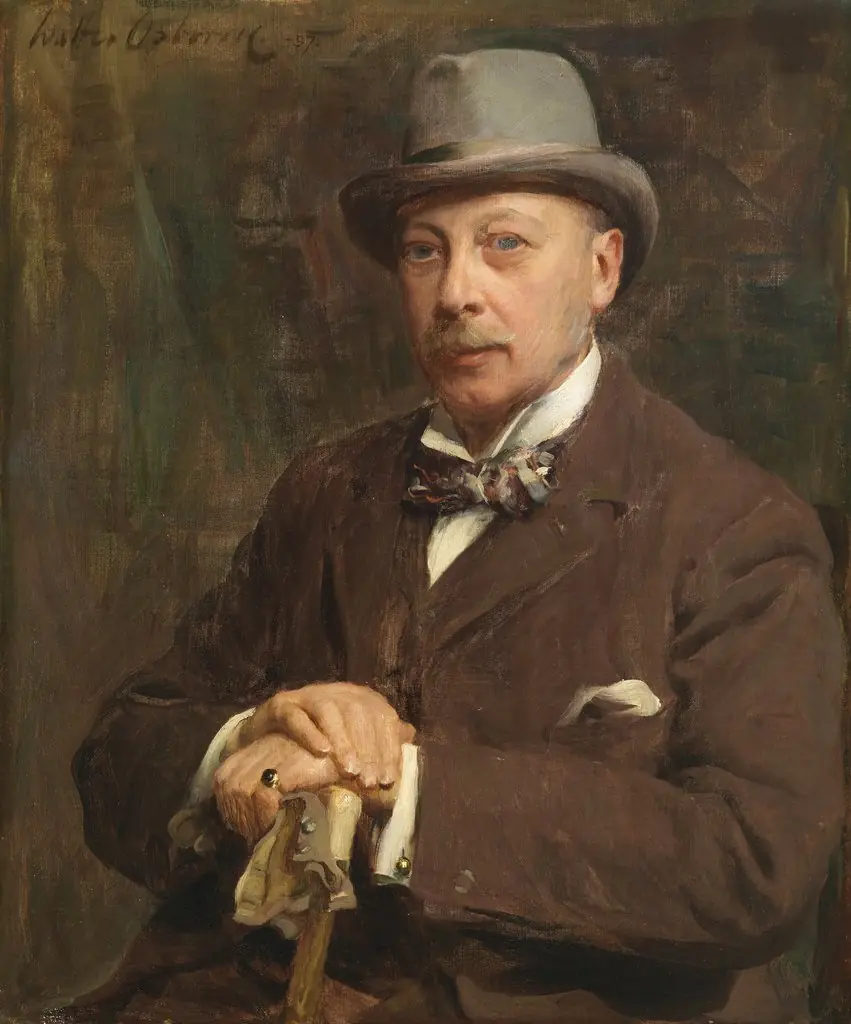 Portrait of a Gentleman
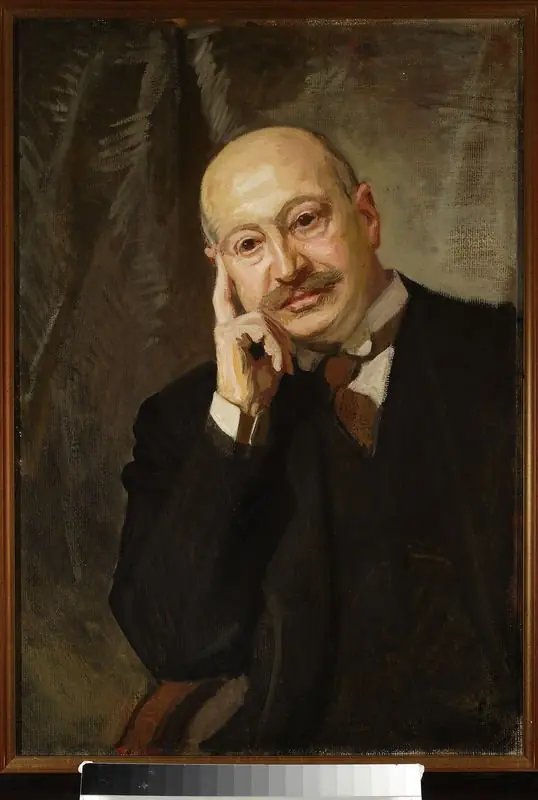 Portrait of Edward Krasiński
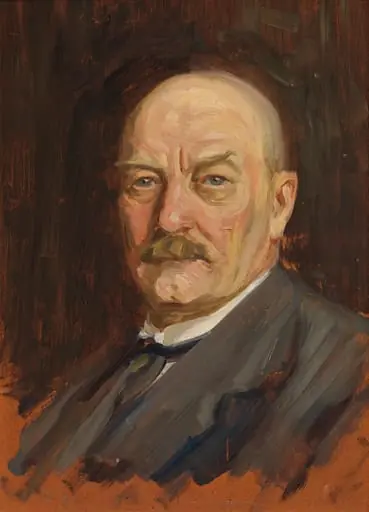 Omakuva
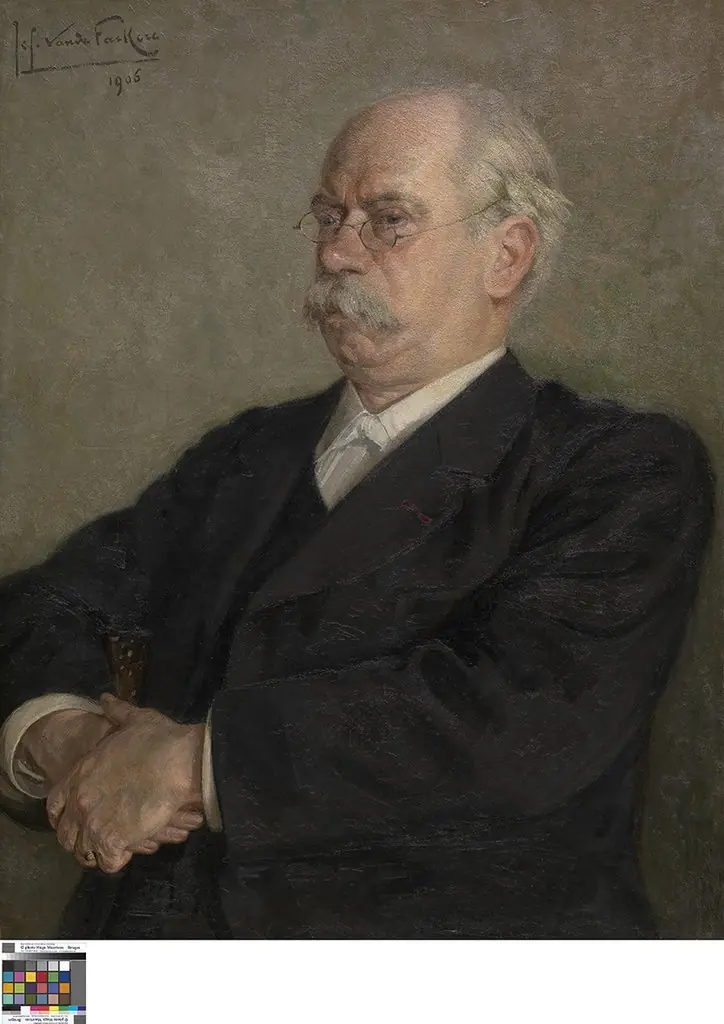 Portrait of Julius Sabbe
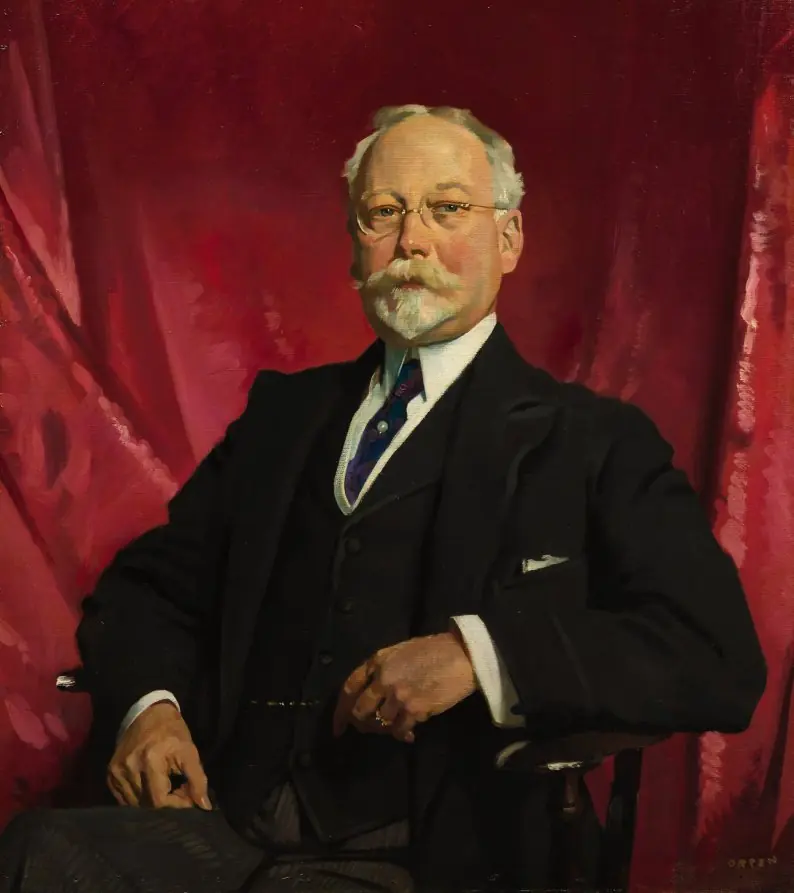 Portrait of John L. Severance
 Edward R. Bacon (1846–1915)
 Portret van Ernest Gérard
 Portrait of Colonel The Hon. Milo George Milo Talbot (1854-1931)
 Portrait of Teodor Rygier, sculptor
 The Right Hon. Louis Botha
 Self Portrait