Artwork
Christmas Eve in Siberia
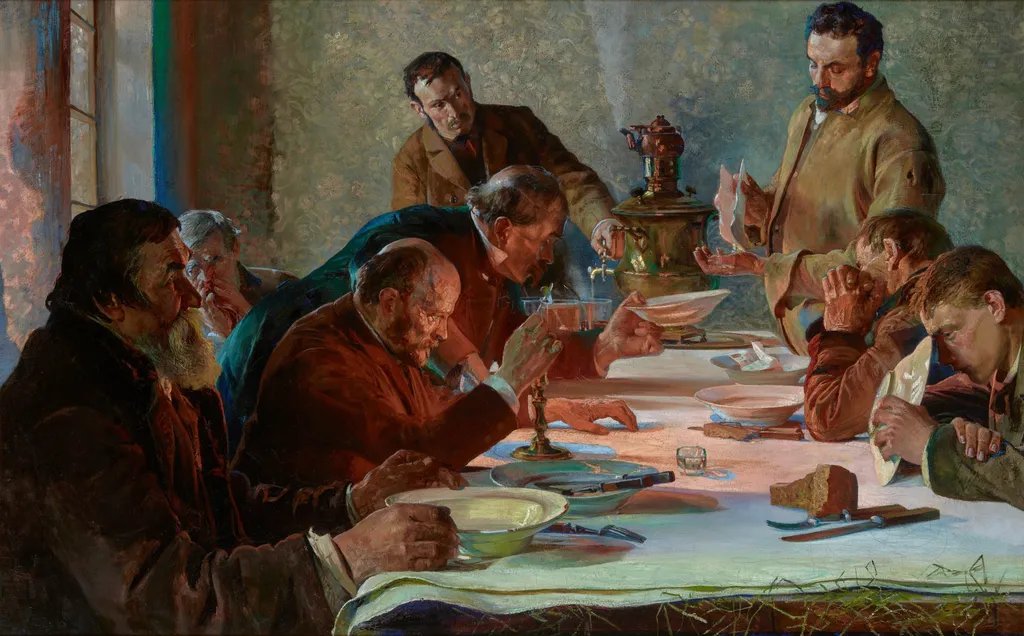
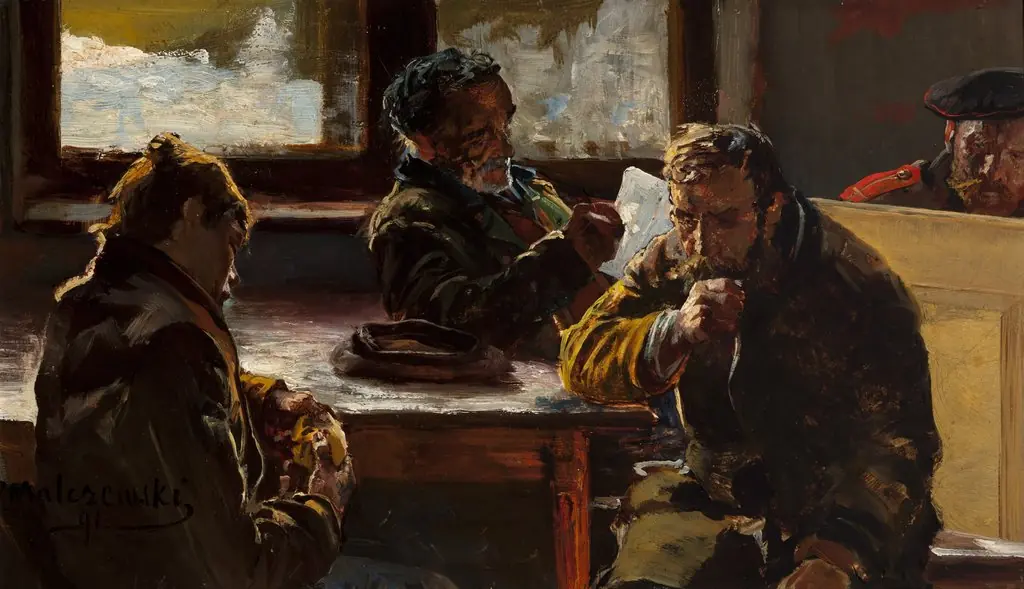
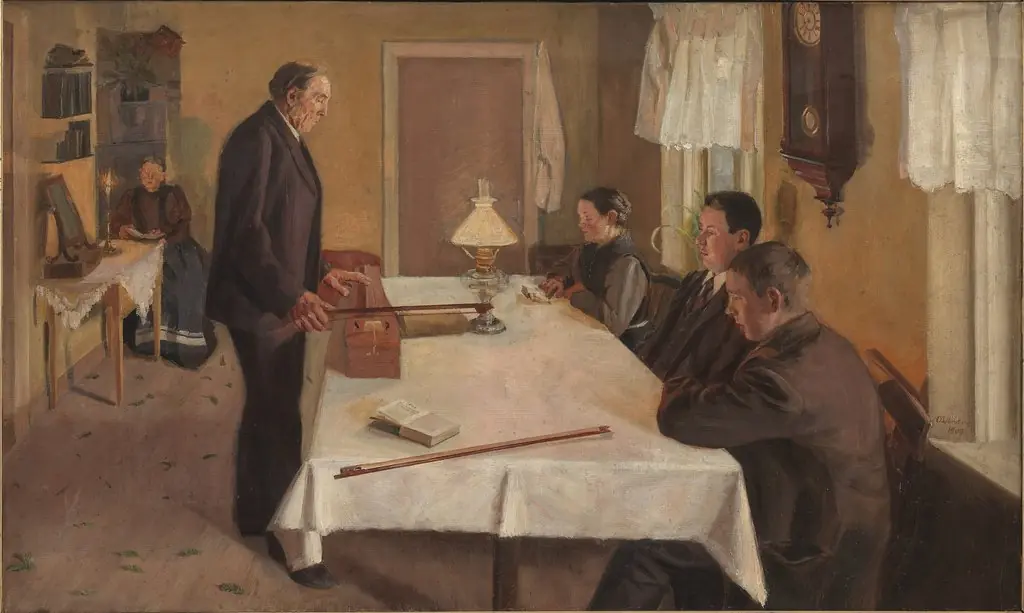
Christmas Eve in Siberia is an oil painting by the Post-Impressionist artist Jacek Malczewski. It dates from 1896 and is held in the collection of the National Museum in Kraków.
About this work
Overview
Christmas Eve in Siberia is an oil on canvas painting by Polish artist Jacek Malczewski, completed in 1892.
Christmas Eve in Siberia is an oil on canvas painting by Polish artist Jacek Malczewski, completed in 1892. Measuring 81 by 126 centimeters, the work is held in the collection of the National Museum in Kraków. It stands as one of the most affecting achievements of Polish Realism, transforming a documentary scene of political exile into a meditation on suffering, solidarity, and national identity under Tsarist oppression. The painting belongs to Malczewski's broader Siberian series, which he developed across the 1870s and 1880s, drawing on patriotic literature and firsthand accounts of Polish deportees.
Subject & Meaning
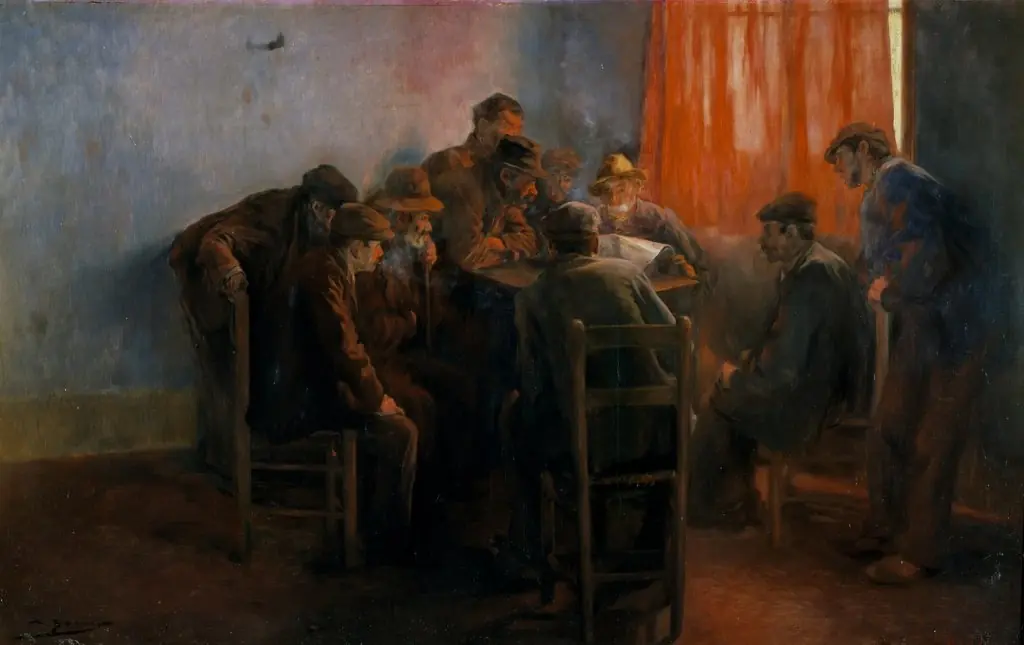
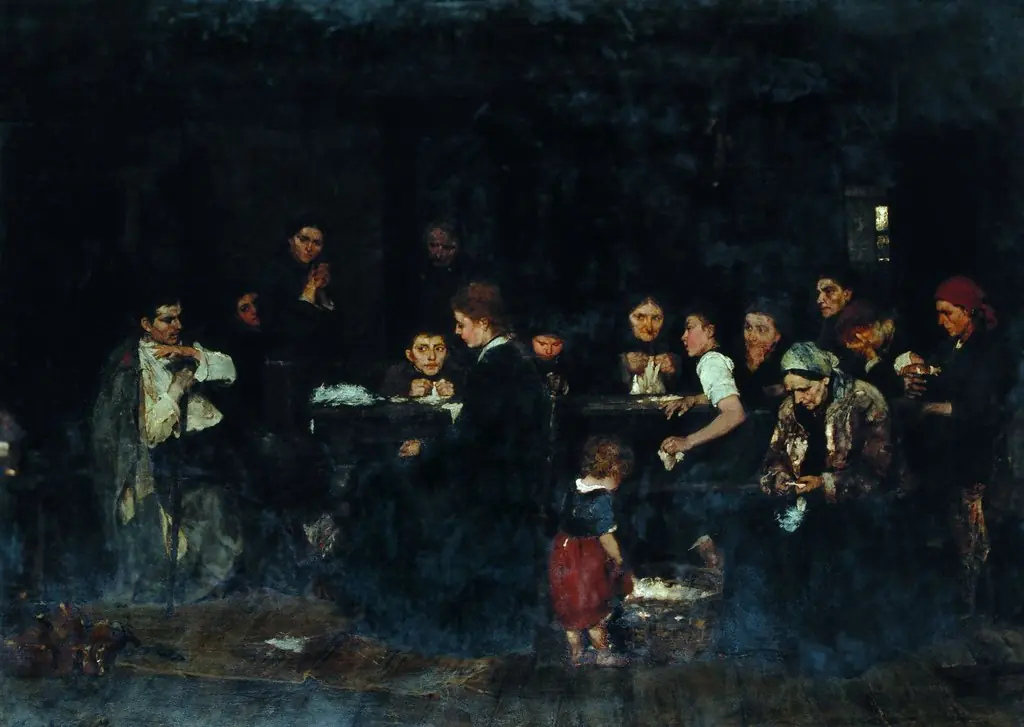
The painting depicts a group of male exiles gathered for a meager Christmas Eve supper in a cramped Siberian interior. Around a long table covered with a pale cloth, the men sit or lean forward with heads bowed, hands clasped in prayer or resting on the table. One standing figure at right reads from an open book, while another tends a large brass samovar. The table holds simple bowls, knives, a candlestick, bread, and a small glass. Malczewski minimizes overt religious iconography, yet the scene resonates with Eucharistic symbolism: the shared meal becomes an assertion of communal dignity and ritual purity against dehumanizing circumstances. Each figure appears absorbed in private suffering, memories of lost homes, and irreparable loss, yet their collective gathering enacts solidarity. The samovar offers a poignant symbol of warmth and domesticity amid deprivation, while empty plates and coarse bread underscore the harsh realities of exile. The work thus layers personal grief with national martyrdom, using Christmas Eve, Poland's most cherished family holiday, to heighten the pathos of displacement.
Technique & Style
Malczewski executed the work in oil on canvas, employing a muted palette of warm browns, umbers, deep greens, and soft golden tones against cooler shadows. The white tablecloth, rendered with crisp highlights, serves as the compositional and symbolic anchor, its brightness contrasting with the surrounding austerity. Flesh tones appear pale yet tinged with rose on cheeks and knuckles, suggesting both malnourishment and persistent human warmth. The samovar's burnished brass introduces small points of golden light that reflect in soup bowls and on faces. Two sources of contrasted lighting structure the scene: cold light streaming through a window at left, and the warmer glow of a candle. Visible brushwork is textured and expressive, with thicker application in faces and fabrics, while layered glazes and subtle temperature transitions create atmospheric depth. The composition organizes along a strong horizontal axis defined by the table's edge, counterbalanced by vertical elements such as window shutters and the upright samovar, reinforcing both group unity and claustrophobic enclosure. This handling places the work within Polish Realism while anticipating Symbolist tendencies in its emotional and moral gravity.
History & Provenance
Malczewski first took up the subject of Siberian deportations during his stay in Paris between 1876 and 1877, inspired by the poetry of Juliusz Słowacki and the patriotic art of Artur Grottger. He continued developing the Siberian series across subsequent years, drawing also on Teofil Lenartowicz's Cienie syberyjskie (Siberian Ghosts). The painting is dated 1892, by which time Malczewski had established himself as a leading figure in the Young Poland movement. The work entered the collection of the National Museum in Kraków, where it remains. Its exhibition history includes display in the relative freedom of Austrian-controlled Galicia, where Kraków served as a center of Polish cultural resistance, allowing such politically charged subjects to be shown without direct Russian censorship.
Context
Malczewski was born in 1854 in Radom, Congress Poland, under Russian occupation, and was shaped by his father Julian's patriotism and romantic literature associated with the November Uprising. After training under Jan Matejko at the Kraków School of Fine Arts and further study in Paris at the École des Beaux-Arts and Académie Suisse, Malczewski emerged as a central figure in Young Poland (Młoda Polska), a movement seeking to revitalize Polish culture through realism, symbolism, and folklore. By the early 1890s, he had mastered academic traditions and turned to contemporary moral and national themes. The Siberian subject carried acute political resonance: following the failed January Uprising of 1863, at least 18,000 Poles were exiled to Siberian labor camps, many never to return. Letters and clandestine reports from these camps circulated among Polish intellectuals, and Malczewski's sympathetic portrayal represented both artistic solidarity and subtle political statement. His approach avoided Matejko's overt historical rhetoric in favor of restrained, humanistic observation. Critics and scholars have compared his art to Gustave Moreau, Arnold Böcklin, and even Salvador Dalí, though his national martyrdom themes remain distinctively Polish.
Legacy
Christmas Eve in Siberia endures as a canonical work of Polish nineteenth-century painting, frequently cited in scholarship on Malczewski and the Young Poland movement. It exemplifies the artist's capacity to channel patriotic concern through genre painting without descending into melodrama, influencing subsequent generations of Polish artists who addressed partition and exile. The painting has gained renewed public attention through digital reproduction and art-historical blogging, where it is often invoked in contemporary discussions of displacement and humanitarian crisis. Malczewski's broader reputation, cemented by works such as Błędne koło (Vicious Circle, 1895-97) and the Thanatos series, positions him as the father of Polish Symbolism. His son Rafał Malczewski, also a painter, eventually sold his father's remaining works to the National Museum in Warsaw before World War II. Jacek Malczewski's late blindness and death in Kraków in 1929, followed by burial at Skałka, Poland's national Panthéon, confirmed his status as a cultural monument; this painting remains among his most widely reproduced and emotionally direct achievements.
Own this work as a print
Artist & collection
Artist
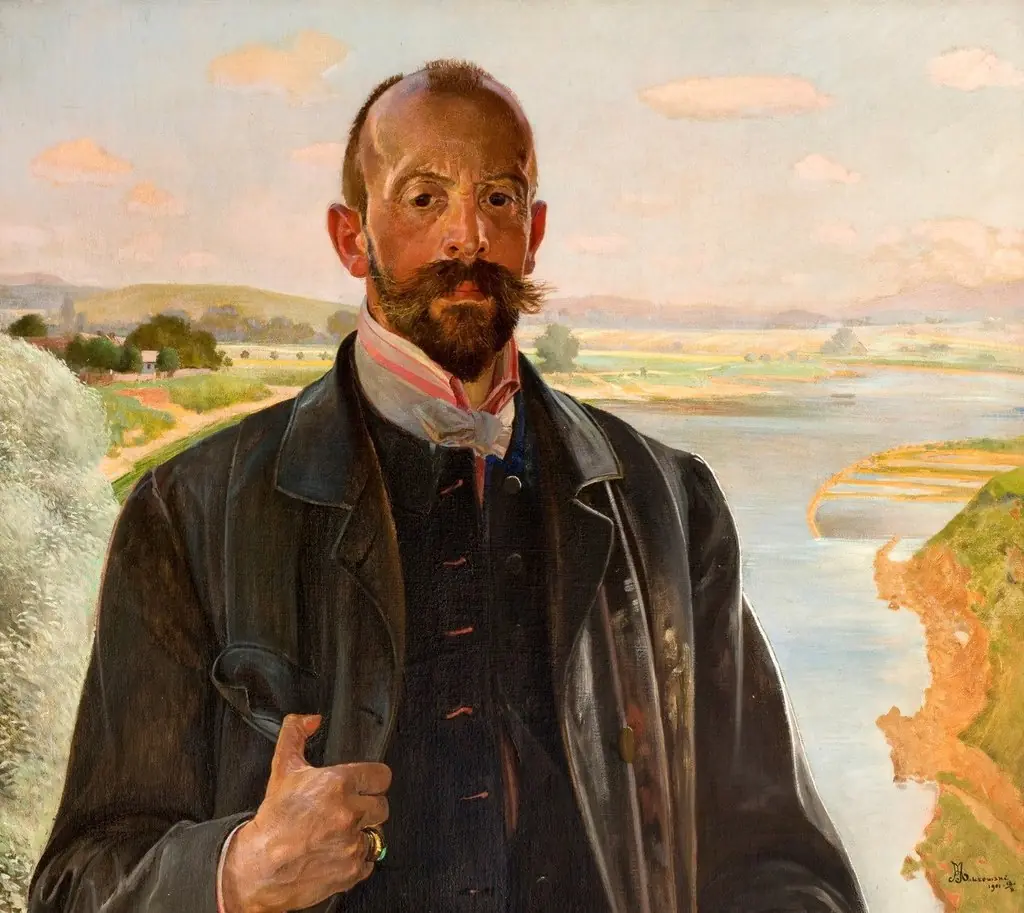
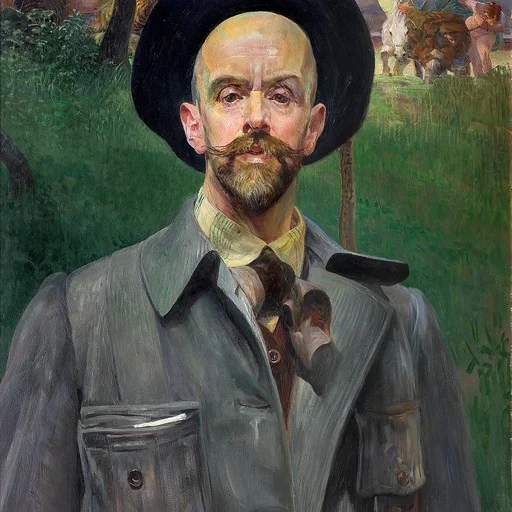
Jacek Malczewski (Polish:; 15 July 1854 – 8 October 1929) was a Polish symbolist painter who was one of the central figures of the patriotic Young Poland movement.