Artwork
Algernon Sidney
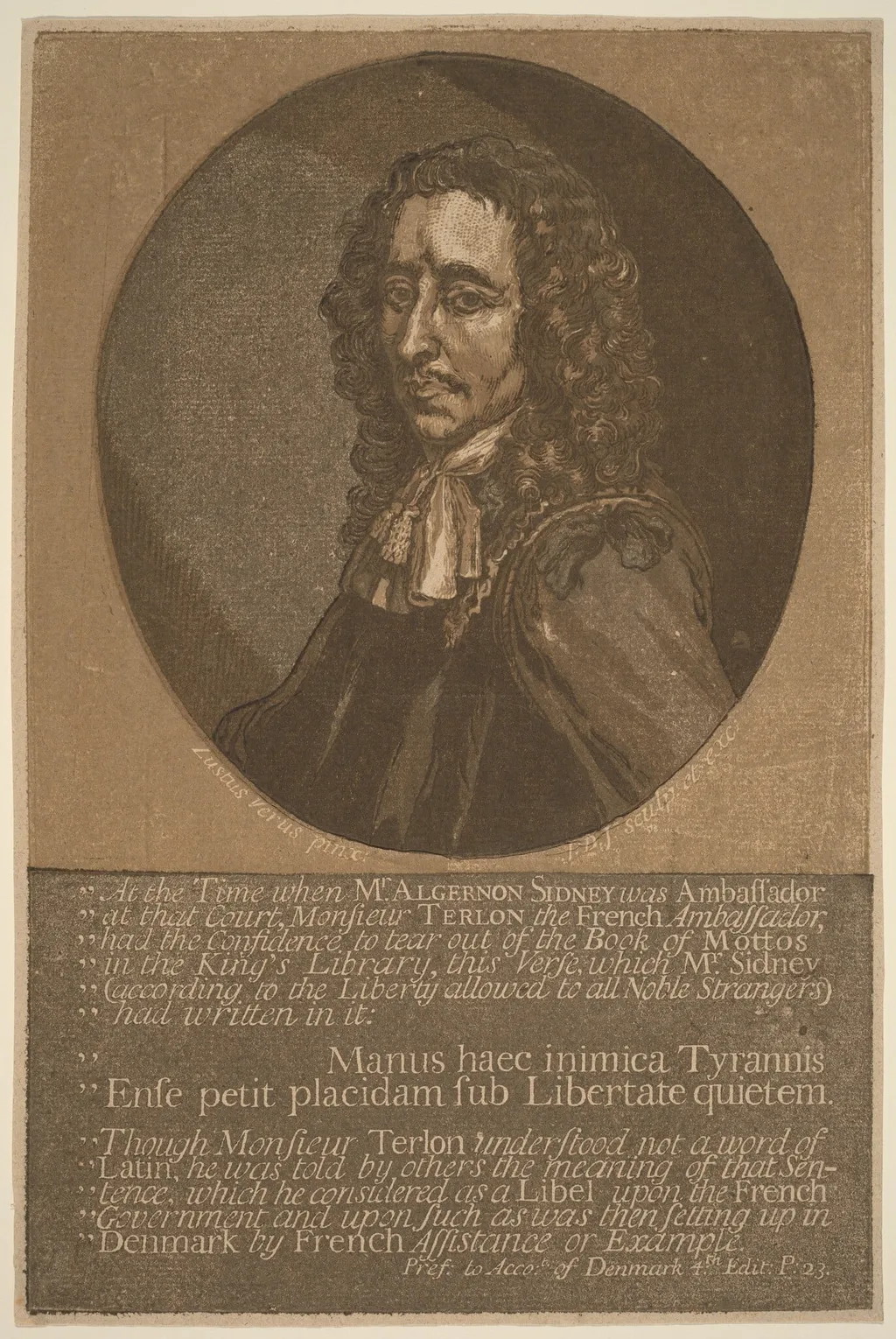
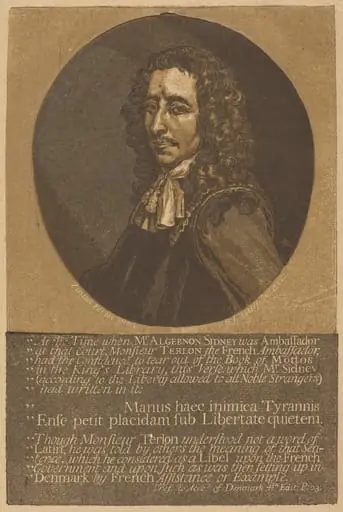
Algernon Sidney is an ink print by the Baroque artist John Baptist Jackson. It dates from 1740 and is held in the collection of the National Gallery of Art.
- Inscription
- Inscribed:lower center of image: Zustus Verus, pinx: J: B: J: sculp; et exc: / at the Time when Mr. ALGERNON SIDNEY was Ambassador... / ... Denmark by French Assistance or Example. / Pref: to Accot. of Denmark 4th Edit: P: 23.
About this work
Overview
Created in 1740 by British printmaker John Baptist Jackson, this chiaroscuro woodcut depicts Algernon Sidney, a 17th-century English politician and martyr.
Created in 1740 by British printmaker John Baptist Jackson, this chiaroscuro woodcut depicts Algernon Sidney, a 17th-century English politician and martyr. Printed from four separate blocks using two tones of brown and two of gray, the image appears on laid paper with a textured surface. Jackson’s method relied on layered woodblocks to simulate tonal gradations, avoiding the linear style typical of ink drawings and instead emulating the chiaroscuro effects of painted portraits.
Subject & Meaning
The portrait portrays Algernon Sidney, a prominent republican figure executed in 1683 for alleged treason. His stern expression, curled hair, and ruffled collar reflect the gravitas associated with political martyrdom in early modern England. The dramatic lighting isolates his face against a deep shadow, reinforcing his moral resolve.
Below the image, an inscription recounts his life and death, framing the print as both a commemorative portrait and a political statement.
Technique & Style
Jackson employed a multi-block woodcut technique, carving each block to hold a specific tone, light gray, dark gray, light brown, dark brown. By overprinting these layers, he achieved subtle transitions between light and shadow, mimicking the modeling of oil paintings. Heavy embossing enhances the contours of Sidney’s face and collar, adding tactile depth.
Unlike contemporaries who replicated drawings, Jackson sought to translate painterly effects into print through precise registration and ink control.
History & Provenance
Jackson, active in Paris and Venice during the 1730s and 1740s, specialized in reproducing Old Master compositions as prints. This portrait of Sidney likely derived from a now-lost oil painting, consistent with his practice of working from existing artworks rather than original sketches. The print’s survival suggests it circulated among collectors interested in political iconography, though its early ownership remains undocumented.
Context
In the mid-18th century, prints of historical figures like Sidney served as vehicles for republican ideals, especially among British and continental audiences critical of monarchy. Jackson’s choice to render Sidney in chiaroscuro aligned with Baroque traditions of dignified portraiture, while his technical innovation distinguished his work from conventional engravings. The print reflects a broader trend of using print media to preserve and disseminate political memory.
Legacy
Jackson’s approach to chiaroscuro woodcut influenced later printmakers seeking to expand the tonal possibilities of relief printing. While his output was modest and largely overlooked in his time, this print stands as a rare example of 18th-century technical ambition in woodcut. It preserves a political figure’s image through a medium that balanced craftsmanship with narrative intent, bridging painting and print traditions.
Own this work as a print
Artist & collection

Artist
John Baptist Jackson (1701–1780) was a British artist, a woodcut printmaker of the eighteenth century.

![The Marriage at Cana [left plate], by John Baptist Jackson](https://artifactworldgallery.com/img/john-baptist-jackson--the-marriage-at-cana-left-plate--22bae83d46cc40b5-w320.webp)