Artwork
Ulysses and Polyphemus
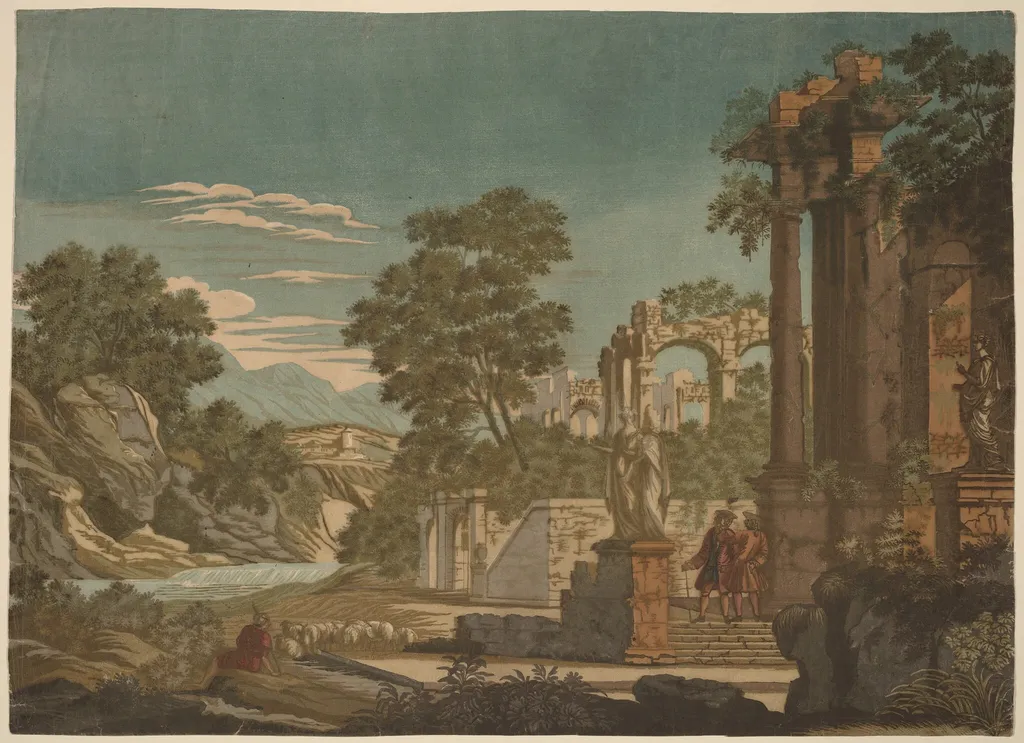
Ulysses and Polyphemus is an ink print by the Baroque artist John Baptist Jackson. It dates from 1701 and is held in the collection of the National Gallery of Art.
- Inscription
- Inscribed:lower right in image: J. 9
About this work
Overview
Created in 1701, Ulysses and Polyphemus is a chiaroscuro woodcut by the British printmaker John Baptist Jackson. The image is produced from two separate woodblocks, one inked in yellow‑green, the other in black, and printed on laid paper, giving the work a distinctive tonal contrast and depth.
Subject & Meaning
The composition illustrates a moment from the myth of Ulysses and the Cyclops Polyphemus. A robed statue stands on a pedestal amid ruined columns, while two figures in antiquated dress gesture toward it; a shepherd watches his flock below. The scene combines classical architecture with a pastoral landscape, suggesting the interplay of heroic narrative and everyday life.
Technique & Style
Jackson employed a chiaroscuro method that layers ink from two blocks to model light and shadow. His use of oil‑based inks, formulated by the artist himself, allows subtle overprinting, expanding the palette beyond the binary black and white of traditional woodcuts. The print also features embossing, which accentuates texture on the stone‑like surfaces.
History & Provenance
The work remains documented in several European collections, evidencing its circulation among connoisseurs of the period.
Active in the early eighteenth century, Jackson worked in artistic centers such as Paris and Venice, where he developed his approach of translating oil paintings into woodcut form. Ulysses and Polyphemus reflects this practice, moving away from the earlier convention of copying ink‑and‑wash drawings. The work remains documented in several European collections, evidencing its circulation among connoisseurs of the period.
Context
During Jackson’s career, chiaroscuro woodcut was experiencing a revival, particularly in Italy and France. By integrating color and relief, Jackson’s prints responded to contemporary tastes for richly modeled images that could rival painted works, while still exploiting the reproducibility of printmaking.
Own this work as a print
Artist & collection

Artist
John Baptist Jackson (1701–1780) was a British artist, a woodcut printmaker of the eighteenth century.

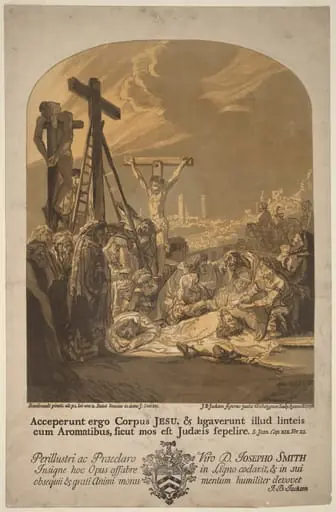
![The Marriage at Cana [left plate], by John Baptist Jackson](https://artifactworldgallery.com/img/john-baptist-jackson--the-marriage-at-cana-left-plate--22bae83d46cc40b5-w320.webp)
- An Italian View
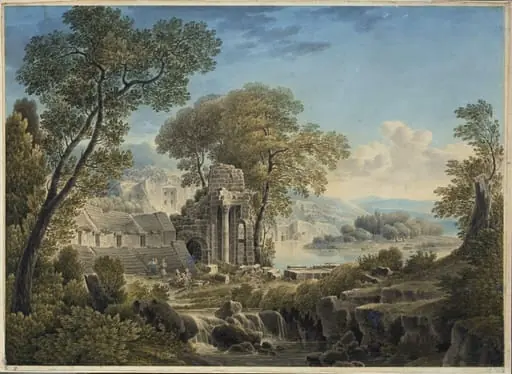 Theatre of Myra, now Demre, in Lycia
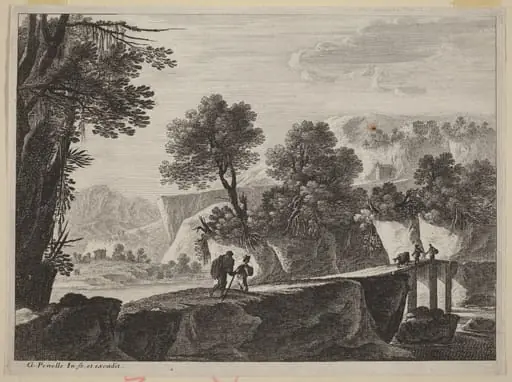 Travelers Approaching a Bridge
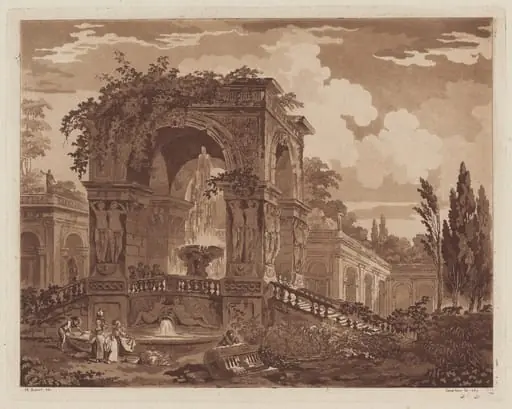 View of an Antique Fountain
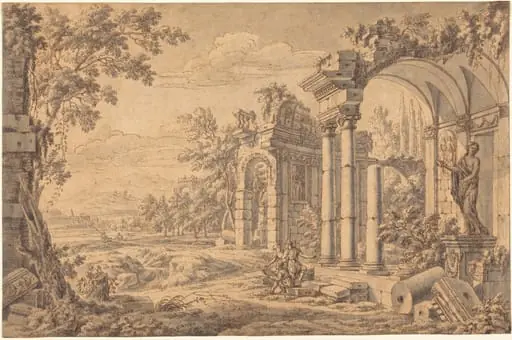 Landscape with a Draftsman among Ancient Ruins
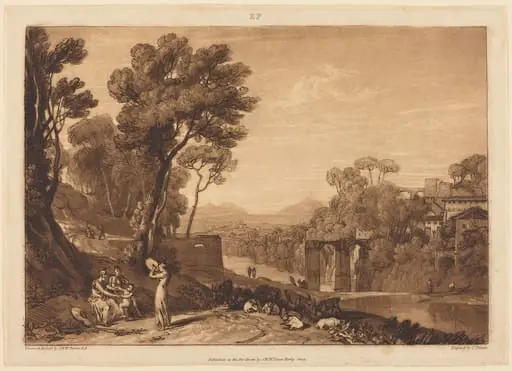 The Woman and Tambourine
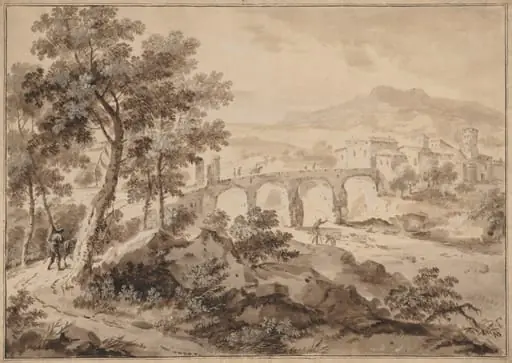 Landscape with Bridge
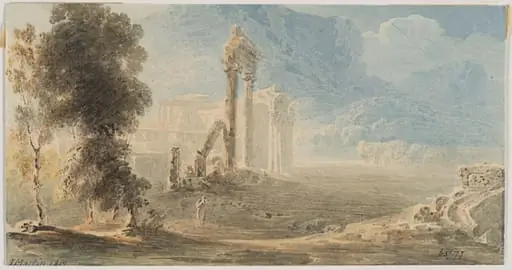 Classical Ruins and Mountains
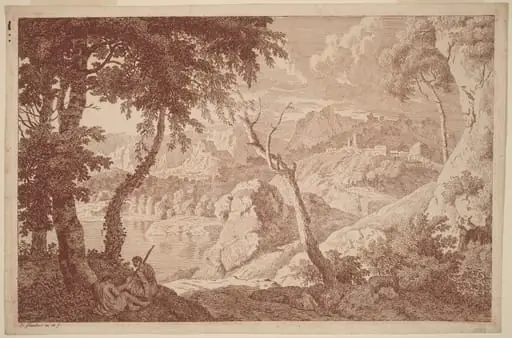 Mountain Landscape with Two Men Resting
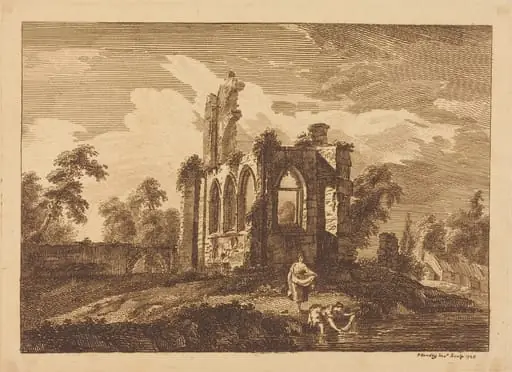 Ruins with Two Women Washing Clothes in a River
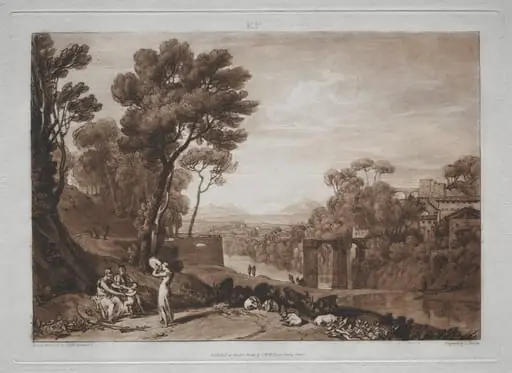 Liber Studiorum: The Woman and the Tambourine
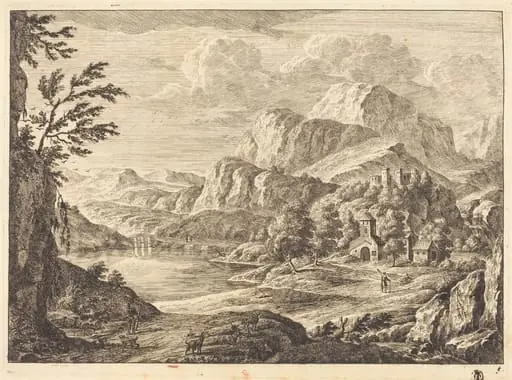 Mountainous Landscape with a Ruined Castle and an Arched Bridge in the Distance