Artwork
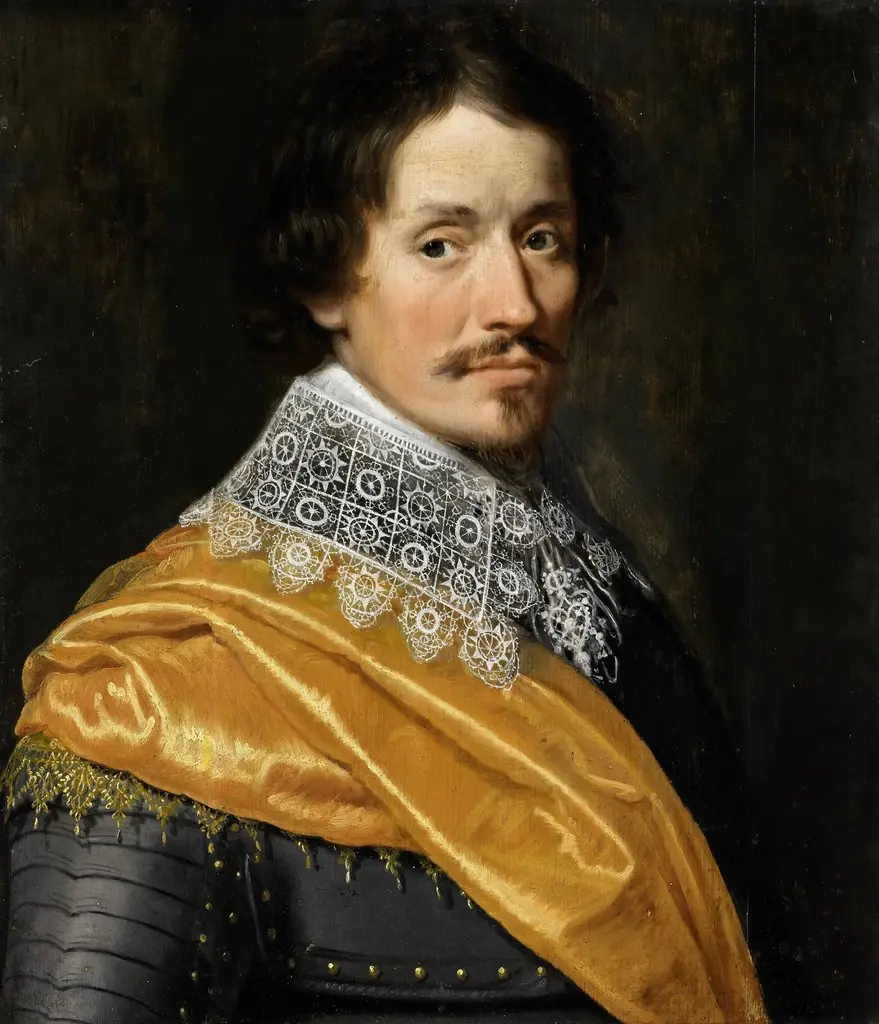
Portrait of Frederik Hendrik (1584-1647), Prince of Orange
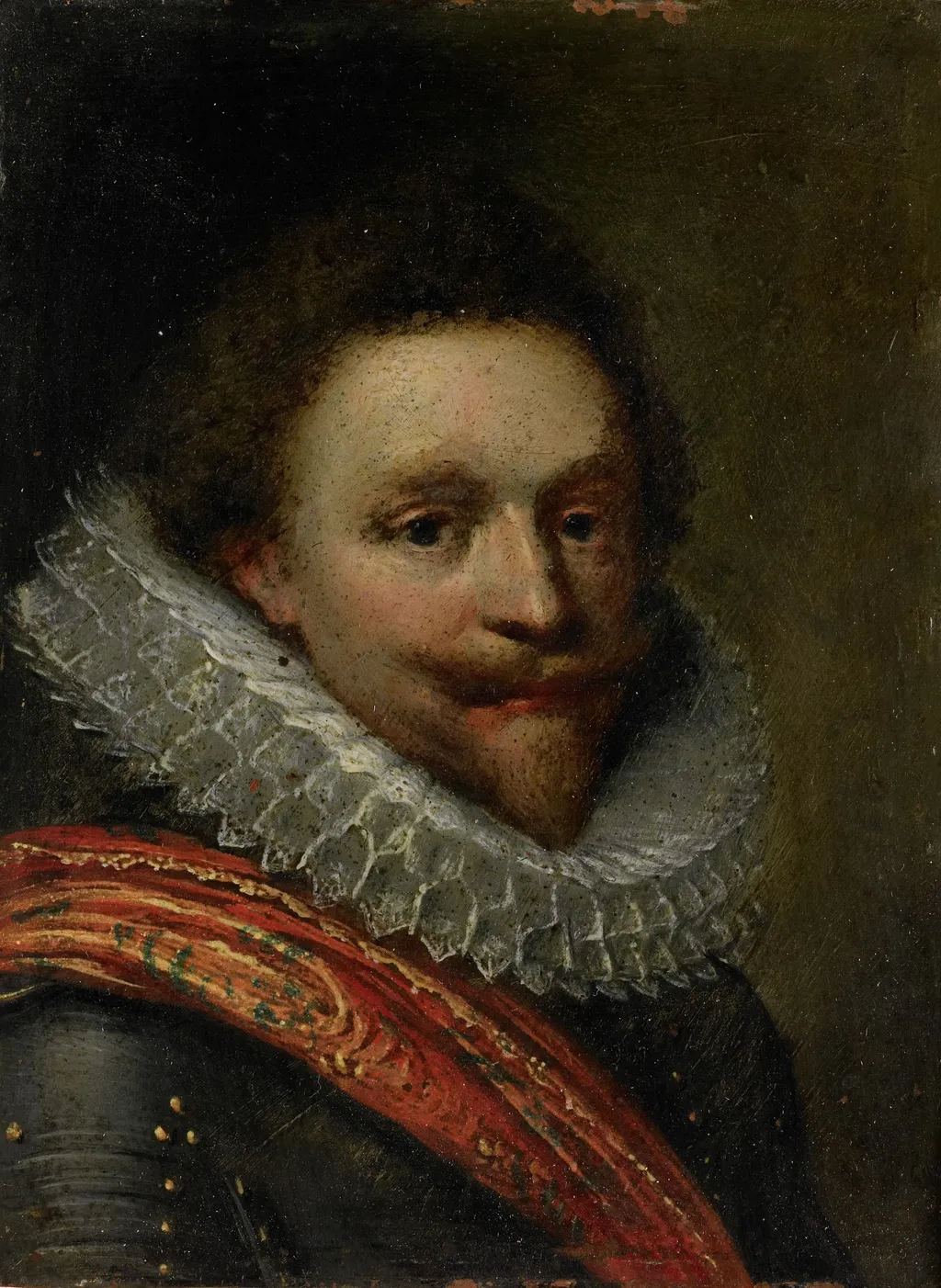
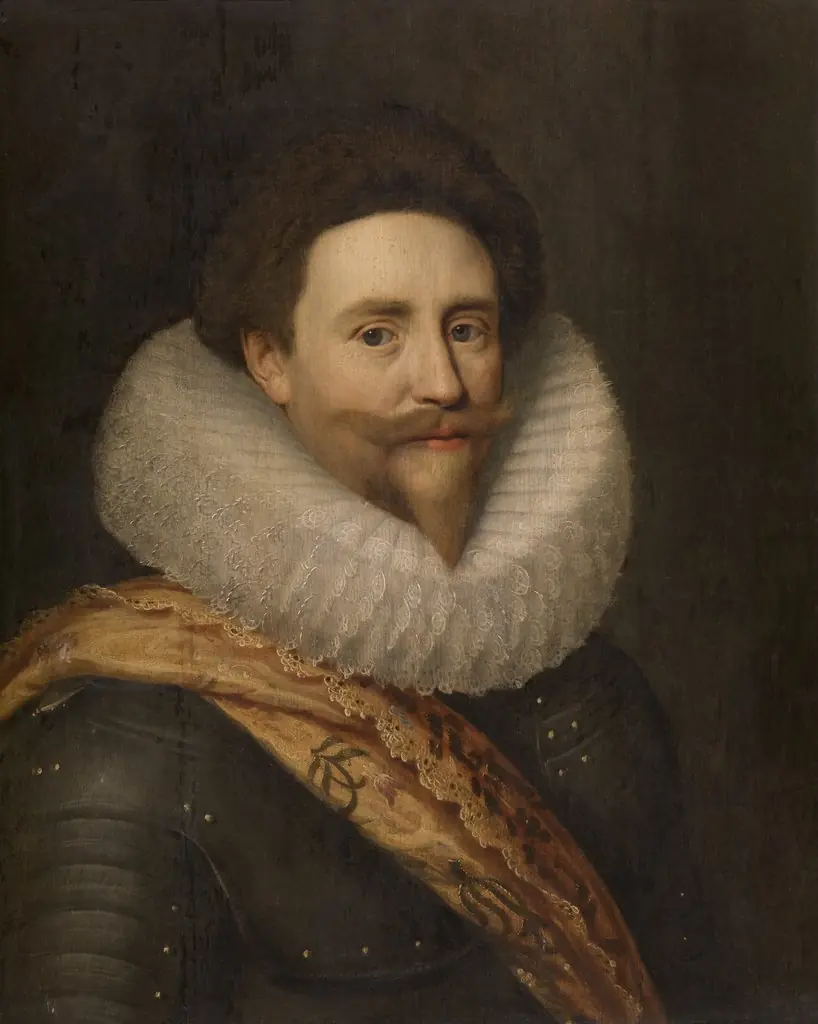
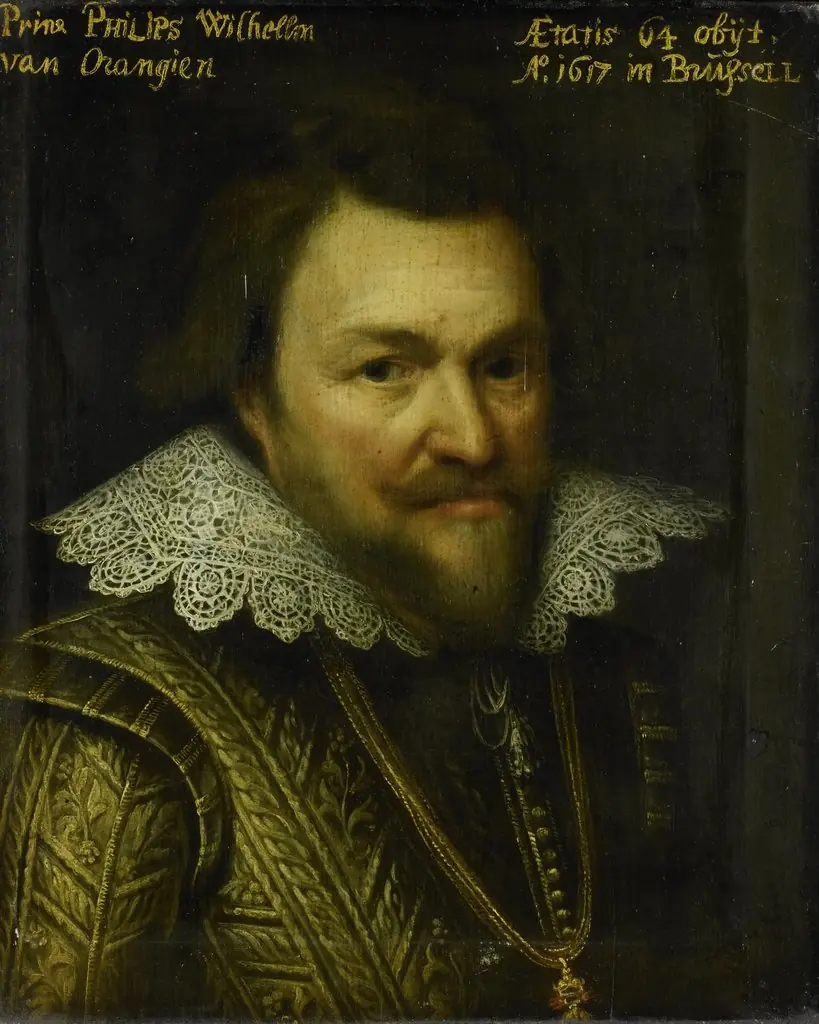
Portrait of Frederik Hendrik (1584-1647), Prince of Orange is an oil painting by the Dutch Golden Age artist Jacob Lyon. It dates from 1612 and is held in the collection of the Rijksmuseum.
About this work
Subject & Meaning
Depicted in ceremonial dress with a sash of the Order of Saint Michael, the composition emphasizes his dual role as sovereign commander and national unifier.
Jacob Lyon painted this 1612 oil-on-copper portrait of Frederick Henry of Orange-Nassau, a leading military and political figure in the Dutch Republic. The work functions as both a state portrait and a symbolic assertion of Orange authority during the early phase of the Eighty Years' War. Depicted in ceremonial dress with a sash of the Order of Saint Michael, the composition emphasizes his dual role as sovereign commander and national unifier.
The sitter's direct gaze and the inclusion of the Dutch lion motif reinforce themes of sovereignty and resistance against Spanish rule. Today housed in the Rijksmuseum, the painting was originally part of Arnoldus Andries des Tombe's collection before entering national custody. Its iconography aligns with contemporary state portraiture that blended personal likeness with political messaging.
Technique & Style
This small-scale portrait of Frederik Hendrik, Prince of Orange, is executed in oil paint on a copper support, a technique well suited to the precise, enamel-like finish associated with early seventeenth-century Dutch cabinet pictures. The copper plate measures 11.5 cm in height by 8.6 cm in width, an intimate format that encouraged meticulous handling and a smooth, highly detailed surface. Painted in 1612 by Jacob Lyon, the work is classified as a portrait and takes as its main subject the young prince, who is depicted with the refined finish that the oil-on-copper combination characteristically allows.
The use of copper rather than panel or canvas would have given Lyon a rigid, non-absorbent ground, permitting fine brushwork, luminous glazes, and crisp delineation of features in a composition of modest dimensions.
History & Provenance
The portrait of Frederik Hendrik was executed in 1612 by the artist Jacob Lyon on a copper panel using oil paint. It depicts the Prince of Orange in a bust‑length format. According to the work’s provenance, it was once in the possession of Arnoldus Andries des Tombe before entering the Rijksmuseum, where it remains today as part of the museum’s collection.
The painting’s inception date is recorded as 1612‑01‑01, confirming its creation in the early years of the Twelve‑Years’ Truce.
The Portrait of Frederik Hendrik, painted by Jacob Lyon in 1612, is held in the collection of the Rijksmuseum in Amsterdam. The work, executed in oil on copper, depicts Frederick Henry of Orange-Nassau and measures 11.5 cm in height by 8.6 cm in width. Historically, the painting was owned by Arnoldus Andries des Tombe before entering the museum's holdings.
The provided sources do not contain specific information regarding the museum's inventory or accession number for this piece, nor do they list any exhibition history.
Overview
Jacob Lyon’s 1612 portrait presents Frederick Henry, Prince of Orange, rendered on a copper plate. The work resides in the Rijksmuseum’s collection and exemplifies early‑seventeenth‑century portraiture in the Dutch Republic. The composition isolates the sitter against a dark backdrop, emphasizing his attire and facial features.
Context
During the early 1600s, Dutch portraiture often emphasized individual achievement and civic pride. Lyon’s choice of copper aligns with contemporary practices among artists seeking a luminous finish, while the emphasis on military attire reflects the Prince’s reputation as a commander in the Eighty Years’ War.
Own this work as a print
Artist & collection