Artwork
Portrait and Birth Record of Mahala Wechter
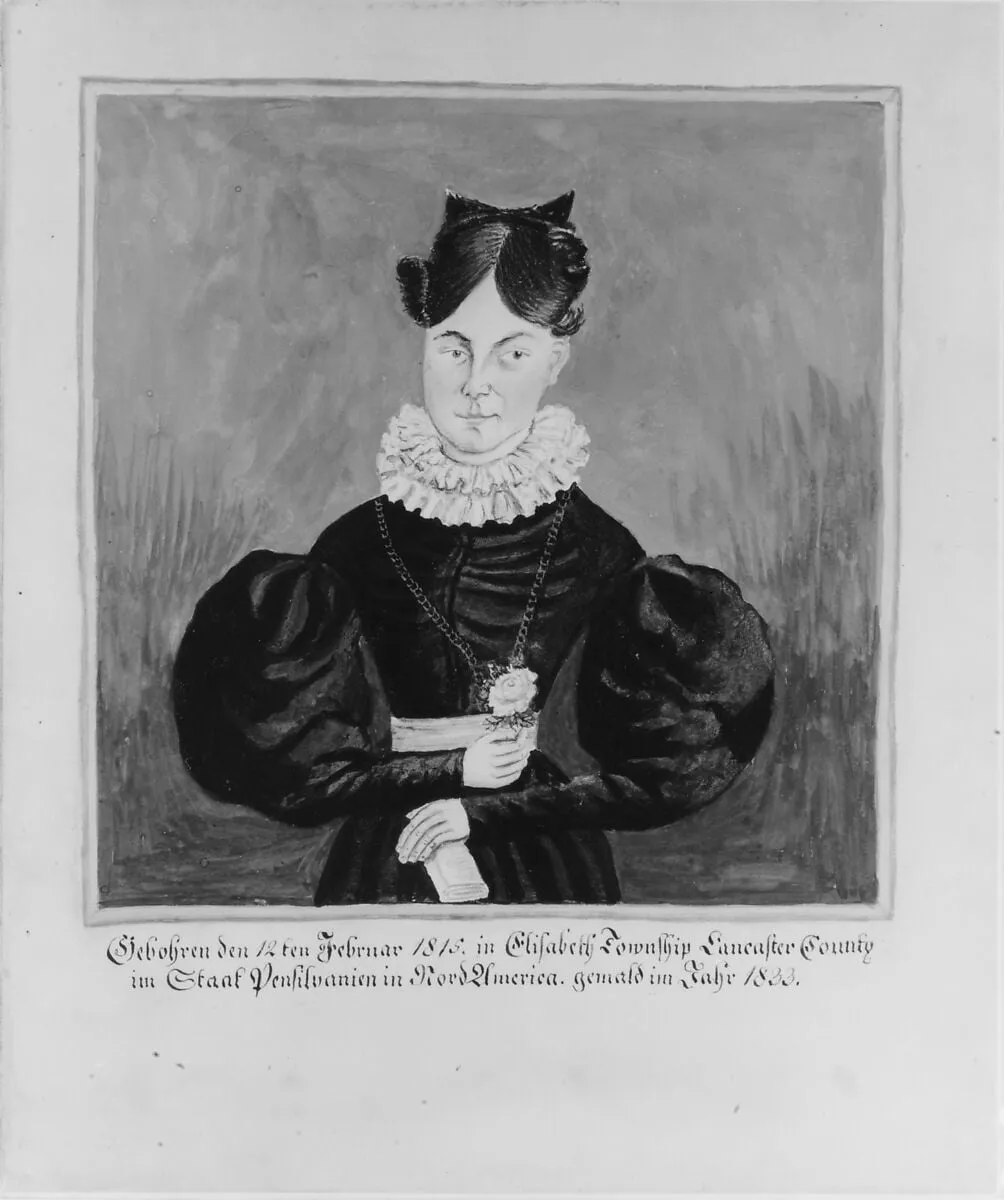
Portrait and Birth Record of Mahala Wechter is a watercolor work on paper by the Romanticist artist Jacob Maentel. It dates from 1833 and is held in the collection of the Metropolitan Museum of Art.
About this work
Technique & Style
The overall effect is a restrained yet meticulous realism, characteristic of early nineteenth-century American folk portraiture.
The work is executed in watercolor and gouache with gum arabic over graphite on an off-white wove paper support.
Handling is linear and descriptive, with precise contour lines defining facial features and costume details. Flat areas of color and delicate cross-hatching render volume and texture, while inscriptions and decorative flourishes frame the figure within a structured, ornamental field. The overall effect is a restrained yet meticulous realism, characteristic of early nineteenth-century American folk portraiture.
History & Provenance
Created by Jacob Maentel in 1833, the Portrait and Birth Record of Mahala Wechter serves as both a likeness and a documented birth record. Executed in watercolor, gouache, gum arabic, and graphite on off-white wove paper, the work measures 29.5 cm in height and 24.1 cm in width. The piece was produced during Maentel's active period as a portraitist in the American South, capturing the sitter as a woman.
It is currently held within the collection of the Metropolitan Museum of Art, where it is classified under The American Wing. The specific date of inception is recorded as January 1, 1833.
The Portrait and Birth Record of Mahala Wechter is held in the collection of the Metropolitan Museum of Art, classified under The American Wing. Created in 1833, the watercolor, gouache, gum arabic, and graphite work on off-white wove paper measures 29.5 by 24.1 cm. No specific accession number or exhibition history is documented in the available sources.
Overview
Created in 1833, this work by Jacob Maentel merges a portrait with a birth register on a single sheet of off‑white wove paper. The composition presents a seated woman in a blue gown cradling an infant, while a handwritten list beside her records the birth dates of ten children. The piece exemplifies the artist’s practice of documenting the lives of early American immigrants through combined visual and textual records.
Subject & Meaning
The central figure is Mahala Wechter, depicted in domestic attire and holding her newborn, emphasizing maternal identity within a family context. The adjacent list of birth dates functions as a genealogical record, underscoring the importance of lineage and household continuity for immigrant families in the early nineteenth century. Together, the portrait and register convey both personal likeness and collective family history.
Context
In the 1830s, immigrant families often recorded births and marriages in personal ledgers; Maentel’s integration of such a record into a painted portrait is unusual for the period, when portraiture and documentation were typically separate. The work thus provides insight into how visual art could serve practical, archival functions within tightly knit settlement communities.
Artist & collection
Artist
Jacob Maentel or Mental (1763–1863) was a German-American folk artist known for his portrayal of 19th-Century America.

- Portrait of Lydia Lloyd Murray
 Portrait of a lady in a ruff, dated 1590
 Mrs. Abraham Conger (Mary Rutgers McCrea Hedges)
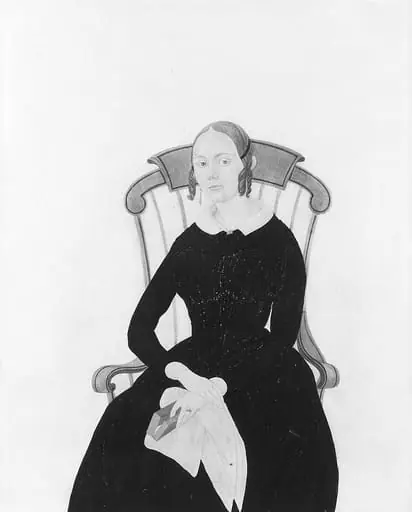 Lady Seated in a Boston Rocker
 Mary Hodge Johnson
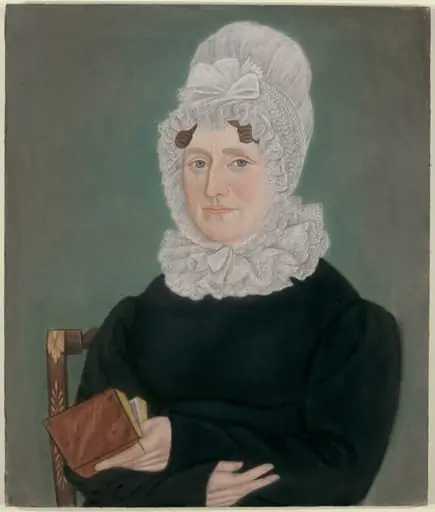 Portrait of a Woman with a Lace Cap
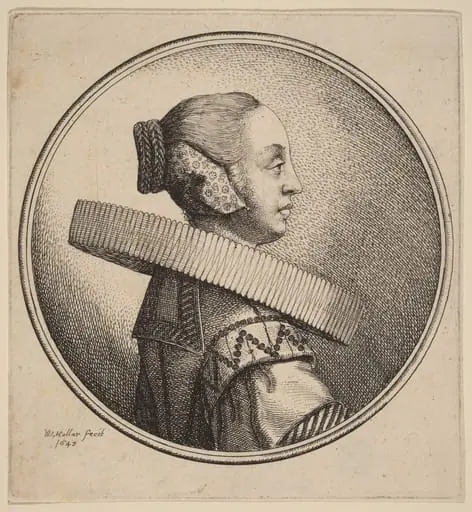 Woman with a Ruff in Profile
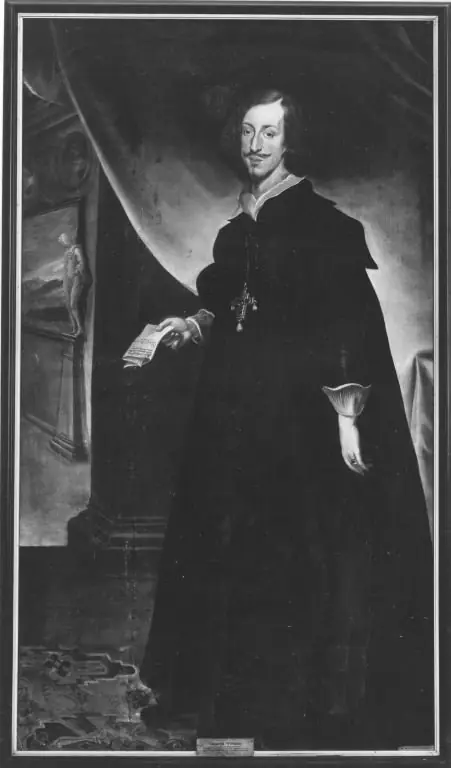 Erzherzog Leopold Wilhelm von Österreich (1614-1662) in geistlichem Gewand
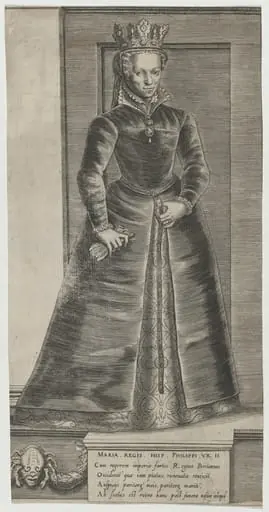 Queen Mary I
 Mrs. Warren Rogers
 Woman Holding a Book
 Mechthilde von Bayern (Kopie nach dem Bildnis Hans Schöpfers d. Ä.)