Artwork
Lady Seated in a Boston Rocker
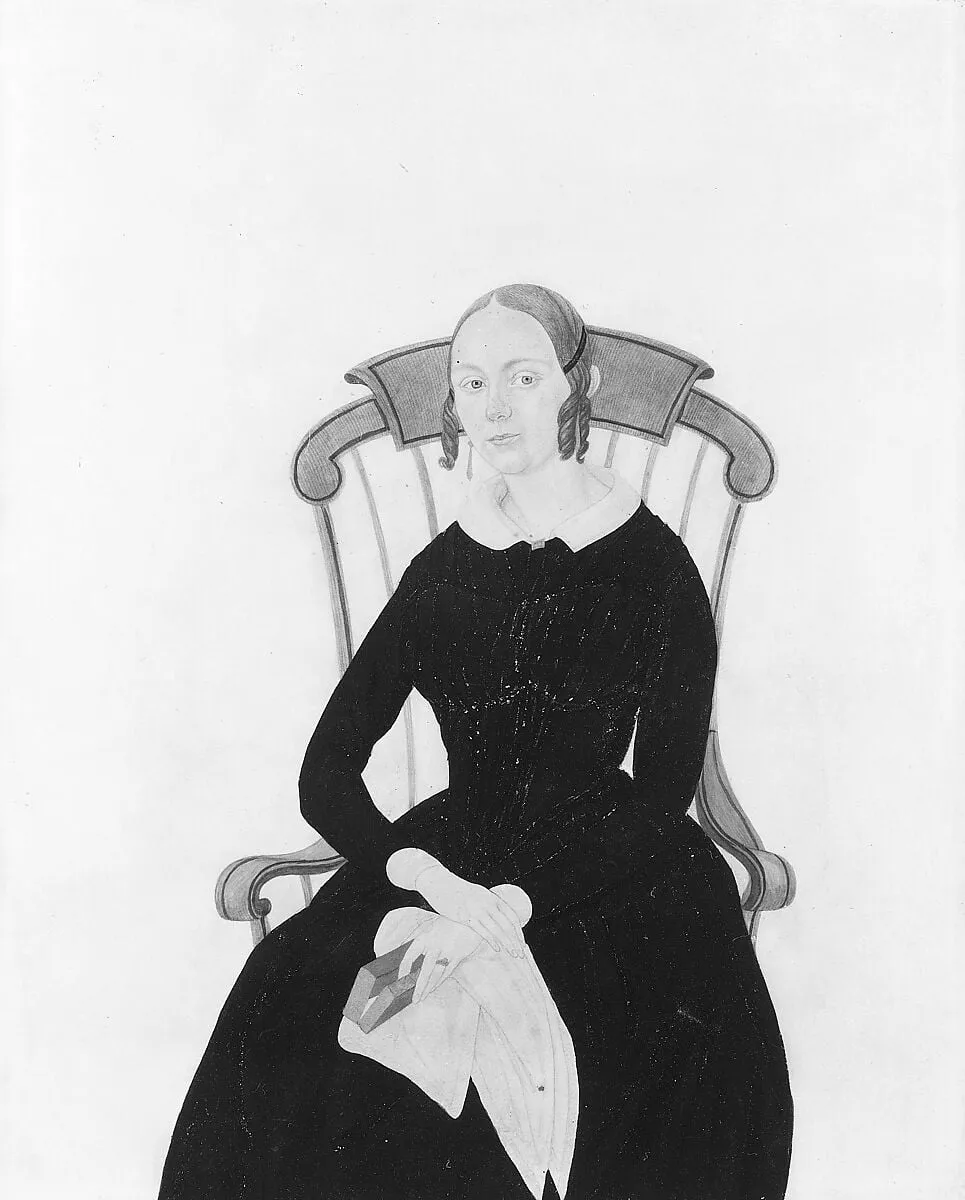
Lady Seated in a Boston Rocker is a watercolor work on paper by the American Folk Art artist Jane Anthony Davis. It dates from 1838 and is held in the collection of the Metropolitan Museum of Art.
About this work
If you like this, look up the subject portraits, women, american, woman for more faces from the same time.
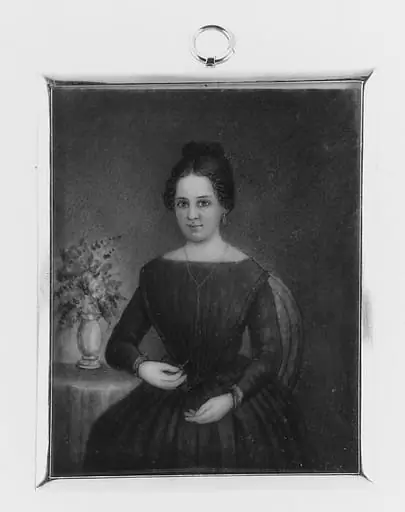
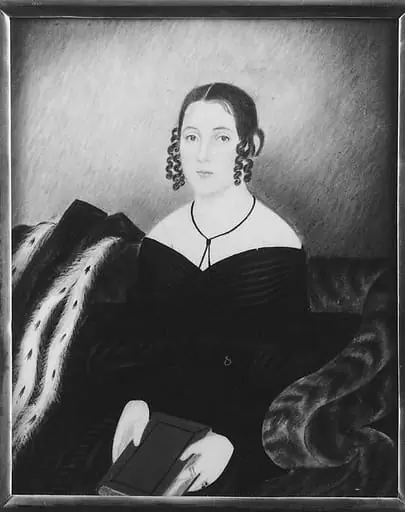
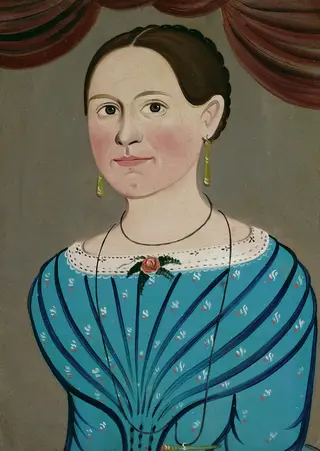
A woman sits sideways in a wooden rocking chair, her hands folded in her lap. The chair’s curved slats and woven seat fill the right side of the picture. Soft light falls on her face and the ruffles of her dress.
This watercolor was painted in 1850, when most portraits were oil on canvas. Davis used thin, see-through layers, called glazing, to build up color without losing the paper’s grain. The result feels quiet, almost like a photograph.
If you like this, look up the subject portraits, women, american, woman for more faces from the same time.
Subject & Meaning
The watercolor portrait shows a woman seated on a Boston rocker, rendered in graphite and watercolor on tan wove paper. It belongs to The American Wing collection at the Metropolitan Museum of Art and exemplifies the portrait genre through its intimate depiction of a female sitter.
The work uses conventional portrait conventions to convey quiet dignity and domestic interiority, reflecting early 20th-century American attitudes toward women's private spaces. Its composition emphasizes stillness and contemplation within a familiar household setting.
The woman is identified only by gender in the catalog description, with no further narrative or symbolic attributes provided in the available records.
Technique & Style
The work is executed in watercolor and graphite on smooth-surfaced tan wove paper, combining transparent washes with precise linear underdrawing to articulate form and setting.
Stylistically, the composition centers on a seated woman rendered with careful attention to physiognomy and costume, while the background remains broadly handled to direct focus to the figure. The artist employs controlled wet-into-wet passages in the watercolor to model volume and atmosphere, particularly in the drapery and chair, while graphite is used for incisive contouring and fine detail in the sitter’s features and accessories.
Context
Jane Anthony Davis's 1919 watercolor Lady Seated in a Boston Rocker, held in The American Wing at the Metropolitan Museum of Art, exemplifies her nuanced portraiture rooted in early 20th-century American realism. Art historians note its significance within Davis's exploration of domestic subjects, situating the work amid contemporary literary depictions of New England life and aligning it with the broader American regionalist movement's focus on intimate, character-driven scenes.
The piece's critical reception underscores its integration into scholarly discourse on women artists of the period, with recent studies emphasizing its technical mastery and psychological depth as contributions to redefining portraiture beyond conventional male-dominated narratives.
Overview
Lady Seated in a Boston Rocker is a small portrait executed in watercolor and graphite on smooth tan wove paper. The composition shows a woman turned slightly away from the viewer, seated in a wooden rocker with its curved slats and woven seat dominating the right side of the image. Soft illumination highlights the sitter’s face and the delicate folds of her dress, creating a calm, intimate atmosphere.
History & Provenance
Born in Warwick, Rhode Island, in 1821, Jane Anthony Davis created the piece in the late 1830s or early 1850s, during her formative years before marriage in 1841. The drawing entered the American Wing collection of the museum, where it remains documented as an example of early American folk art.
Artist & collection

Artist
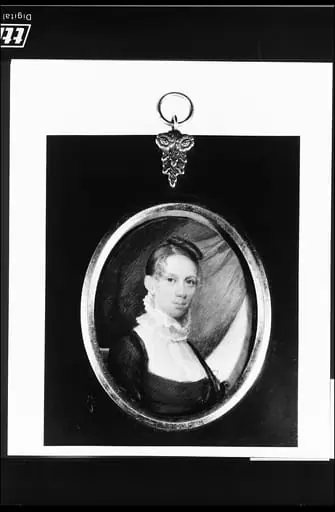
Jane Anthony Davis (September 2, 1821 – April 1855), was an American artist. Until 1981 she was known only as J. A. Davis. Davis was born Jane Anthony in Warwick, Rhode Island, the daughter of Giles Anthony and Sara…