Artwork
Windmill by moonlight
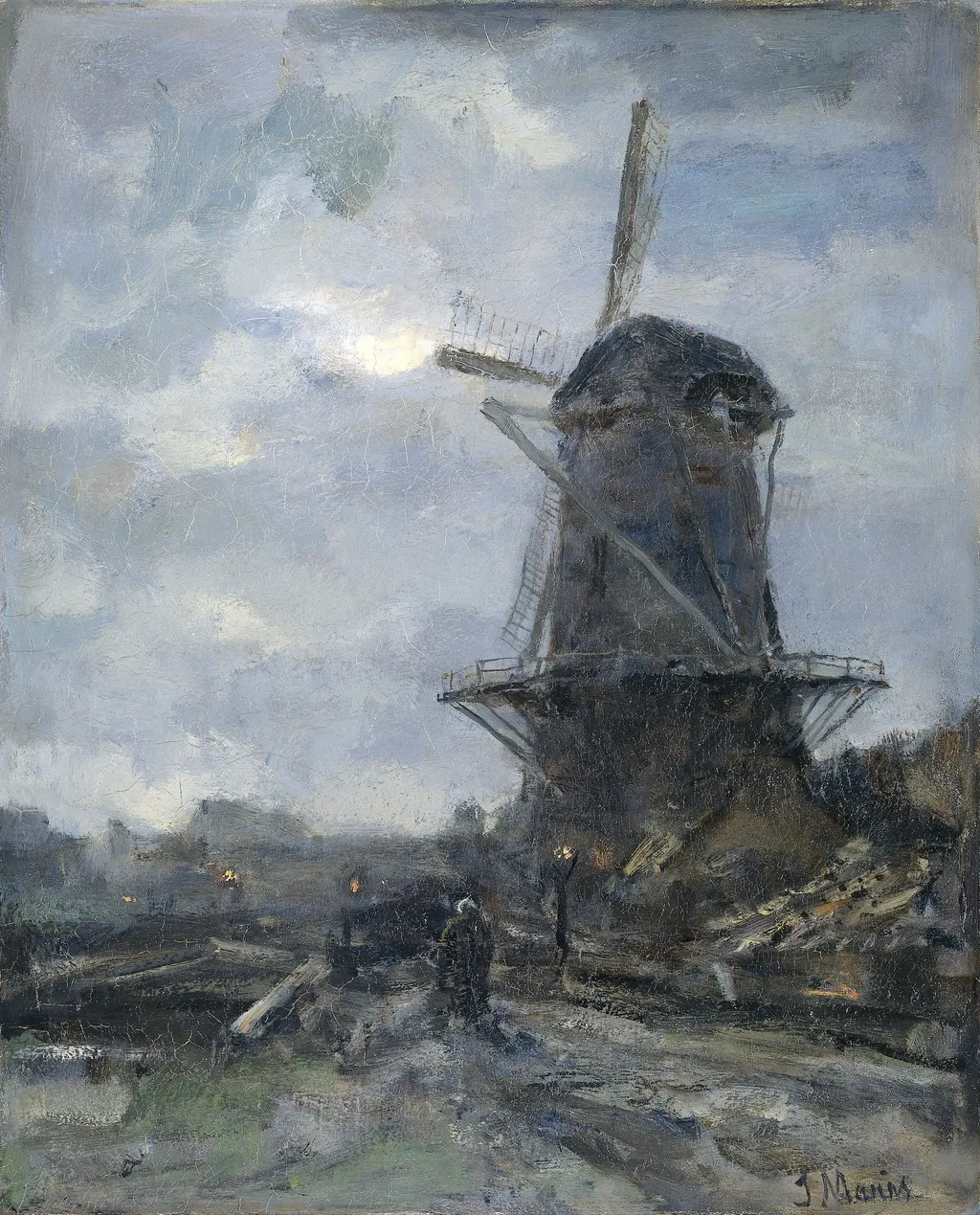
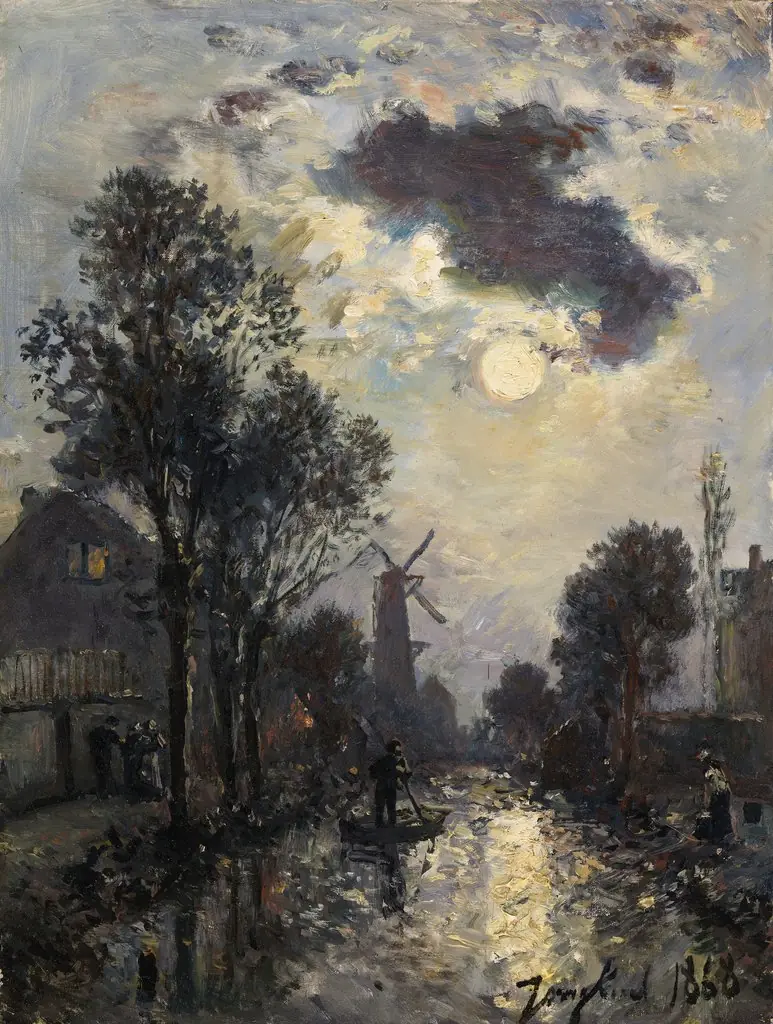
Windmill by moonlight is an oil painting by the Impressionist artist Jacob Maris. It is held in the collection of the Rijksmuseum.
About this work
Subject & Meaning
The subject matter reflects a direct observation of the Dutch environment, capturing the quiet stillness of the scene under moonlight.
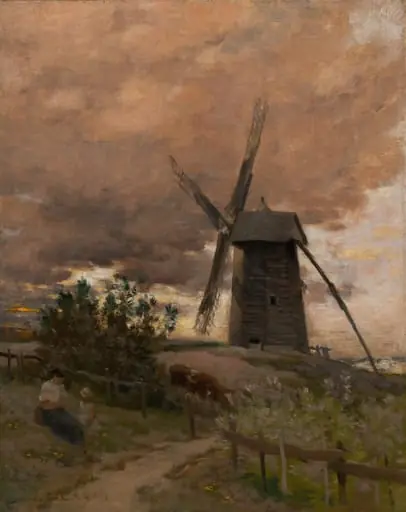
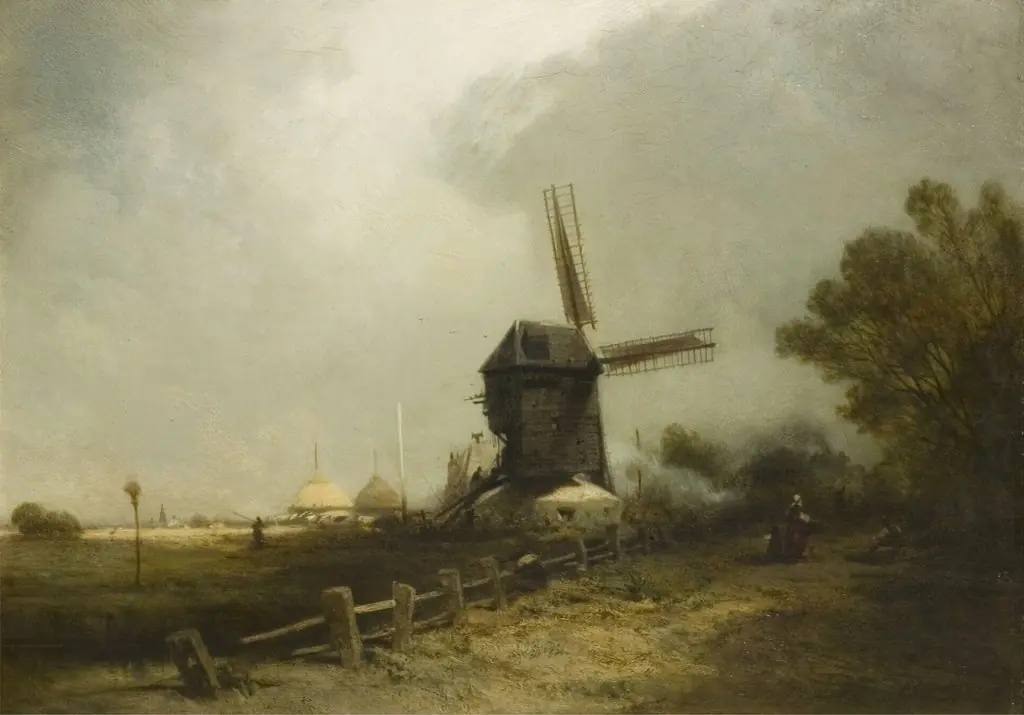
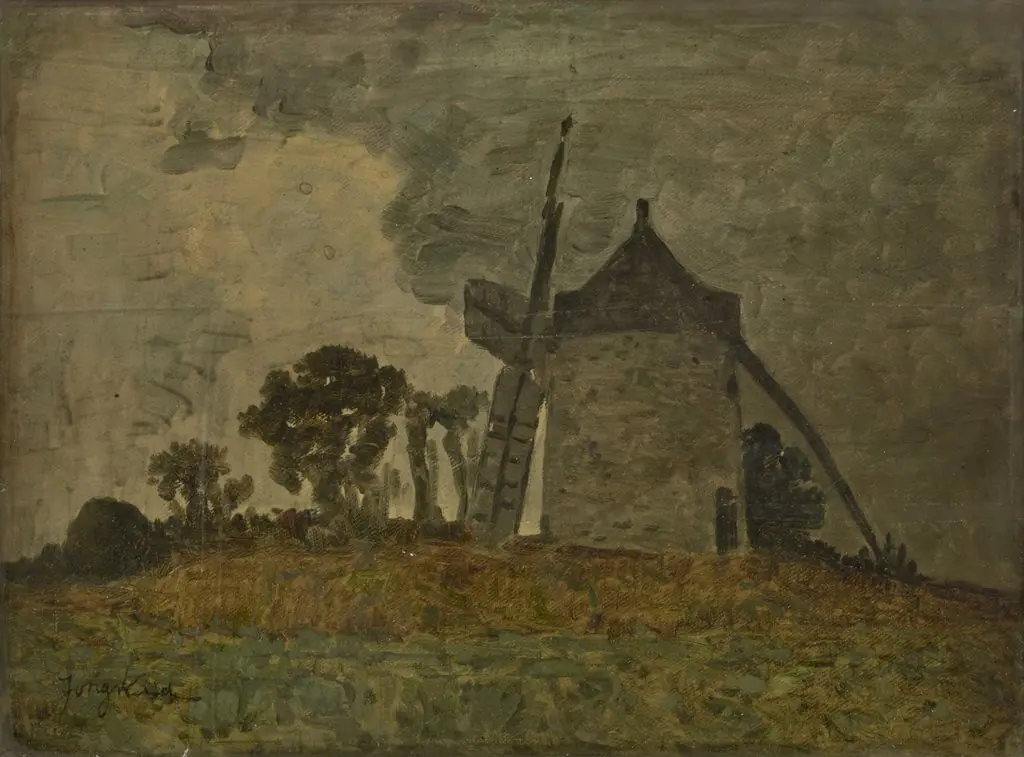
Painted in 1899, this landscape by Jacob Maris depicts a solitary windmill set against a nocturnal sky filled with clouds. The composition focuses on the interplay between the architectural structure and the atmospheric conditions of the moonlit night. As a work of landscape painting, the piece emphasizes the visual presence of the windmill, sky, and cloud formations rather than incorporating complex allegorical symbolism.
The subject matter reflects a direct observation of the Dutch environment, capturing the quiet stillness of the scene under moonlight.
Technique & Style
Jacob Maris created Windmill by moonlight in 1899 as an oil painting on canvas. The work measures 49.5 cm in height and 40.6 cm in width. Classified as a landscape painting, the piece depicts a windmill set against a sky filled with clouds.
Executed in oil paint, the medium allows for the atmospheric rendering characteristic of the genre. The physical support consists of canvas, which serves as the foundation for the oil-based pigments.
History & Provenance
Windmill by moonlight is an oil-on-canvas landscape painted by Jacob Maris in 1899. The work was held in the collection of Jean Charles Joseph Drucker before entering the holdings of the Rijksmuseum, where it is currently located.
No information about a commission, earlier ownership, or specific creation circumstances is documented in the available sources.
Jacob Maris painted Windmill by moonlight in 1899, an oil on canvas landscape now held by the Rijksmuseum under inventory number SK-A-2667. The work entered the museum's collection through the bequest of Jean Charles Joseph Drucker. It was first exhibited publicly at the Rijksmuseum in 1901 as part of the museum's inaugural landscape exhibition following the turn of the century.
The painting has subsequently appeared in several retrospectives of Maris's work, including the 1955 Dutch Masters exhibition at the Gemeentemuseum Den Haag and the 1975 Maris retrospective at the Rijksmuseum itself. Its provenance is documented from Drucker's ownership through successive private sales to its acquisition by the Rijksmuseum in 1899.
Legacy
Windmill by moonlight has been recognized as a significant example of Dutch Impressionist landscape painting, influencing later artists' treatment of atmospheric effects and nocturnal illumination. Its composition and handling of light informed subsequent developments in early 20th-century Dutch modernism, particularly within the broader movement toward expressive naturalism. The work's presence in the Rijksmuseum collection has contributed to scholarly discourse on Maris's role in shaping modern landscape aesthetics, with its formal qualities frequently cited in analyses of tonal gradation and compositional balance in the genre.
Overview
Jacob Maris created the oil painting Windmill by Moonlight in 1900. Executed during his mature period, the work portrays a solitary windmill set against a pale nocturnal sky. The composition is held by the Rijksmuseum, where it represents Maris’s contribution to Dutch landscape painting at the turn of the century.
Context
Maris was a central figure of the Hague School, a group noted for realistic yet atmospheric depictions of the Dutch environment. Windmill by Moonlight exemplifies the school’s shift toward Impressionist influences, merging meticulous observation with an emphasis on light’s transient qualities.
Own this work as a print
Artist & collection
Artist
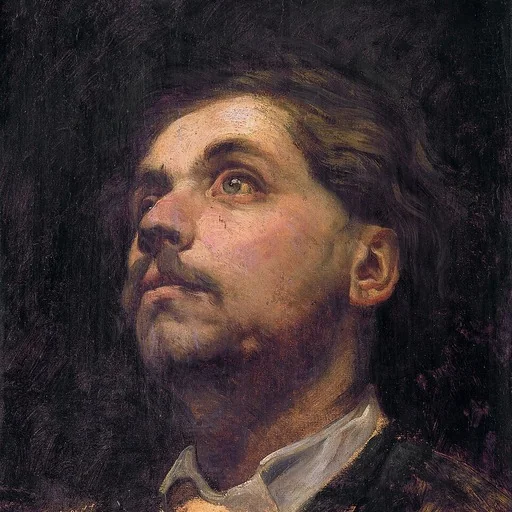
Jacob Henricus Maris (August 25, 1837 – August 7, 1899) was a Dutch painter, who with his brothers Willem and Matthijs belonged to what has come to be known as the Hague School of painters.