Artwork
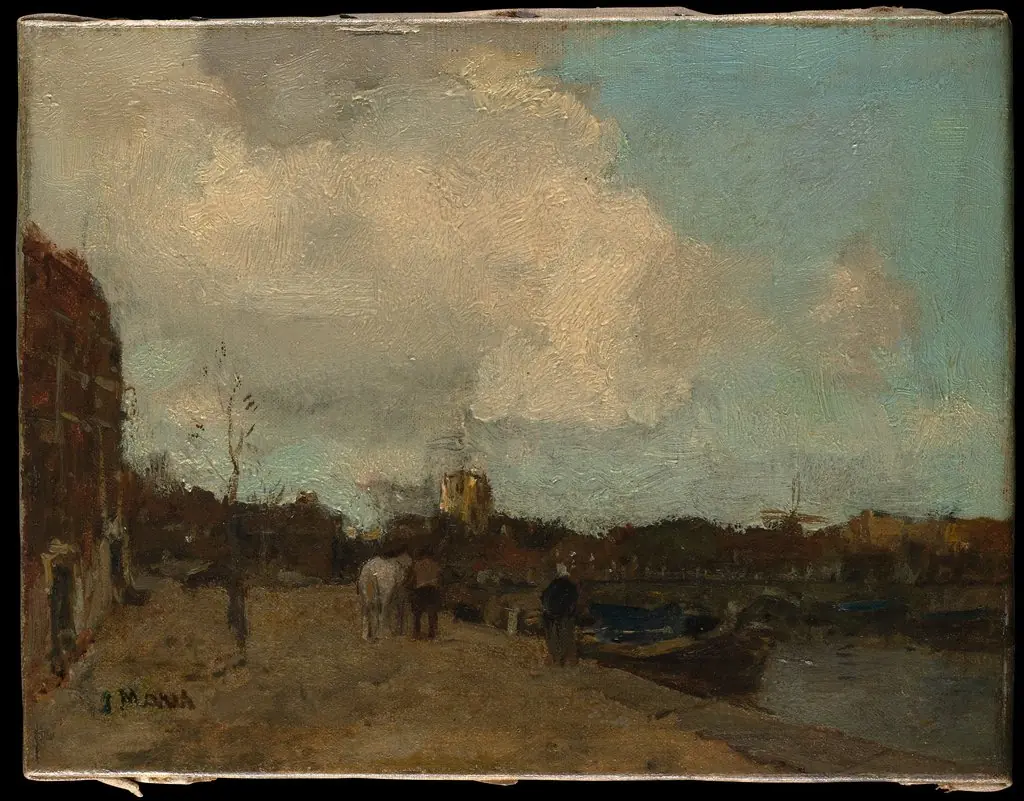
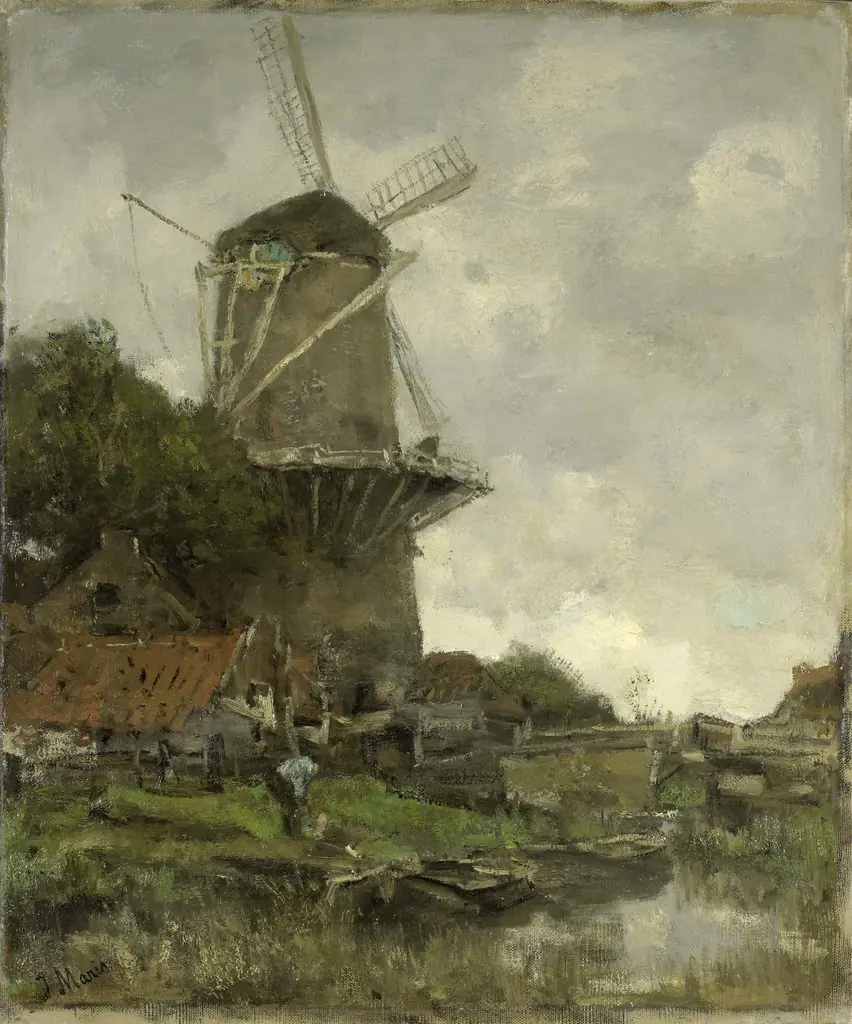
View of the Mill and Bridge on the Noordwest Buitensingel in The Hague
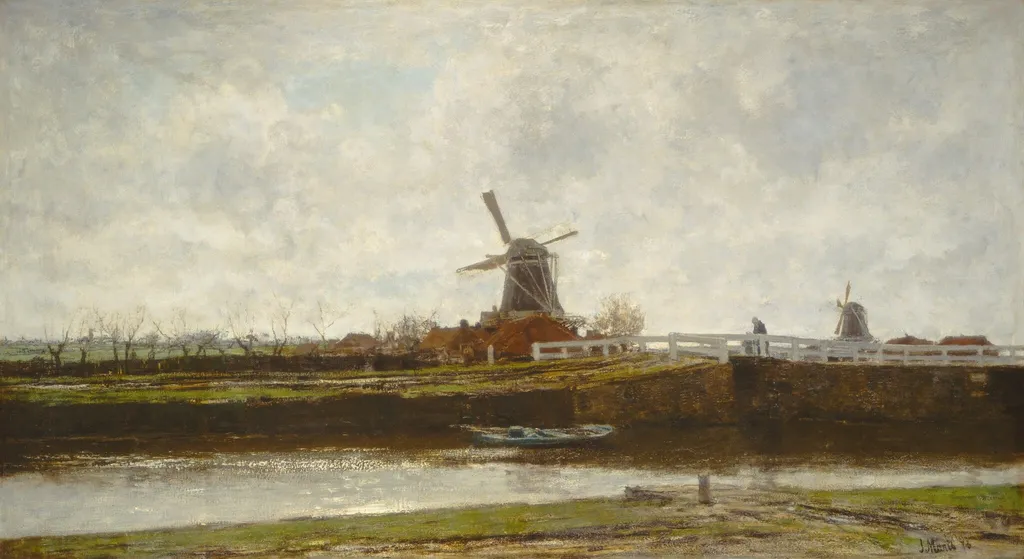
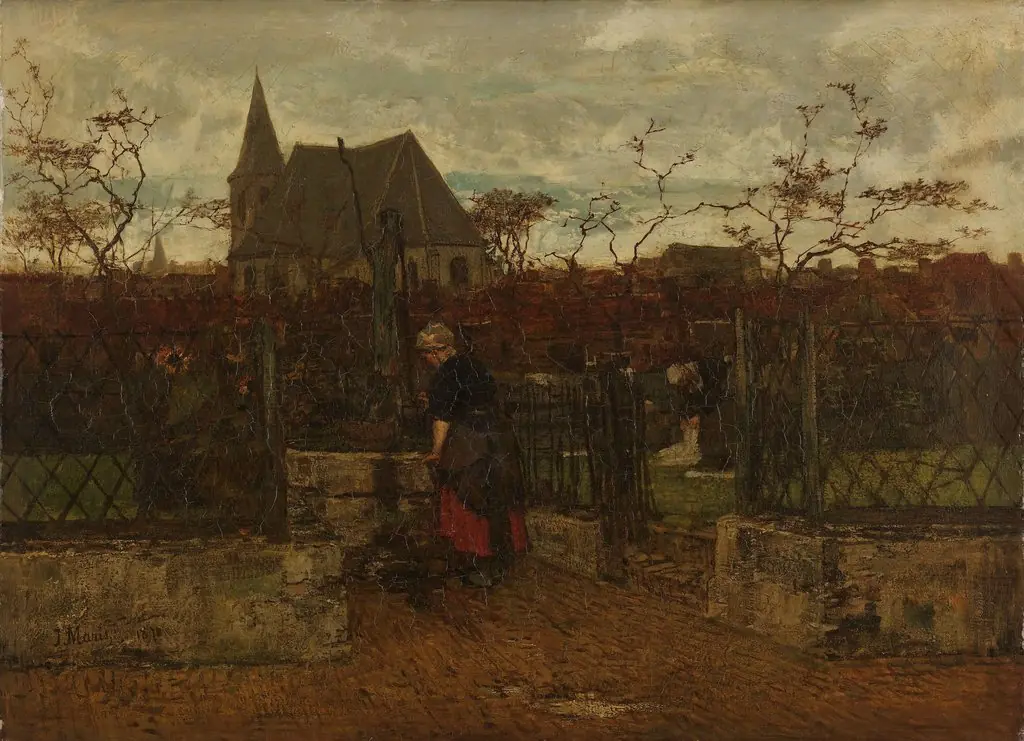
View of the Mill and Bridge on the Noordwest Buitensingel in The Hague is an oil painting by the Impressionist artist Jacob Maris. It dates from 1873 and is held in the collection of the National Gallery of Art.
- Inscription
- Inscribed:lower right: JMaris 73
About this work
A quiet mill and bridge on the Noordwest Buitensingel in The Hague. Maris painted this everyday scene in 1873, keeping the details simple while suggesting what ordinary life looked like at the time.
Technique & Style
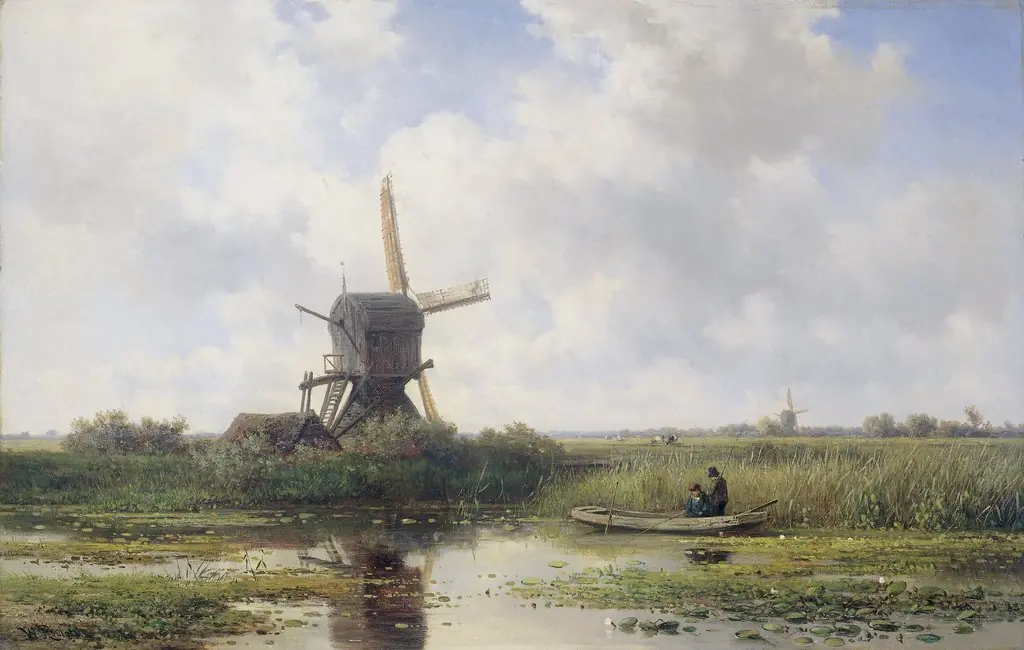
The composition centers on a small boat, a motif that contributes to the overall sense of quiet activity along the Noordwest Buitensingel.
The painting is executed in oil on canvas, a standard support for 19th-century Dutch landscape works, and measures approximately 81 cm in height by 144 cm in width. Jacob Maris applies a naturalistic palette and loose brushwork to render the mill, bridge, and waterway, emphasizing atmospheric effects and the modest scale of the scene. The composition centers on a small boat, a motif that contributes to the overall sense of quiet activity along the Noordwest Buitensingel.
As an oil painting, the piece demonstrates the material handling typical of Maris’s mature period, with layered pigments that preserve fine detail while allowing subtle tonal transitions across the canvas.
History & Provenance
The work was painted in 1873 by the Dutch landscape artist Jacob Maris in oil on canvas. Its early owners included the physician Sir Henry Thompson, 1st bt., from whom it passed to the Glasgow businessman George McCulloch by 1903; McCulloch lent it to a London exhibition in 1903, and after his death it appeared in his estate sale at Christie, Manson & Woods in May 1913. Handled by the dealer Henry Wallis & Son in London, it was purchased on 30 October 1916 by Henry Clay Frick, who kept it until his death.
It descended to his daughter Helen Clay Frick, who in 1959 gave it to his nephew Dr. Henry Clay Frick II. The National Gallery of Art, Washington, D.C., acquired the painting in 1999 through a purchase from Noortman (Maastricht) BV.
Overview
Jacob Maris's "View of the Mill and Bridge on the Noordwest Buitensingel in The Hague," painted in 1873, is an oil-on-canvas landscape. This work exemplifies the naturalistic and atmospheric characteristics of the Hague School, a prominent Dutch art movement of which Maris was a leading exponent. The painting captures a tranquil scene, reflecting the artist's focus on depicting the subtle interplay of light and mood within the everyday Dutch environment.
Subject & Meaning
The composition features a boat gently navigating a canal, positioned near a traditional mill and an arched bridge. This specific setting on the Noordwest Buitensingel in The Hague grounds the painting in a recognizable Dutch locale. Maris chose to portray a quiet, ordinary moment, elevating an everyday scene into a contemplative landscape that emphasizes the serene beauty of the local waterways and architecture.
Context
Jacob Maris was a central figure within the Hague School, a Dutch art movement that emerged in the late 19th century. His artistic development was shaped by his studies with J.A.B. Stroebel, and he frequently collaborated with his brothers, Willem and Matthijs, who were also notable artists. This familial and artistic environment fostered a shared emphasis on capturing the unique qualities of the Dutch landscape.
Legacy
Through his distinctive approach to landscape painting, Jacob Maris established himself as one of the most significant Dutch artists of the late nineteenth century. His contributions to the Hague School, particularly his ability to convey subtle light and atmospheric depth, left a lasting impact on the perception and portrayal of the Dutch environment. His work continues to be recognized for its influence on subsequent landscape painters.
Artist & collection
Artist
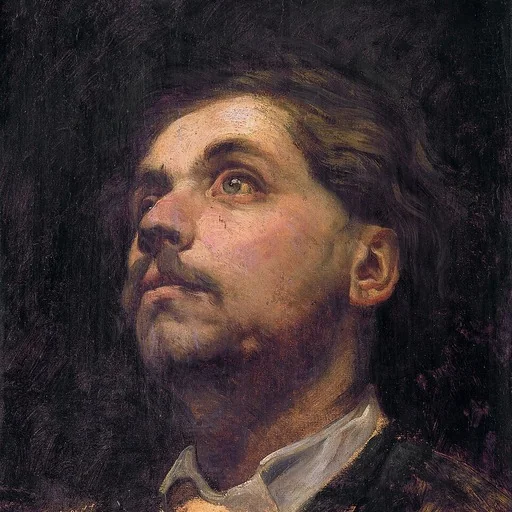
Jacob Henricus Maris (August 25, 1837 – August 7, 1899) was a Dutch painter, who with his brothers Willem and Matthijs belonged to what has come to be known as the Hague School of painters.