Artwork
Paul and Barnabas at Lystra
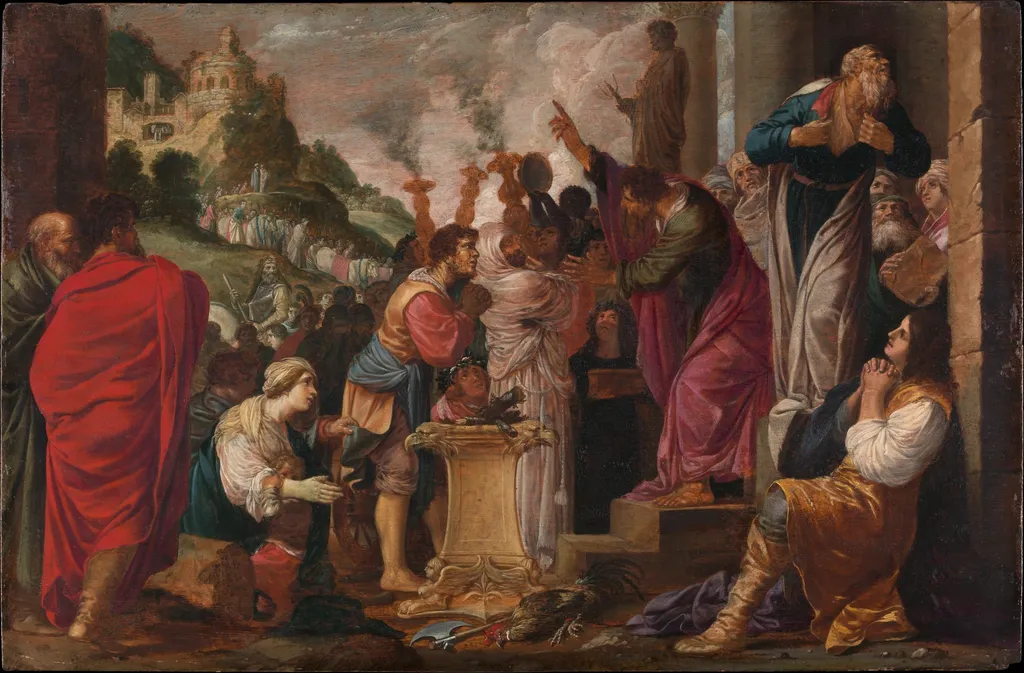
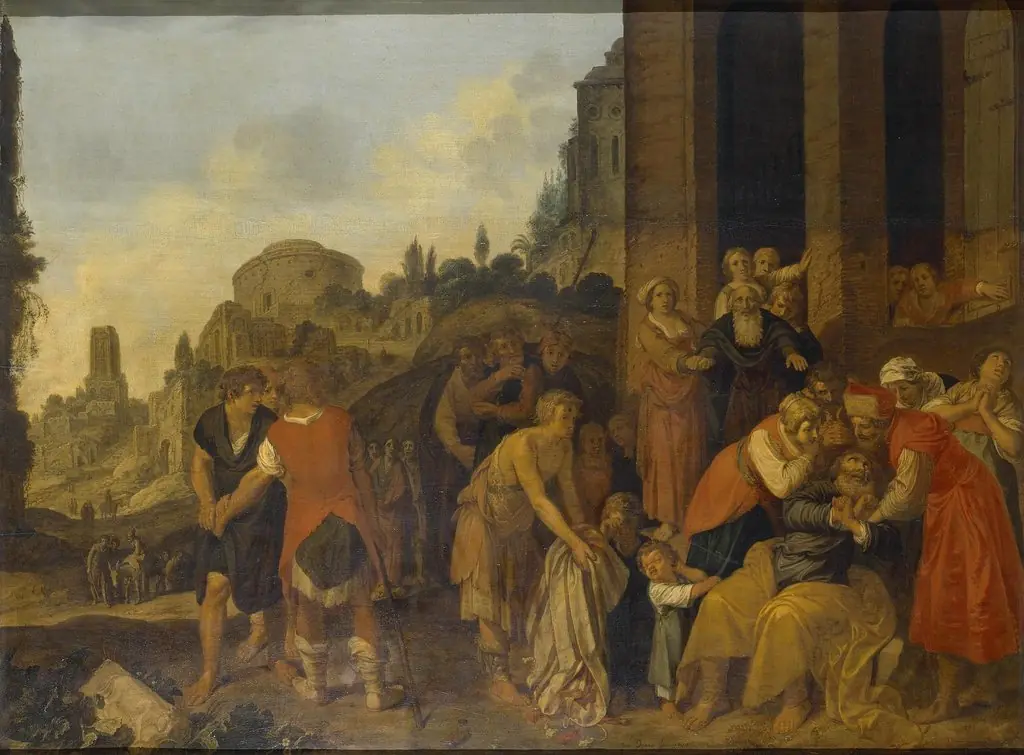
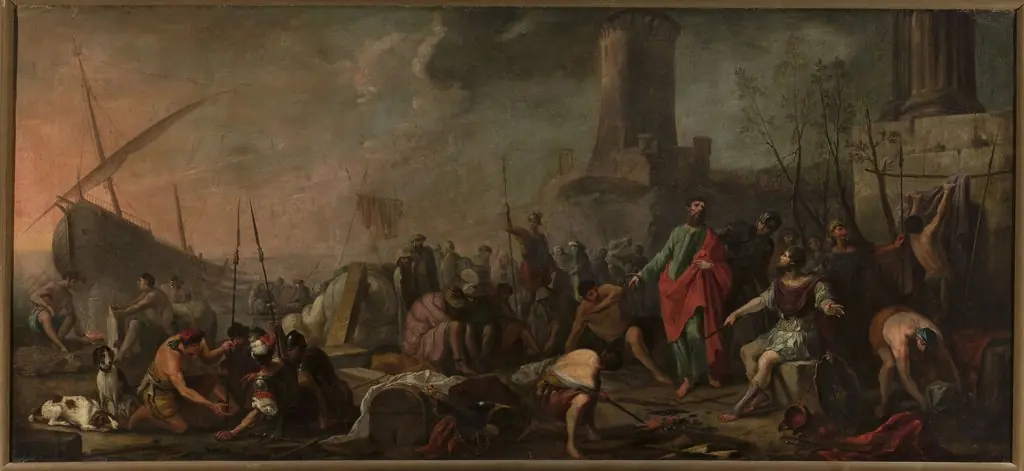
Paul and Barnabas at Lystra is an oil painting by the Early Baroque Italian artist Jacob Pynas. It dates from 1627 and is held in the collection of the Metropolitan Museum of Art.
About this work
Subject & Meaning
The painting titled Paul and Barnabas at Lystra, created by Jacob Pynas in 1627, illustrates the missionary episode described in the Acts of the Apostles.
The painting titled Paul and Barnabas at Lystra, created by Jacob Pynas in 1627, illustrates the missionary episode described in the Acts of the Apostles. In the composition the two apostles appear alongside a local woman and a rooster, elements that identify the scene’s Lystran setting. The presence of these figures conveys the encounter between the traveling missionaries and the inhabitants of the city, emphasizing the spread of the Christian message amid both reception and opposition.
As a religious work, the piece reflects the Counter‑Reformation interest in vivid biblical narratives that could instruct and inspire viewers.
History & Provenance
Jacob Pynas's oil-on-panel painting, Paul and Barnabas at Lystra, created in 1627, is held in the collection of the Metropolitan Museum of Art in New York. The work measures 48.3 cm in height and 73.3 cm in width. While the provided sources confirm the museum's possession of the piece and its physical dimensions, they do not specify a unique inventory or accession number for the entry.
Furthermore, the available documentation does not record any past or future exhibition history for this specific artwork at the institution or elsewhere.
Legacy
The 1627 canvas by Jacob Pynas, documented in the Metropolitan Museum of Art, has been cited in art‑historical surveys as an example of Dutch Baroque religious imagery, reinforcing the artist’s reputation beyond his contemporaries. Its presence in a major museum collection has prompted scholarly discussion of Pynas’s role in the development of narrative biblical scenes, influencing later 17th‑century interpretations of the Acts of the Apostles. The work’s iconography, including the rooster and the figures of Paul and Barnabas, continues to be referenced in studies of Counter‑Reformation visual theology, underscoring its enduring legacy within the canon of European religious painting.
Overview
Jacob Pynas, a painter from the Dutch Golden Age, completed Paul and Barnabas at Lystra in 1627. This oil painting depicts a dramatic biblical episode from the Acts of the Apostles, where the inhabitants of Lystra mistakenly identify Paul and Barnabas as gods after a miracle. The composition captures the moment of attempted sacrifice, with a crowd gathered around the apostles and a priest preparing an offering. The work is now part of The Metropolitan Museum of Art's collection.
Technique & Style
Executed in oil paint, Paul and Barnabas at Lystra reflects the influence of the early Baroque style, particularly its Italian manifestations. Pynas employs a dramatic use of light and shadow, known as chiaroscuro, to highlight key figures and create a sense of depth and intensity. Faces are selectively illuminated, contrasting with areas of deep shadow.
The palette primarily consists of earthy tones, contributing to the solemnity of the religious narrative and the overall atmospheric effect.
Context
Jacob Pynas holds a notable place in art history, not only for his own works but also for his connection to one of the most celebrated Dutch masters. In 1625, Pynas briefly served as a teacher to a young Rembrandt van Rijn, two years before completing Paul and Barnabas at Lystra. This pedagogical relationship offers insight into the artistic lineages and influences that shaped the development of painting during the Dutch Golden Age.
Own this work as a print
Artist & collection
Artist
Jacob Symonsz. Pynas (1592 or 1593 – after 1650) was a Dutch Golden Age painter and draughtsman. He is best known for having briefly taught the painter Rembrandt in 1625.