Artwork
Jacob's Sons Show Him Joseph's Blood-Stained Robe
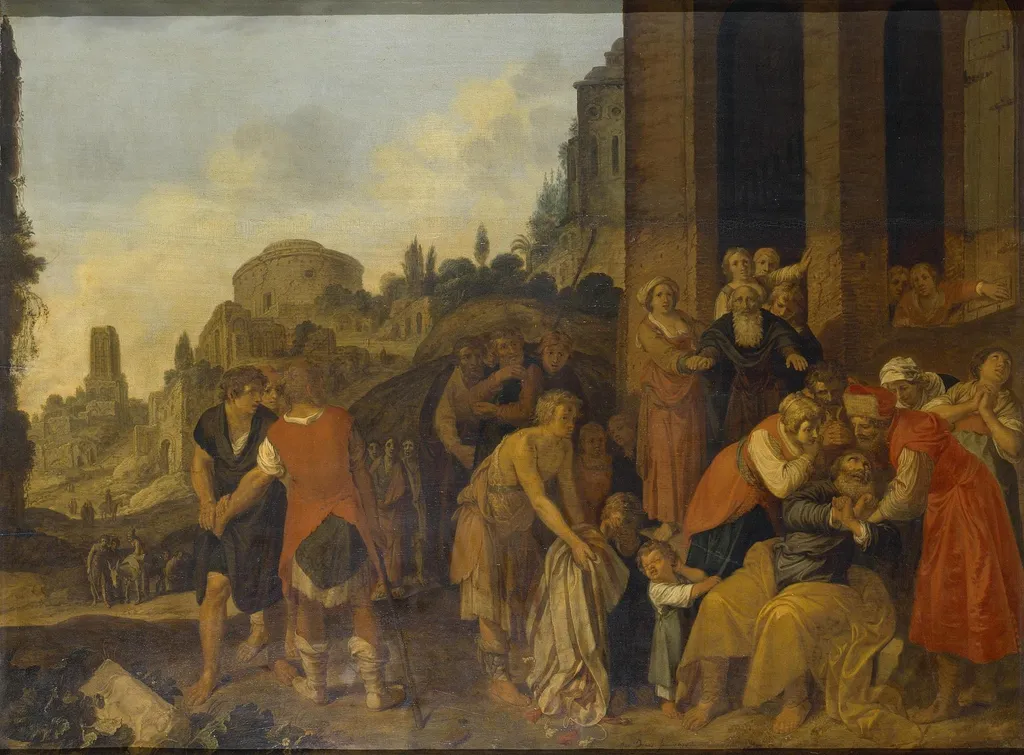
Jacob's Sons Show Him Joseph's Blood-Stained Robe is an oil painting by the Dutch Golden Age artist Jan Pynas. It dates from 1618 and is held in the collection of the Hermitage Museum.
About this work
Subject & Meaning
It is executed in oil on panel, measuring 90 cm in height and 119 cm in width, and was produced in the Netherlands during the early 17th century.
The painting shows Jacob receiving Joseph's coat stained with blood, a biblical scene symbolizing deceit and the loss of his favored son. This moment reflects themes of familial betrayal and divine providence within the religious narrative. The work was created by Jan Pynas in 1618 and is part of the Hermitage Museum's collection in St. Petersburg, Russia.
It is executed in oil on panel, measuring 90 cm in height and 119 cm in width, and was produced in the Netherlands during the early 17th century.
Technique & Style
The work is an oil painting executed on a wooden panel, measuring 90 cm in height and 119 cm in width. Jan Pynas applied oil paint to the surface, a technique typical of early 17th-century Dutch religious art, with careful attention to the dramatic rendering of the blood-stained coat. The composition emphasizes the emotional tension of the biblical narrative, reflecting stylistic qualities characteristic of the period's religious genre painting.
History & Provenance
Jan Pynas created the oil-on-panel painting Jacob's Sons Show Him Joseph's Blood-Stained Robe in 1618. The work depicts the biblical scene where Jacob's sons present the blood-stained coat of Joseph to their father. Originating in the Netherlands, the piece measures 90 cm in height and 119 cm in width. It is currently held in the collection of the Hermitage Museum.
The painting is part of the Hermitage Museum's collection and is catalogued under its standard museum inventory system. It was created in 1618 by Jan Pynas and is displayed within the museum's permanent galleries of religious art. The work has been featured in several Hermitage exhibitions focusing on Dutch Golden Age paintings and on the broader theme of biblical narratives in European art.
Context
The painting was created by Jan Pynas in 1618 and is housed in the Hermitage Museum in St. Petersburg. It portrays the biblical moment when Jacob displays Joseph's blood-stained robe to his sons, a scene rooted in the Book of Genesis. The work is classified as a religious painting and exemplifies early Dutch religious art of the 17th century.
Its composition and subject matter reflect the influence of earlier biblical narrative painting traditions within the Netherlands, situating it within the broader development of religious art in the region.
Scholarly attention to this work is limited, but its presence in a major institutional collection underscores its historical and artistic significance within the corpus of Dutch Golden Age religious painting.
Legacy
The painting's legacy is anchored in its early recognition as a compelling religious composition within Dutch Baroque art. Its dramatic narrative of Jacob's grief over Joseph's apparent death influenced later interpretations of biblical scenes emphasizing familial betrayal and divine providence. The work's provenance in the Hermitage Museum since its acquisition cemented its status as a key example of 17th-century Dutch religious painting, studied for its emotional intensity and technical execution in oil on panel. Contemporary scholarship continues to reference the piece when examining the evolution of narrative painting in Northern Europe.
Overview
Jan Pynas’s 1618 oil painting, titled Jacob’s Sons Show Him Joseph’s Blood‑Stained Robe, presents a dramatic biblical episode set in an open landscape. Central to the composition is a man displaying a torn, crimson‑splattered garment, while surrounding figures react with alarm and curiosity. The scene unfolds beneath a pale sky, framed by ruined architecture, trees, and a dome‑shaped structure, rendered in a palette that juxtaposes warm reds and oranges with cooler background tones.
Own this work as a print
Artist & collection

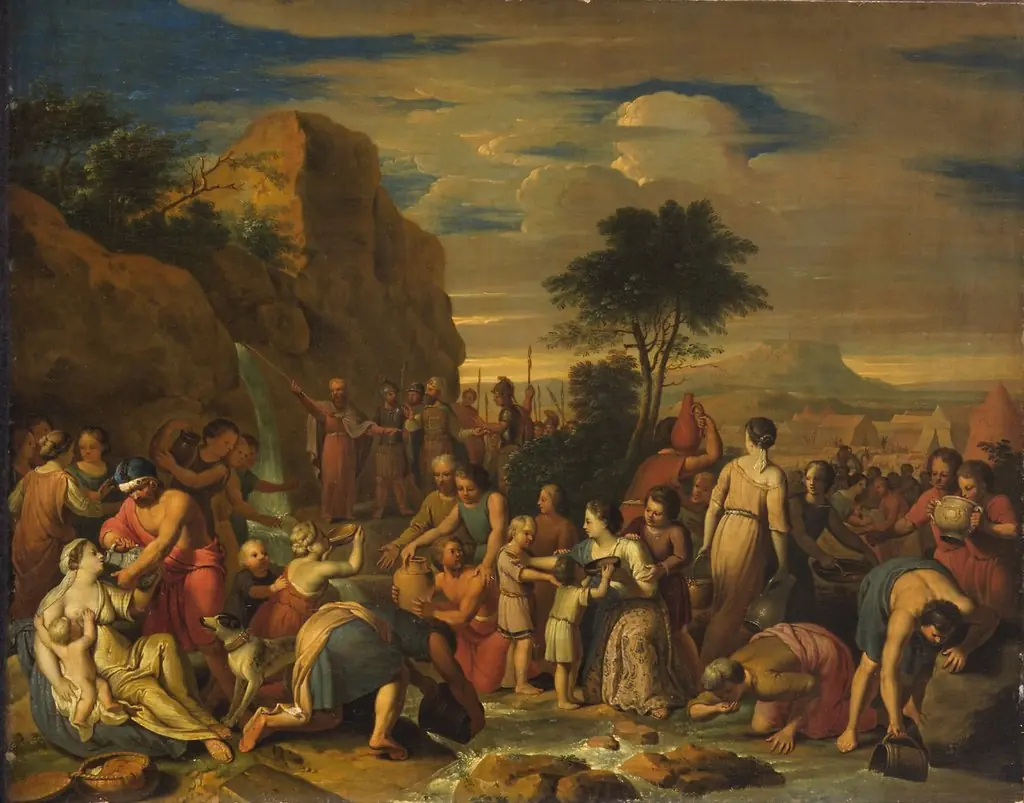
- Moses schlägt Wasser aus dem Felsen
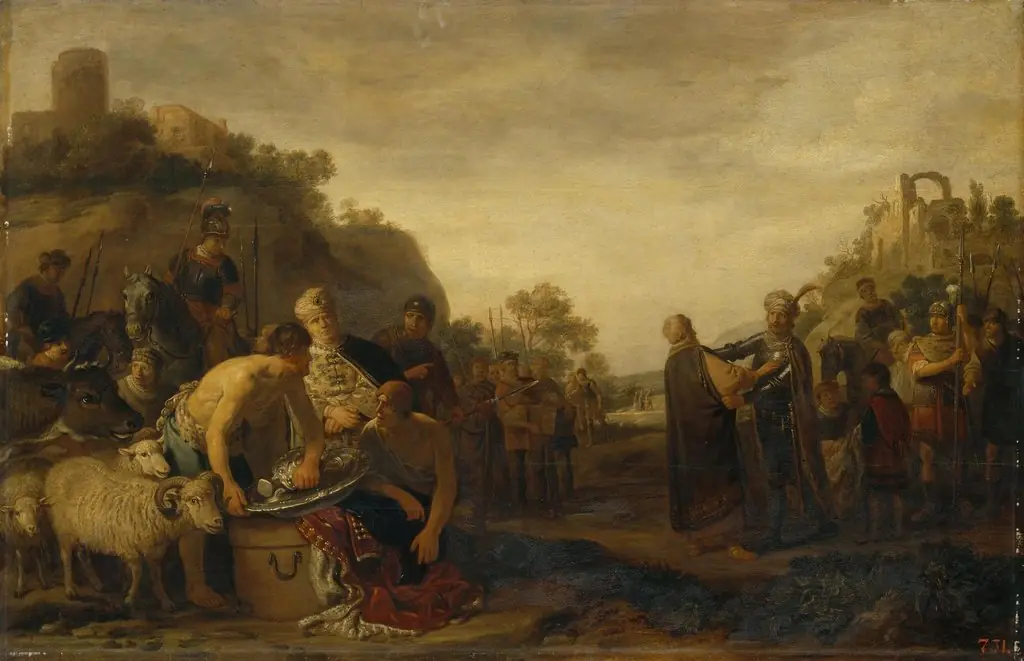 Samuel and Saul
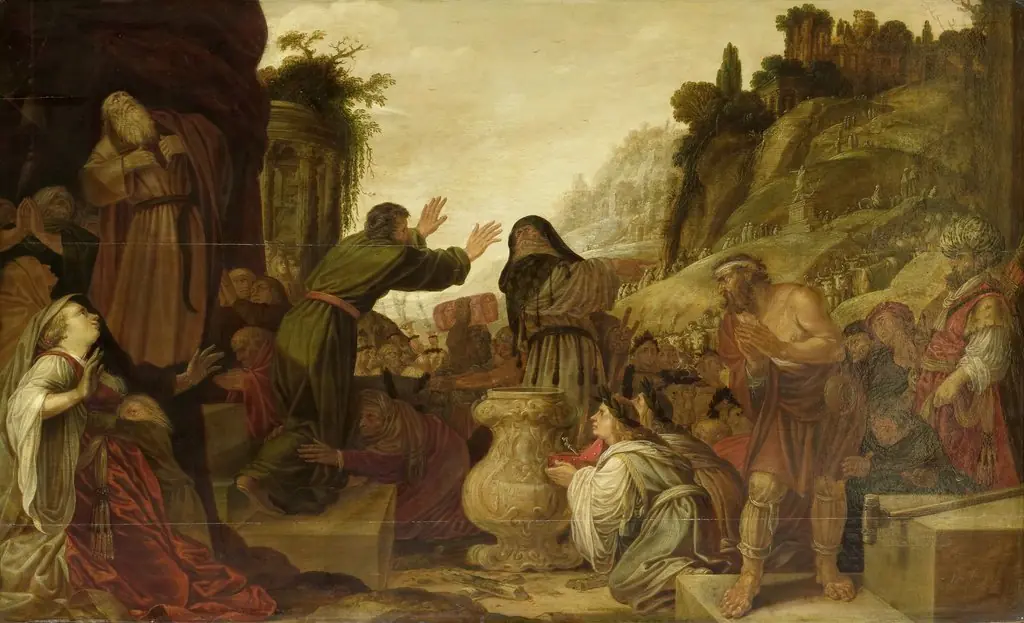 Sts Paul and Barnabas worshipped as gods by the people of Lystra
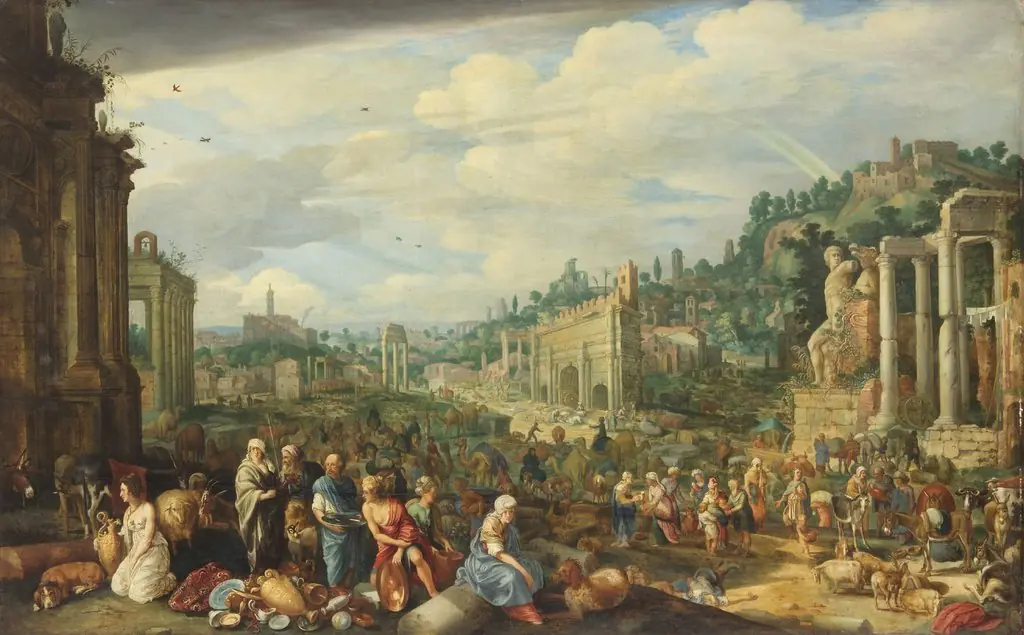 Ansicht des Campo Vaccino in Rom (Aufbruch der Israeliten aus Ägypten)
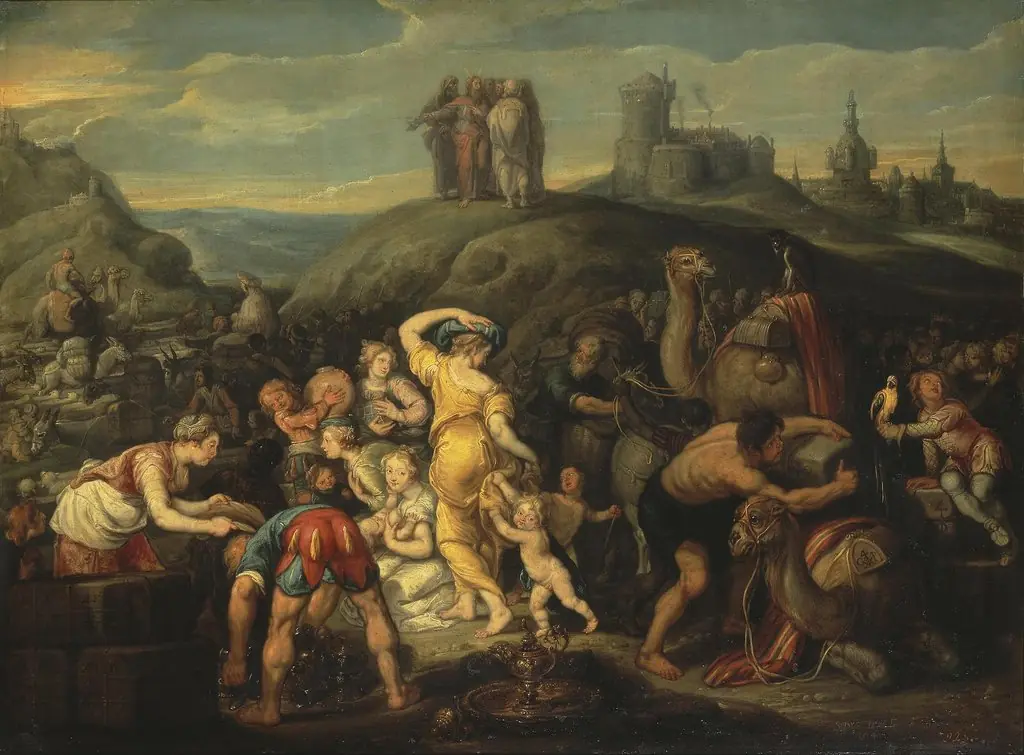 The Israelites after Crossing the Red Sea
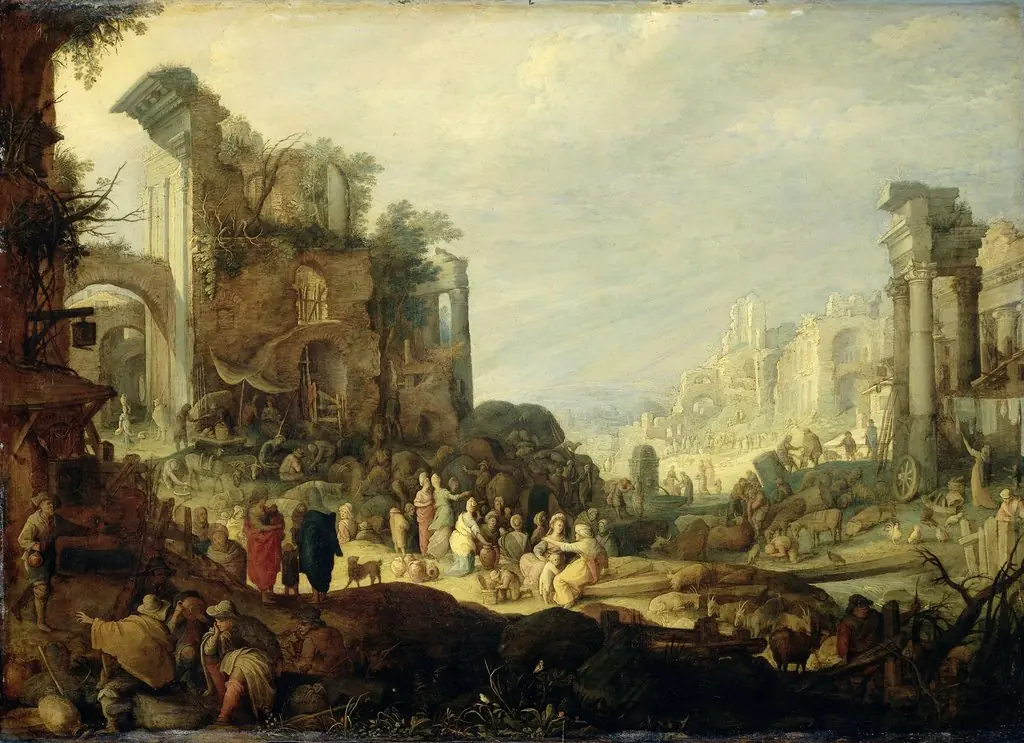 Landscape with Roman Ruins and the Meeting of Rebecca and Eliezer
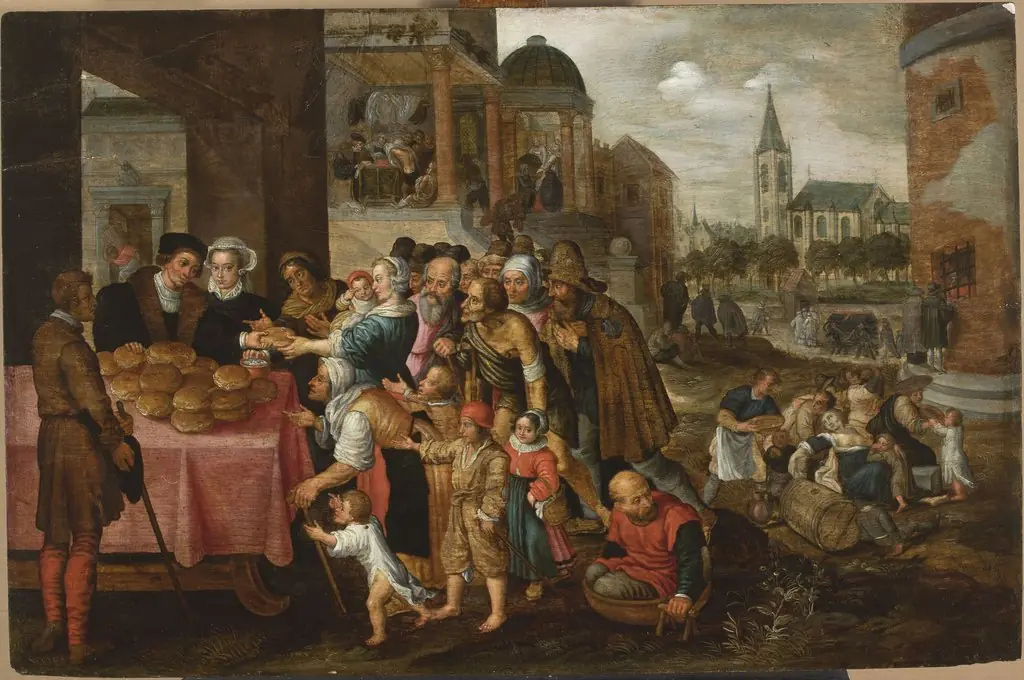 Christian deeds of mercy (Matthew 25:35-36)
 Alexander en Diogenes
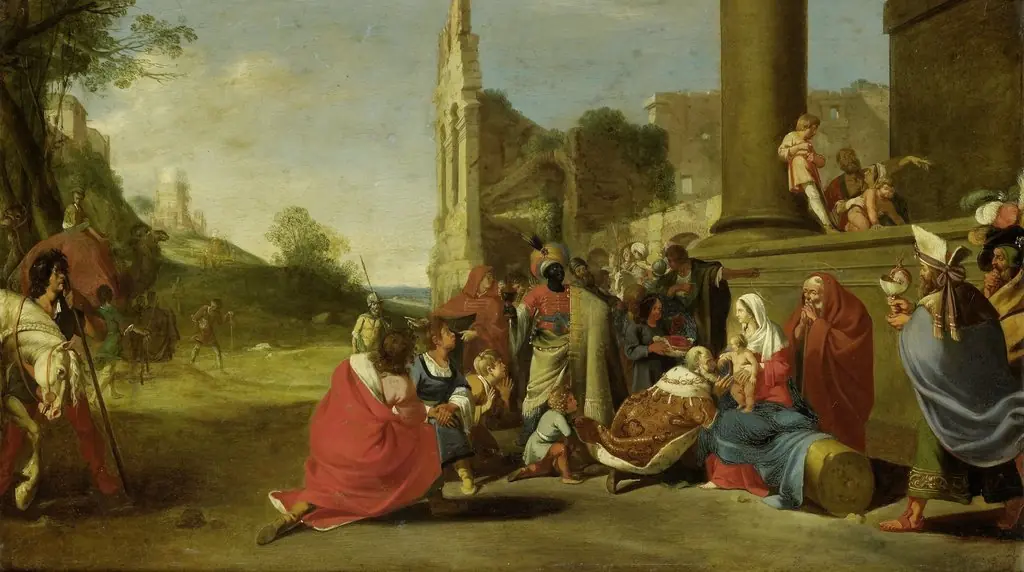 The adoration of the magi
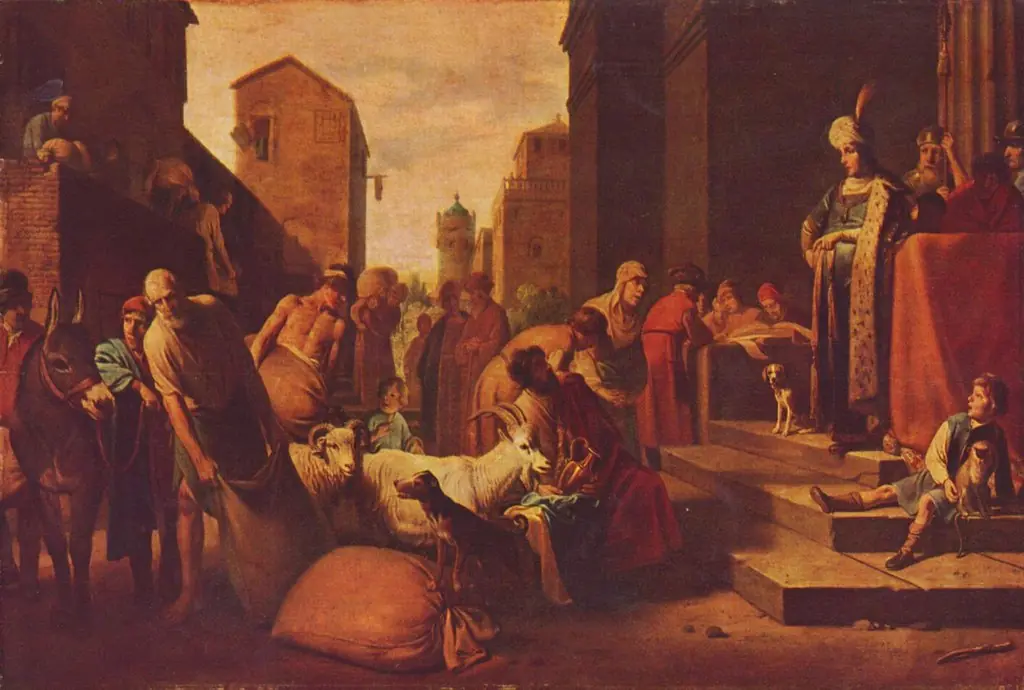 Joseph Selling Grain in Egypt
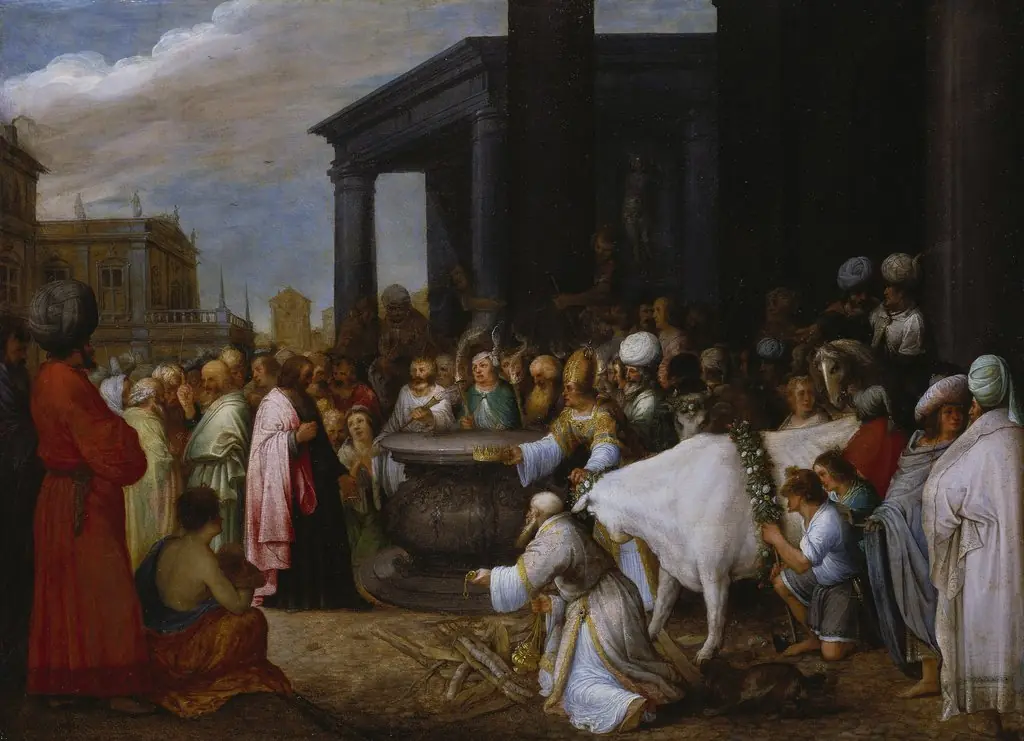 Paul and Barnabas are worshiped as gods in Lystra
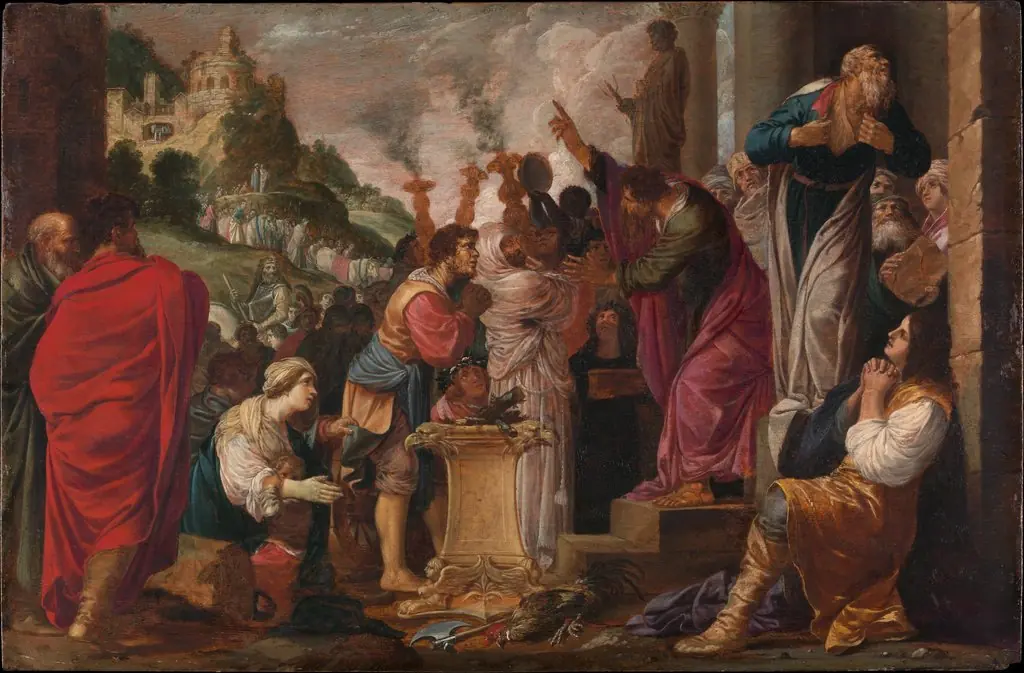 Paul and Barnabas at Lystra