Artwork
Italian city view
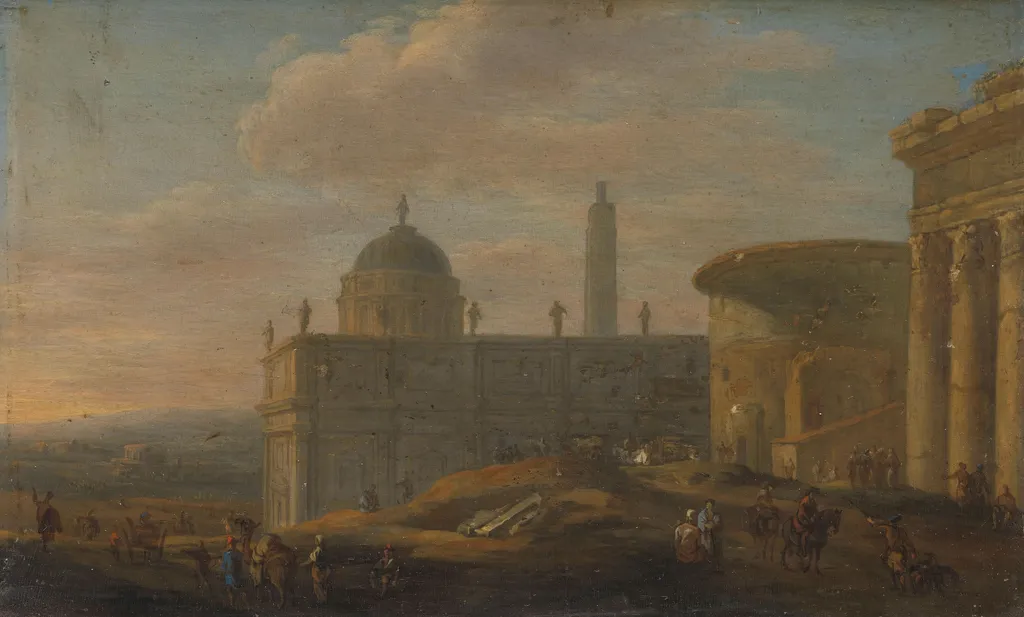
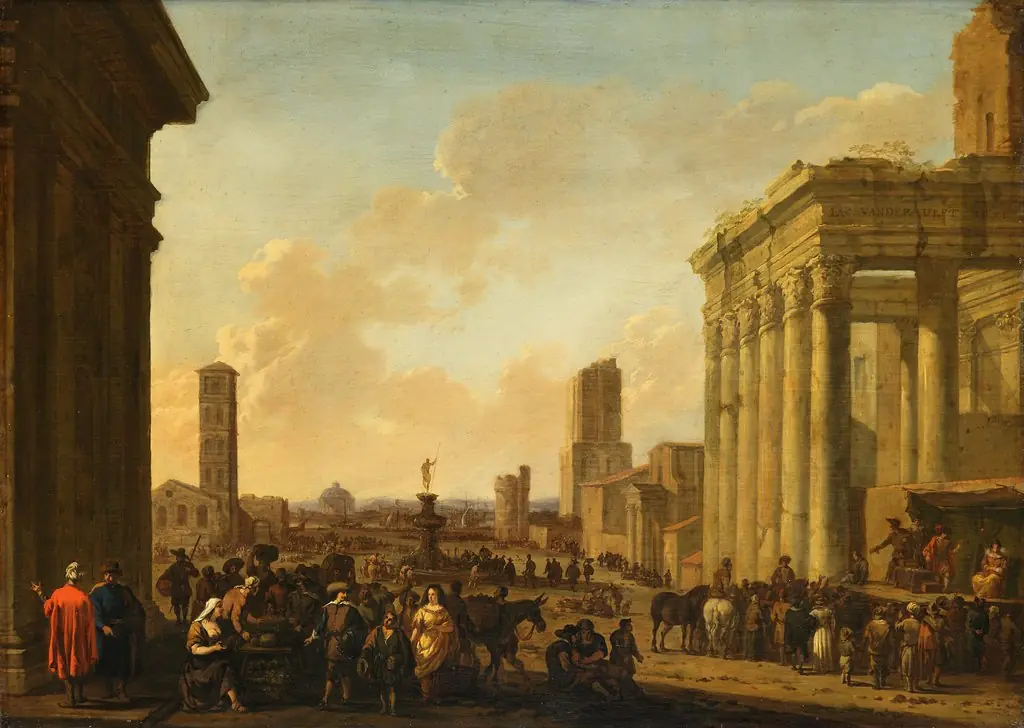
Italian city view is an oil painting by the Dutch Golden Age artist Jacob van der Ulft. It dates from 1650 and is held in the collection of the Rijksmuseum.
About this work
Technique & Style
The medium and support combination typical of the period allows for the detailed rendering of the urban environment depicted.
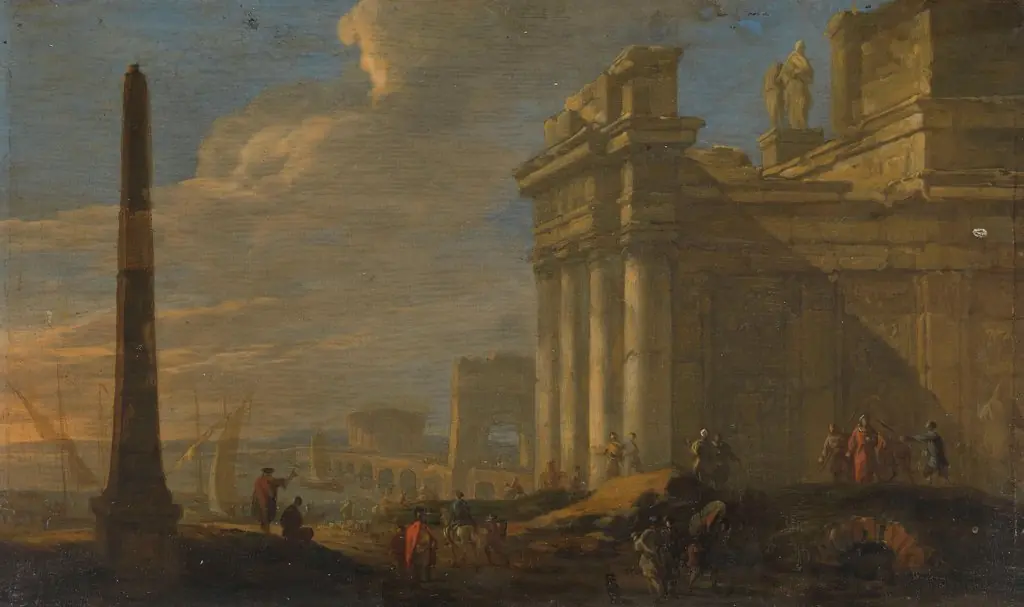
Jacob van der Ulft's Italian city view, created in 1650, is executed in oil paint on a panel support. The work measures 12.5 cm in height and 20 cm in width, classifying it as a small-scale landscape painting. As a genre piece, the composition focuses on an architectural cityscape, characteristic of the artist's approach to Italianate views during the mid-seventeenth century.
The medium and support combination typical of the period allows for the detailed rendering of the urban environment depicted.
History & Provenance
The painting was created in 1650 by Jacob van der Ulft, as indicated by the shared date across sources.
Ownership history begins with Adriaan Leonard van Heteren Gevers, who held the work before it entered the collection of the Rijksmuseum as part of the Kabinet van Heteren Gevers. The painting remains in the Rijksmuseum’s holdings.
Context
The painting Italian city view by Jacob van der Ulft demonstrates a measured perspective and restrained palette that scholars have linked to mid-17th-century Dutch landscape traditions, particularly the tonal approach seen in Haarlem workshops. Contemporary records indicate it entered the collection of Adriaan Leonard van Heteren Gevers, whose holdings formed the core of the Kabinet van Heteren Gevers at the Rijksmuseum, where it remains on display. Its attribution to van der Ulft has been reinforced by technical analysis of panel preparation and brushwork consistent with other dated works from 1650.
Overview
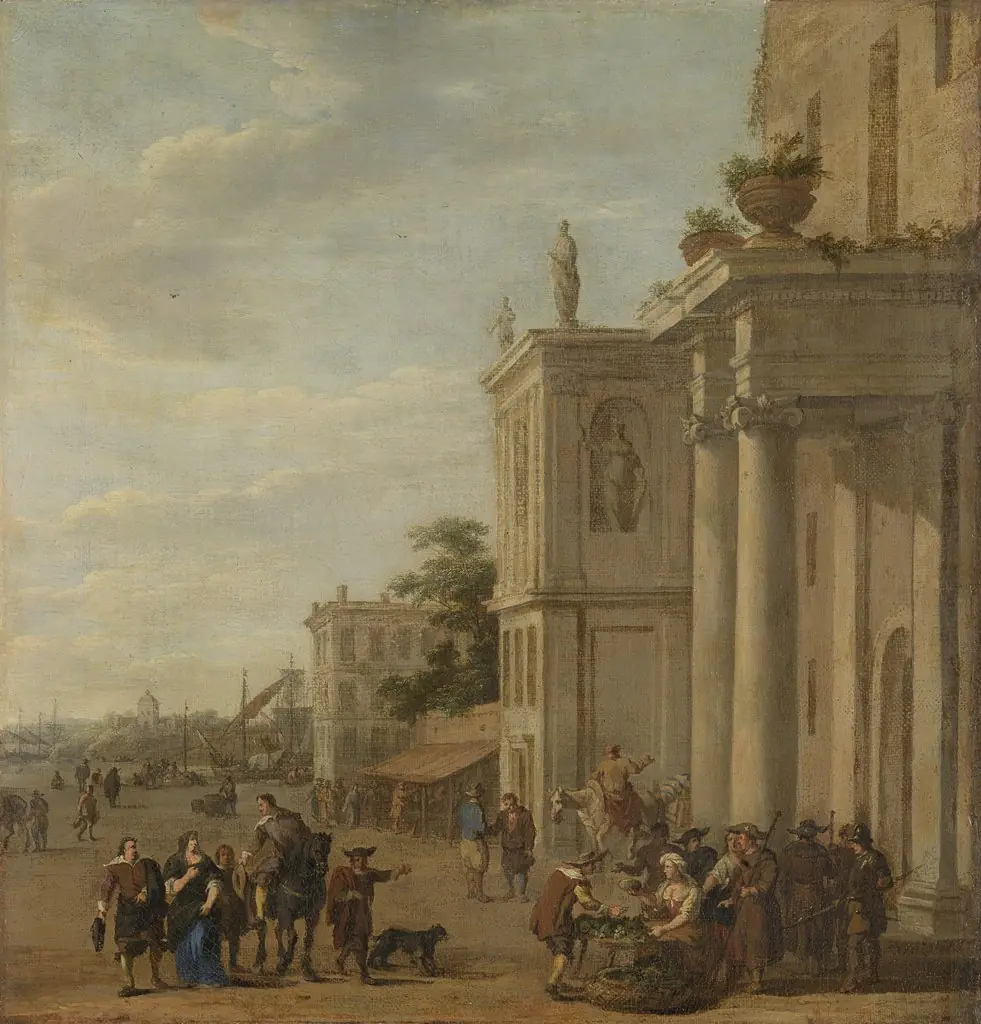
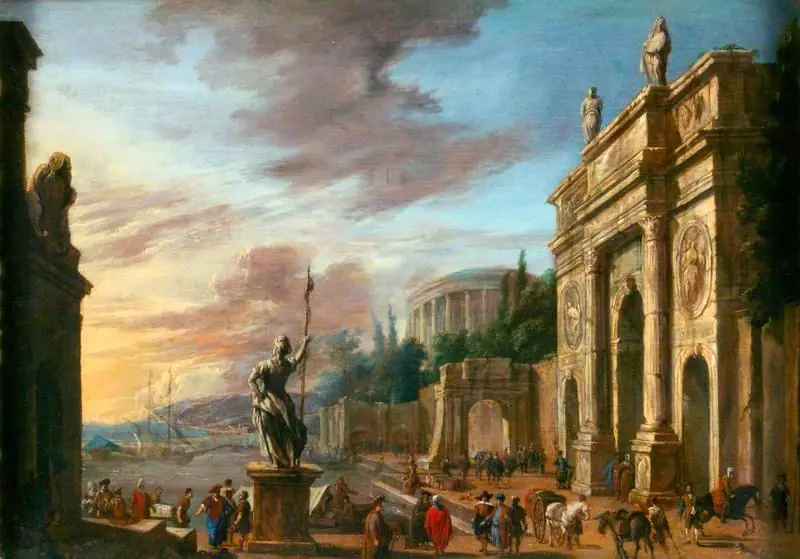
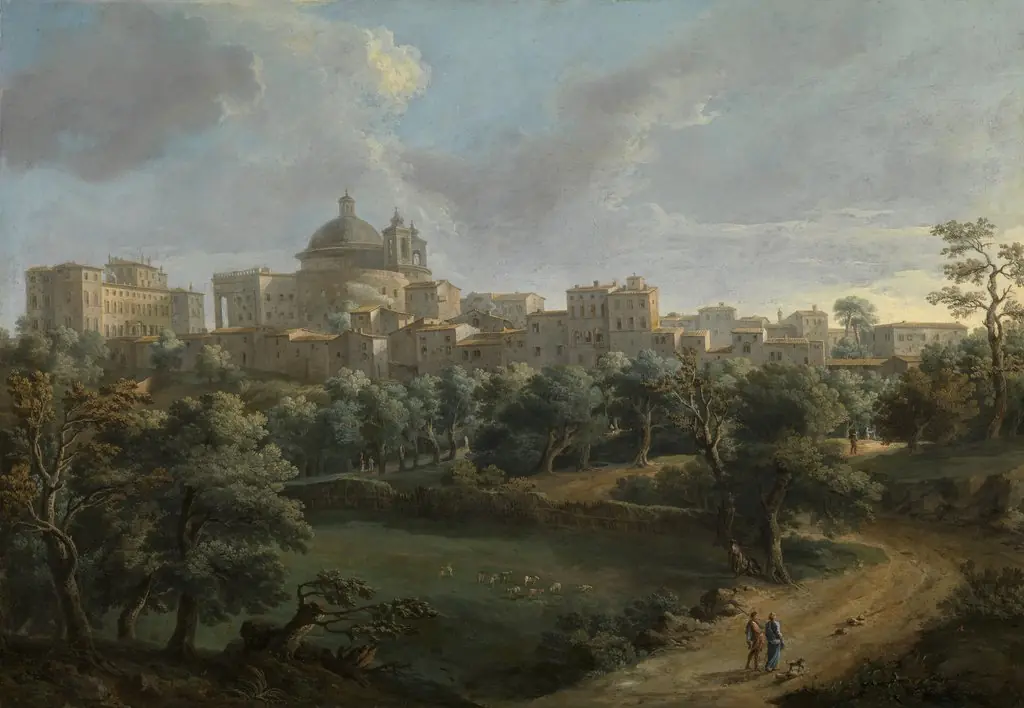
Created circa 1650, this oil painting presents a bustling Italian town square dominated by a central dome, an adjacent obelisk, and a monumental colonnaded structure on the right. Figures populate the streets, moving on foot or horseback, while a gently clouded sky casts a warm, golden light across the scene, emphasizing depth and atmosphere.
Subject & Meaning
The work captures a lively urban environment, highlighting the interplay of civic architecture and daily life. The prominence of the dome and obelisk suggests a focal civic or religious building, while the surrounding activity reflects the social vibrancy of a Mediterranean city during the mid‑seventeenth century.
Own this work as a print
Artist & collection
Artist
Jacob van der Ulft (Dutch pronunciation:; 1621–1689) was a Dutch painter, glass painter, print artist, architect and mayor. He was known for his architectural and city views, landscapes and topographical views.