Artwork
Adoration of the Shepherds
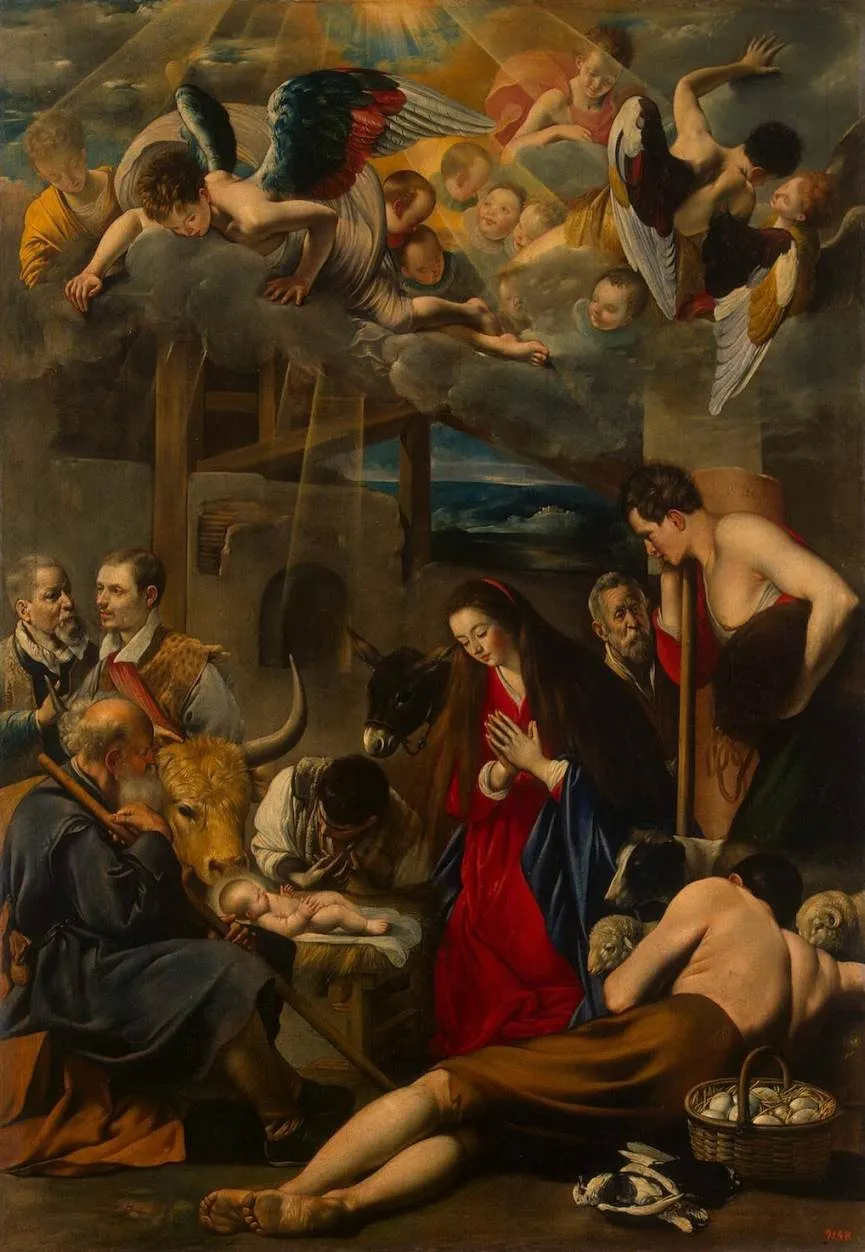
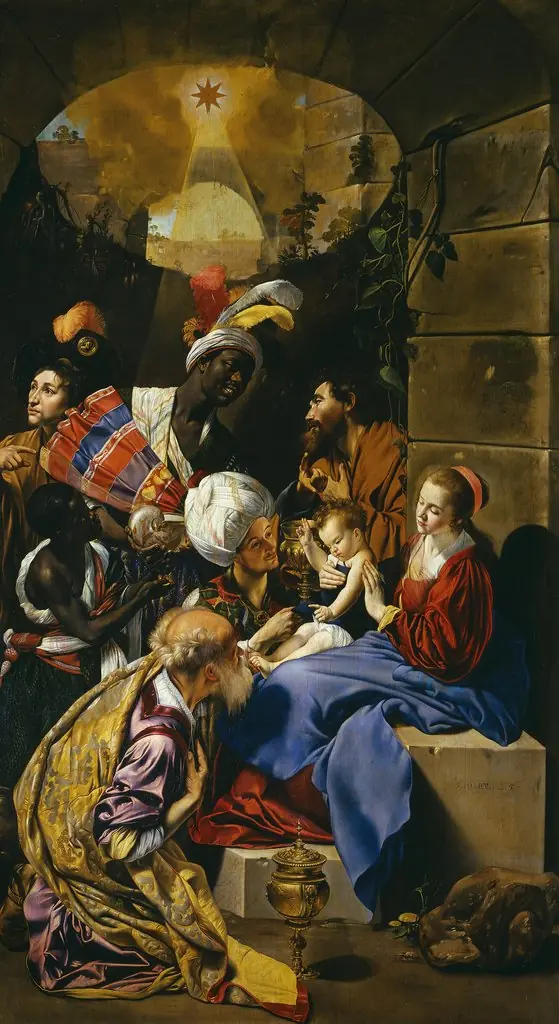
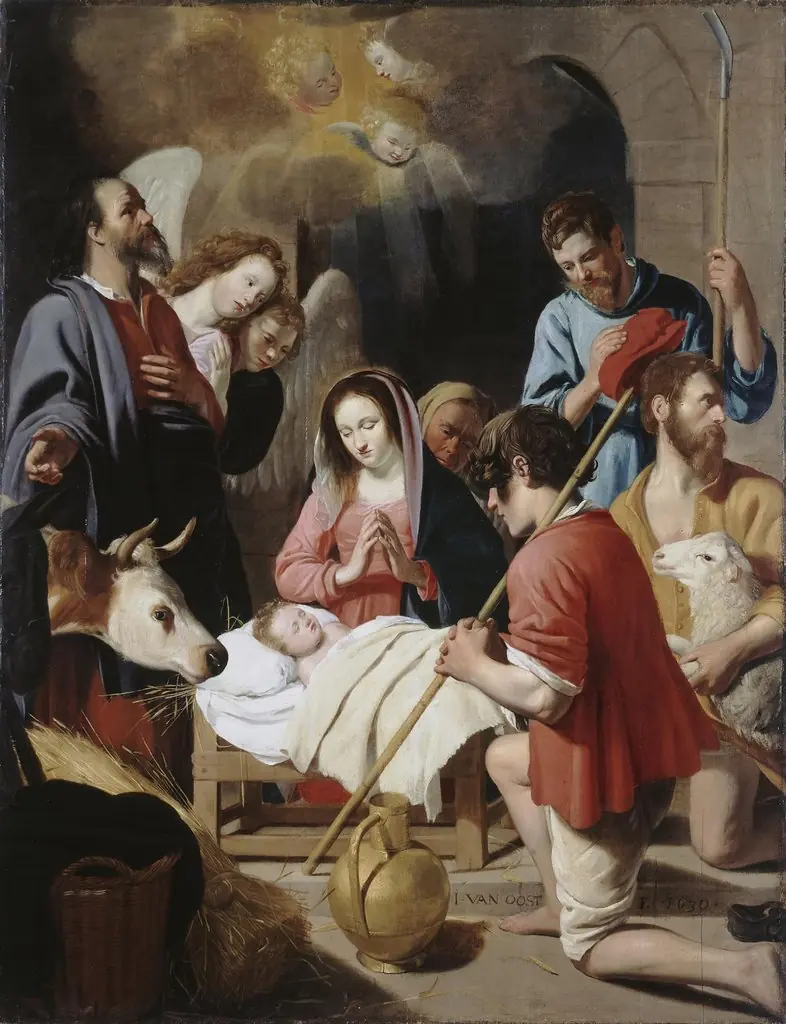
Adoration of the Shepherds is an oil painting by the Early Baroque Italian artist Juan Bautista Maíno. It dates from 1613 and is held in the collection of the Hermitage Museum.
About this work
Subject & Meaning
The inclusion of specific objects such as a walking stick, a basket, and an egg as food grounds the sacred event in a tangible, earthly reality.
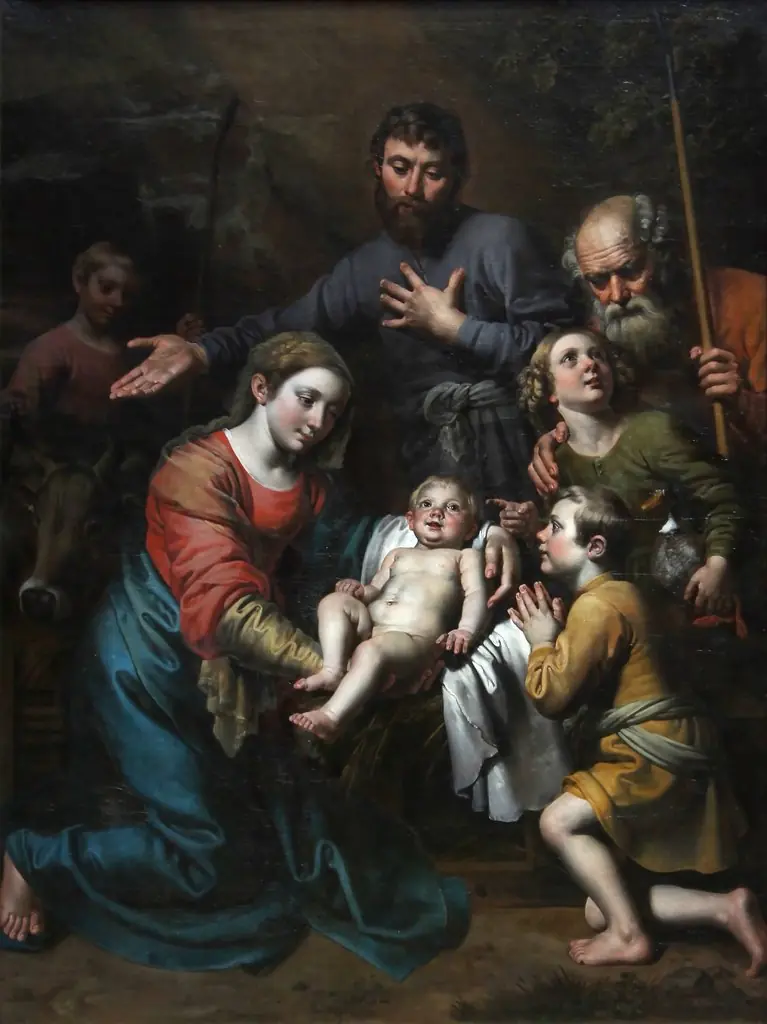
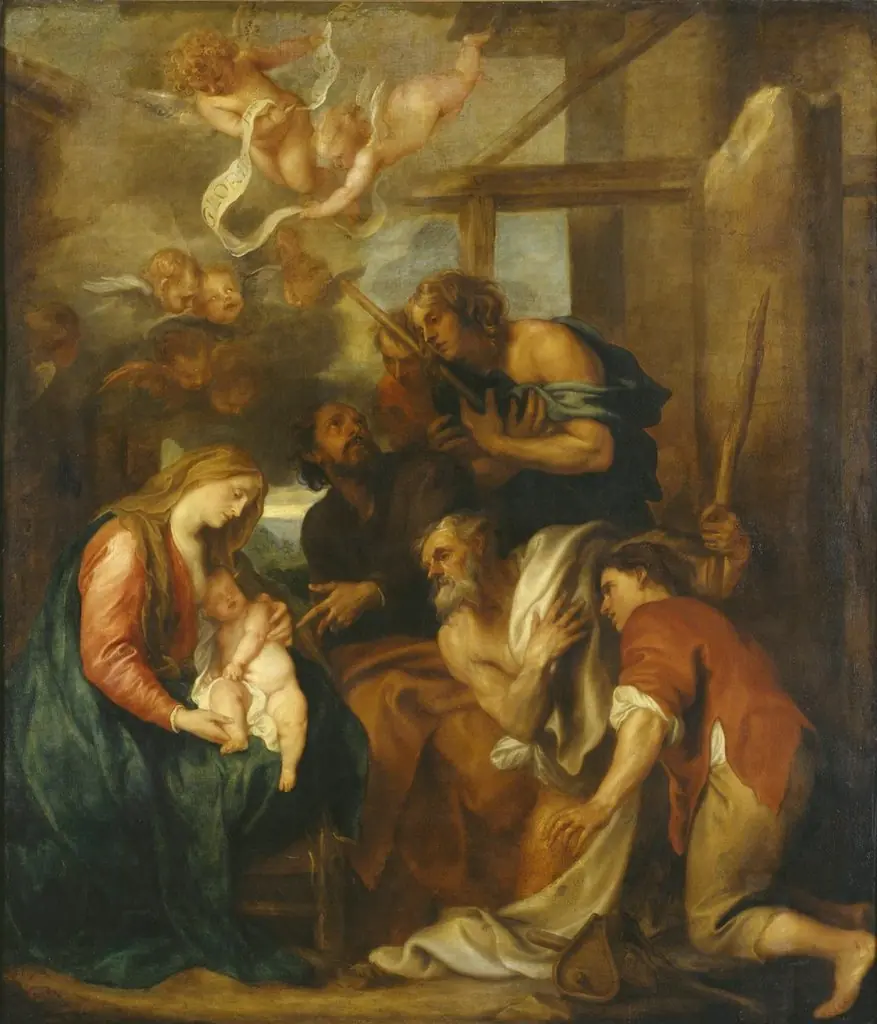
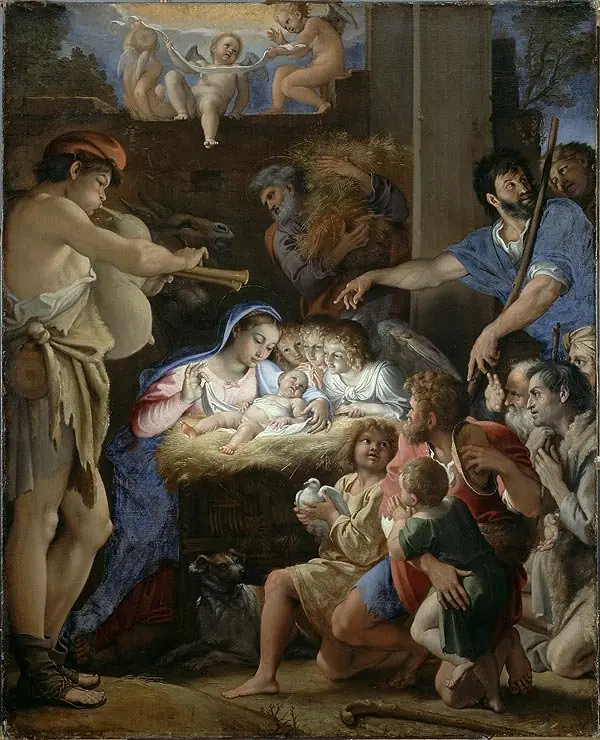
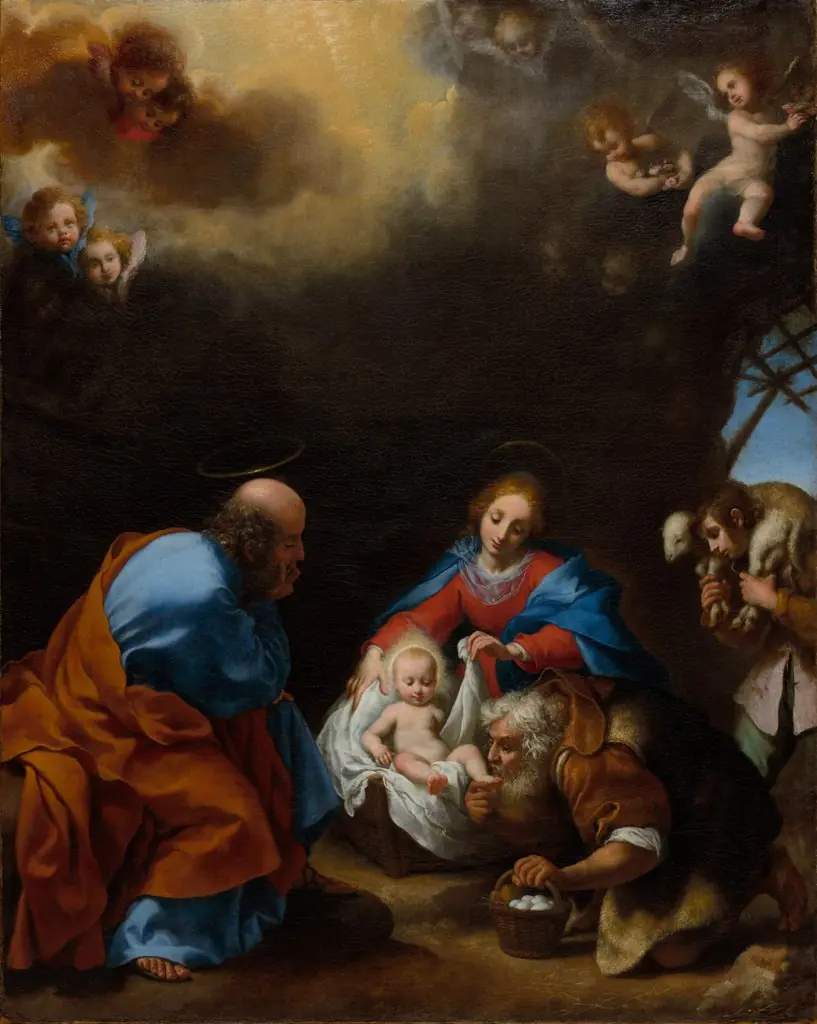
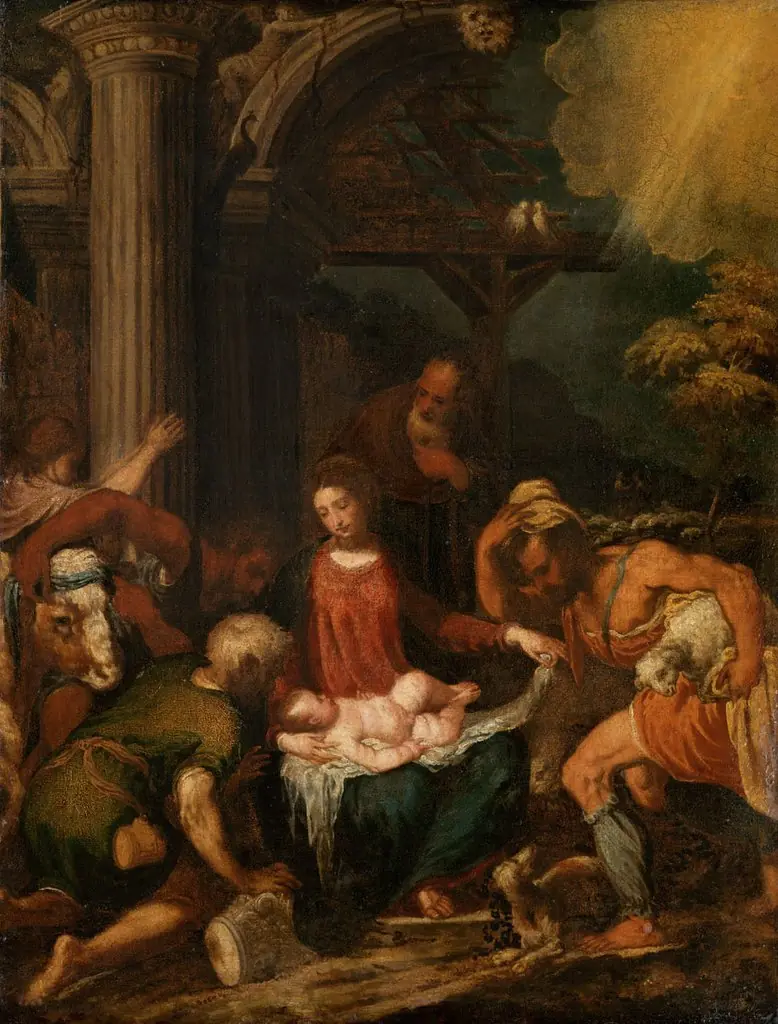
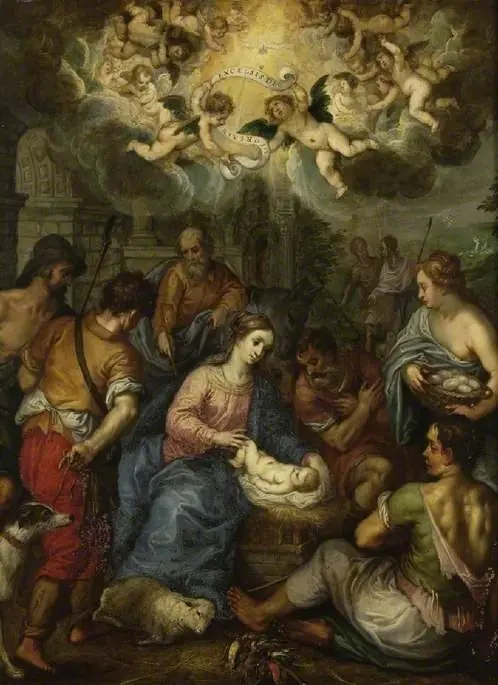
Juan Bautista Maíno's 1613 oil painting, Adoration of the Shepherds, illustrates the biblical narrative of shepherds visiting the newborn Christ Child within a rustic barn setting. The composition centers on the infant Jesus and the Virgin Mary, surrounded by adoring shepherds, oxen, and a donkey, establishing the traditional Nativity scene. Iconographic details include halos signifying the holy figures, an angel hovering above, and a pigeon, likely representing the Holy Spirit.
The inclusion of specific objects such as a walking stick, a basket, and an egg as food grounds the sacred event in a tangible, earthly reality. The presence of sheep reinforces the pastoral theme central to the shepherds' identity. This work serves as a religious depiction of the adoration event, emphasizing the humility of the birth through the gathering of animals and humble worshippers around the divine child.
Technique & Style
Juan Bautista Maíno's Adoration of the Shepherds, executed in 1613, is an oil painting on canvas. The work measures 143.5 cm in height and 100.5 cm in width. As a religious painting, the artist employed oil paint to depict a complex arrangement of figures and objects, including the Christ Child, the Virgin Mary, shepherds, and various animals such as oxen, donkeys, and sheep within a barn setting.
The composition also features angels, clouds, and specific details like a walking stick, a basket, and an egg, all rendered through the medium's characteristic handling. The painting is currently held in the Hermitage Museum collection.
History & Provenance
Adoration of the Shepherds is an oil‑on‑canvas religious painting executed by Juan Bautista Maíno in Spain in 1613. The work portrays the biblical scene of shepherds adoring the infant Christ, surrounded by angels and assorted symbolic elements. It measures 143.5 cm by 100.5 cm and was created as a devotional image for private or ecclesiastical patronage, though specific commissioning details are not recorded.
After its execution, the painting entered the collection of the Hermitage Museum in St Petersburg, where it remains on public display. Its provenance therefore traces from the Spanish workshop of Maíno to the Hermitage’s holdings.
Overview
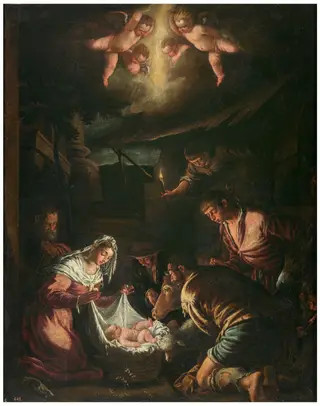
This oil painting, titled Adoration of the Shepherds, depicts a nocturnal scene centered around a newborn child and a woman in a vibrant red robe. The composition is dynamic, featuring a gathering of figures including winged angels, humble shepherds, and various animals. The artist employs dramatic lighting to highlight key elements within the busy tableau, drawing the viewer's attention to the central figures and their interactions.
Artist & collection