Artwork
Cornelis de Graeff with his Wife and Sons
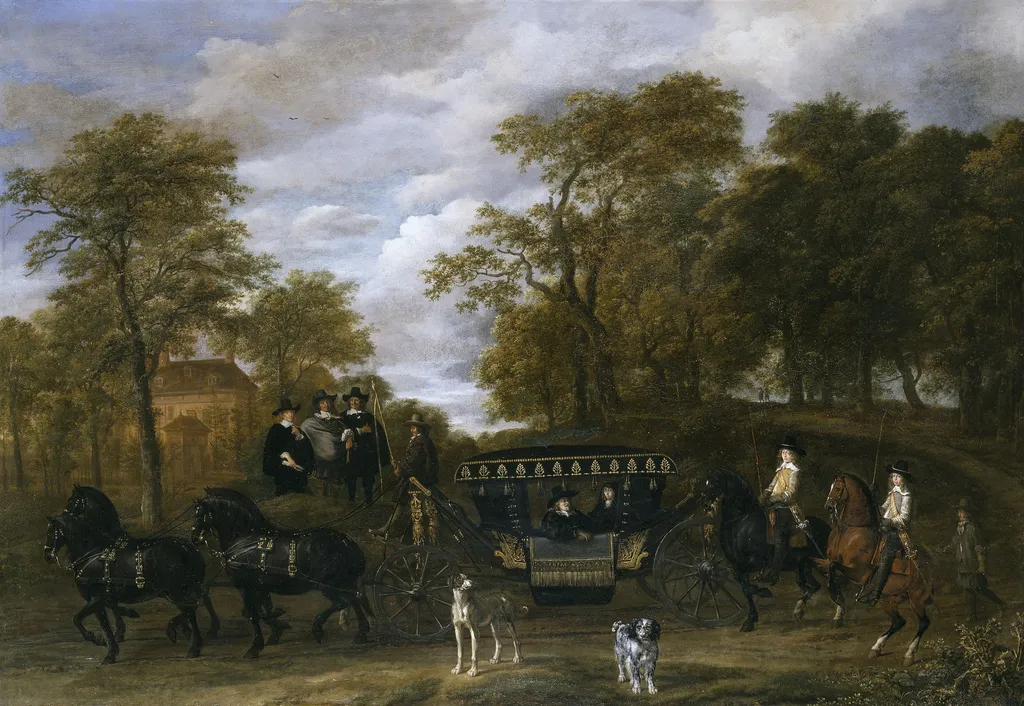
Cornelis de Graeff with his Wife and Sons is an oil painting by the Dutch Golden Age artist Jacob van Ruisdael. It dates from 1660 and is held in the collection of the Amsterdam Museum.
About this work
Subject & Meaning
Commissioned directly by de Graeff, the work serves as a representation of the family's wealth and status, centered on their ownership of the Soestdijk palace.
The painting depicts the arrival of Amsterdam burgomaster Cornelis de Graeff, his second wife Catharina Hooft, and their sons Pieter and Jacob at Soestdijk, their country estate near Utrecht. The composition functions as a family portrait integrated into a landscape, showcasing the group alongside a carriage and dogs on a forest road. Beyond the immediate family, the scene includes three accompanying figures identified as de Graeff's brothers-in-law, Willem Schrijver and Pieter Trip, and his younger brother Andries de Graeff.
Commissioned directly by de Graeff, the work serves as a representation of the family's wealth and status, centered on their ownership of the Soestdijk palace. The collaboration between artists, with Thomas de Keyser painting the figures and animals and Jacob van Ruisdael executing the background and estate, underscores the importance of the subject matter as a document of patrician life and property.
Technique & Style
The work is executed in oil on canvas, measuring 118.4 cm by 170.5 cm. It belongs to the portrait genre and was painted circa 1660. The composition depicts the arrival of Cornelis de Graeff, his wife Catharina Hooft and their sons at Soestdijk Palace, with figures rendered in a naturalistic manner characteristic of Dutch Golden Age portraiture. Stylistically, the background landscape is attributed to Jacob van Ruisdael, while the travelers and animals are rendered in the more expressive style of Thomas de Keyser.
The painting’s handling of light and detail reflects the technical proficiency of the period, though its present condition is not documented in the sources.
History & Provenance
The painting was commissioned by Cornelis de Graeff, a prominent Amsterdam burgomaster, to depict his family’s arrival at Soestdijk, his country estate near Utrecht. Art historian Seymour Slive attributes the landscape and estate to Jacob van Ruisdael, while the figures, carriage, and animals are attributed to Thomas de Keyser. The work is dated to c. 1660 and is the only known commissioned painting by Ruisdael.
The 118.4 × 170.5 cm oil on canvas has been in the collection of the National Gallery of Ireland in Dublin since its acquisition.
Context
Scholarly attribution of this 1660 canvas has shifted over time. Hofstede de Groot excluded it from his 1911 catalogue raisonné of Jacob van Ruisdael, but art historian Seymour Slive later attributed the background and country estate to Ruisdael in his 2001 catalogue raisonné. The figures, carriage, and animals are credited to Thomas de Keyser.
The painting represents a rare collaborative venture for Ruisdael, and notably stands as his only known commissioned work.
Legacy
The work is recognized as one of the rare paintings that Jacob van Ruisdael executed on commission, a fact highlighted by art historian Seymour Slive in his 2001 catalogue raisonné. Its depiction of the De Graeff family at Soestdijk combines portraiture with a meticulously rendered landscape, influencing later Dutch portrait groups that sought to blend personal narrative with idealized scenery. The painting’s inclusion in the National Gallery of Ireland’s collection has ensured its continued visibility, while scholarly discussions of Ruisdael’s oeuvre frequently reference this piece to illustrate his mastery of atmospheric space and his collaboration with Thomas de Keyser.
Overview
Titled Cornelis de Graeff with his Wife and Sons, this oil on canvas painting from approximately 1660 is a collaborative work by Dutch Golden Age artists Thomas de Keyser and Jacob van Ruisdael. It portrays the arrival of the prominent Amsterdam burgomaster Cornelis de Graeff and his family at their country estate, Soestdijk Palace. The artwork is currently held in the collection of the National Gallery of Ireland in Dublin.
Own this work as a print
Artist & collection
Artist
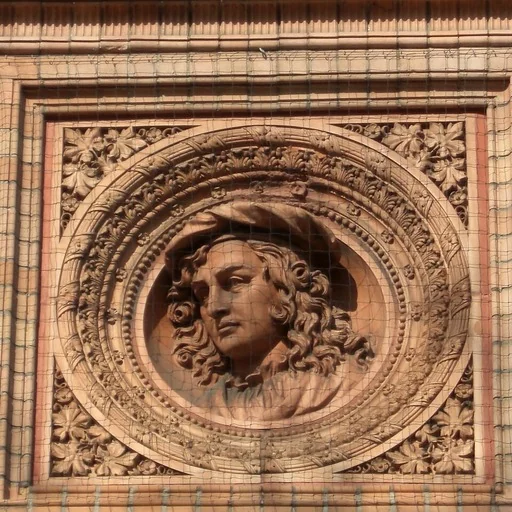
Jacob Isaackszoon van Ruisdael was a Dutch painter, draughtsman, and etcher. He is generally considered the pre-eminent landscape painter of the Dutch Golden Age, a period of great wealth and cultural achievement when…

- Landscape with figures and a village kermis
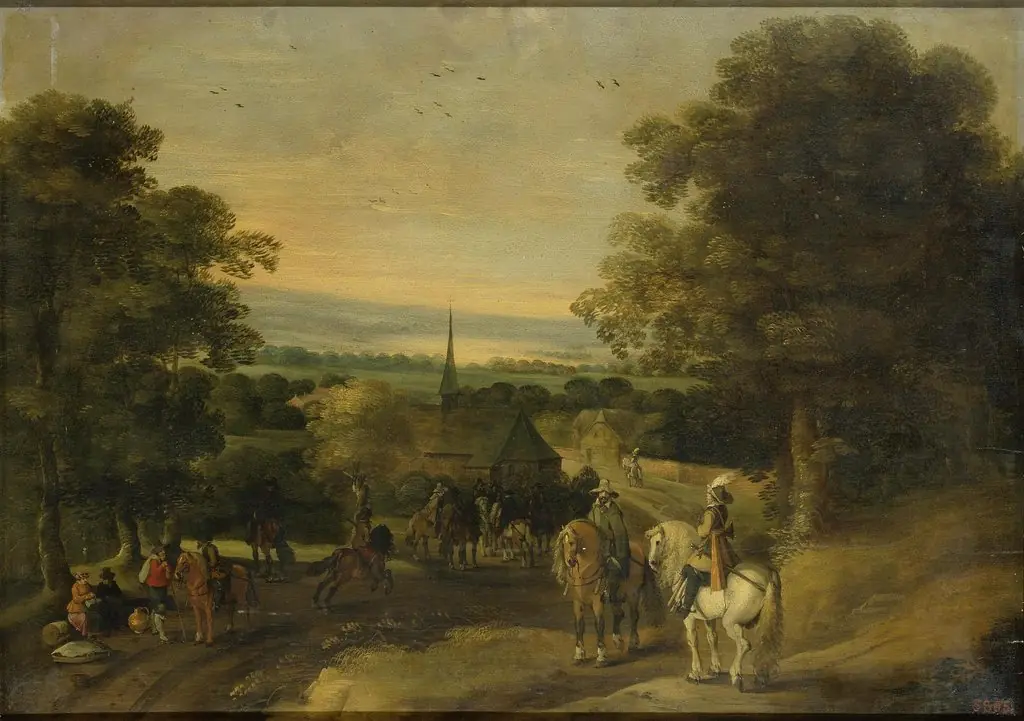 Landscape with a Cavalry Group
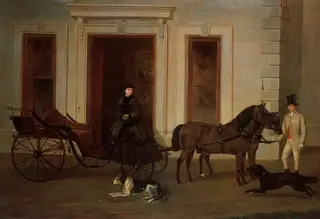 Lady Pryse, carriage & horses, coachman
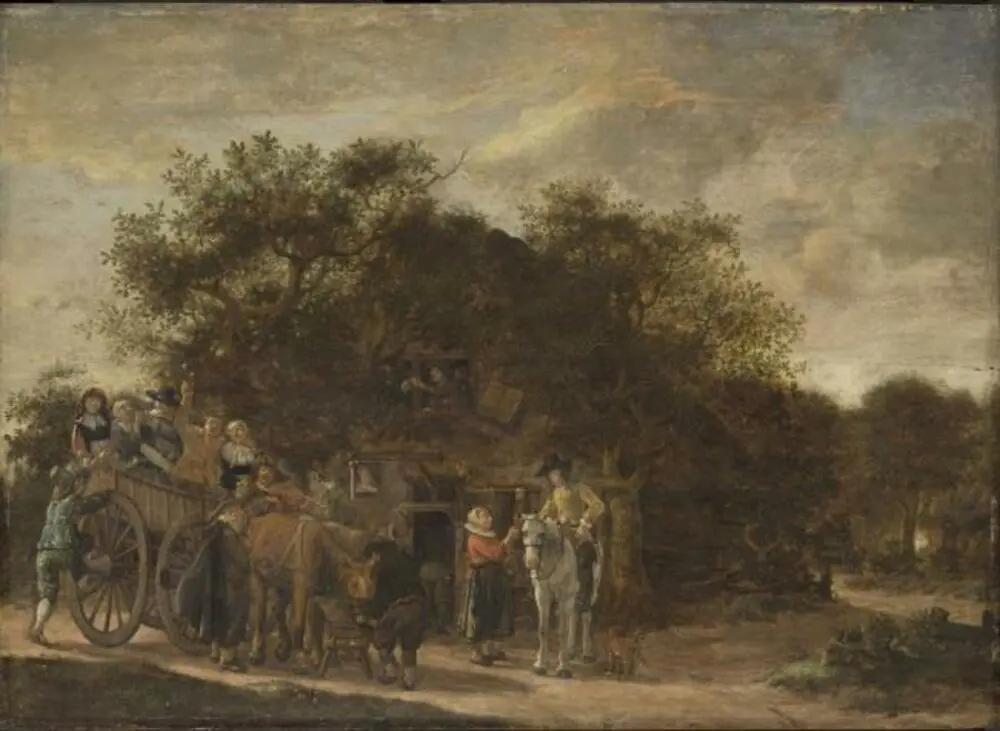 The Halt at the Inn
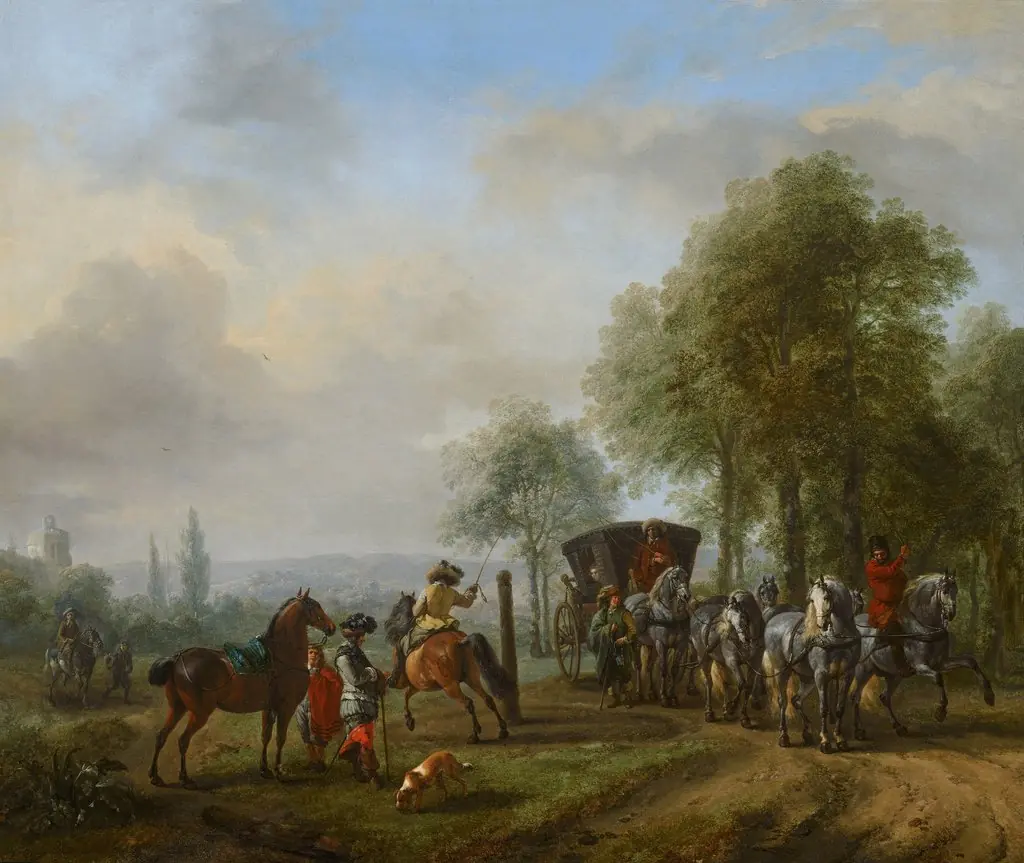 The Driving School
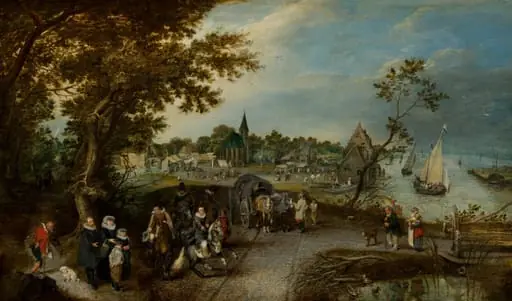 Untitled
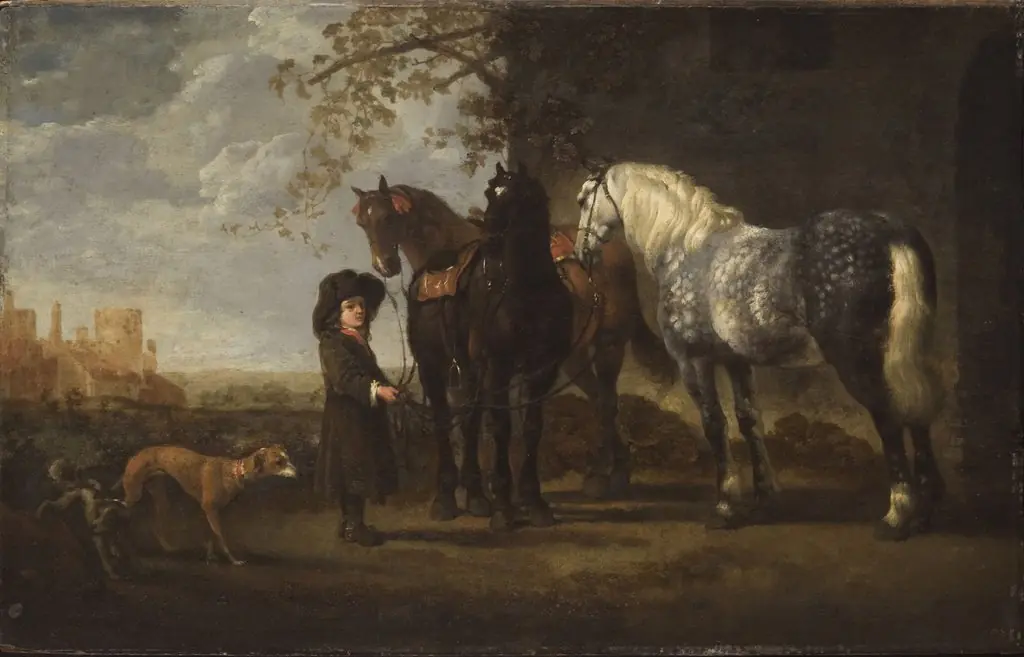 Groom with Three Horses and Two Dogs
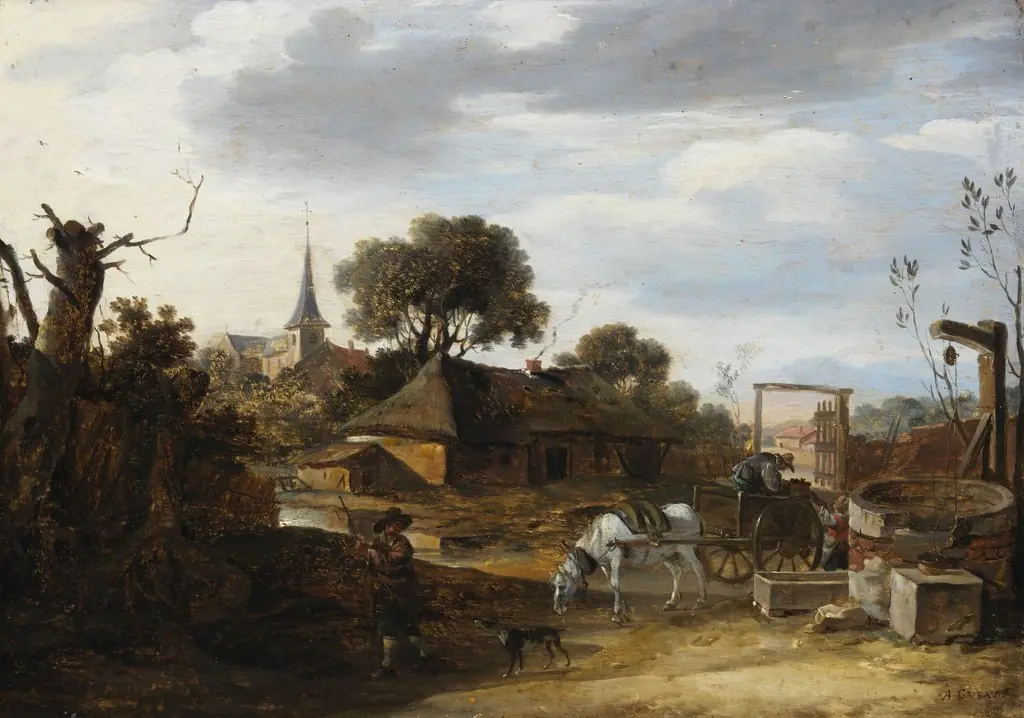 A Farmyard
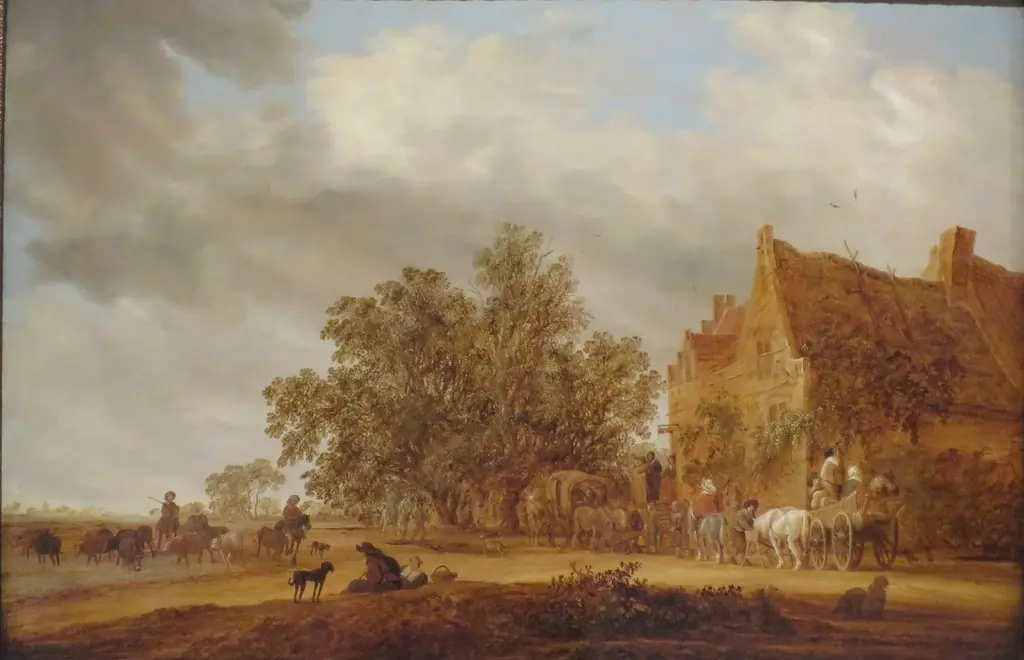 Halt in Front of an Inn
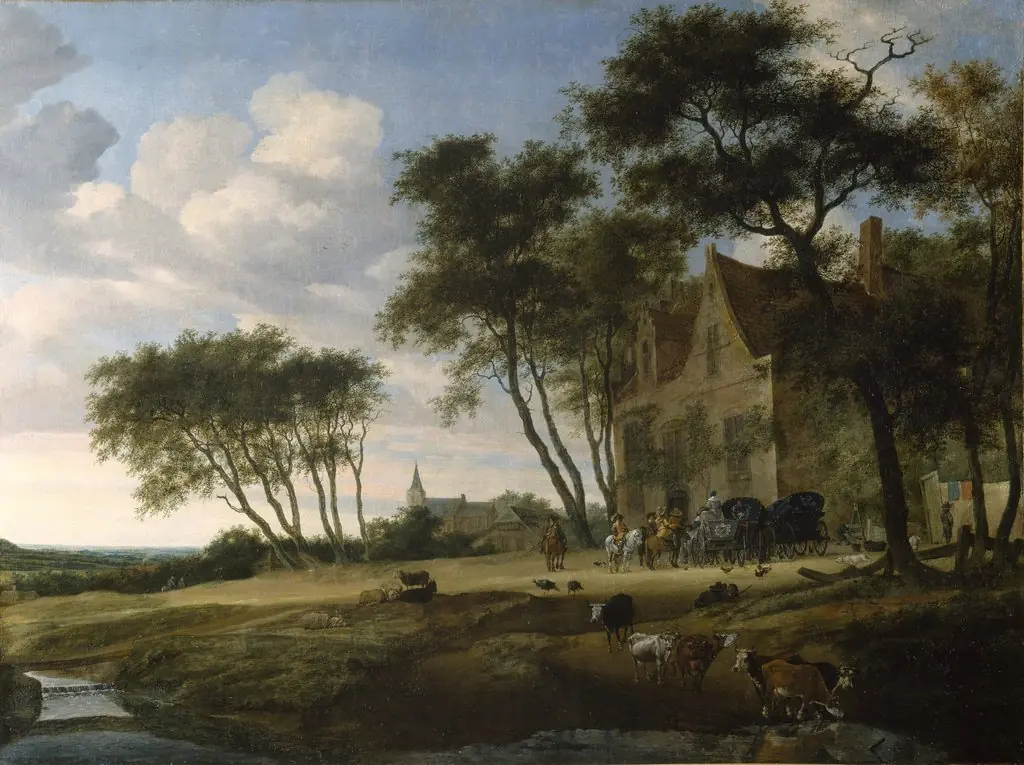 The Halt
 View of the Village of Schelle (Village street)
 Assault on travellers