Artwork
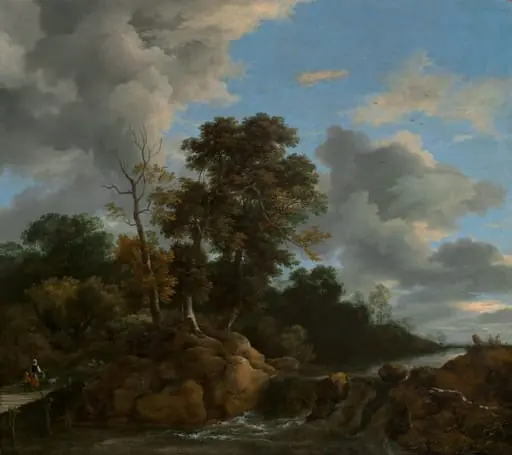
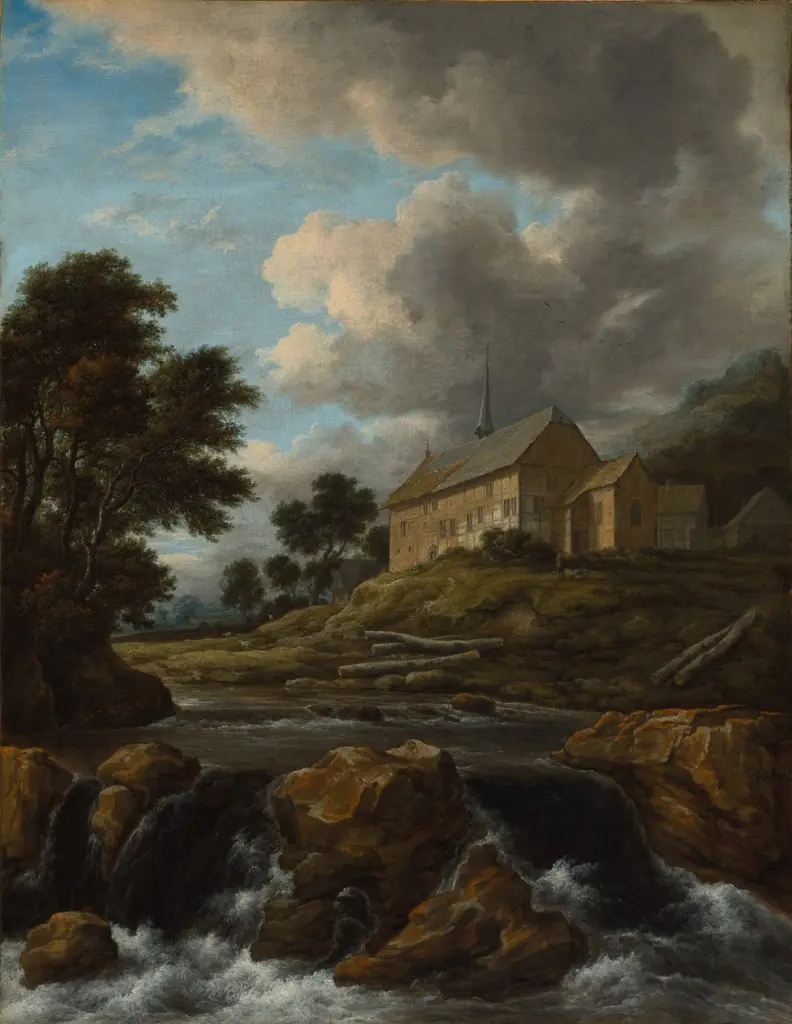
Low Waterfall in a Wooded Landscape with a Dead Beech Tree
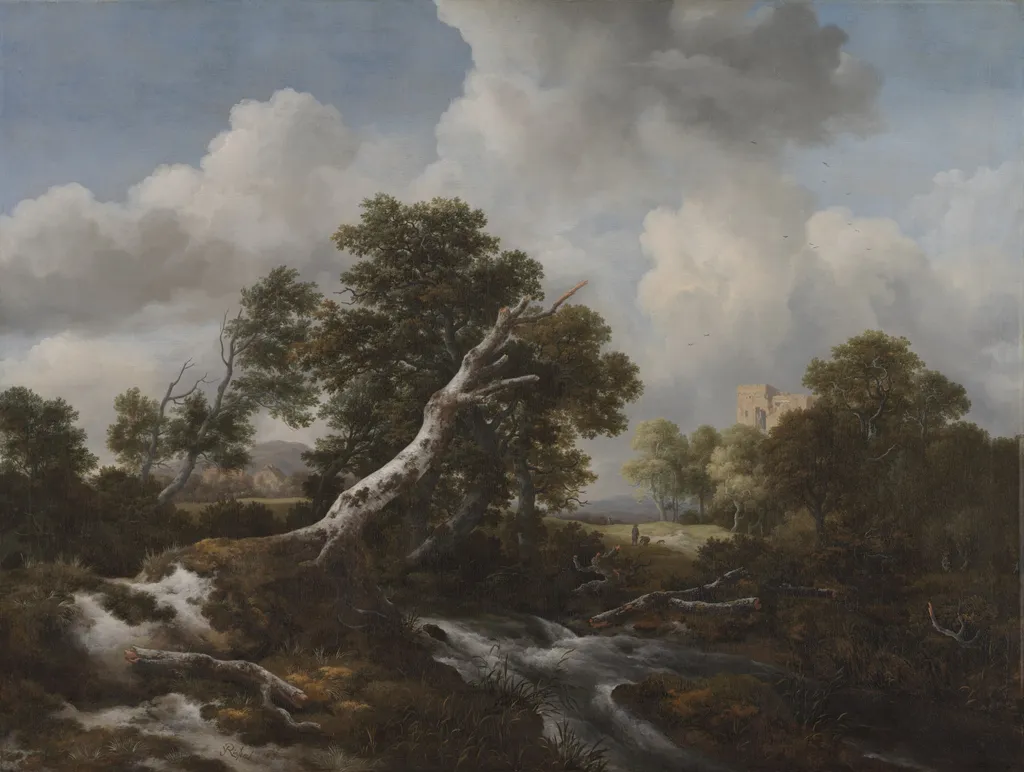
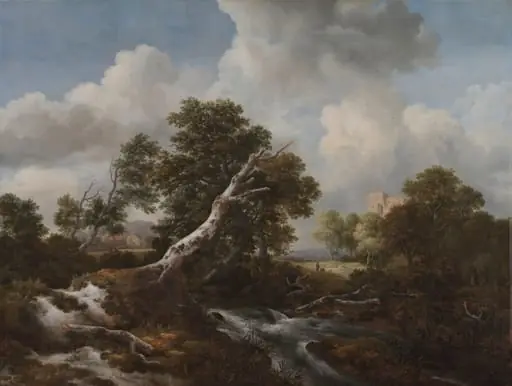
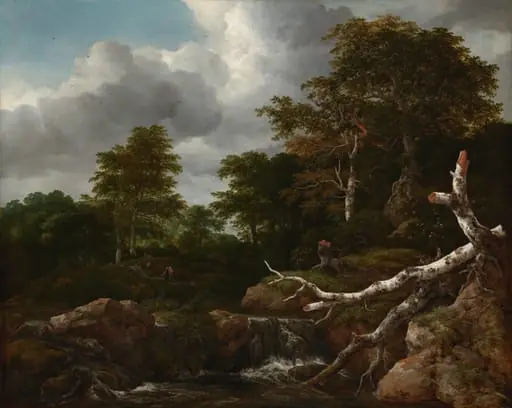
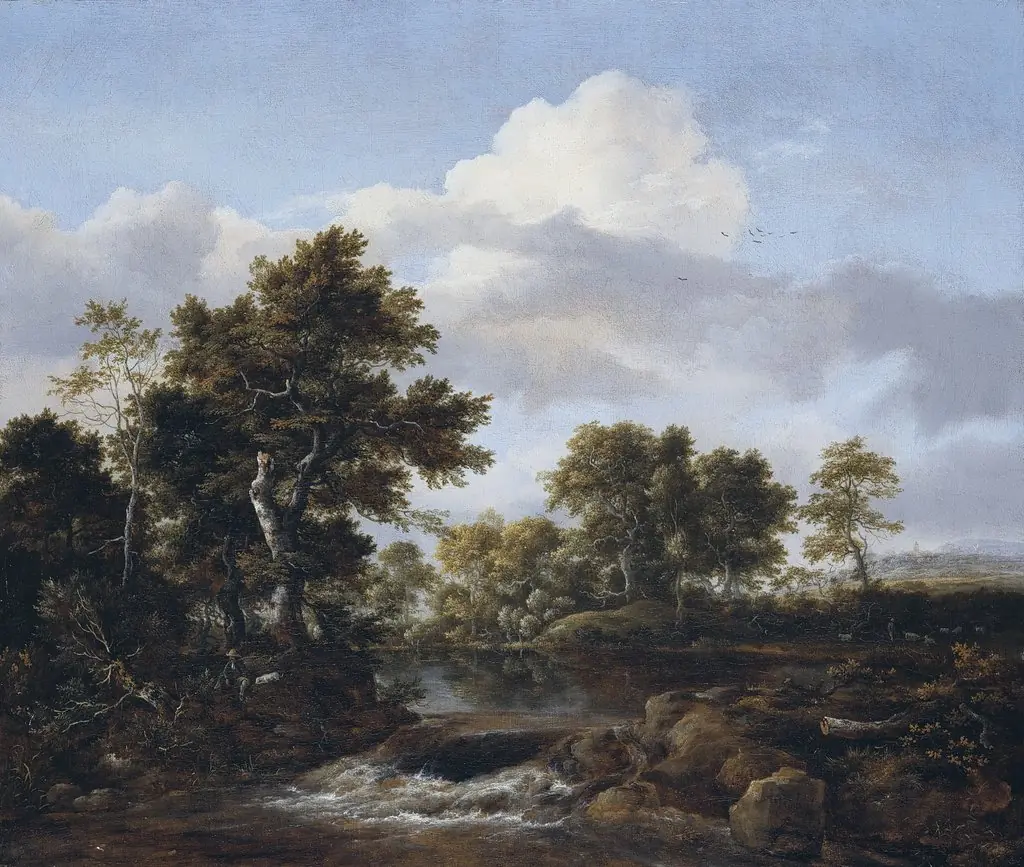
Low Waterfall in a Wooded Landscape with a Dead Beech Tree is an oil painting by the Dutch Golden Age artist Jacob van Ruisdael. It dates from 1660 and is held in the collection of the Cleveland Museum of Art.
About this work
Overview
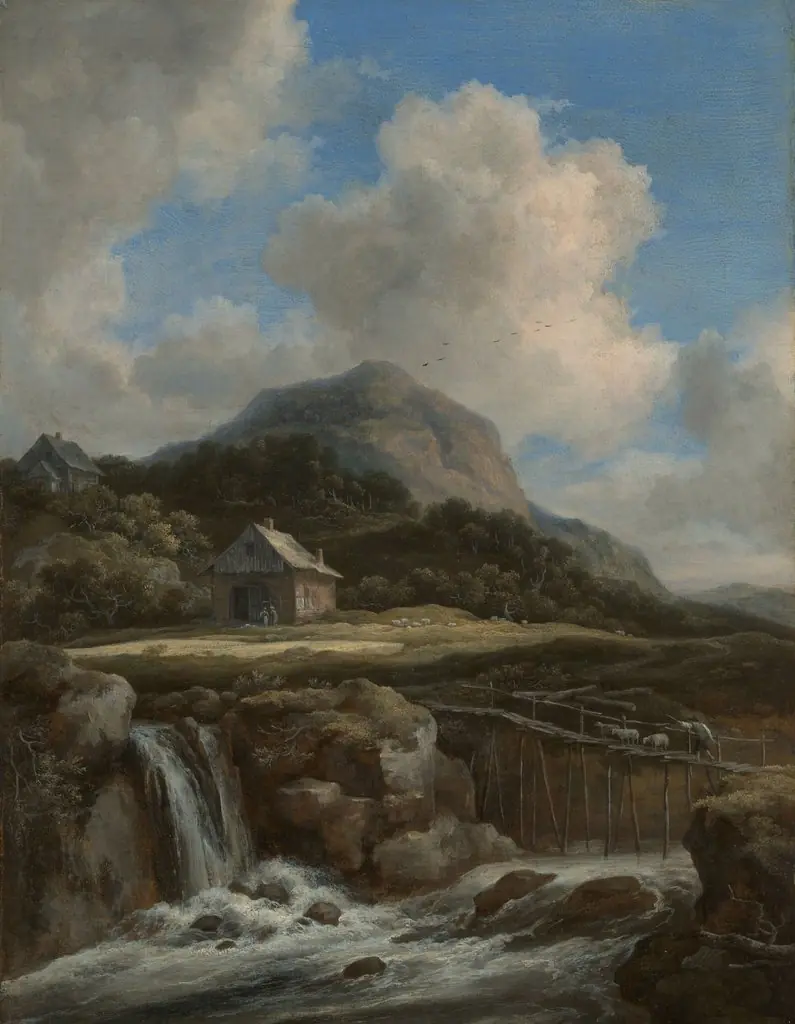
A rocky waterfall cascades from the left, feeding a dark stream that winds through the foreground, creating a dynamic interplay of water and stone.
Painted in 1660, Jacob van Ruisdael's Low Waterfall in a Wooded Landscape with a Dead Beech Tree exemplifies the artist's mature approach to the Dutch landscape genre. The composition centers on a dense, tangled forest where a prominent dead beech tree anchors the middle ground, its skeletal branches contrasting with the surrounding foliage. A rocky waterfall cascades from the left, feeding a dark stream that winds through the foreground, creating a dynamic interplay of water and stone.
In the distance, a ruined castle perches atop a hill, partially obscured by the trees, adding a sense of historical depth and melancholy. The sky above is filled with heavy, dramatic clouds, through which shafts of light break to illuminate specific areas of the scene, a technique characteristic of Ruisdael's mastery of atmospheric effects. This work reflects the artist's shift toward more monumental and emotionally charged landscapes during the 1660s, moving beyond mere topographical representation to evoke a profound sense of nature's power and transience.
The painting stands as a significant example of Dutch Golden Age landscape painting, demonstrating Ruisdael's ability to synthesize natural observation with imaginative composition.
Subject & Meaning
The central dead beech tree dominates the composition, its gnarled branches and peeling bark creating a skeletal form against the verdant backdrop. This stark element, combined with the secluded waterfall and the decaying castle in the distance, imbues the landscape with a sense of quiet melancholy and a slightly unsettling atmosphere. The scene evokes themes of nature's cycle and the passage of time.
Technique & Style
The artist employs a rich, dark palette to render the tangled forest, emphasizing the dramatic contrast between light and shadow. The sky, with its heavy clouds and intermittent shafts of light, contributes significantly to the painting's overall moodiness. The meticulous depiction of natural elements, from the textured bark of the dead tree to the rushing water of the falls, showcases a detailed approach to landscape painting.
Context
This work aligns with the characteristic style of Jacob van Ruisdael, a prominent Dutch Golden Age landscape painter known for his evocative and often dramatic depictions of nature. His oeuvre frequently explores similar themes of wild, untamed environments, often incorporating elements like waterfalls, dense forests, and ancient ruins to convey a sense of grandeur and introspection.
Own this work as a print
Artist & collection
Artist
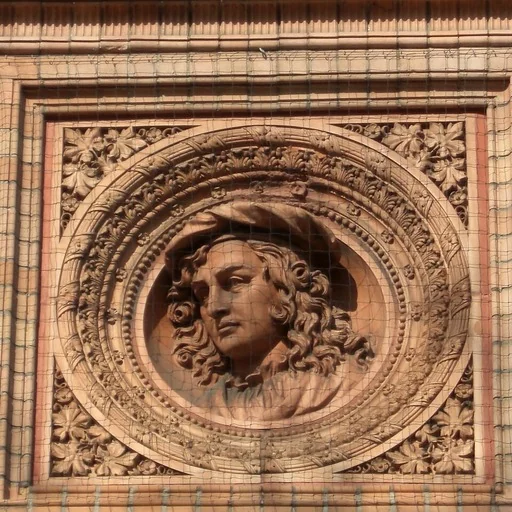
Jacob Isaackszoon van Ruisdael was a Dutch painter, draughtsman, and etcher. He is generally considered the pre-eminent landscape painter of the Dutch Golden Age, a period of great wealth and cultural achievement when…