Artwork
Landscape with a Windmill
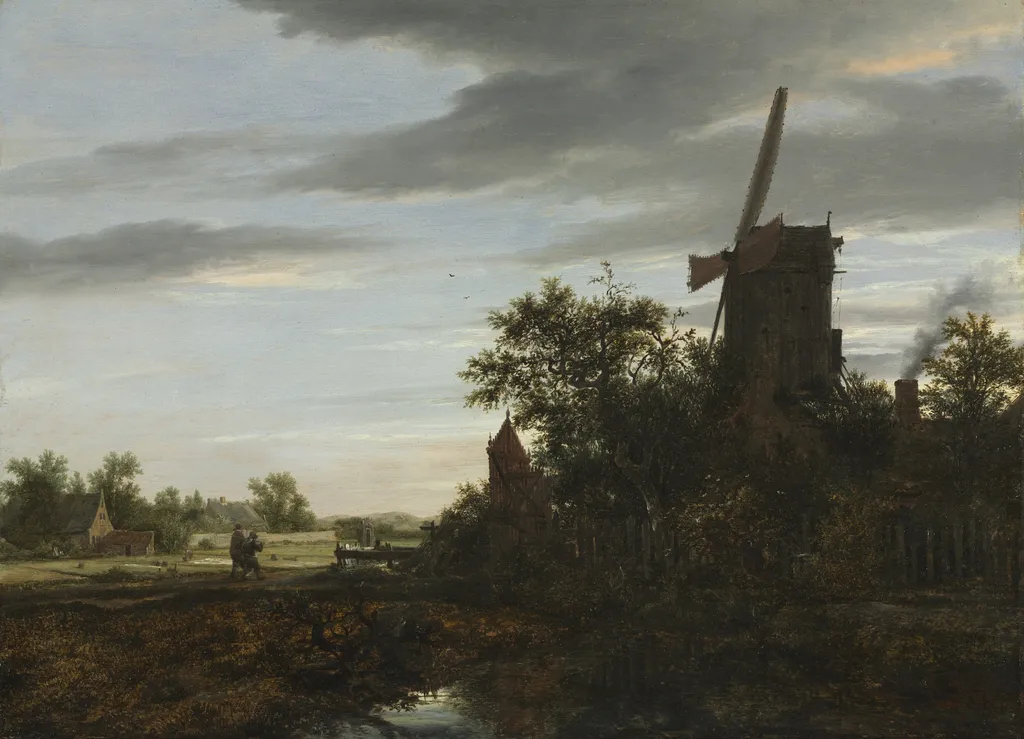
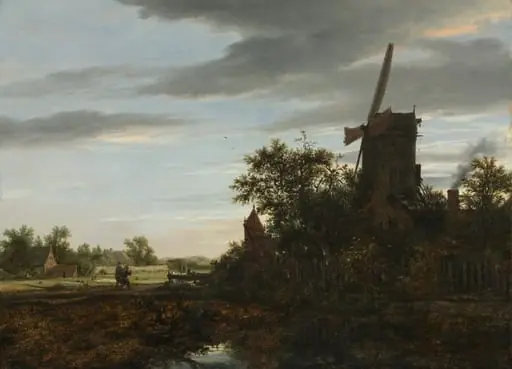
Landscape with a Windmill is an oil painting by the Dutch Golden Age artist Jacob van Ruisdael. It dates from 1646 and is held in the collection of the Cleveland Museum of Art.
About this work
Subject & Meaning
The 1646 panel centers on a towering post mill silhouetted against a clouded sky, flanked by a watercourse, garden fence, and a house with a smoking chimney.
The 1646 panel centers on a towering post mill silhouetted against a clouded sky, flanked by a watercourse, garden fence, and a house with a smoking chimney. Two travelers cross a path toward the mill while laundry bleaches on the meadow, evoking quotidian Dutch labor. The windmill’s monumental scale and stillness suggest a meditation on human ingenuity harnessing natural forces for sustenance and prosperity.
Drawing on contemporary emblem literature, such as Zacharias Heyns’s Emblemata (1625), the motif has been linked to the biblical adage “the letter killeth, but the spirit giveth life,” positing the mill as a symbol of providential power ordering earthly welfare.
Technique & Style
Executed in 1646, Landscape with a Windmill is an oil painting on a wooden panel measuring 49.5 by 68.5 centimeters. The work is signed and dated "JvR 1646" in the lower right corner. Stylistically, this early career piece reflects the influence of Ruisdael's uncle and teacher, Salomon van Ruysdael, particularly in its composition featuring a foreground landmark and distant background.
However, Ruisdael distinguishes himself through a precise, naturalistic rendering of vegetation; unlike the stylized flora of his contemporaries, the trees and bushes are depicted with exacting detail, distinguishing specific species by their foliage and growth forms. The artist employs a monumental approach, exaggerating the height of the windmill to create a dramatic silhouette against a cloudy sky. The handling captures a specific atmospheric moment where the setting sun illuminates a peaceful scene, emphasized by a smoke plume indicating a lack of wind.
History & Provenance
Landscape with a Windmill was painted by Jacob van Ruisdael in 1646, early in his career, and is signed and dated JvR 1646 on the oil-on-panel support; the work was made in Haarlem. It entered the Cook collection, owned by Francis, Frederick and Herbert Cook, and remained there until the collection was sold at Christie’s in London on 25 November 1966. The painting was purchased by the New York dealer Kunsthandlung F. Kleinberger & Co, then acquired in 1967 by the Mr and Mrs William H. Marlatt Fund, which lent it to the Cleveland Museum of Art.
Exhibition history includes a 1946 showing of Cook Collection works at the Usher Gallery, Lincoln, a 1964‑66 loan to Manchester City Art Gallery, and a 2011 Ruisdael retrospective at the Cleveland Museum of Art.
The painting is held in the Cleveland Museum of Art, Ohio, where it bears the accession number 1967.19. It entered the museum in 1967 as a loan from the Mr and Mrs William H. Marlatt Fund, which had purchased the work that year from New York dealer Kunsthandlung F. Kleinberger & Co; Kleinberger had acquired it at the Christie’s auction of the Cook collection on 25 November 1966. Exhibition history includes a 1946 showing of Cook Collection works at the Usher Gallery in Lincoln, UK, a loan to the Manchester City Art Gallery from 1964 to 1966, and a 2011 presentation in the Cleveland Museum of Art’s Jacob van Ruisdael landscapes exhibition.
Context
Jacob van Ruisdael's Landscape with a Windmill (1646) exemplifies the early phase of his landscape oeuvre, showing the compositional influence of his uncle and teacher Salomon van Ruysdael while already displaying his distinctive attention to botanical detail and the symbolic weight of the windmill. Scholars note that the work anticipates motifs he would revisit throughout his career, such as a foreground landmark set against an expansive background. The painting entered the Cleveland Museum of Art via the Cook collection, which sold it at Christie's in 1966; it was subsequently acquired by the William H. Marlatt Fund and has been exhibited in Lincoln (1946), Manchester (1964‑66) and the 2011 CMA retrospective.
Its precise rendering of vegetation and the interpretation of the windmill as a metaphor for divine power reflect its significance within Dutch Golden Age landscape painting.
Legacy
Landscape with a Windmill remains an important early work in Jacob van Ruisdael’s oeuvre, noted for its compositional formula that he revisited throughout his career. The painting is held by the Cleveland Museum of Art and has been featured in exhibitions such as the 1946 Cook Collection show at the Usher Gallery, the 1964‑66 Manchester City Art Gallery display, and the 2011 Ruisdael landscape survey at Cleveland. It is catalogued in Seymour Slive’s raisonné and discussed in his study of windmills, underscoring its scholarly reputation.
The work’s emphasis on a monumental windmill and naturalistic vegetation influenced Ruisdael’s later landscapes, cementing its legacy within his artistic development.
Overview
Jacob van Ruisdael's Landscape with a Windmill, painted in 1646, is an early example of the Dutch artist's work in oil on panel. This serene composition, signed and dated by the artist, is now part of the collection at the Cleveland Museum of Art. It offers insight into the formative period of Ruisdael's career, showcasing his developing approach to landscape painting.
Own this work as a print
Artist & collection
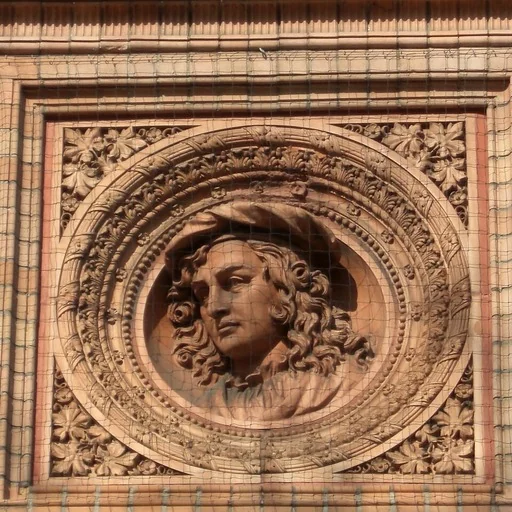
Artist
Jacob Isaackszoon van Ruisdael was a Dutch painter, draughtsman, and etcher. He is generally considered the pre-eminent landscape painter of the Dutch Golden Age, a period of great wealth and cultural achievement when…