Artwork
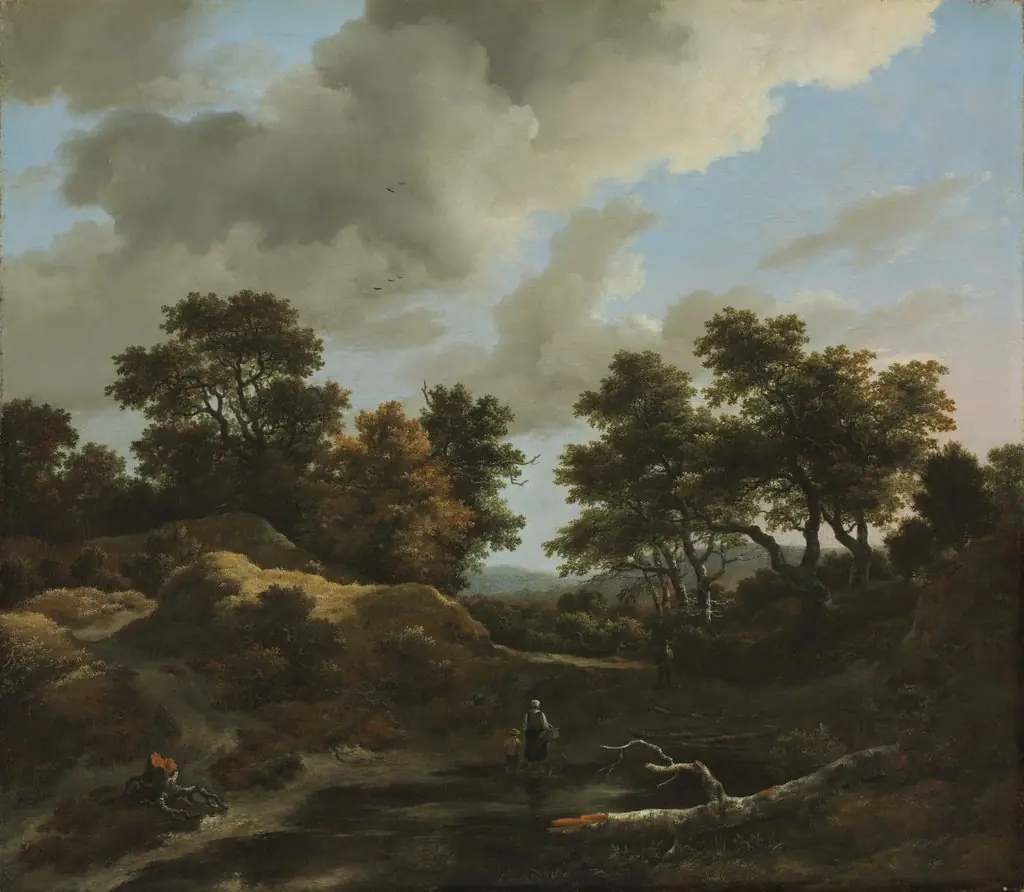
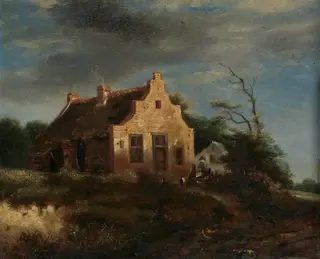
Farm in a wooded dune landscape
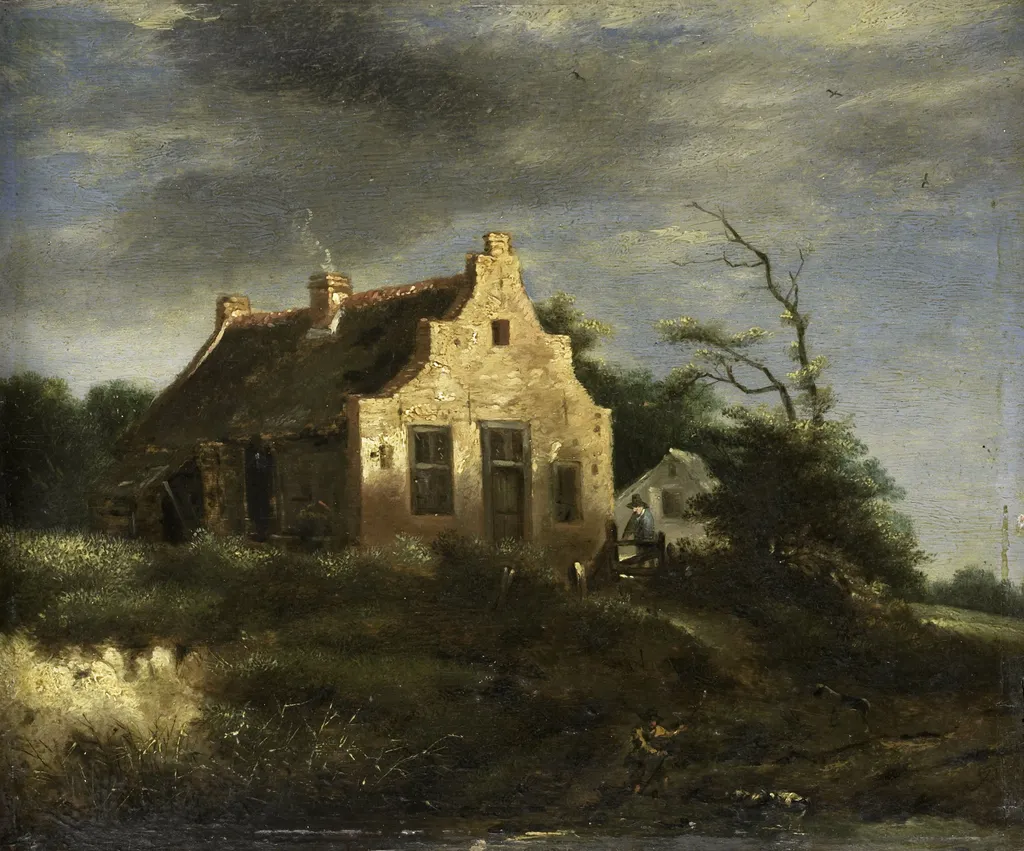
Farm in a wooded dune landscape is an oil painting by the Dutch Golden Age artist Jacob van Ruisdael. It is held in the collection of the Rijksmuseum.
About this work
Subject & Meaning
The composition emphasizes the interplay of light and shadow, reflecting the Dutch Golden Age interest in naturalistic landscape representation.
The painting portrays a solitary farmstead nestled within a wooded dune landscape, featuring a modest house surrounded by trees and a lone figure, set against a sky that suggests an approaching storm. The composition emphasizes the interplay of light and shadow, reflecting the Dutch Golden Age interest in naturalistic landscape representation. The lone figure may symbolize human presence within nature, though its precise meaning remains tied to the broader tradition of Dutch landscape painting that often conveyed subtle moral or atmospheric themes.
The work measures 24 cm by 28.5 cm and is executed in oil on panel, dated 1690.
Technique & Style
Jacob van Ruisdael painted Farm in a wooded dune landscape in 1690 using oil on panel. The work measures 24 cm in height and 28.5 cm in width, depicting a house surrounded by forest and a man within a dune landscape. Its formal qualities reflect seventeenth-century Dutch landscape painting, characterized by naturalistic detail and atmospheric depth. The piece is part of the Rijksmuseum collection in Amsterdam.
The painting's technique employs layered oil paint to achieve textural variation in the dunes and foliage, while the support, a wooden panel, was typical for smaller Dutch works of the period. The handling of light and compositional balance exemplify Ruisdael's mastery of spatial recession and organic forms, aligning with the conventions of Dutch Golden Age landscape art.
History & Provenance
Farm in a wooded dune landscape is an oil painting on panel created by Jacob van Ruisdael in 1690. According to the catalogue record for the work, it depicts a house, forest, and man within a landscape setting, and it has been accessioned into the collection of the Rijksmuseum, where it remains held. The sources do not document an earlier ownership chain, a commissioning party, or details of its creation prior to its entry into the museum's holdings, so the pre-Rijksmuseum provenance of the panel is not established in the available information.
Overview
Jacob van Ruisdael’s oil painting, dated 1690, presents a modest farmhouse set within a wooded dune landscape. The composition balances a weathered, thatched-roof dwelling against a backdrop of trees and low vegetation, under a muted, cloud‑filled sky. The work is part of the Rijksmuseum’s collection, exemplifying the Dutch Golden Age’s interest in rural scenery.
Context
Ruisdael was a leading figure in Dutch landscape painting, known for integrating natural observation with compositional balance. This work reflects the period’s fascination with the Dutch countryside’s varied terrain, dunes, woods, and cultivated land, while also illustrating the artist’s skill in portraying atmospheric conditions and modest rural architecture.
Own this work as a print
Artist & collection
Artist
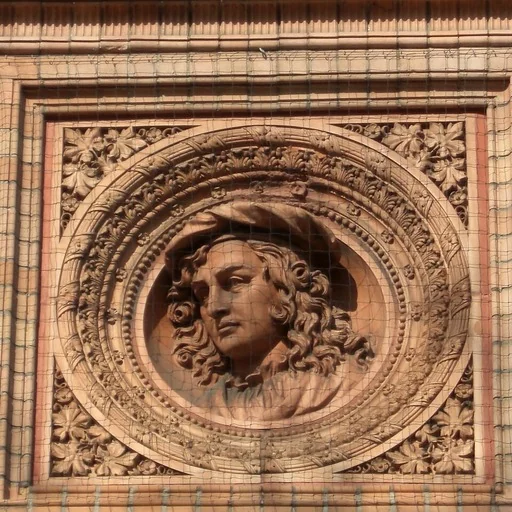
Jacob Isaackszoon van Ruisdael was a Dutch painter, draughtsman, and etcher. He is generally considered the pre-eminent landscape painter of the Dutch Golden Age, a period of great wealth and cultural achievement when…

- A Landscape with a Farmstead
 Farm in a wooded dune landscape
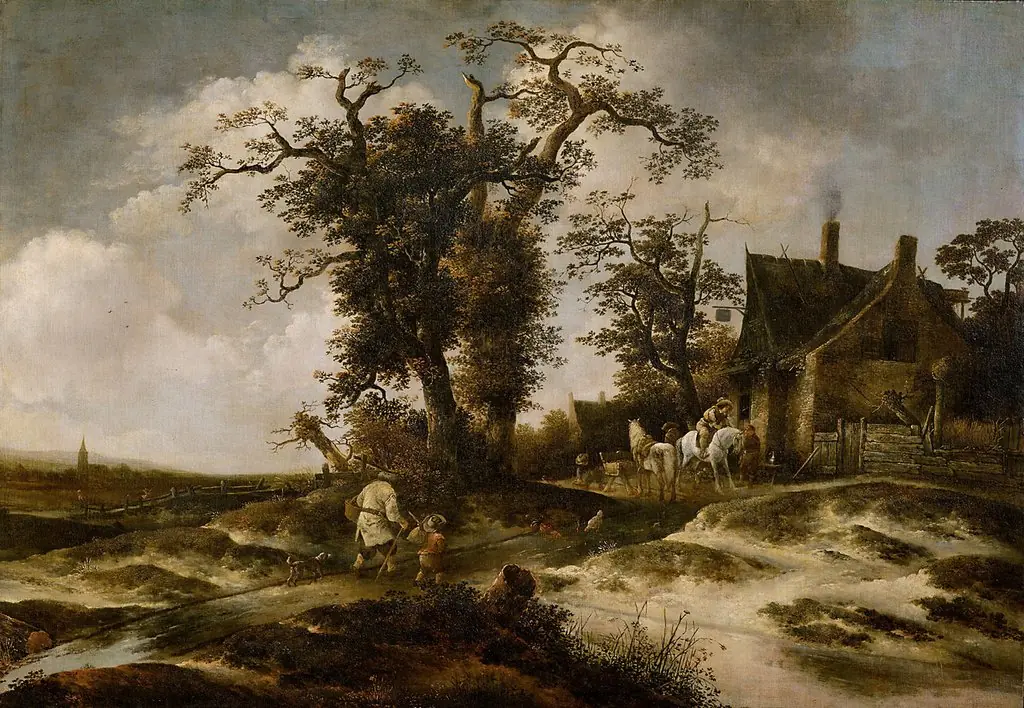 Vor dem Gasthaus am Dünenrand
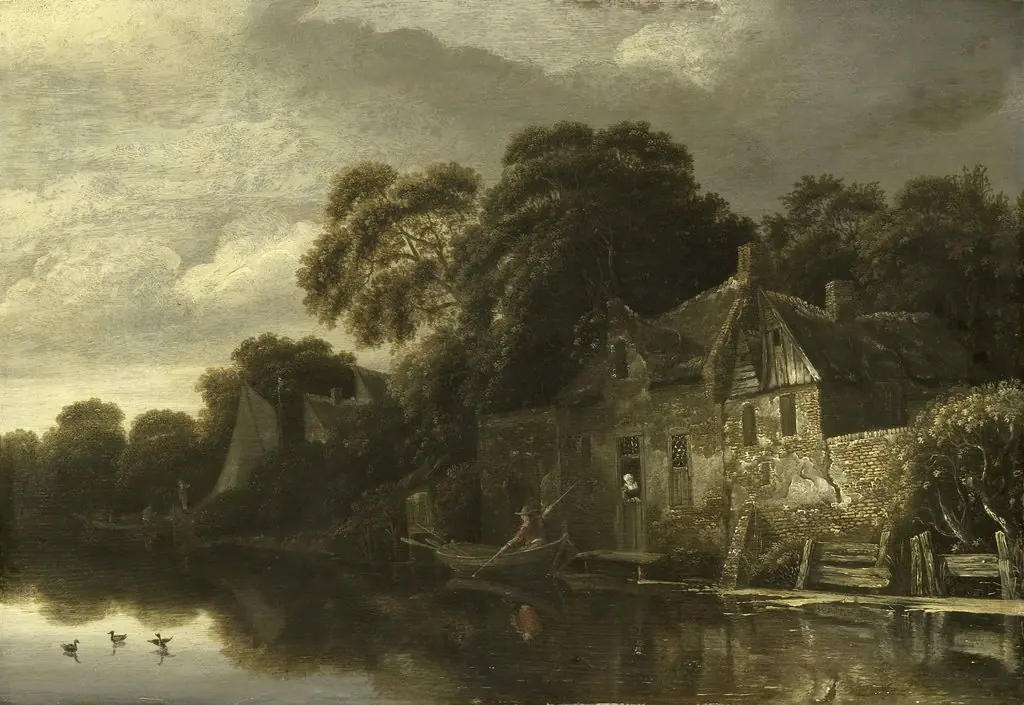 Old country cottage on the water
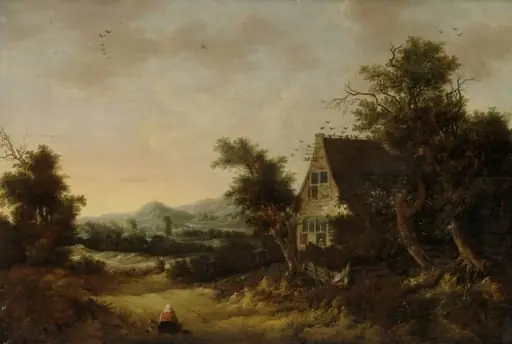 Hilly Landscape with Peasant Cottage
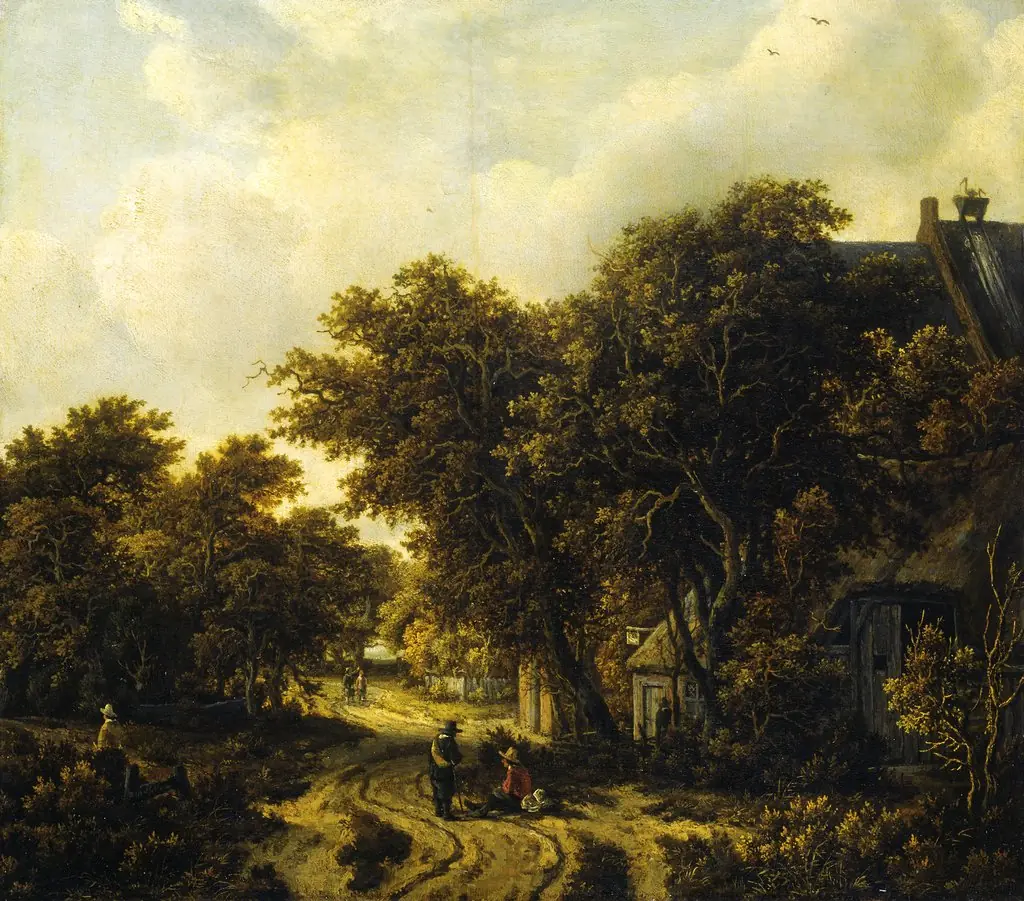 Landscape with an Inn
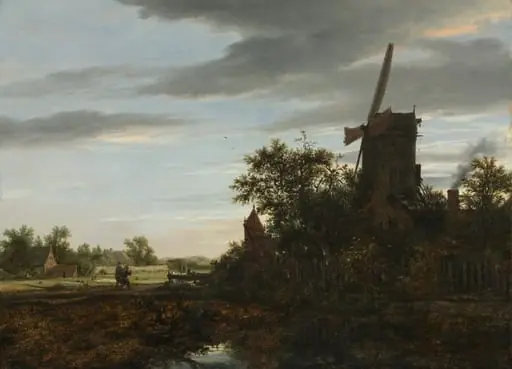 Landscape with a Windmill
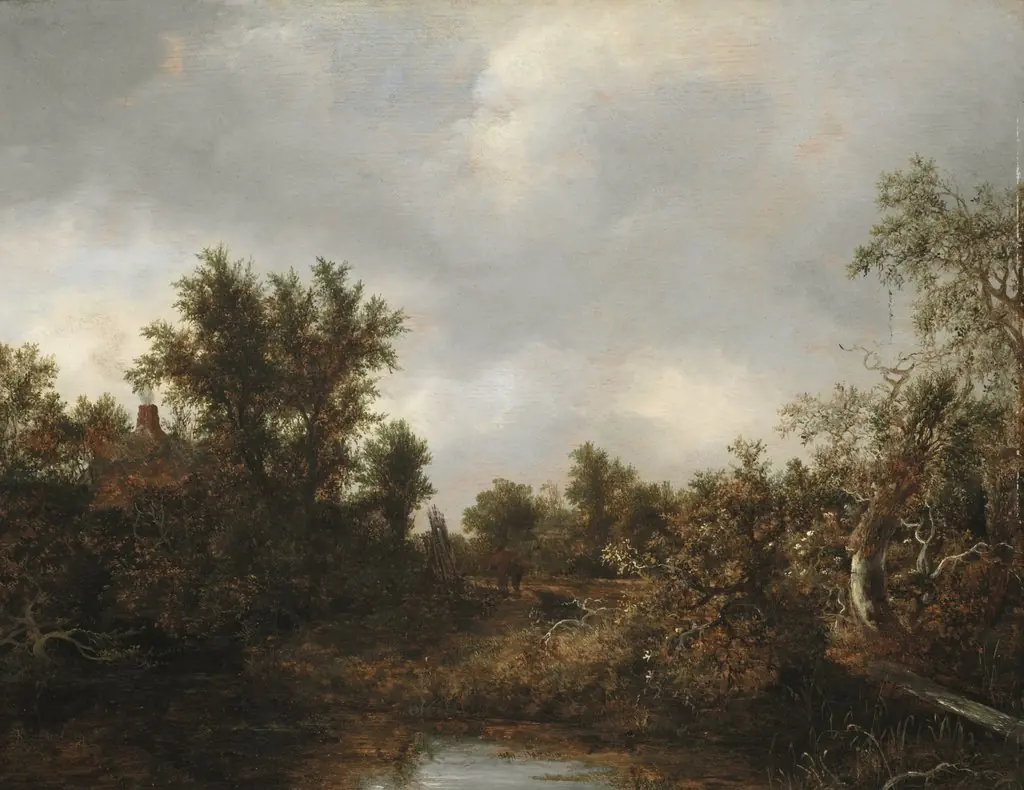 Landscape, ca. 1646
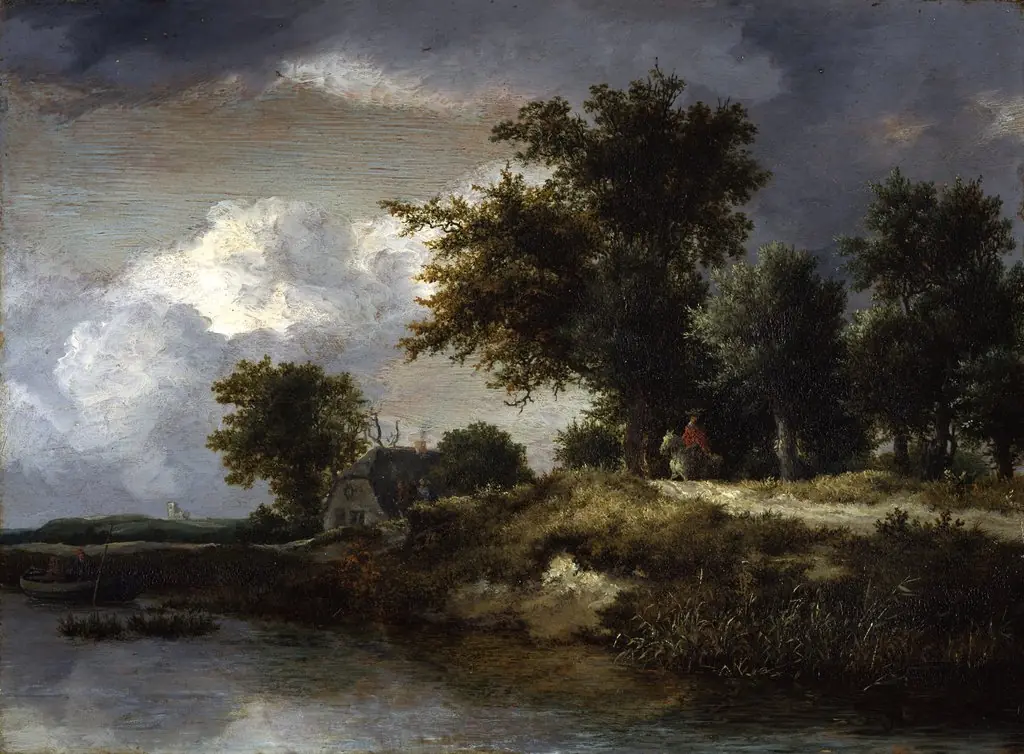 Wooded River Bank
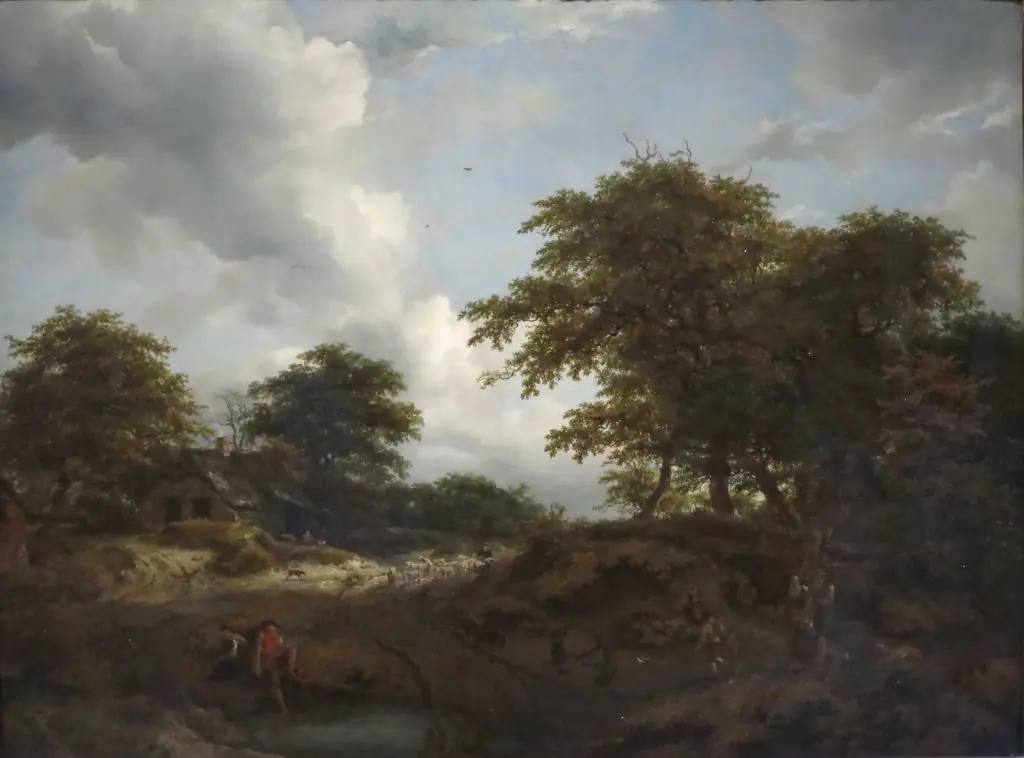 Wooded Landscape with a Pool and Figures
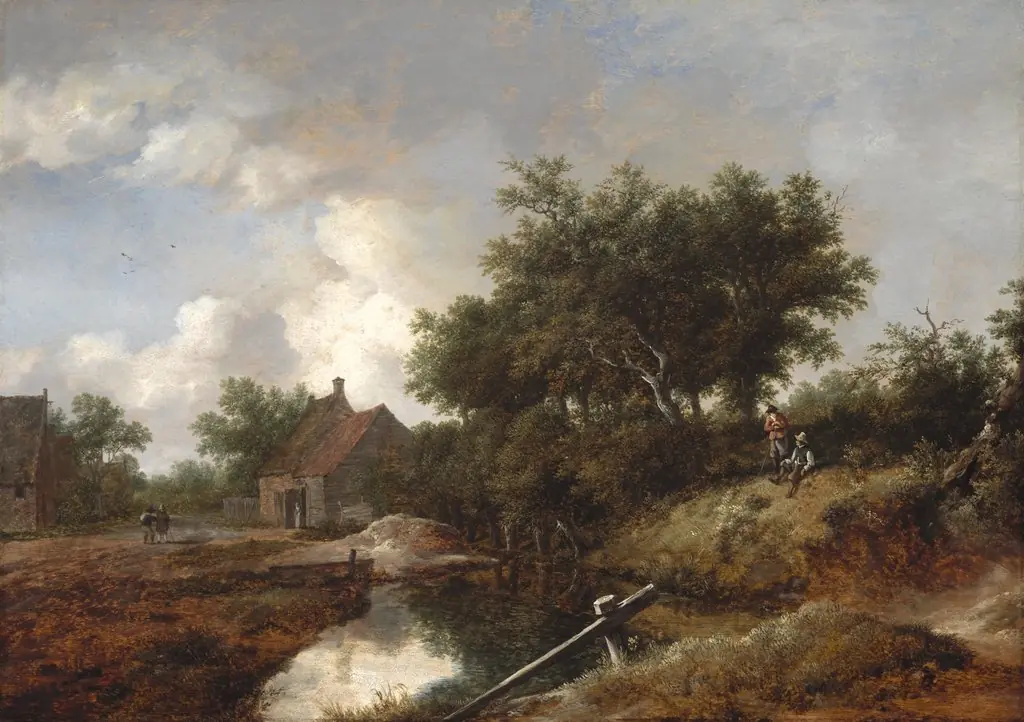 Path Leading to Farms by a Wooded Brook, ca. 1645
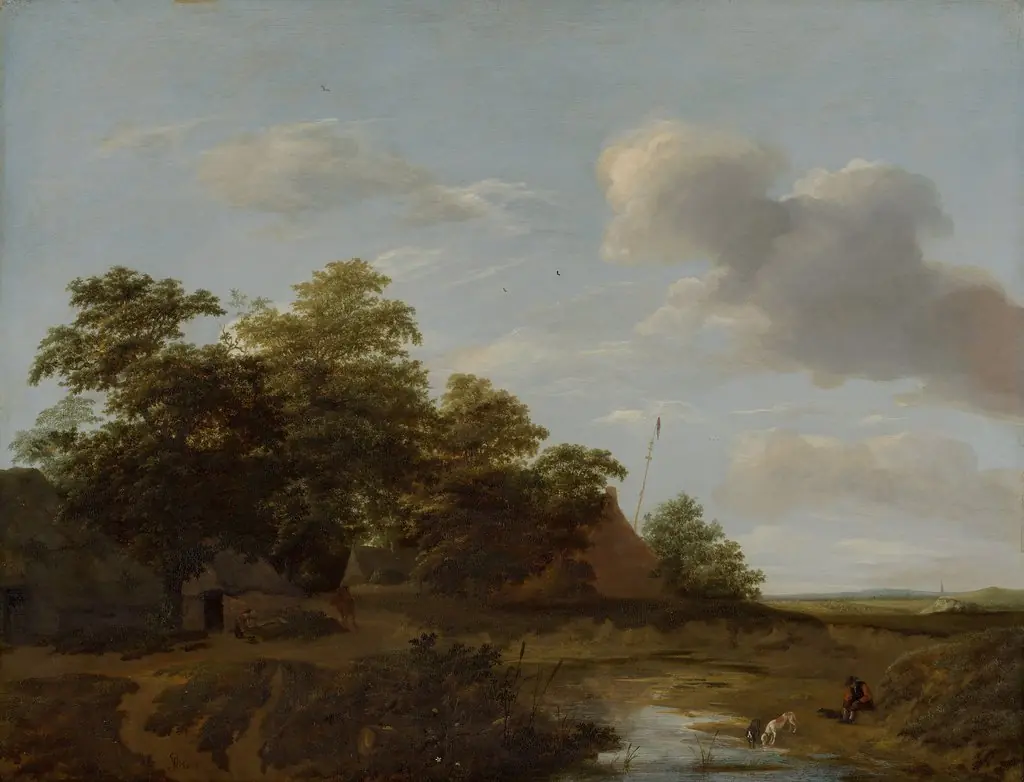 Landscape with a farm