Artwork
Mountainous Landscape
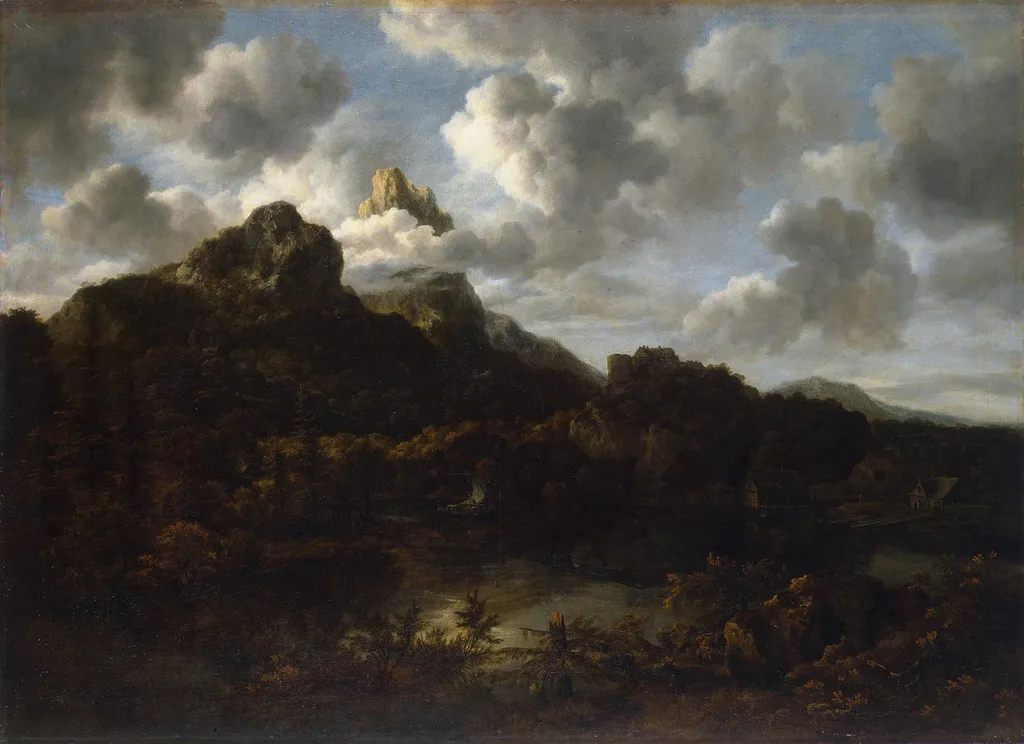
Mountainous Landscape is an oil painting by the Dutch Golden Age artist Jacob van Ruisdael. It dates from 1670 and is held in the collection of the Hermitage Museum.
About this work
Subject & Meaning
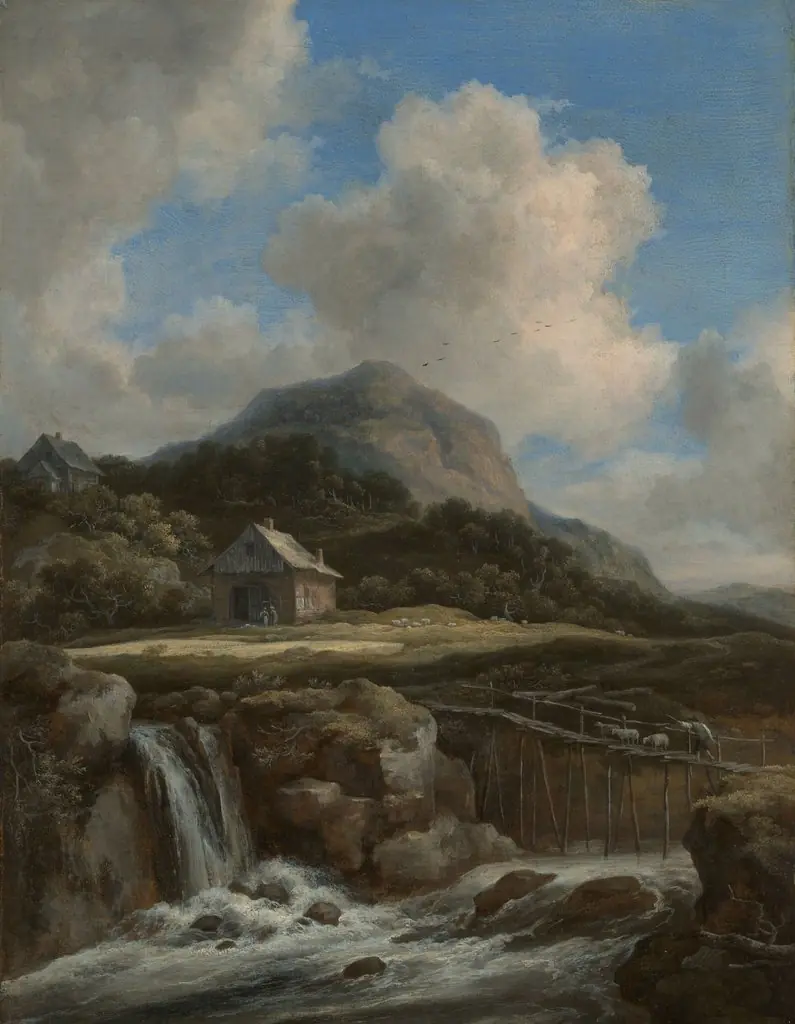
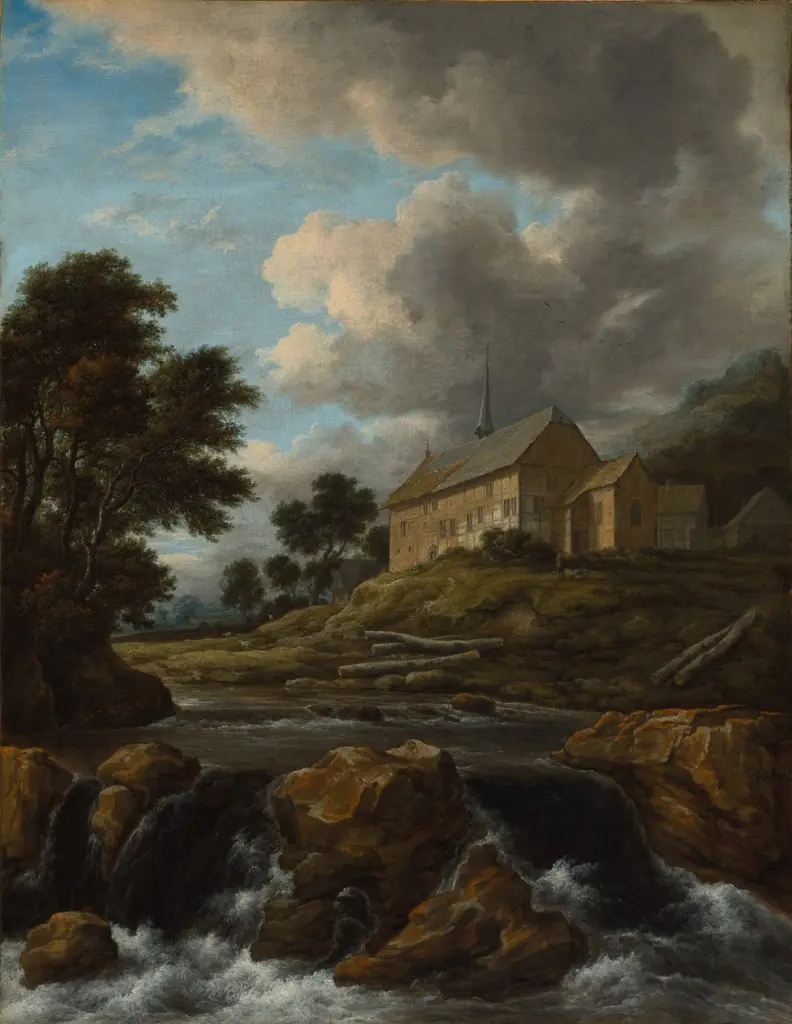
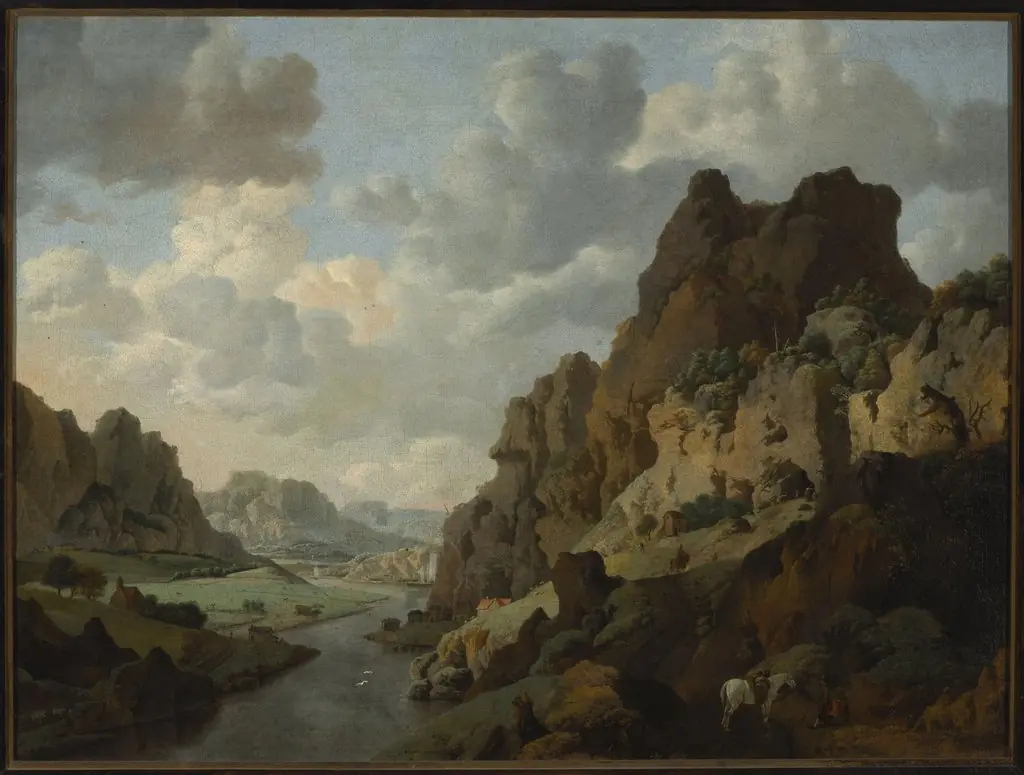
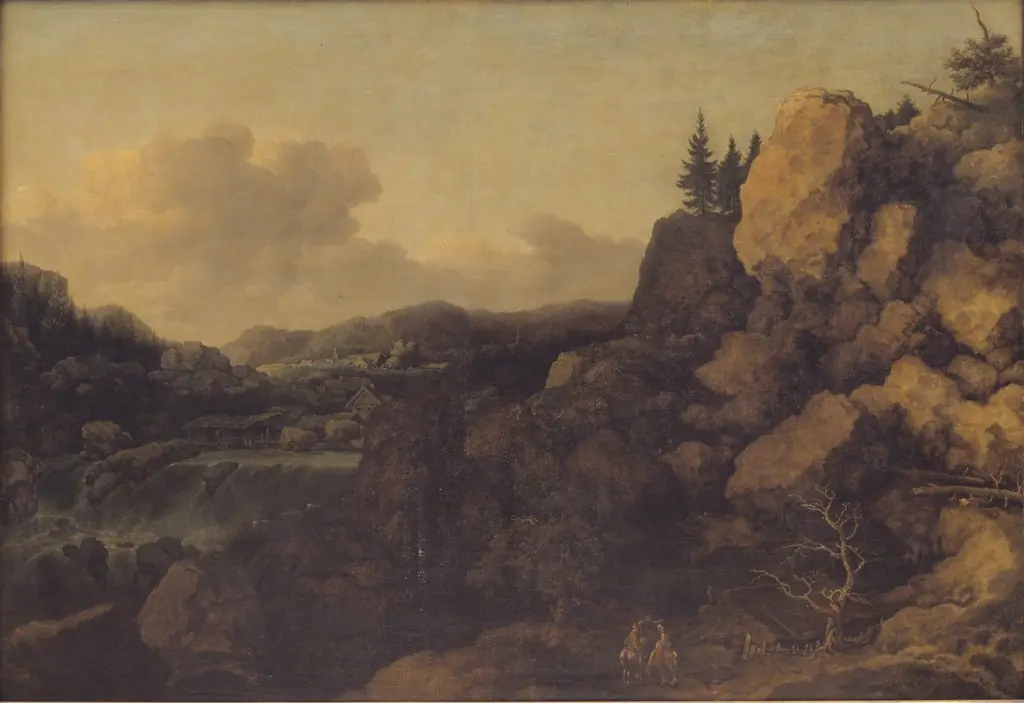
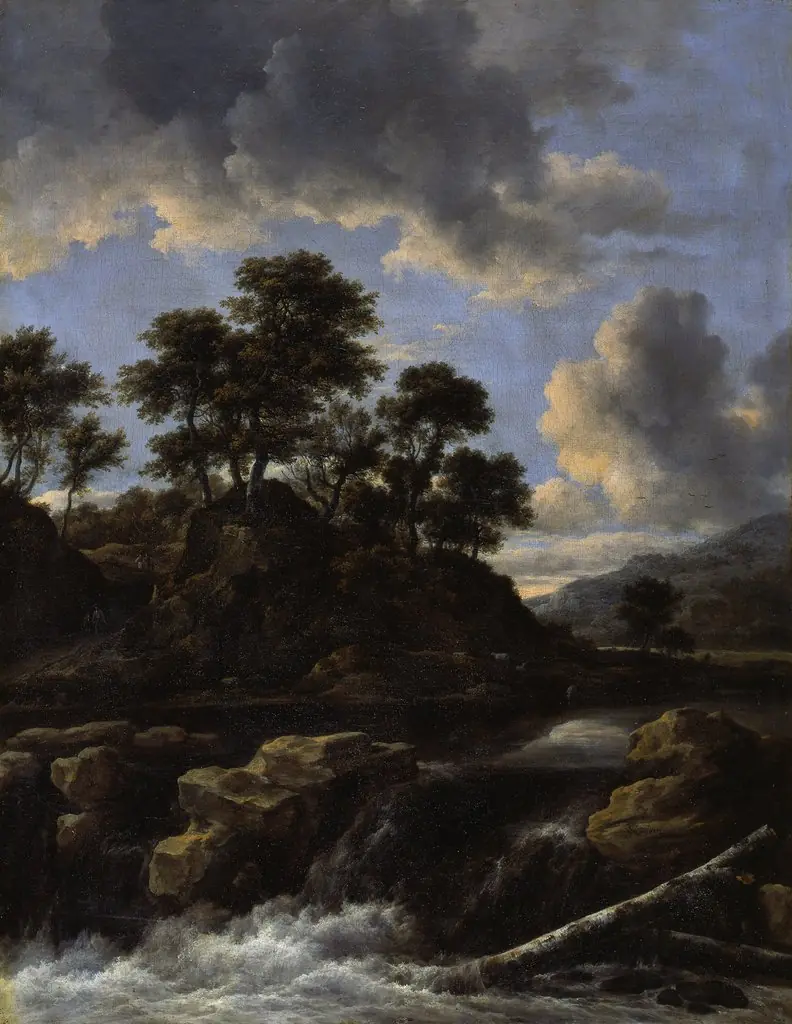
Mountainous Landscape depicts a rugged terrain intersected by a river, featuring a water‑mill, a cottage, timber piles, and a distant castle on a rocky hill, with a conical hill shrouded in cloud, symbolizing the interplay of nature and human activity, while the dramatic lighting suggests a twilight atmosphere
The composition reflects typical Dutch Golden Age landscape iconography, emphasizing the sublime qualities of mountains and rivers to convey both natural grandeur and moral contemplation
The work is housed in the Hermitage Museum, having entered the collection via Count Heinrich von Brühl and later acquisition by Catherine the Great
Scholars such as Hofstede de Groot highlighted its significance as one of Ruisdael's most important pieces, noting its influence on later landscape painters
The painting measures 99.5 × 137 cm and dates to around 1675‑1679, exemplifying Ruisdael's mastery of atmospheric effects and detailed natural observation
Technique & Style
The palette relies on earthy browns, muted greens, and deep blues, though the passage of time has darkened the scene, as noted by Hofstede de Groot in 1911.
Jacob van Ruisdael’s *Mountainous Landscape* (1670) is executed in oil paint on canvas, measuring 99.5 × 137 cm. The support, a tightly woven linen canvas, provides a stable foundation for the layered pigments, characteristic of Dutch Golden Age landscape painting. Ruisdael’s handling is precise yet expressive, with fine brushwork delineating rocky textures, foliage, and architectural elements, while broader, more fluid strokes render the sky and water. The palette relies on earthy browns, muted greens, and deep blues, though the passage of time has darkened the scene, as noted by Hofstede de Groot in 1911. Stylistically, the work exemplifies Ruisdael’s dramatic compositional approach, balancing rugged terrain with a dynamic river and human-made structures. The conical mountain obscured by clouds, the timber raft, and the watermill demonstrate his ability to merge natural grandeur with intimate detail, creating a tension between realism and idealized landscape conventions.
History & Provenance
The painting *Mountainous Landscape* (also titled *Mountain Landscape with a Watermill*) by Jacob van Ruisdael was created between 1675 and 1679. Originally attributed to Salomon van Ruisdael in an 1838 catalogue, the work was later documented by Hofstede de Groot in 1911 as a significant piece by Jacob van Ruisdael. The composition was engraved by P. E. Moitte while in the possession of Count Heinrich von Brühl. The painting entered the Hermitage Museum collection in Saint Petersburg after 1835, having been acquired by Empress Catherine the Great for the museum following 1763. It appears as number 1147 in the 1901 Hermitage catalogue.
Mountainous Landscape is held in the collection of the Hermitage Museum in Saint Petersburg under inventory number 1147. The work entered the Hermitage catalogue in 1835 and was acquired for the museum after 1763 by Empress Catherine the Great. It was documented by Hofstede de Groot in 1911 and listed in the 1901 Hermitage catalogue as originating from the collection of Count Brühl. The painting was exhibited at the Mauritshuis in The Hague in October 1981 and January 1982.
Context
Mountainous Landscape occupies a notable place within Jacob van Ruisdael's late output and the broader tradition of Dutch Golden Age landscape painting. Hofstede de Groot catalogued the canvas in 1911, describing it as "one of Ruisdael's most important pictures" and noting that the composition, a dark, rocky scene crossed by a river with a timber raft and a watermill, was originally attributed in an 1838 catalogue to Salomon van Ruisdael before being correctly reassigned. Smith's 1835 catalogue raisonné numbered it as entry 307 ("A Raft and Watermill"), and P. E. Moitte engraved it while the painting was in the Brühl collection. The work's imagery parallels other Ruisdael landscapes of the late 1670s, and such compositions frequently served as inspiration for subsequent landscape painters. A documented exhibition history includes a showing at the Kabinet van Schilderijen Mauritshuis in The Hague between 1 October 1981 and 3 January 1982, situating the painting within the scholarly reassessment of Ruisdael's late Scandinavian-inspired scenes.
Legacy
Mountainous Landscape has been recognized as one of Jacob van Ruisdael's most important pictures, a status noted by art historian Hofstede de Groot in 1911. The work's composition, featuring a dark rocky landscape with a watermill and castle, frequently served as inspiration for later painters of the landscape genre. Its historical significance is further evidenced by its inclusion in early catalogues raisonnés, such as John Smith's 1835 volume, and its documentation in major museum inventories dating back to 1835.
The painting's reputation as a major work of the Dutch Golden Age is reinforced by its exhibition history, including a showing at the Mauritshuis in The Hague between October 1981 and January 1982. Scholars have observed that the scene's specific details are similar to other works by Ruisdael from the same period, establishing a visual precedent that influenced subsequent generations of landscape artists.
Own this work as a print
Artist & collection
Artist
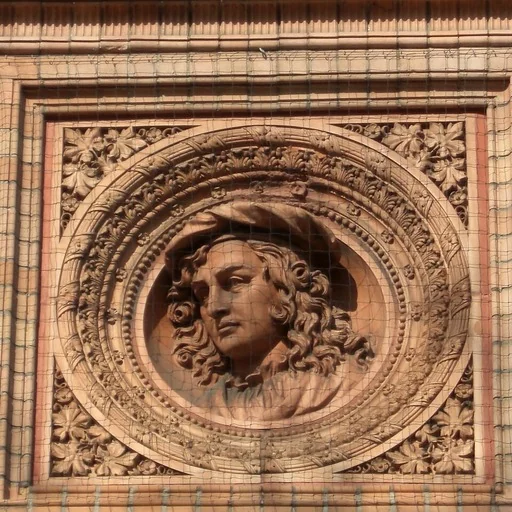
Jacob Isaackszoon van Ruisdael was a Dutch painter, draughtsman, and etcher. He is generally considered the pre-eminent landscape painter of the Dutch Golden Age, a period of great wealth and cultural achievement when…