Artwork
The Cloister
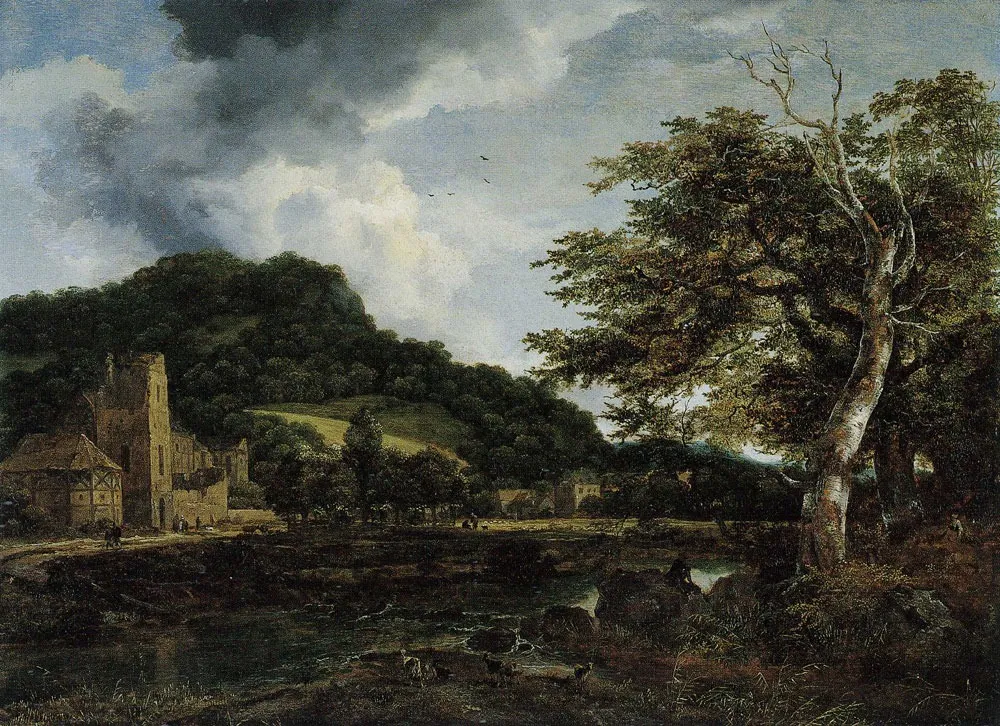
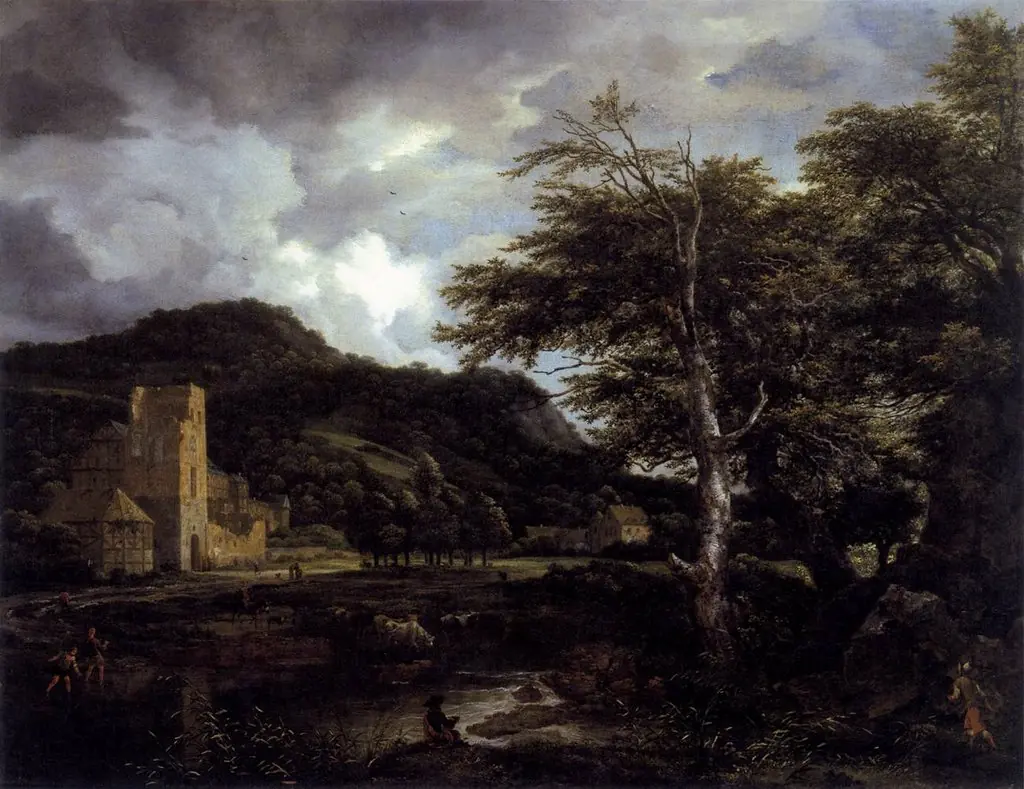
The Cloister is an oil painting by the Dutch Golden Age artist Jacob van Ruisdael. It dates from 1649 and is held in the collection of the Gemäldegalerie Berlin.
About this work
Subject & Meaning
These elements together form the visual program of the work, linking the architectural serenity of the religious space with the surrounding natural world.
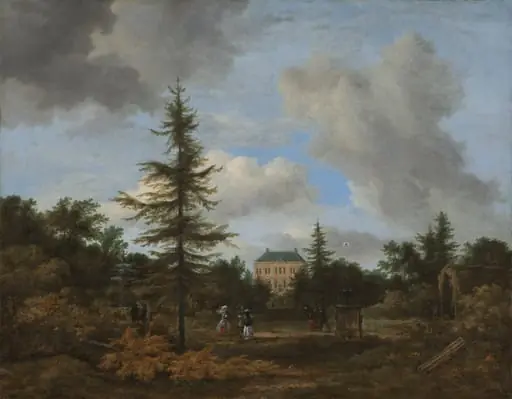
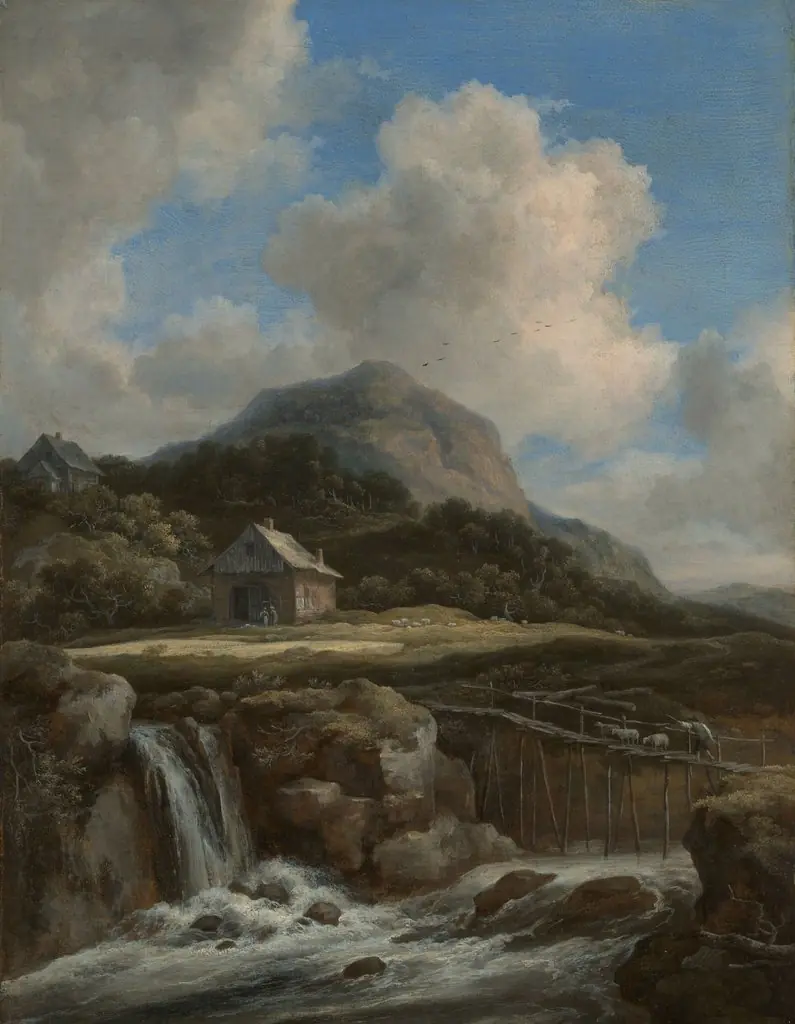
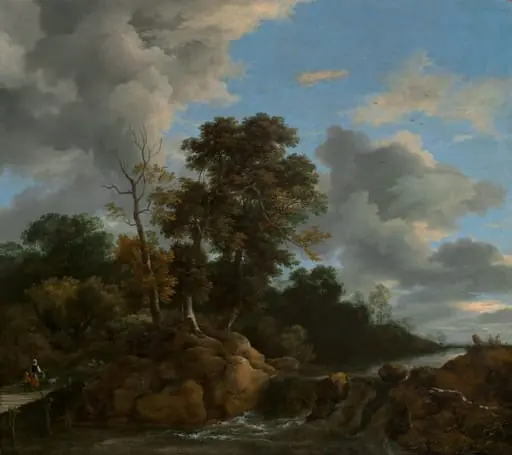
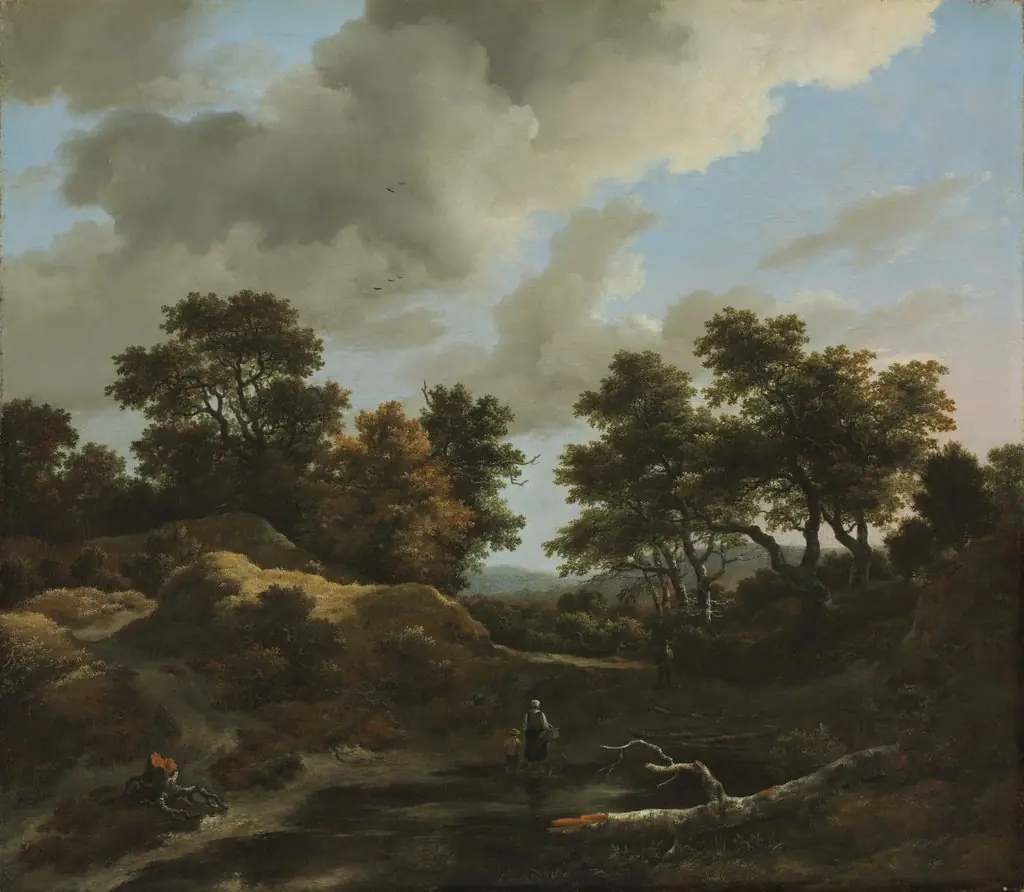
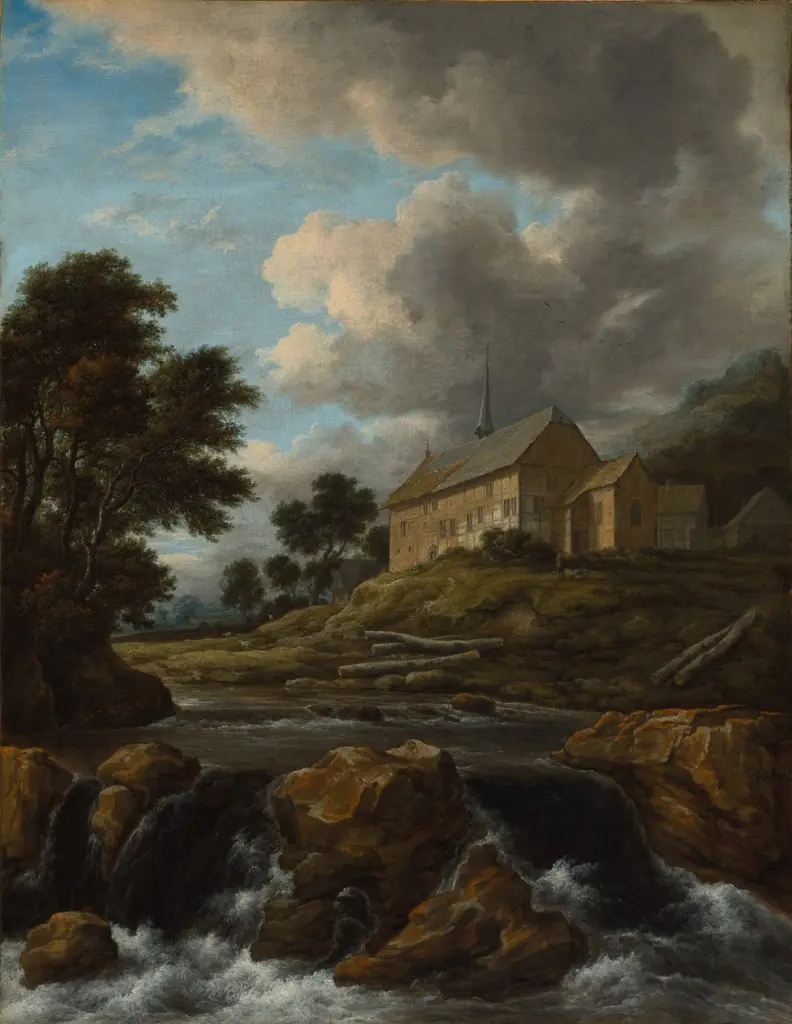
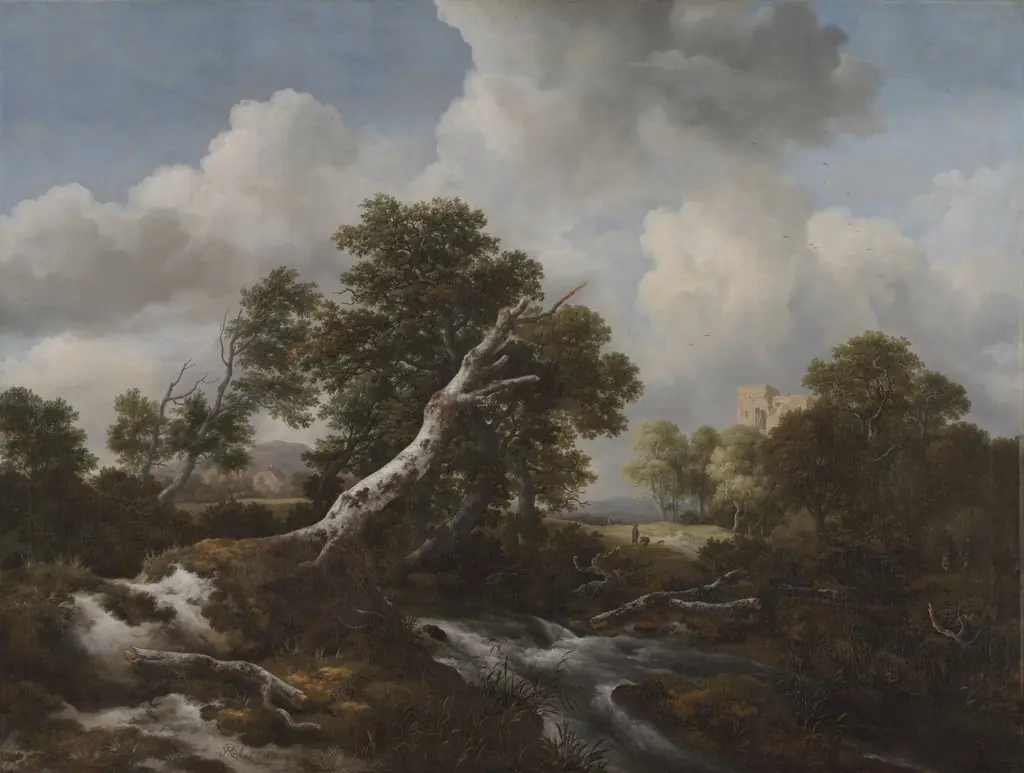
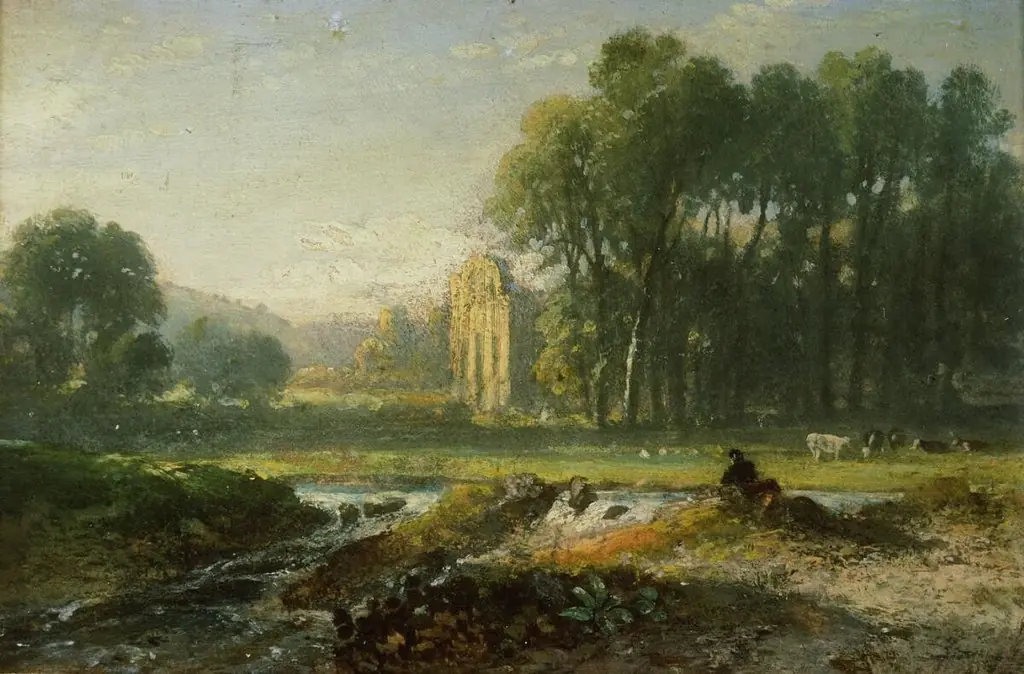
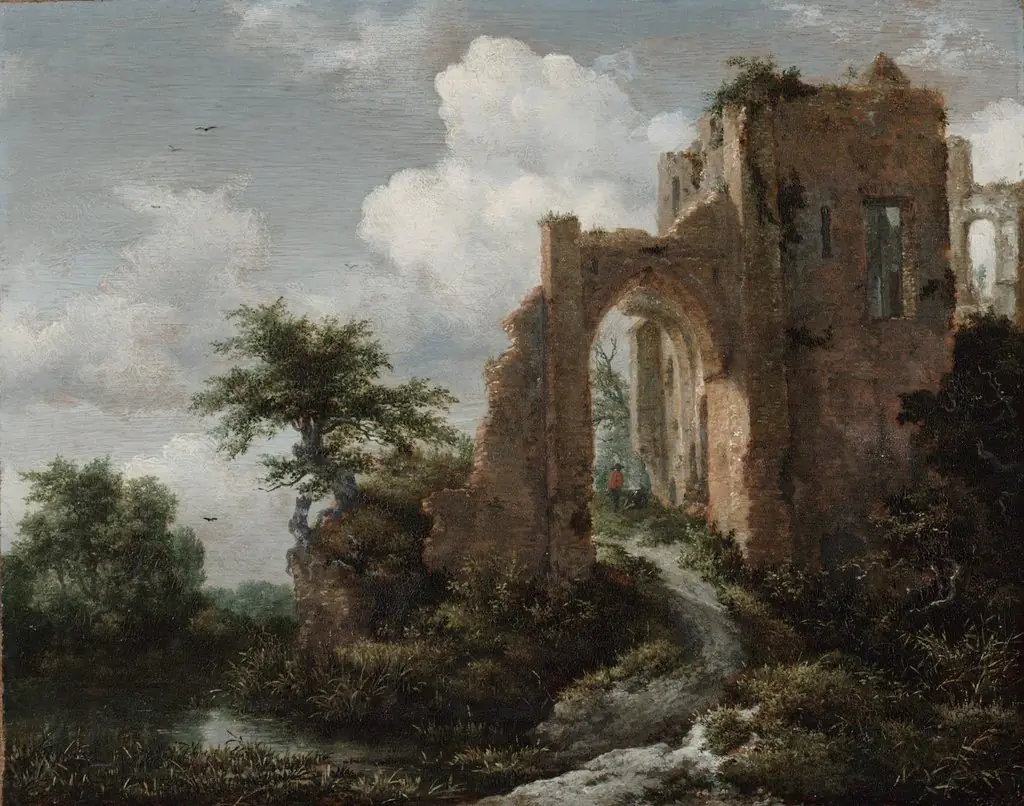
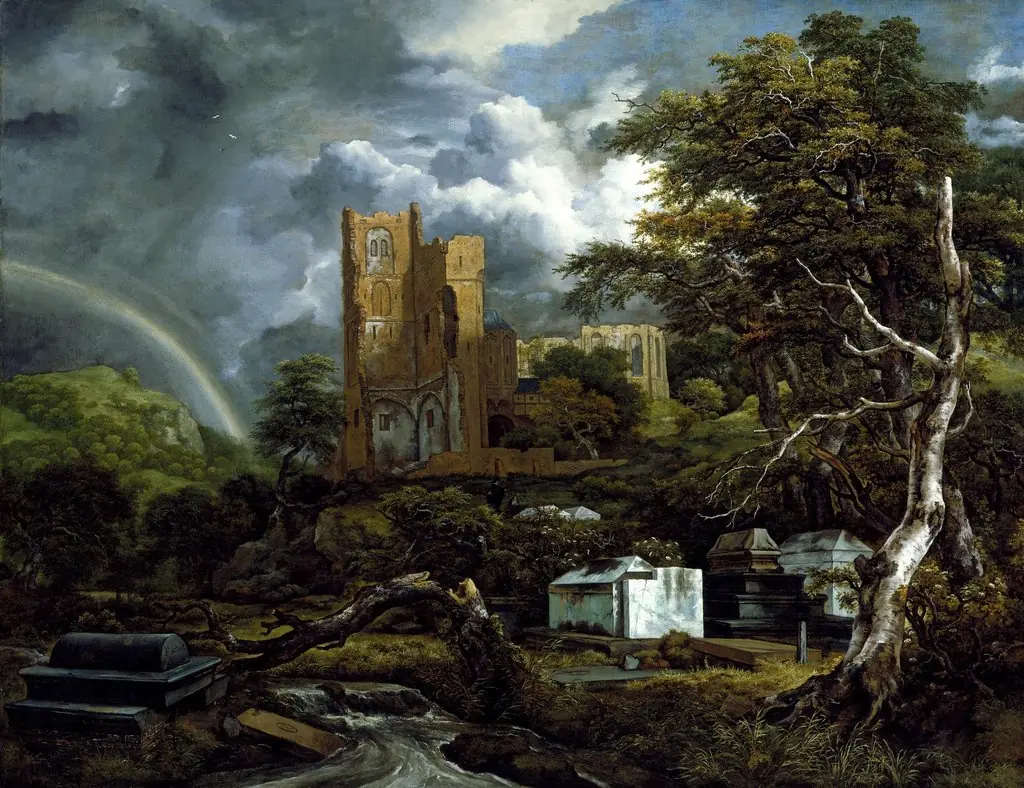
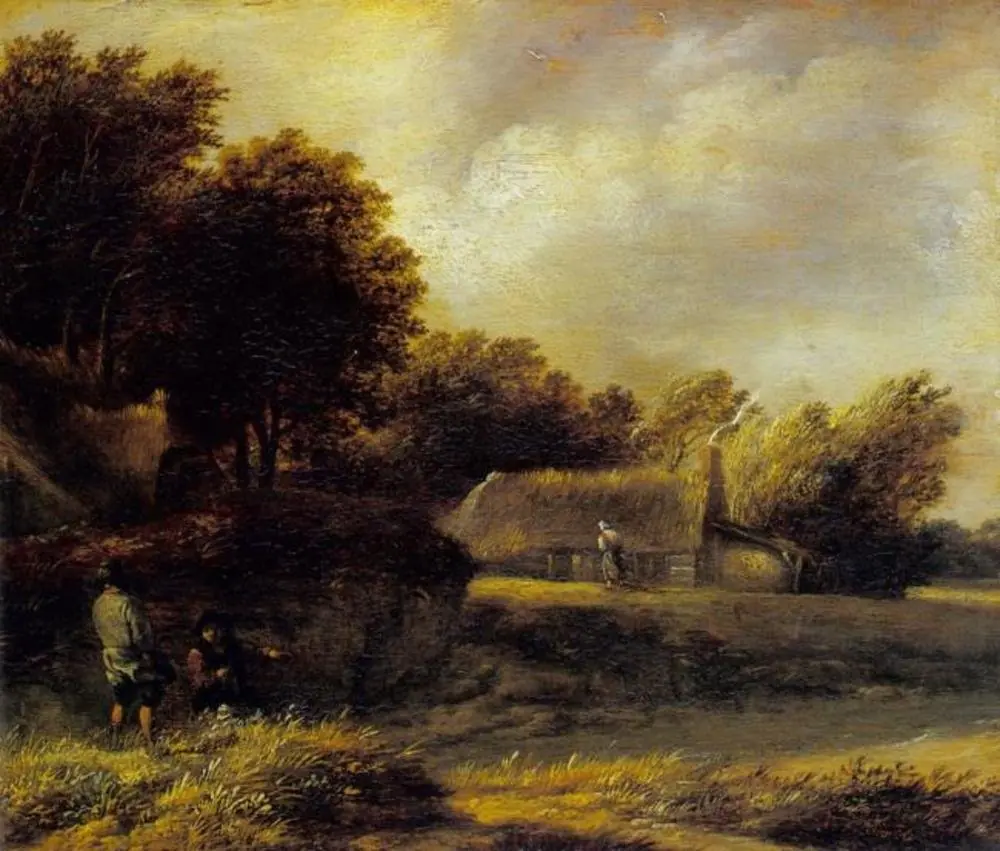
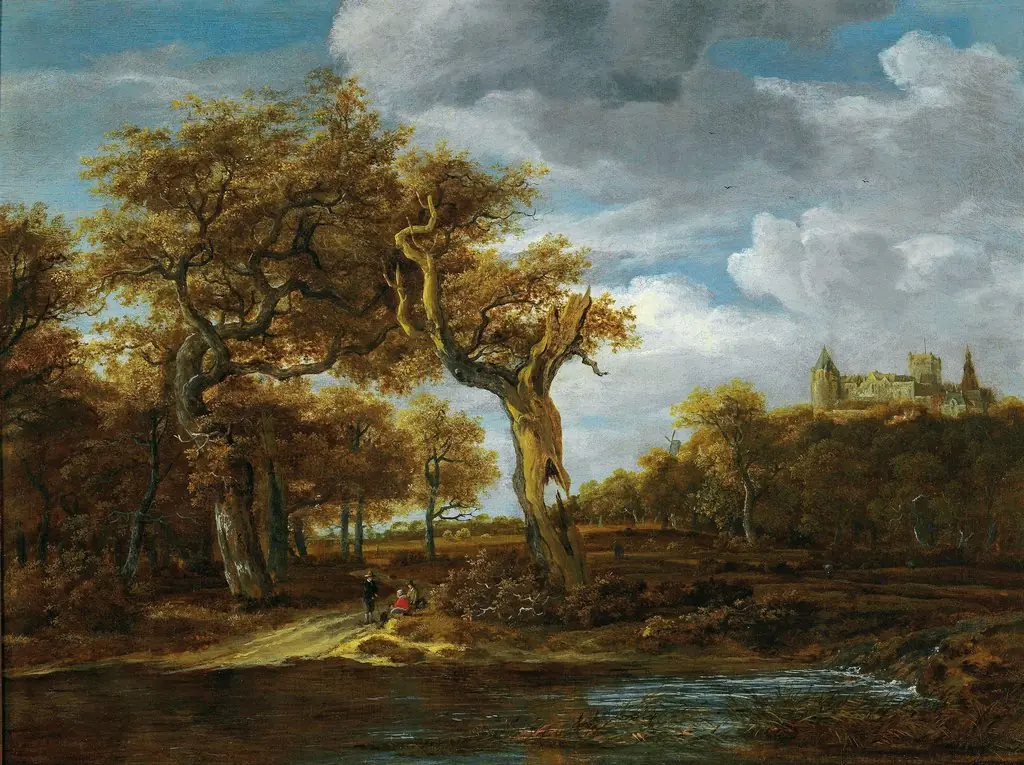
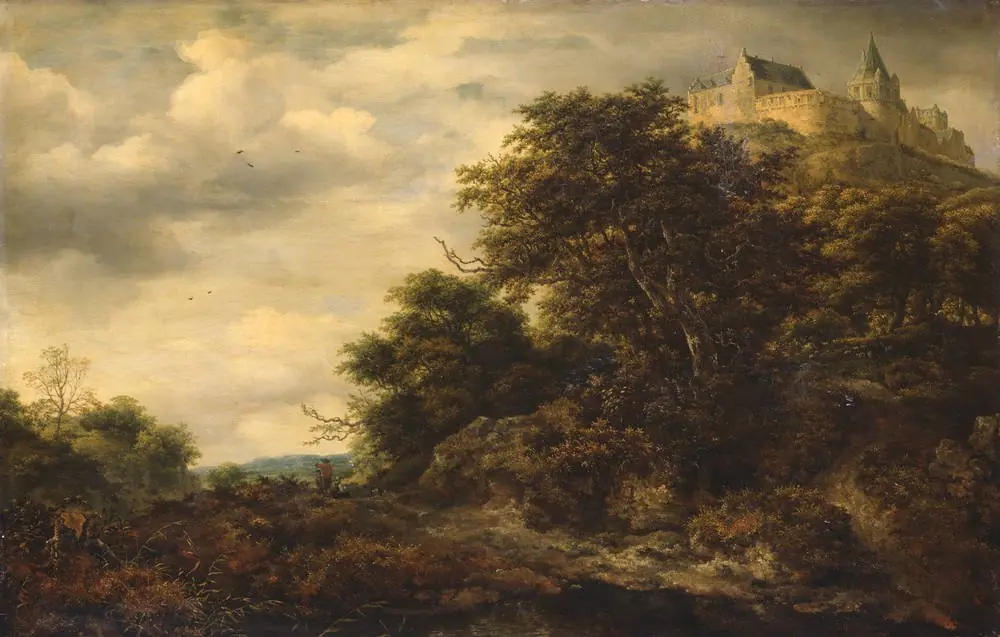
The painting presents a quiet cloister set within a Dutch landscape, framed by a sky streaked with clouds, a solitary tree, a gentle hill, a dense forest, a flowing river, and a distant monastery. These elements together form the visual program of the work, linking the architectural serenity of the religious space with the surrounding natural world. The composition emphasizes a balanced interplay between built environment and nature, reflecting the 17‑century interest in harmonious scenery.
Technique & Style
Executed in oil on canvas, the work measures 45.7 cm in height and 62.3 cm in width. The handling combines fluid, atmospheric sky rendering with precise botanical study of foliage and gnarled trunks, characteristic of Ruisdael’s mature style. The composition balances vertical accents of slender trees against horizontal bands of distant hills and a luminous, cloud-strewn sky, guiding the eye toward a receding architectural fragment at left that evokes a ruined cloister.
The palette relies on earthy greens and ochres for the landscape, contrasted with cool blues and whites in the sky, while thin, layered glazes articulate light effects across the surface.
No specific condition report is provided in the cited sources, and the painting’s structural support is identified as canvas.
History & Provenance
Jacob van Ruisdael created the landscape painting The Cloister in 1649. The work was executed in Haarlem using oil paint on a panel support. While the primary inception date is recorded as 1649, some records also associate the work with the year 1657. The painting currently resides in the collection of the Gemäldegalerie in Berlin.
The painting The Cloister by Jacob van Ruisdael is held in the collection of the Gemäldegalerie in Berlin. Created in 1649, the work depicts a landscape featuring a monastery, trees, and a river. While the artwork's inception is primarily dated to 1649, some records also associate the year 1657 with the piece.
The physical object consists of oil paint on canvas or panel and measures 45.7 cm in height by 62.3 cm in width. No specific inventory numbers or past exhibition histories for this work are provided in the available sources.
Overview
Jacob van Ruisdael completed The Cloister, a landscape painting, in 1649. This work captures a serene village setting, characterized by a prominent ruined structure and a winding river. Executed in paint, the artwork is a notable example of Dutch Golden Age landscape art.
It is currently part of the collection at the Gemäldegalerie Berlin, where it offers insight into Ruisdael's early career.
Artist & collection
Artist
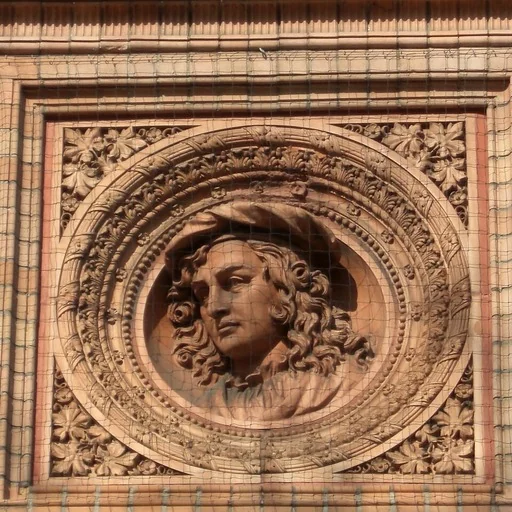
Jacob Isaackszoon van Ruisdael was a Dutch painter, draughtsman, and etcher. He is generally considered the pre-eminent landscape painter of the Dutch Golden Age, a period of great wealth and cultural achievement when…